
The Other Life
Past Lives and The Prophet on love, leaving, and lives that continue.
Deep Life Reflections | Essay 47 | James Gibb
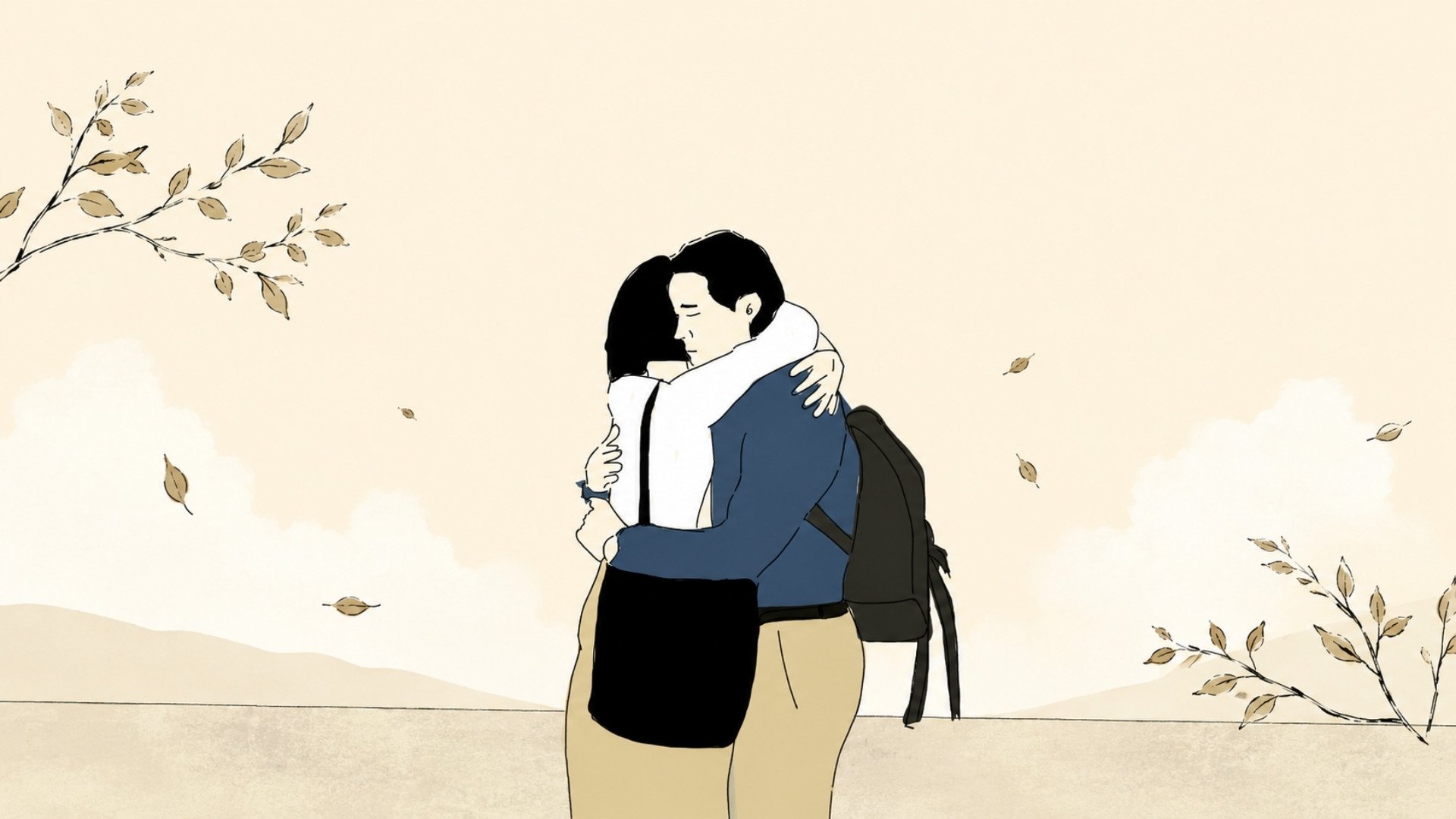
If you leave something behind, you gain something too.
In Korean, people use the word ‘In-Yun’ to describe the belief that interactions between two people in this life are a result of interactions in their past lives: a concept of fate or destiny. ‘In-Yun’ lies at the heart of Past Lives, a Best Picture nominee at the Academy Awards.
Nora and Hae Sung are childhood friends in South Korea separated when Nora’s family emigrates to Canada, leaving a heartbroken twelve-year-old Hae Sung behind. There’s a telling image in the opening minutes as the childhood friends part ways on the packed and narrow suburban streets of Seoul, a simple “Bye” marking their last physical encounter.
The story jumps forward twelve years, and we find Hae Sung using Facebook to track Nora down to New York, where she’s now working as a writer. Despite this reconnection, a virtual one through Skype, they lose contact and another twelve years pass before their paths cross again, this time physically in New York. Now in their mid-thirties, Nora is by her own admission more American than Korean and married to the decent and understanding Arthur.
Past Lives reminded me of the Before Sunrise and Before Sunset films by Richard Linklater, questioning the “what ifs” of life and the role of fate and chance. It’s clear Nora and Hae Sung share a deep connection, one forged over four decades and the powerful magnet of nostalgia. Yet they are also paradoxically distant through the choices they’ve made. As Nora’s mother says early in the film, “If you leave something behind, you gain something too.” This speaks to Nora’s spirit of adventure and the search for the unfamiliar.
While Nora is searching to gain something, Hae Sung believes he may have already found it (Nora herself). This distance is also symbolically captured by the contrasting shots of Nora’s nighttime New York and Hae Sung’s daytime Seoul. We see this too in the camerawork of writer and director, Celine Song, who shoots their New York reunion from a distance or in the shadows.
Past Lives is one of those films that subtly invites us to reflect on our own lives, on the people we meet, and the choices we make. It’s stripped of the usual Hollywood sentimentality found in films of this genre, which makes it a more human film. It doesn’t give us neat answers or conventionally happy endings. It does not try to solve the mystery of fate.
Its message is much simpler: to be grateful for our time with people, even if it’s not forever.
The Lebanese poet Kahlil Gibran writes from a similar threshold in his 1923 book, The Prophet. It concerns a man preparing to leave, asked to speak before he goes. Gibran knows a thing or two about this. Born into an impoverished Christian family in Bsharri, Lebanon, in 1883, Gibran emigrated to New York as a child of twelve.
In The Prophet, a collection of twenty-six poetic fables on life and the human condition, the prophet Al Mustafa is about to board a ship home after living in the fictional city of Orphalese for the past twelve years. As he readies for his journey, the townspeople stop him and ask if he can share his wisdom on topics such as love, friendship, passion, pain, children, self-knowledge, pleasure, religion, and death.
Each of these subjects is given its own chapter, allowing the reader to absorb Gibran’s wisdom in whatever sequence they prefer. In the chapter on ‘Giving’, Gibran writes, “You give but little when you give of your possessions. It is when you give of yourself that you truly give.” On love, “When love beckons to you, follow him, Though his ways are hard and steep.”
Gibran received little public recognition during his life. His health was marked by chronic illness and self-neglect. He died in 1931, aged just forty-eight in New York. His final resting place in Bsharri, now a museum, is visited by more than 50,000 pilgrims annually.
The Prophet was a thoughtful gift from a friend while I was in hospital recovering from major surgery. The inscribed message, “Here’s to having a lot to celebrate in life!” naturally made me reflect, thinking about the decisions I’ve made, the paths I’ve walked, and the paths I’ve yet to walk. I thought about one of the most significant decisions in my own journey. Twelve years seems to be a recurring pattern, and so it’s fitting that 2024 marks the twelfth anniversary since I left Scotland for the United Arab Emirates. I was thirty-six when I left Scotland, comfortable in many respects, but with an itch to explore and try something new.
In an alternate reality, I might have stayed in Scotland, leading a life very different from my current one. Yet, moving to the UAE has certainly enriched my thinking, experiences, passions, and relationships. I don’t know whether moving to Dubai was fate, instinct, or just one more decision among many.
Perhaps I was sensing there was more to be discovered and that if we leave something behind, we gain something too. But the life we leave behind does not vanish. It is still there and still alive. Still beating.
It becomes one of our past lives.
Pass It On
If this idea was worth your time, it may be worth someone else’s.
Share this essay with a friend:
https://www.deeplifejourney.com/deep-life-reflections/february-9-2024
If you have a thought you’d like to share, please leave a comment below.
You can read all previous issues of Deep Life Reflections here.