
Art’s Role in Finding Truth
Wilfred Owen’s war poems, Chinatown, and how art challenges the stories we are told to accept.
Deep Life Reflections | Essay 171 | James Gibb
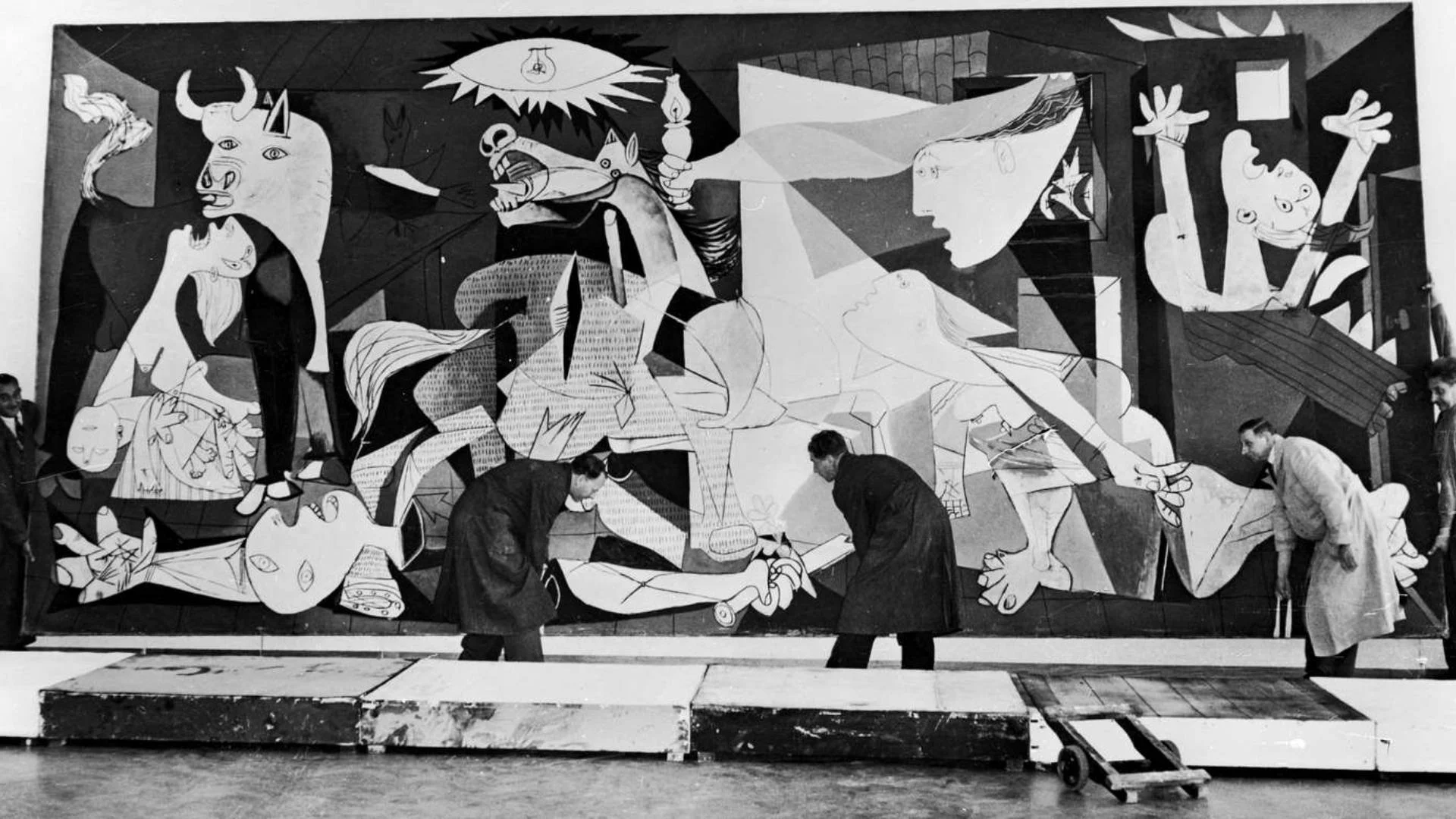
Art can expose the stories power depends on: glory, justice, order, simplicity, and inevitability.
Can art tell the truth?
I believe it can. Power needs stories to survive. Stories like war is glorious, corruption is accidental, and justice still governs the world. Art, however, can expose the lie inside the story.
It can do so because it begins in individual vision, not the compromises and questionable motives of a committee. It is one person’s judgement, responsibility, and creativity. Michelangelo’s Pietà, Britten’s War Requiem, and Coppola’s The Godfather are works in which the artist has deliberately chosen where to look and what truth, or truths, to show.
There are many subjects the artist can turn to for fuel. One is war.
War has irreversibly shaped the lives and work of many artists. Ernest Hemingway and Pablo Picasso both had their art influenced by their experiences in the First World War and Spanish Civil War. Wilfred Owen, an English poet and soldier, is another. His traumatic experiences in the First World War made him one of the most significant war poets of his time.
Owen’s enlistment in the British Army in 1915 and subsequent deployment to the Western Front exposed him to the brutal realities of war, which deeply influenced his poetry. The gruesome experiences of trench warfare became the essence of his poetic expression.
“Red lips are not so red as the stained stones kissed by the English dead.”
Deep in the belly of suffering, destruction, and death, Owen found the words to record the senselessness of war, and its complete absence of gallantry or glory. His poetry is vivid and compassionate toward the common soldier. It is also notable for its irony.
In the preface to his collection of poetry, The Poems of Wilfred Owen, he wrote:
“This book is not about heroes. English poetry is not yet fit to speak of them. Nor is it about deeds, or lands, or anything about glory, honour, might, majesty, dominion, or power, except War. My subject is War, and the pity of War. The Poetry is in the pity.”
One of Owen’s most powerful poems, ‘Dulce et Decorum est,’ demolishes the old lie that dying for one’s country is noble. The title, a Latin phrase from the Roman poet Horace, means “It is sweet and fitting to die for one’s country.” The poem, through its anonymous speaker, describes the gruesome effects of a gas attack:
“Dim through the misty panes and thick green light,
As under a green sea, I saw him drowning.In all my dreams before my helpless sight,
He plunges at me, guttering, choking, drowning.”
Owen’s speaker concludes that anyone who sees the realities of war for themselves would not repeat the empty platitudes of patriotic sacrifice.
Wilfred Owen was killed in action on November 4, 1918, just one week before the war’s end. He was 25. Through his work, published posthumously, Owen countered the glorified narrative of dying for one’s country. He wrote:
“All a poet can do today is warn. That is why the true Poets must be truthful.”
The grim European battlefields of Wilfred Owen are a world away from the film noir of Roman Polanski’s sepia-tinted Los Angeles, the setting for his 1974 masterpiece, Chinatown. But both are built on stories that begin to rot when investigated further.
“Forget it Jake, it’s Chinatown.”
Chinatown, starring Jack Nicholson, is regarded as one of the most perfectly constructed films of all time. Film schools study it. It’s a complex story of personal and political corruption, involving murder, stolen water rights, and incest. It’s set in the golden hue of 1930s Los Angeles, a small city in a large desert, populated by big characters and even bigger lies.
Nicholson stars as private detective J.J. Gittes, hired to expose a high-profile businessman whose wife suspects him of infidelity. However, from this rather straightforward premise, Gittes finds himself quickly out of his depth, stumbling into the dangerous boreholes of money, power, and corruption. Gittes just wants to get to the bottom of things. He’s tired of the lies people spout.
Screenwriter Robert Towne was interested in exploring moral decay and the futility of seeking justice in a corrupt system. He used the real case of the California water rights scandal to examine the recurring themes of deception and inevitability, captured in the famous line: “Forget it Jake, it’s Chinatown.”
The film’s warning about unaccountable power impacting our lives in ways we cannot comprehend closely mirrored the political sentiments of the early 1970s. Chinatown was released during the final act of the Watergate scandal. Its vision feels current because it understands that corruption teaches people to go about their daily lives without expecting the truth.
The film’s ending is notoriously bleak, perhaps understandable given Polanski made the film just five years after his wife, Sharon Tate, was murdered by the Manson Family. The film presents a fatalistic, even tragic nature of America because it is fatalistic about power. It suggests the rules of the game are written in a cryptic language, making everyone feel like an outsider and, ultimately, a victim.
The crimes in Chinatown include incest and murder, but the biggest crime is against the city’s own future, perpetrated by men who understand that controlling the water means controlling the wealth. At one point, Gittes asks millionaire Noah Cross why he needs more money:
“What can you buy that you can’t already afford?”
Cross replies: “The future, Mr. Gittes, the future.”
It seems we are still in Chinatown.
We may never have left it.
The poems of Wilfred Owen counter traditional notions of the glory of sacrifice in war, while Chinatown portrays the shattering of one’s understanding of justice and morality through the corruption of money and power. Both are examples of using art to dismantle two common stories: the lie of glory and the lie of order and justice.
Humans have always lived in times where people are more likely to accept an argument based on their emotions and beliefs, rather than one based on evidence or facts. As a species, we prefer power to truth. That power solidifies and survives by turning deceptive or false stories into ones that feel noble, natural, inevitable, or understandable.
Art matters because it can shatter those stories open, laying bare the jagged pieces of fiction or distortion.
We might therefore refuse the story that asks too little of the truth. Art helps us do that because it remains one of the few places where an individual can still look directly, speak freely, write honestly, and yes, warn.
Pass It On
If this idea was worth your time, it may be worth someone else’s.
Share this essay with a friend:
https://www.deeplifejourney.com/deep-life-reflections/june-26-2026
If you have a thought you’d like to share, please leave a comment below.
You can read all previous issues of Deep Life Reflections here.