
The Century of the Self
Filmmaker Adam Curtis on the origin of the forces shaping what we think we want.
Deep Life Reflections | Essay 165 | James Gibb

The modern self was shaped—deliberately—by people who understood how to influence what we want.
“There is a policeman inside all our heads. He must be destroyed.”
—The Century of the Self. Directed by Adam Curtis
Adam Curtis is a brilliant, yet little-known British filmmaker known for his distinctive documentary style. His work has been memorably described in terms such as “whiplash digressions,” “menacing atmospherics” and “near-psychedelic compilation of archival footage.” Curtis’ work is immediately recognisable. I first discovered his work about a decade ago. His films have won five BAFTAs. He really should be better known, especially because his films have something important to say.
Curtis’ approach is to mix together a quarry load of archival BBC footage to explore what he believes are the hidden forces shaping our society. He draws from the wells of sociology, psychology, philosophy, economics, political history, culture, music, and art. The result is a story that drapes over society like an invisible straight-jacket. We can’t see it, but we can certainly feel it. His 2002 documentary, The Century of the Self, is a textbook example of this approach and result. Watch the full documentary here for free.
The documentary, split into four one-hour parts, explores the rise of psychoanalysis as a persuasive tool for both governments and corporations. This led to the creation of the consumer culture and self-absorption that defined the 20th century and continues to influence the 21st.
Curtis notes that a hundred years ago people didn’t talk about our ‘selves’. A few rich people did, and you read about it in novels, but most people didn’t. The focus was very different then: the sense of doing your public duty, or fighting in a war, or being involved in a political revolution, where your self is absorbed into a grander project. That has all but disappeared. It led Curtis to frame this question: ‘Why do we now have this obsession with the self?’
His answer was Sigmund Freud, specifically his ideas about human beings. While some think Freudian ideas have long expired, the reality is his influence is still very much alive. His ideas still define our time politically and socially.
Central to the documentary is one Edward Bernays, known as the father of public relations. Bernays, who lived in New York, began his career as a press agent for visiting showbusiness celebrities on Broadway. He was exceptional at his job. In fact, he was so good he was asked to join the War Department’s Committee on Public Information, the propaganda arm of the US war effort. He did a sterling job there, too. He helped engineer public support for America’s participation in the First World War, moving away from traditional democratic engagement. Bernays also happened to have a famous uncle. Sigmund Freud.
Just after the war, Bernays sent his uncle some cigars, which were hard to come by in Vienna at that time. In return, Freud sent him a copy of his book, The General Introduction to Psychoanalysis. Bernays read it. He took a core idea from it: that human beings were fundamentally emotional and irrational creatures. Taking this premise to its logical conclusion, he recognised it was pointless to appeal to the masses rationally if you wanted to get them to support something. This is the genesis of how he coined the term ‘public relations’, which had a far more appealing and less manipulative ring to it.
Bernays took his uncle’s theories from Austria and transported them to America. He mastered the powerful psychological techniques to manipulate public opinion and drive mass consumerism for American companies. Up until then, people only bought things they needed. Now they would be sold something not because they needed it, but because it would make them feel better. That was revolutionary.
Like his uncle, Bernays believed that by tapping into people’s unconscious desires, he could influence their behaviour, encouraging people to buy products they didn’t consciously need, but would improve their identity and status. By applying psychoanalytic concepts to advertising in America, Bernays helped create a culture where personal happiness was linked to material consumption. Curtis’ documentary is loaded with examples of Bernays’ influence.
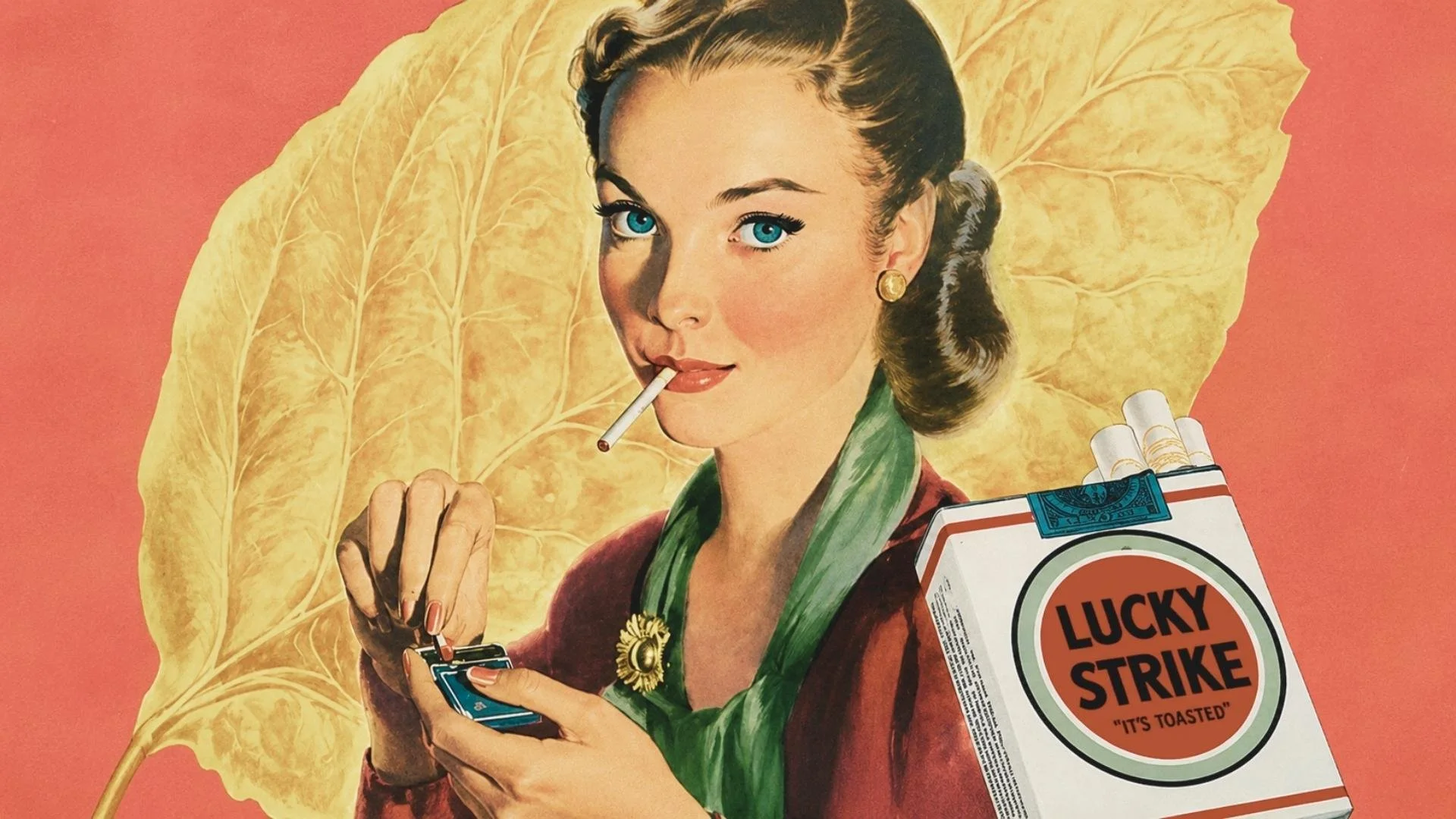
One of his most famous campaigns is the 1929 ‘Torches of Freedom.’ This initiative aimed to make smoking socially acceptable for women. Before the 20th century, smoking was considered inappropriate for women. In 1922, a woman from New York City was arrested for lighting a cigarette on the street. Bernays needed to radically change the perception. He linked smoking to women’s liberation and aspirations for a better life. He organised a public demonstration where young, attractive women smoked cigarettes, branded as ‘torches of freedom,’ during the Easter Sunday Parade on March 31, 1929. He made sure the press captured these striking images, which were on the front pages the next morning. The campaign led to a significant increase in female smokers: from 5% of cigarette sales in 1923 to 12% in 1929, and 18.1% in 1935. It didn’t stop. By 1965, one-third of all American women smoked. During these years, the cancer rates for women also rose significantly.
The Century of the Self is fundamentally an examination of how Freud’s theories of the unconscious mind influenced corporate and political power in the United States and beyond, largely through the work of his nephew, Edward Bernays. Bernays even used them to launch Freud himself in America, arranging for his uncle’s work to be published in the 1920s, and promoting it with all the tools of public relations. The principles of public relations and consumer psychology remain central to modern advertising, media, and politics.
Adam Curtis’ documentaries are rare finds for those interested in exploring the hidden forces behind modern life. In The Century of the Self, he pushes us to recognise where our desires come from, and who benefits from them. There are important implications he argues, particularly for democracy. If our attention is constantly and artificially pulled toward personal gratification and identity, then we are less engaged in critical thinking, public responsibility, and any real sense of the collective.
It all leads to an uncomfortable conclusion: rather than the twentieth century liberating the self, it was instead studied, stirred, sanded down, and sold back to us under the false pretence of freedom.
“And everybody was happy.”
—Edward Bernays
Pass It On
If this idea was worth your time, it may be worth someone else’s.
Share this essay with a friend:
https://www.deeplifejourney.com/deep-life-reflections/may-31-2024
If you have a thought you’d like to share, please leave a comment below.
You can read all previous issues of Deep Life Reflections here.