
We May Be Through with the Past, but the Past Isn’t Through with Us
Annie Jacobsen’s Nuclear War: A Scenario and Magnolia on trauma, memory, and what remains.
Deep Life Reflections | Essay 87 | James Gibb
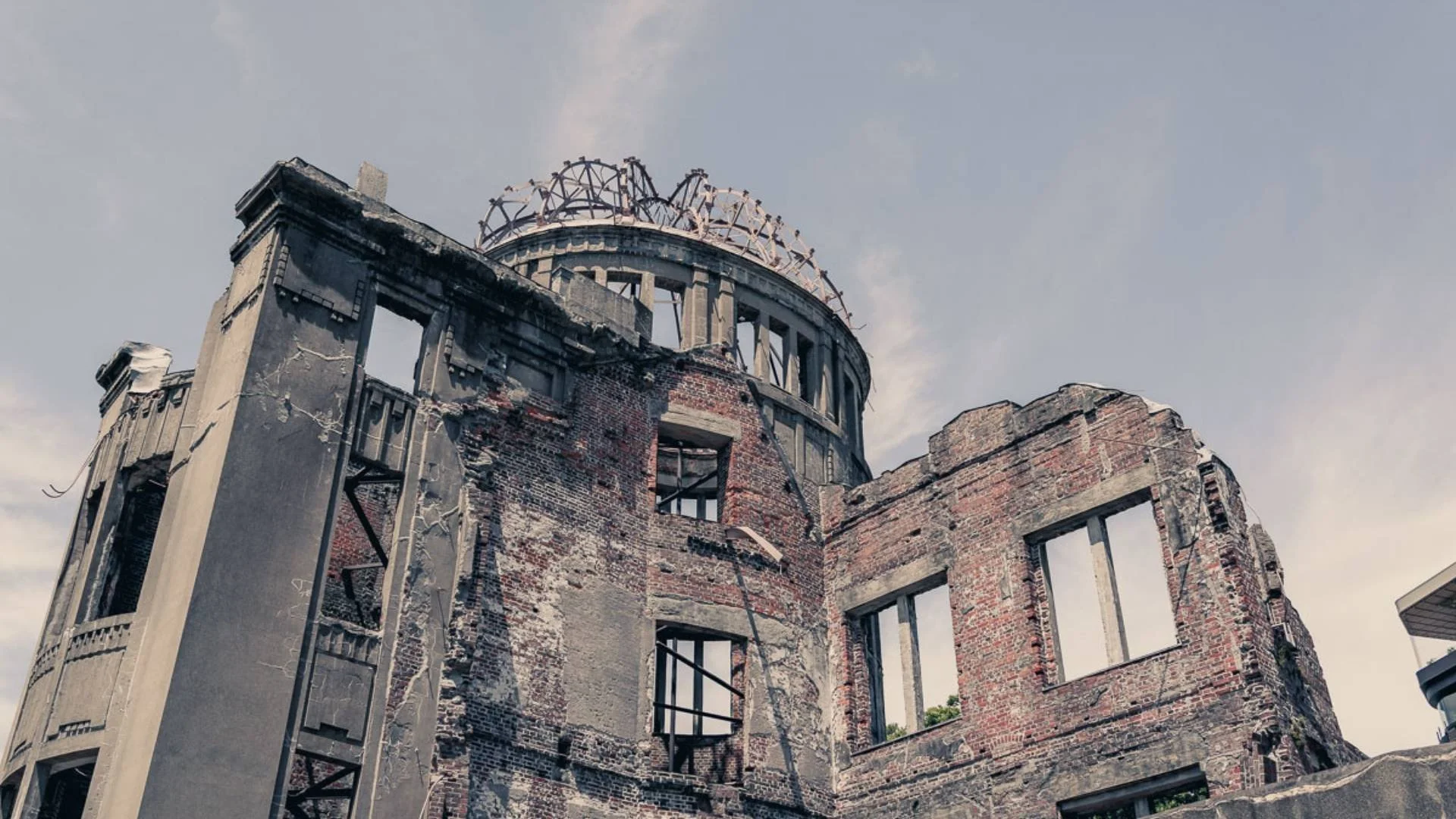
The past does not stay where we leave it. It is waiting for us.
“Après moi, le deluge”—“After me, the flood”
—Napoleon Bonaparte.
There are forms of the past that do not recede. They remain dormant and unresolved, waiting to reappear in the present with all their old force. Sometimes this happens on the scale of nations. Other times within a single life. But the principle is the same: what has not been reckoned with does not disappear.
Like nuclear weapons.
In 1985, Ronald Reagan and Mikhail Gorbachev released a joint statement to the world: “A nuclear war cannot be won and must never be fought.” In Annie Jacobsen’s Nuclear War: A Scenario, she shows us exactly why.It is compelling yet awful in its plausibility. I read it in only a couple of sittings. The Pulitzer-Prize winning journalist details practically second by second what a nuclear strike on the United States would look like and the response that follows.
The world ends in just 72 minutes.
If this sounds ground-zero bleak, it is. But it’s also essential. Jacobsen book is a warning to leaders, governments, and institutions around the world that the threat of nuclear war didn’t disappear when the Cold War did. It remains, dormant but alive, embedded in systems, doctrines, weapons stockpiles, and political tensions that continue to shape the now. The machinery of annihilation is still there, waiting.
Jacobsen imagines a scenario in which an inbound nuclear missile is launched at the United States. She bases it on extensive research: interviews with presidential advisors, cabinet members, nuclear weapons engineers, scientists, soldiers, and intelligence analysts, along with declassified documents and decades of strategic planning. The scenario itself begins at 4:03am in North Korea, when it launches an ICBM towards Washington, D.C. We do not know why. We only see what happens next: the playbooks, the split-second decisions, the confusion, the consequences for the world.
The uneasiness of the book also comes from the sense that this nightmare scenario has long been in the making. Jacobsen takes us back to December 1960, in an underground bunker in Nebraska where U.S. war planners were working on a secret plan to kill 600 million people in a pre-emptive strike on Moscow, with nearly half of those deaths affecting neighbouring countries like China, nations not even involved. Only one man spoke up. General David M. Shoup, commandant of the U.S. Marine Corps said:
“Any plan that murders three hundred million Chinese when it is not even their war is not a good plan. That is not the American way.”
No one seconded him. They all looked away. At the time, the U.S. had over 18,000 nuclear bombs.
That is the kind of past Jacobsen is writing about. A living inheritance, a chapter still open and unfinished. The Cold War may be over as a historical period, but its logic remains with us. The weapons and protocols remain. As does the image of total destruction. We are still living with decisions made long before many of us were born.
The same is true, in a more intimate and emotional register, in Paul Thomas Anderson’s Magnolia.
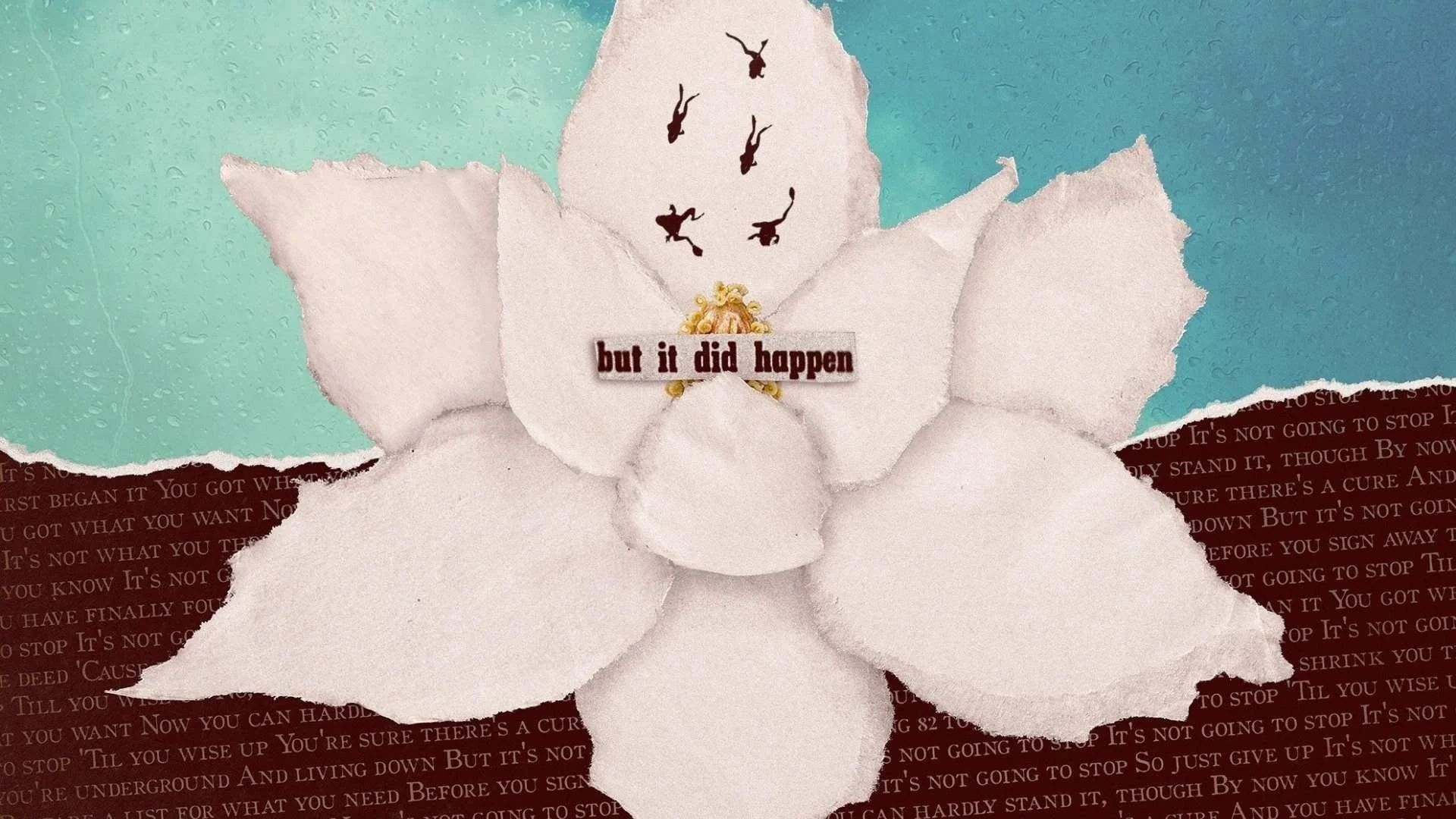
Magnolia (1999). Directed by Paul Thomas Anderson
Released in 1999 (a vintage year for films), Anderson’s third feature is a sprawling story set over one eventful day in the San Fernando Valley. It follows a multitude of seemingly unconnected characters as they go about their lives. A good-hearted cop looking for love. A man on his deathbed seeking redemption. A child prodigy with overbearing parents. A tormented wife. A sleazy self-help guru. They are linked by unhappiness, damage, loneliness, and the residual force of what has already happened to them.
Anderson opens his film with three memorable vignettes, each connected by their bizarre and ironic nature. He is interested in coincidence, fate, and the lasting weight of unresolved trauma, especially from childhood.
The past in Magnolia is an active participant. It seeps into behaviour, relationships, and manipulates the present in ways the characters do not fully understand. This can be seen most obviously in Stanley, the young quiz show prodigy expected to give the right answer every time, and in Donny, the former child star, now older and emotionally wrecked. The past has not merely influenced Donnie, it has formed him. He is a tragic individual.
The same is true of Frank T.J. Mackey, perhaps Tom Cruise’s finest performance. Cruise plays the manic and misogynistic self-help guru, instructing a roomful of male disciples to “seduce and conquer”—an early prototype of the manosphere that would emerge a quarter of a century later. Mackie is all aggression and bravado on the surface, but hollowed out by older wounds underneath. When a female journalist sees through his performance and probes the truth of his damaged past, he is slowly reduced to silence and a seething hatred (of his father, the world, himself).
That is what Magnolia understands so well: how much of adult life is often an elaborate arrangement around unresolved pain. We do not simply move on. We adapt, repress, do what we need to do. We survive. But the past remains, waiting for the right pressure and the right moment to reassert itself. Anderson releases that pressure with a remarkable scene towards the end that evokes biblical scripture of judgment from the skies.
Magnolia gives its characters redemption and dignity. Whether they all deserve them or not is open to debate. But Anderson wants to give them some kind of peace.
Both works are about the same essential truth: the past does not vanish because we stop looking at it. It remains lodged in structures, institutions, families, and psyches. And when it returns, it does so with interest.
We often speak as if the past is something to get over, something finished and settled. But the more honest view is that the past remains a force, one that can deform us if unexamined or ignored, but also one that can teach us if faced directly and with humility.
And some of it is still here.
Pass It On
If this idea was worth your time, it may be worth someone else’s.
Share this essay with a friend:
https://www.deeplifejourney.com/deep-life-reflections/november-15-2024
If you have a thought you’d like to share, please leave a comment below.
You can read all previous issues of Deep Life Reflections here.