
The Broken Lightbulbs
Notes on Procrastination
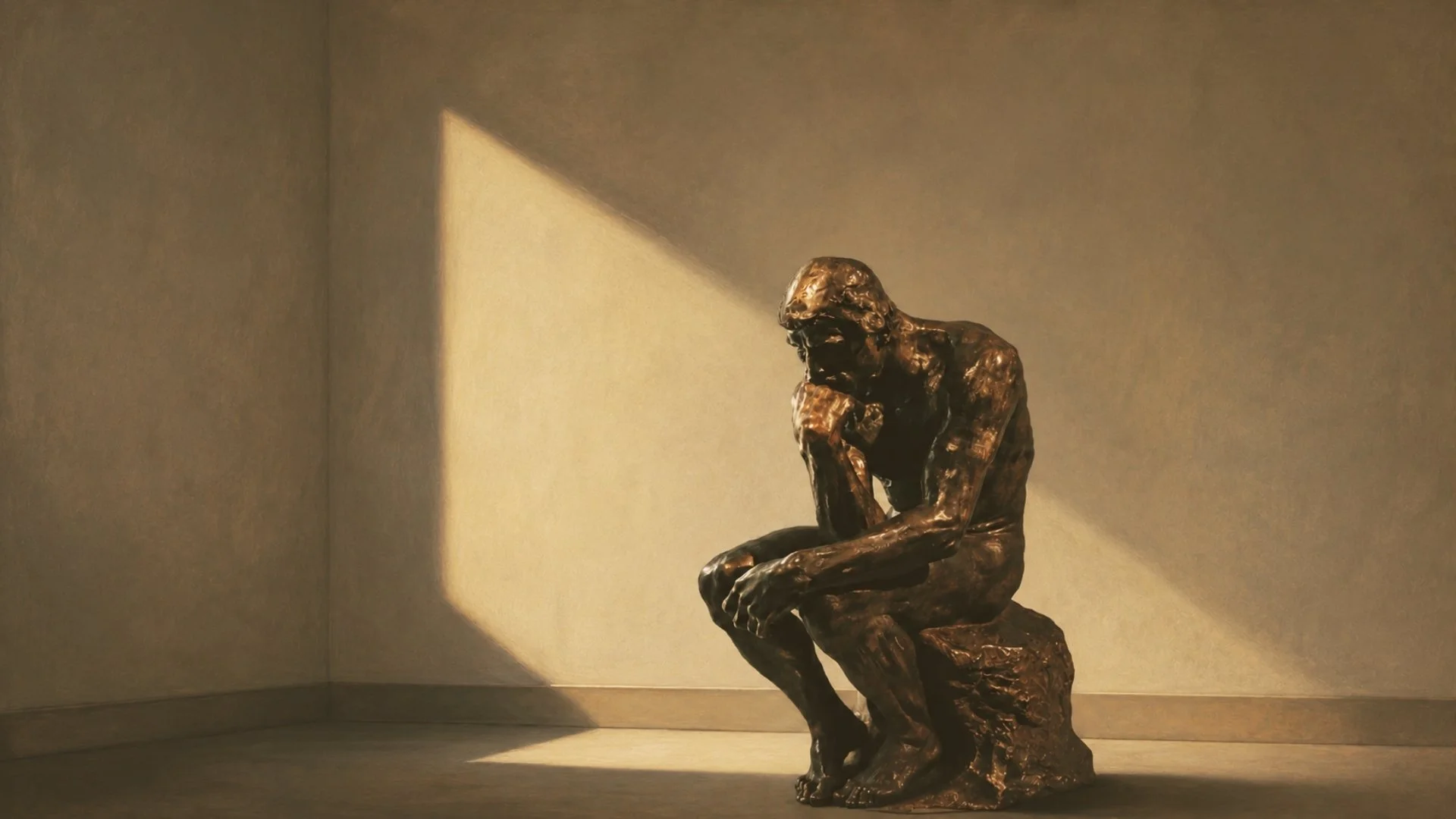
Deep Life Notes | Procrastination
There is an expectation that we should always be doing things. But when we procrastinate, it doesn’t always mean we are being lazy.
History is full of stories about famous procrastinators and the often extreme lengths they went to. My favourite story is Herman Melville’s, the author of Moby Dick, who reportedly had his wife chain him to his desk to finish his epic novel. Fortunately, it hasn’t come to those lengths for me yet.
I’ve been reading a lot about procrastination—the act of delaying or postponing something. There’s no shortage of articles and videos offering all kinds of analysis and solutions, yet procrastination remains entrenched in our lives.
Pressure to justify our existence
Our current age of distraction has magnified procrastination. There is an expectation for us to be “doing things.” Work is our religion. Emails, instant messages, and notifications our daily sermon. There’s pressure every day to justify our existence; to have a side hustle, to be busy. A feeling we should always be doing something more. This can lead to feelings of inadequacy, intensified by the perfect, pristine, and active lives being played out on social media.
This feels like a suitable moment to revisit procrastination: to better understand what might be happening beneath its surface.
A human design flaw
Procrastination often feels like a unique, shameful, personal failing. Something to feel guilty or lazy about. Maybe it was the run we didn’t do this morning; the intention to meet with a good friend that got abandoned; or the new CV we failed to write. But procrastination is a human design flaw. Every person wrestles with it.
Recognising this does not excuse it, but it may make us less brutal with ourselves, and more curious about what might change.
Psychologists and philosophers have documented many reasons for procrastination. I wanted to focus on four: fear of failure; fear of perfection; the conundrum of choice, and the “broken lightbulbs”.
Fear of failure
Fear of failure is often mistakenly interpreted as being lazy. We attach fear, or anxiety, to many of the things we deem most important in life: career, relationships, health. But we are so scared of failing in them, we don’t even dare to make a start. After all, if we don’t do something, we never need to feel the risk of humiliation or ineptitude. It’s why we often focus on the things that matter little to us; we can get on with doing these things quickly and they can even feel like fun. Meanwhile, the things that matter most get neglected.
Fear of perfection
Fear of perfection is a close cousin of fear. It’s a cruel truth we all have two lives; the life we dream about leading (the fantasy); and the life we actually lead (the reality). We fantasise about every aspect of our lives, but we can’t live up to the impossibly high standards we envisioned for ourselves in the important task we want to take on: finding the perfect relationship; building the start-up company that changes the world; writing the best-selling novel. So we don’t start it to avoid those all too familiar feelings of incompetence or indignity. Or even if we make a start, the inept and amateurish quality on display horrifies us in those early results. We can all relate to what I call the hideous first attempt at something important: the disgust between our horrible efforts and the masterpieces of finished works we admire in life.
Conundrum of choice
The conundrum of choice is based on the view that life constantly forces us towards decisions where we have to make hard choices and compromise something. This was the thesis of the 1843 book, Either/Or, written by the Danish philosopher Soren Kierkegaard. He wrote, for example, that one can marry and be constrained; or one can stay single and be free, but miss out on long-term companionship. And also that the difficulty of choosing means many of us spend our lives avoiding choice. We believe that by delaying choices, such as not quitting the job we hate, all our options seem to stay alive—the job could improve; a better job could appear; we could win the lottery. But it’s an illusion. Not choosing is itself a choice. And it can put you in a figure eight loop of misery, like Bill Murray in Groundhog Day.
What the Olive Tree can teach us about the value of waiting
When researching this topic, I discovered an interesting fact about the olive tree. The olive tree can take a long time to grow to full maturity, often taking up to twelve years to bear fruit. It procrastinates a lot, benefiting from a succession of long summers and extreme winters. They are astonishingly tough, and some olive trees are as much as 1,000 years old. The olive tree imparts a valuable lesson: sometimes it’s good to wait.
There are many important tasks we can’t hurry. We can’t make our children grow up quicker; we can’t become an expert on a complex subject after watching a three-minute video on YouTube; and it can take years to assemble ideas for a novel or new business. Speed and busyness impress our society. How fast someone can run; how quickly someone can respond; how many tasks someone can juggle. But procrastination can serve a useful purpose sometimes, by allowing us to consider different ideas, think in original ways, and then come back to the task at hand.
The broken lightbulbs
There is another interesting angle of procrastination. What I call the “broken lightbulbs”. These are the little irritants that blight our lives. We all have them, something small and inconsequential we need to do or fix, like replacing a lightbulb in the kitchen that stopped working last month. But we never get round to fixing many of these. Part of the reason for our apathy is our belief that these minor irritants are beneath us, and therefore not worth our precious time. We have an important, busy life to lead. We don’t fix the lightbulb because we can’t imagine our mood will be hostage to such trivial things. But the small things accumulate, and they determine much of what we feel. They nag us in their small, annoying way.
A few things worth considering
So how might we think about the kinds of procrastination that genuinely hinder us? A few things seem worth noticing.
Take some pressure off. Fear and anxiety can make a task feel larger than it is. Sometimes the useful move is to reduce the drama around it. A job application, difficult conversation, or first draft may matter, but it rarely needs to become a verdict on our entire character.
Forgive the hideous first attempt. The early version of anything important is often incomplete or embarrassing. Leonardo da Vinci worked on the Mona Lisa for years, never quite finishing it, returning repeatedly to make touch-ups. If Leonardo couldn’t find final perfection in one of the world’s greatest works of art, perhaps we can accept something less than perfect in our own first attempts.
Accept that choosing means losing something. Every meaningful choice closes other possibilities. That is part of why we delay. Talking to people and weighing things up help, but eventually a choice has to be made. I’ve noticed that people who navigate life well are often very good at making a decision then moving on.
Do not ignore the broken lightbulbs. Meaningful work matters, but so do the small irritants that quietly drain the day. A fixed lightbulb, answered message, or booked appointment can change more of our mood than we like to admit.
Let the mind wander. The mind needs time to offer its quieter suggestions. Some delay can be avoidance, while other times it can be incubation. There’s a reason we often get our best ideas when we are doing ordinary things like taking a shower or doing the laundry. Many of my best ideas arrive when I’m washing the dishes. Glamorous no, effective yes.
Less comparison, more connection
Procrastination has been with us throughout history. It’s a very human trait, and that means we aren’t alone in our battle. Far from it.
In a world where there seems to be a misguided pride in being busy and a need to always be doing things, it may be better to spend less time comparing ourselves to the apparent industry of others, and more time connecting face to face with those closest to us: sharing our hopes, frustrations, and half-formed thoughts as we try to understand what actually matters.
We don’t need to chain ourselves to our desk like Herman Melville.
And we might still catch our whale.
Pass It On
If this note was worth your time, it may be worth someone else’s.
Share it with a friend, or read more Deep Life Notes here.