
Deep Life Photography | Visual EssaysPompeii: Below the Clouds
In Context
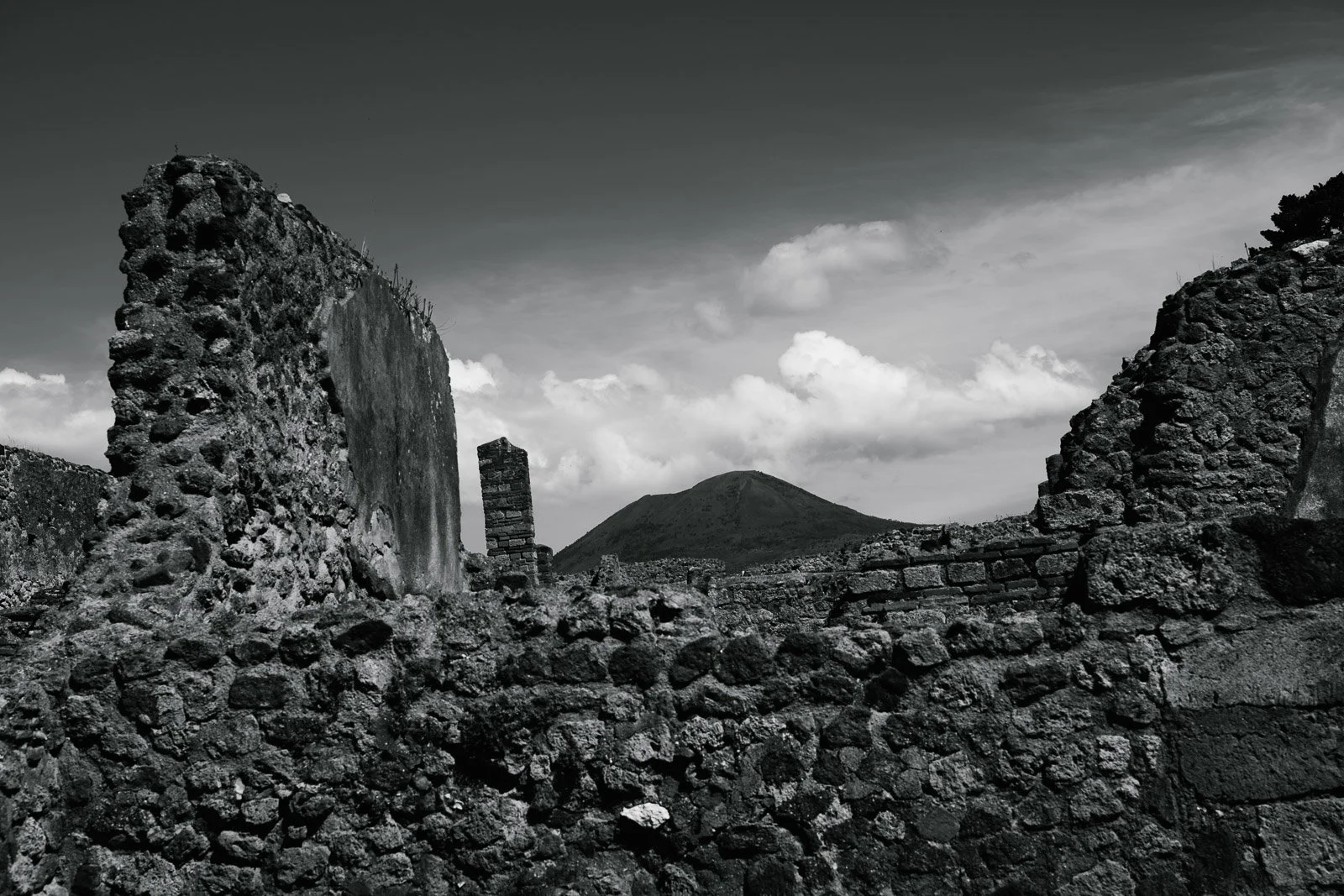
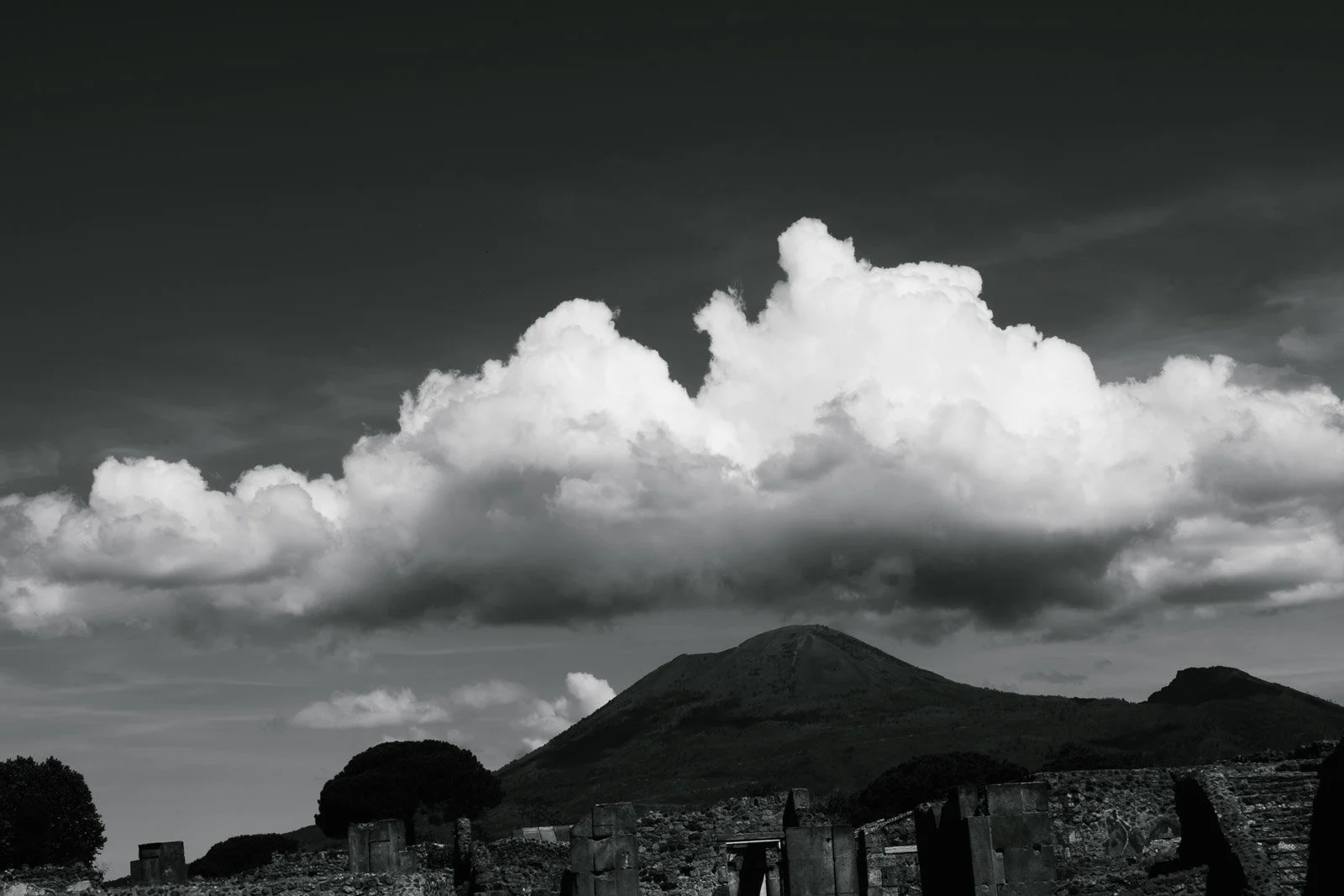
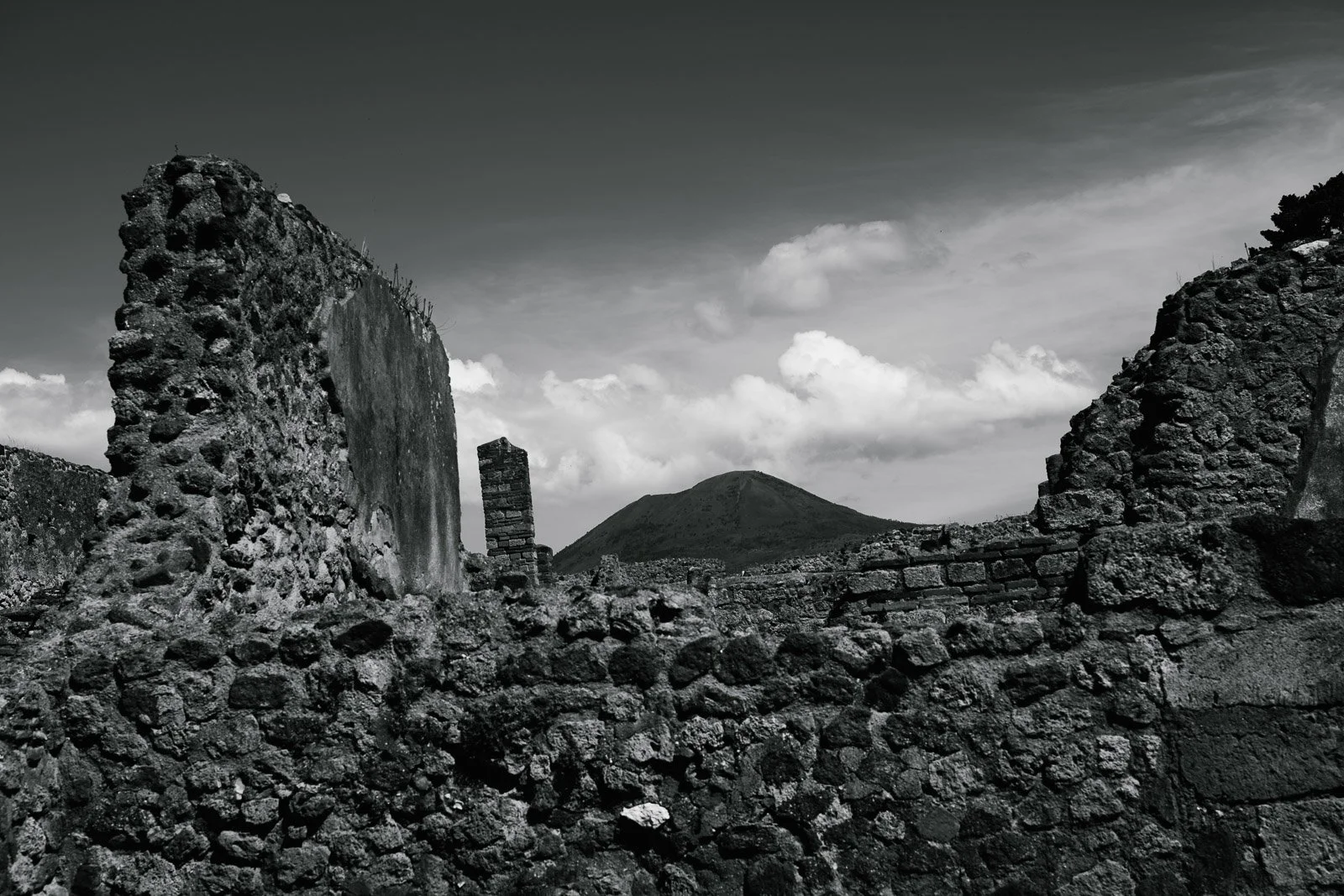
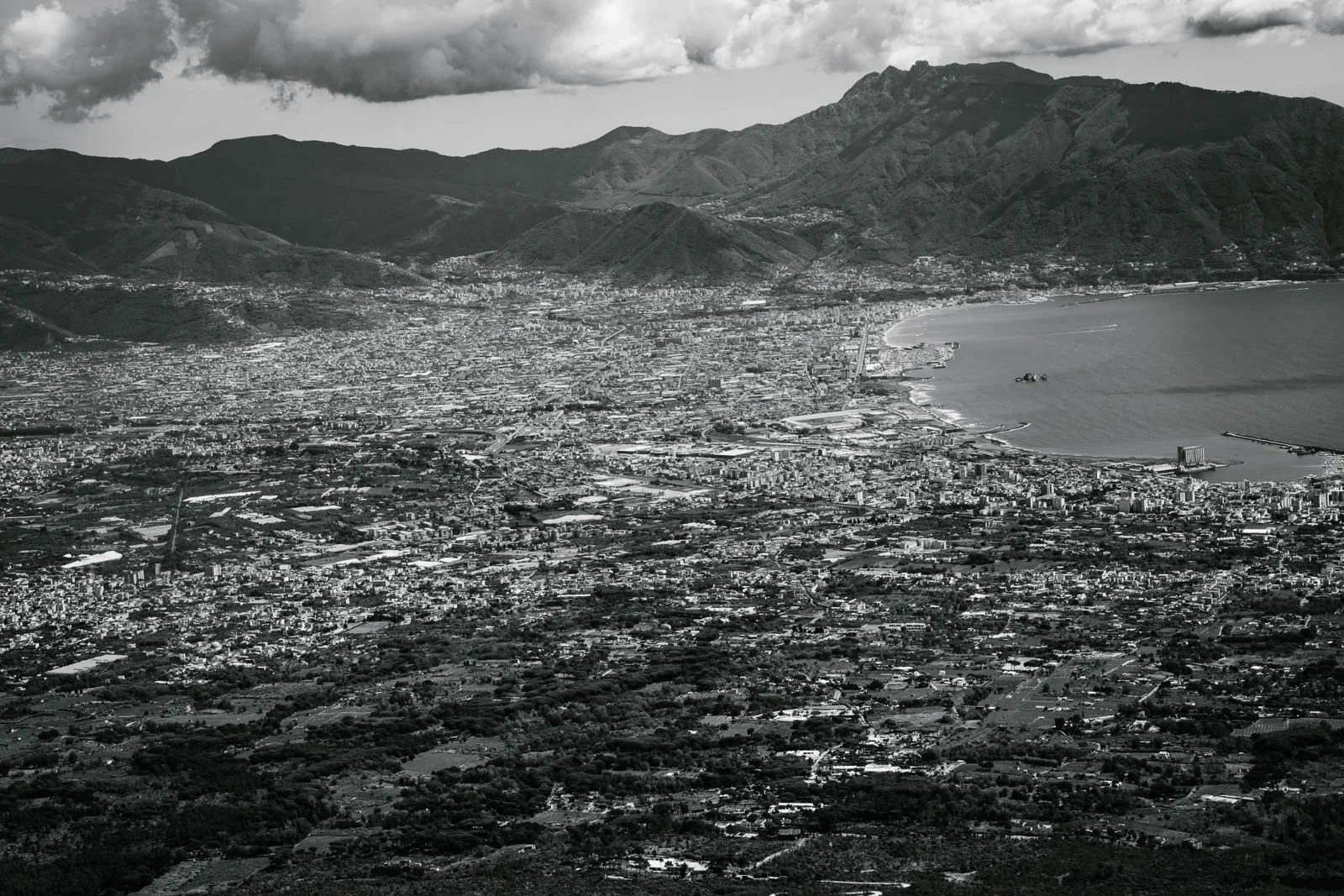
When the French poet and filmmaker Jean Cocteau visited Naples, he wrote a letter to his mother saying that “Vesuvius makes all the clouds in the world.” Two millennia since the famed and catastrophic eruption of AD79—which buried the town of Pompeii—modern-day Naples continues to hold an uneasy truce with Vesuvius, susceptible to its ever-present threat of volcanic and seismic activity. It still feels like Vesuvius is the mass-producer of the world’s clouds.
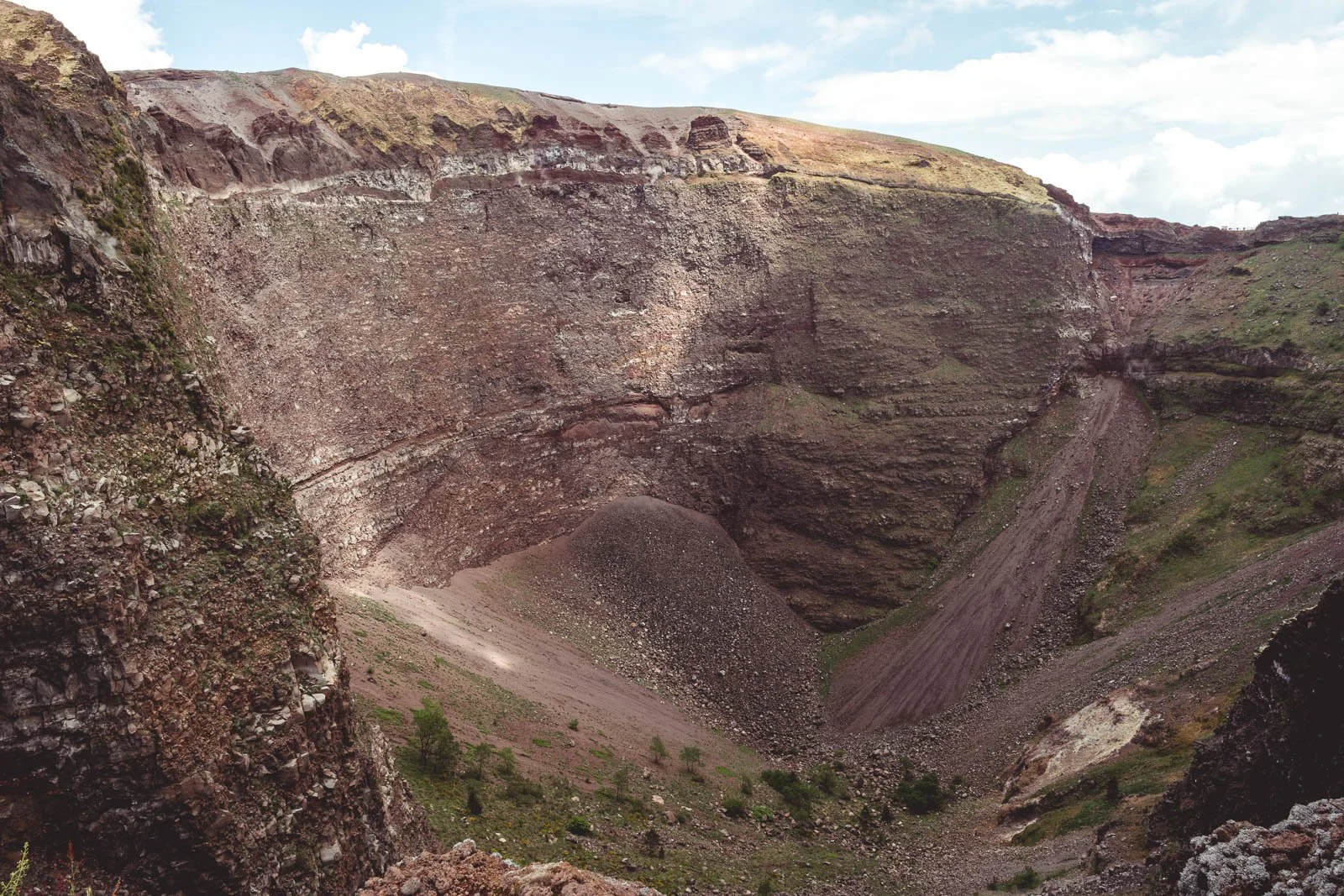
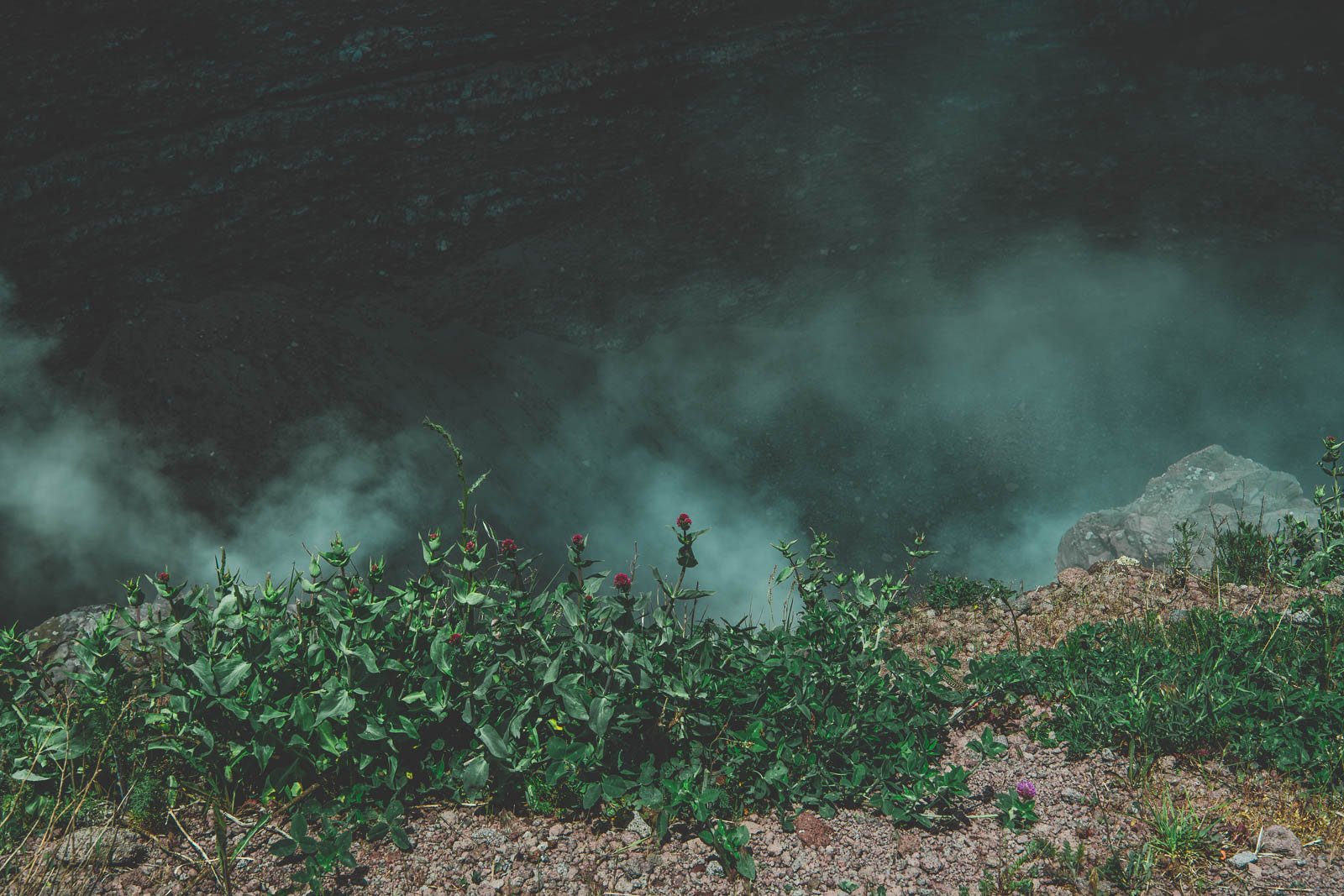
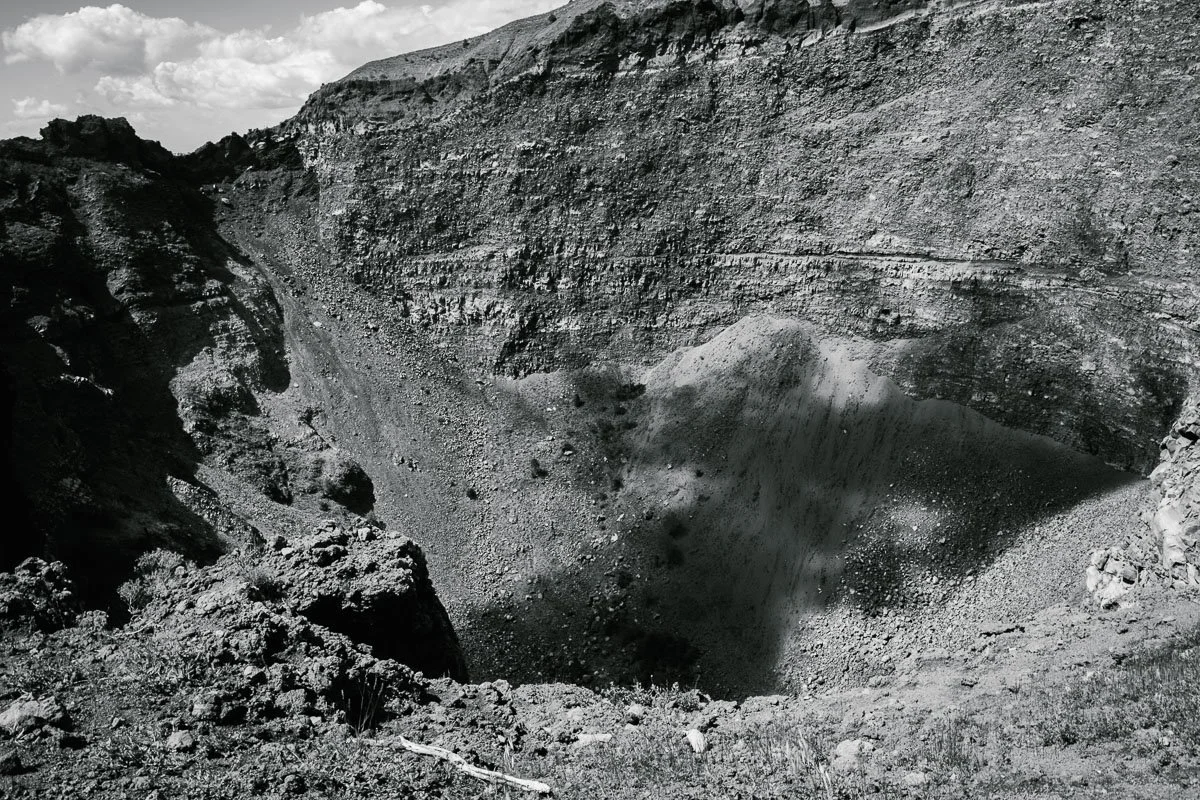
On a warm spring day in 2026, I trekked to the top of Vesuvius and found myself staring into a giant crater filled with rock, vegetation, and foreboding. I saw several bursts of sulfur-rich steam and volcanic gases escaping from vents pockmarked around the rim. The volcano is still very much active and last erupted at the tail-end of the Second World War in 1944. It will erupt again.
On the morning of August 24, AD79—the traditionally accepted date of the eruption—life began like any other summer day in Pompeii. While there had been warning signs, residents paid little attention to them. At around 1pm a massive explosion ripped into the sky, sending a column of ash, pumice, and superheated gas miles into the atmosphere, immediately darkening the afternoon sky.
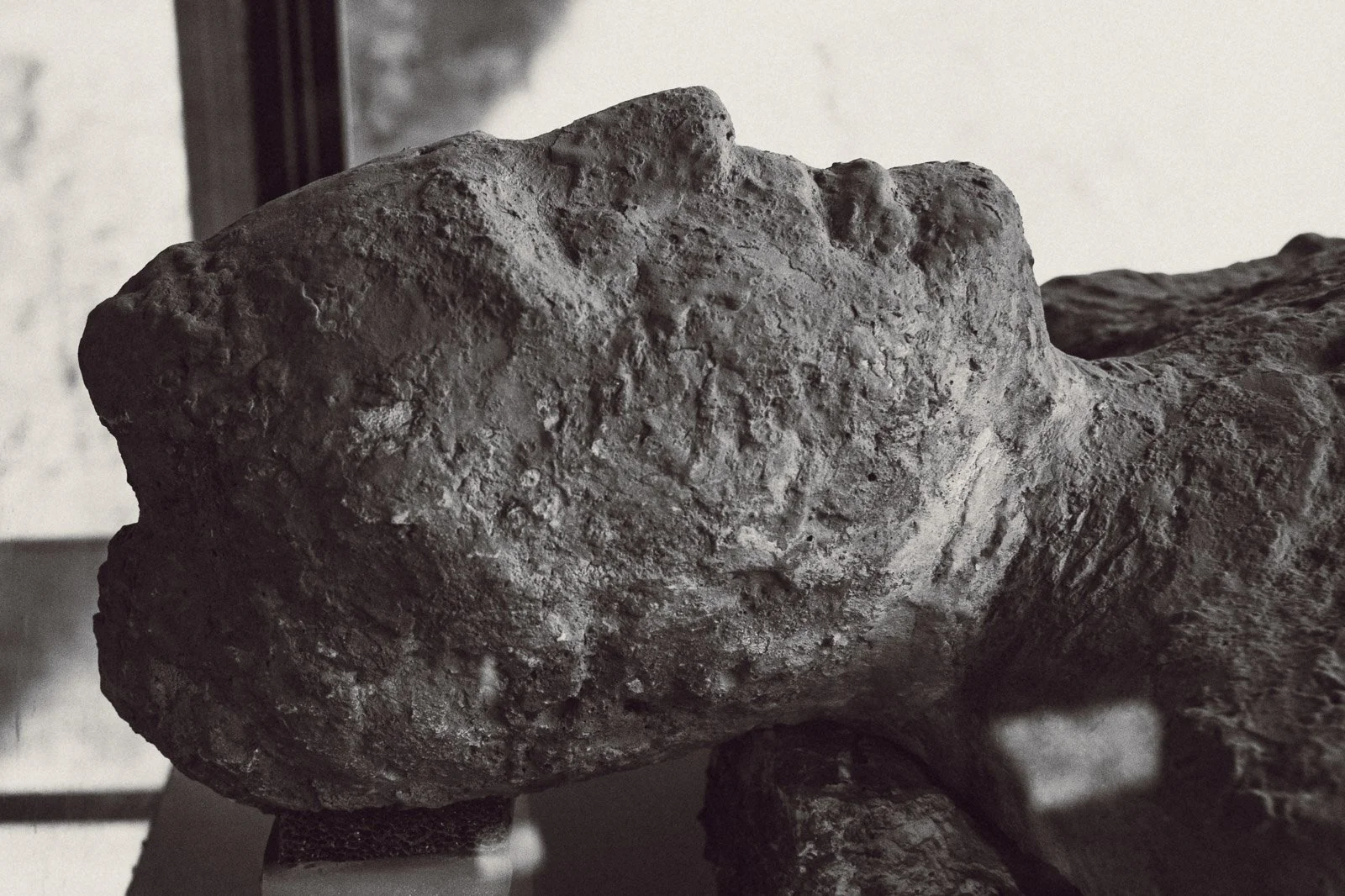
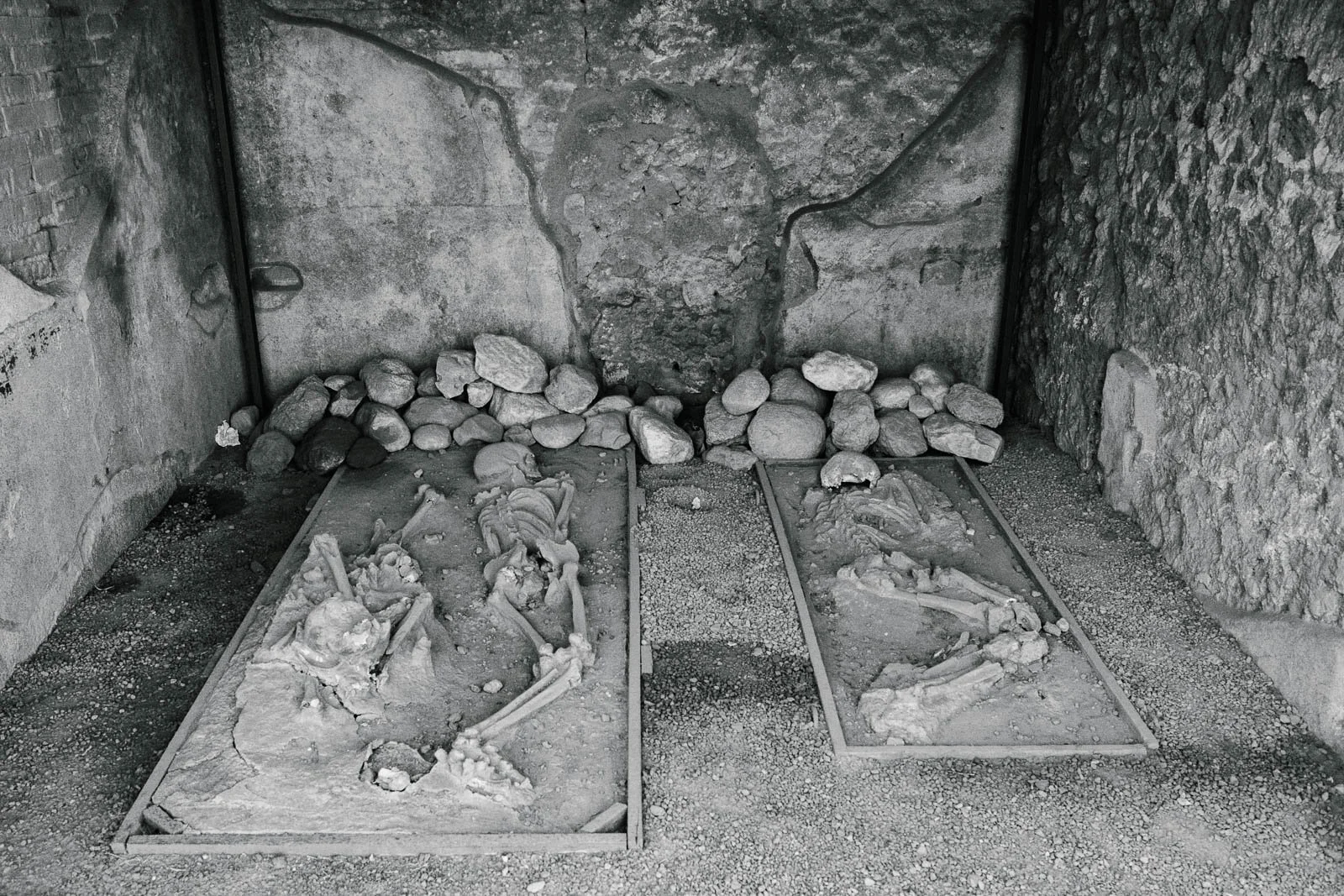
The town was initially subjected to hours of falling pumice and ash, which caused roofs to collapse and made escape increasingly difficult. Later, devastating pyroclastic currents— fast-moving mixtures of hot gas, ash and volcanic material—swept through the town, encasing it in time.
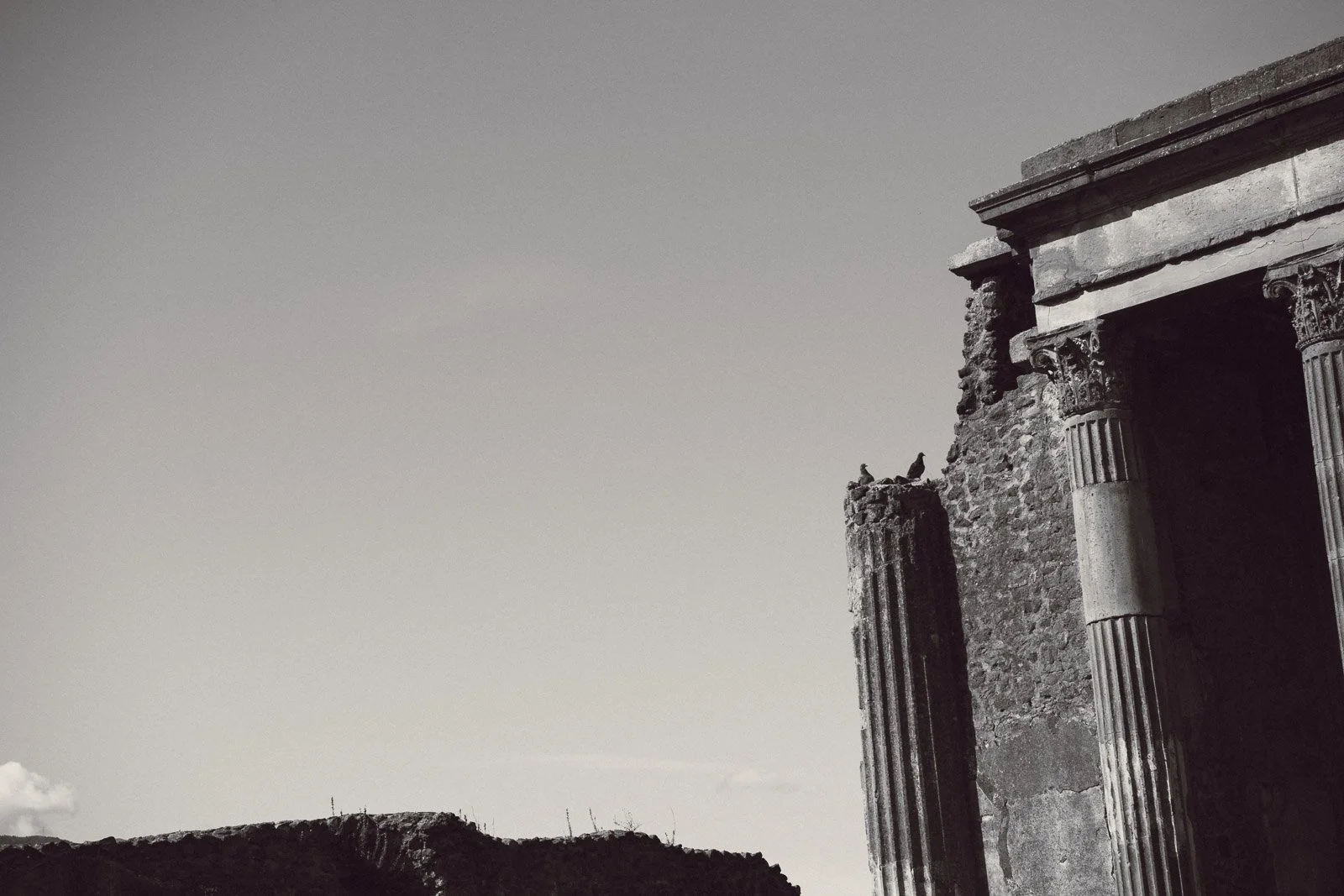
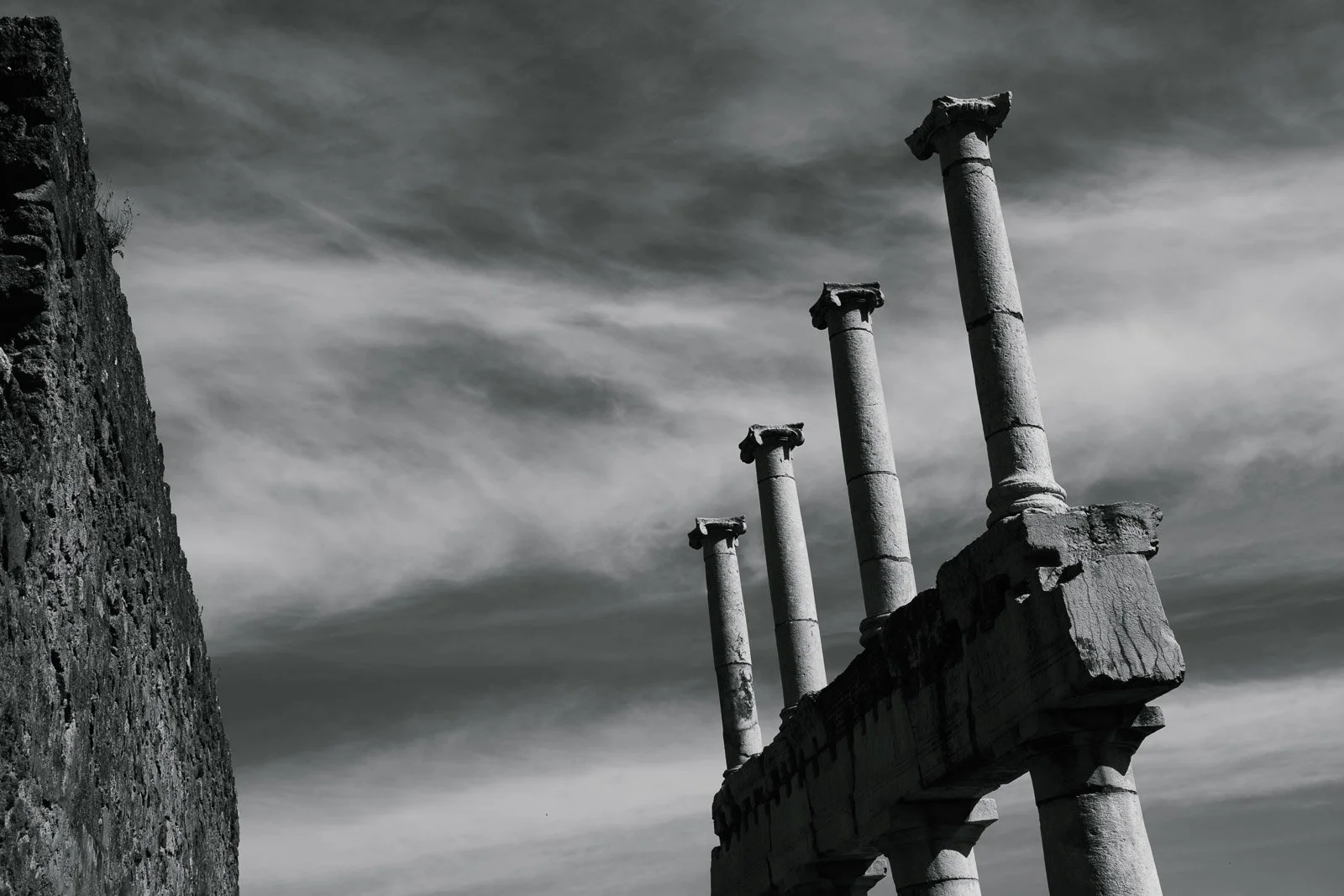
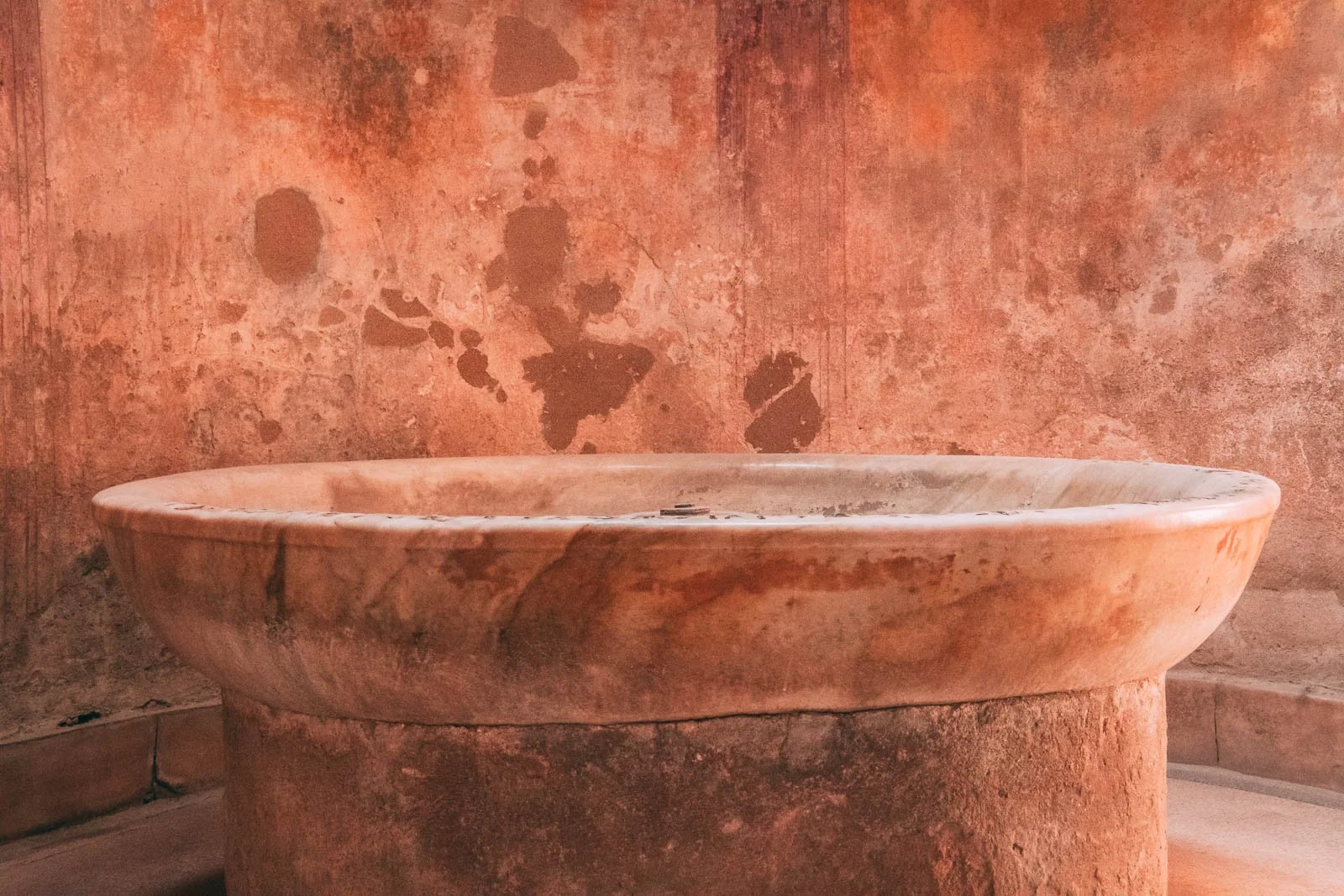
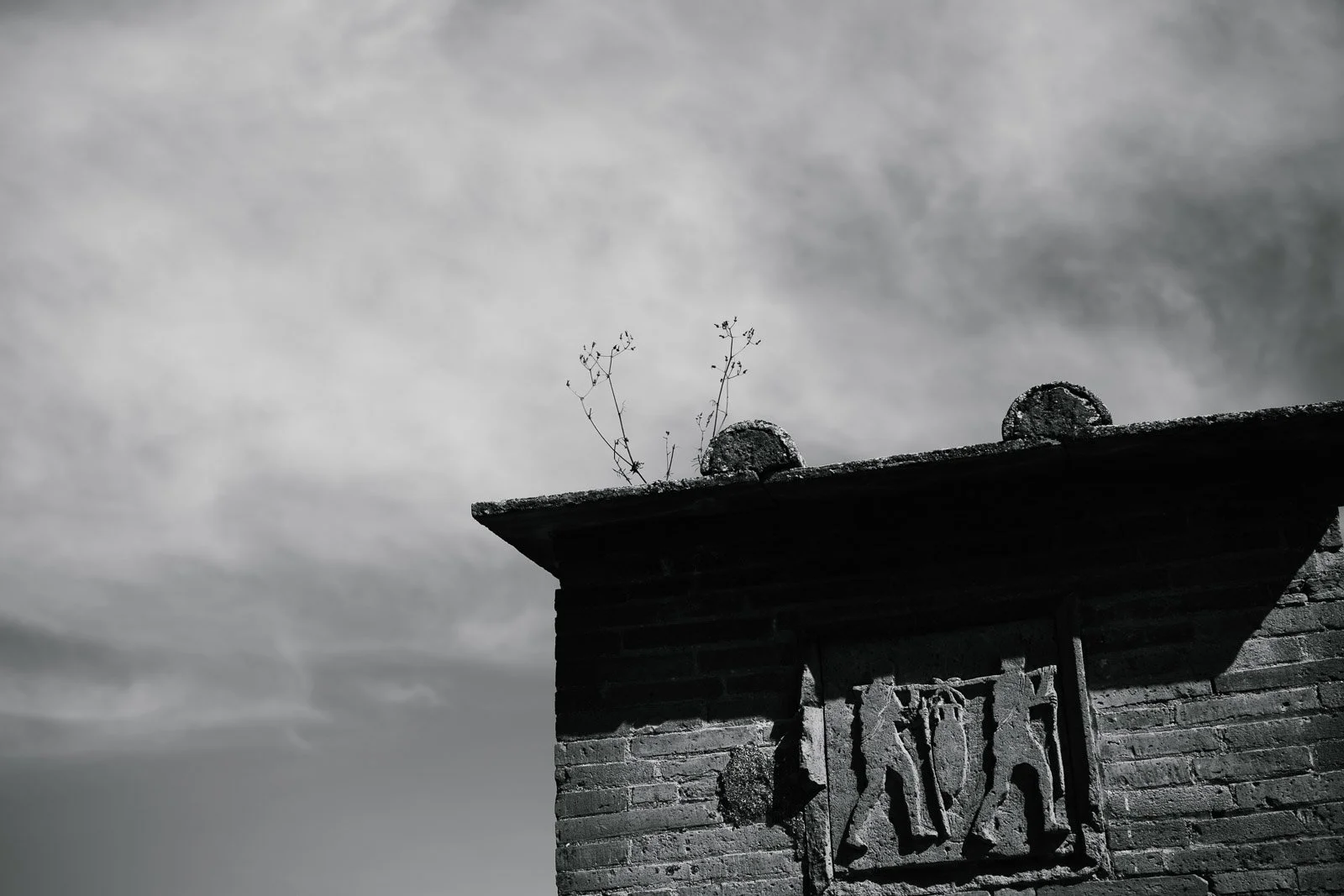
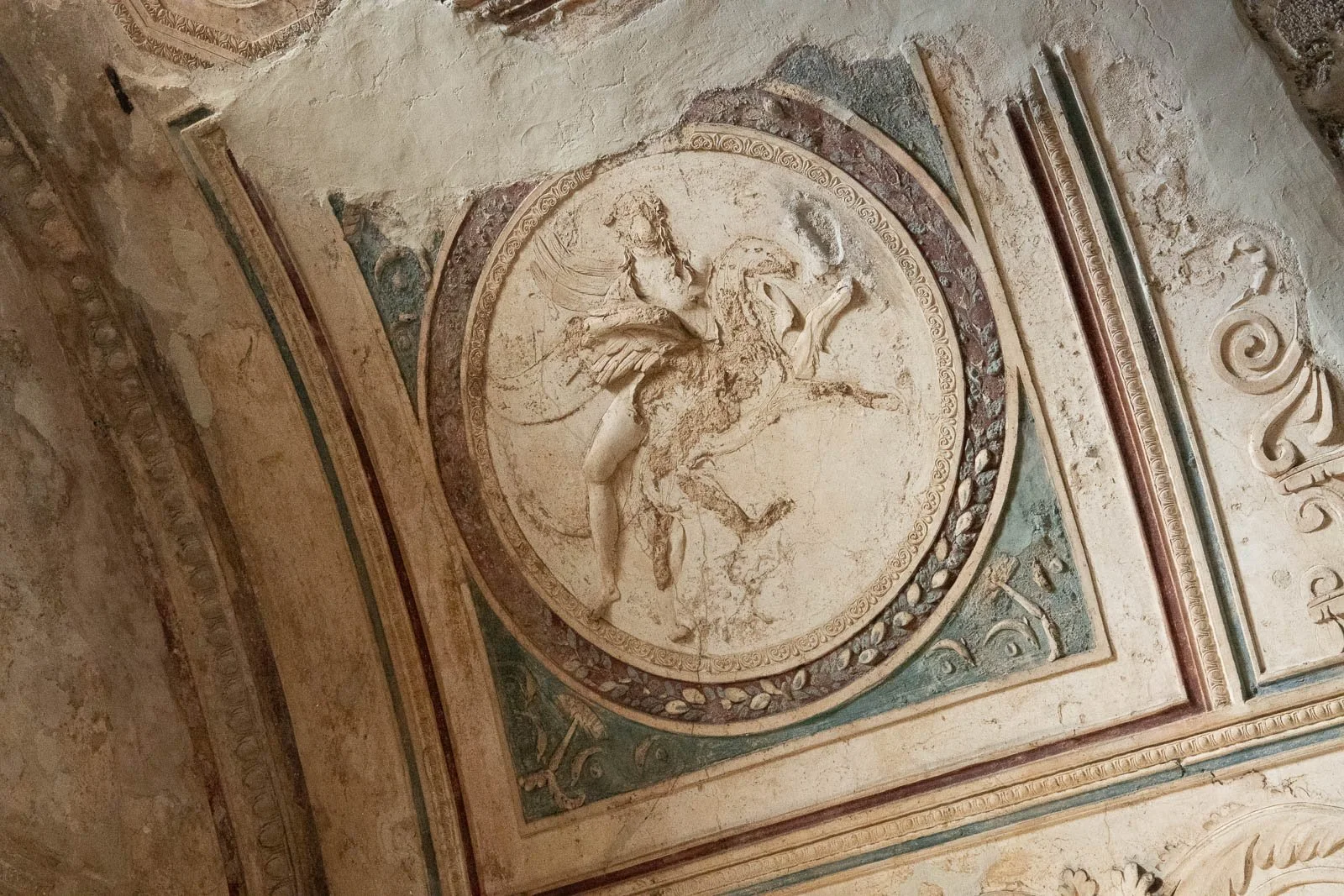
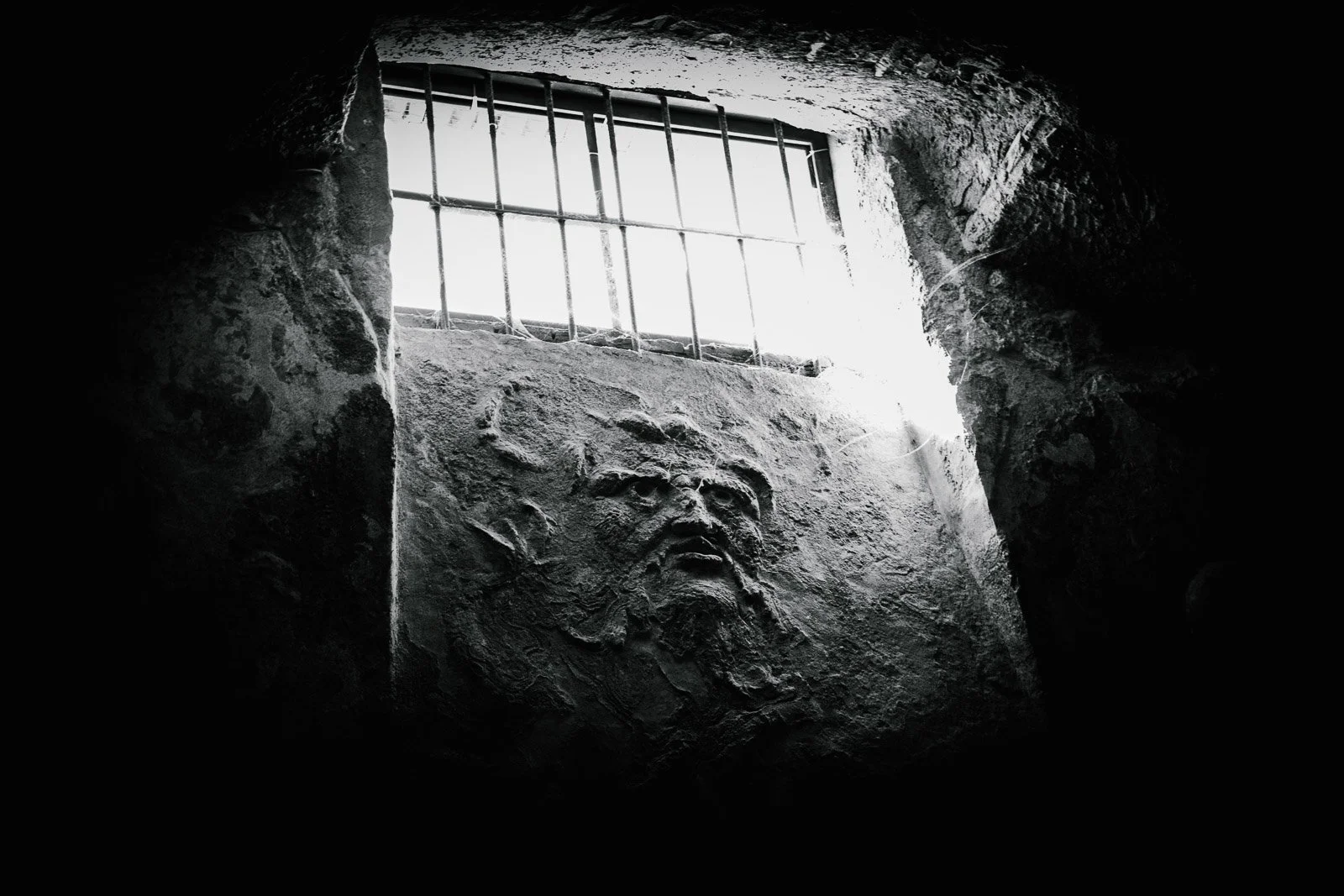
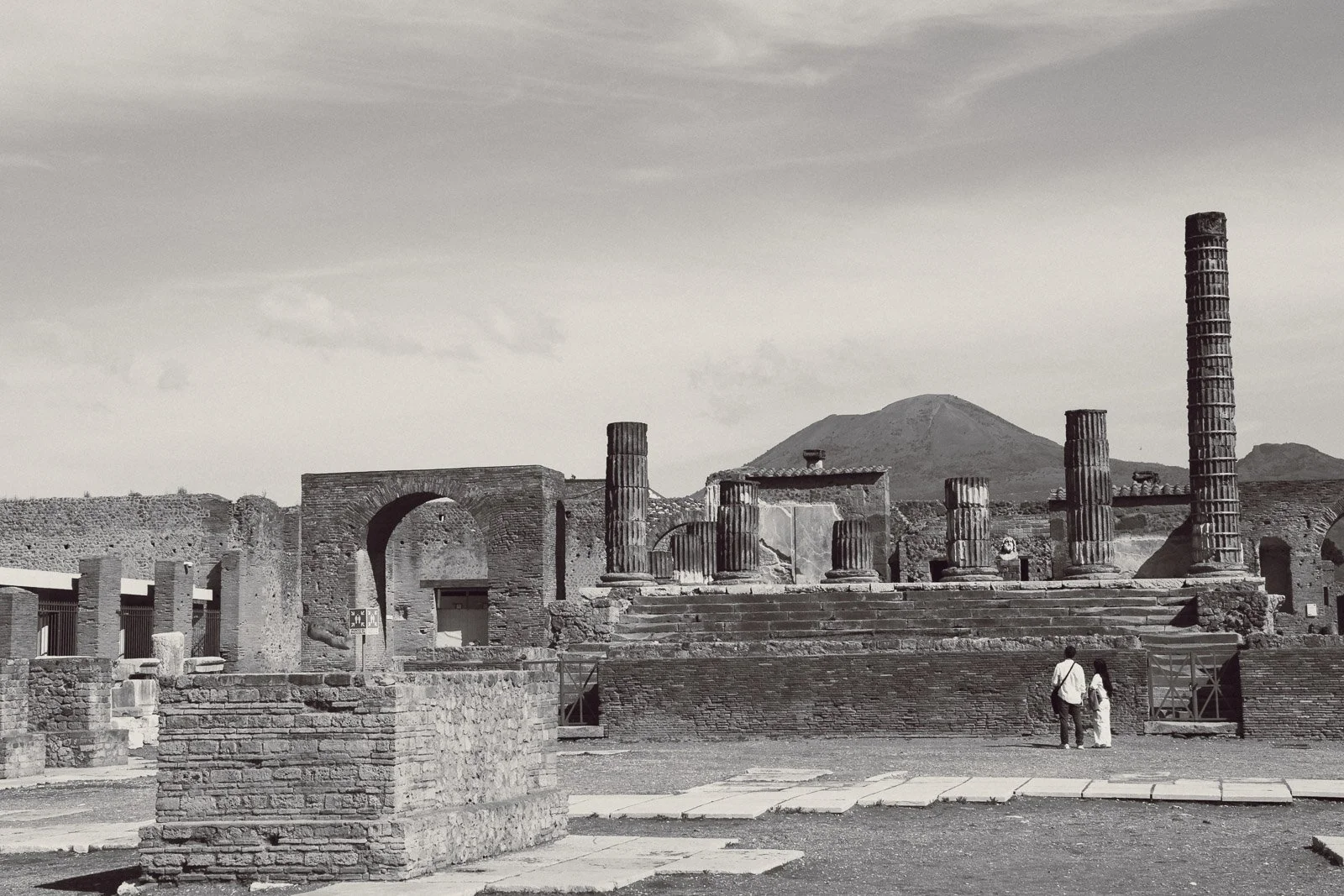
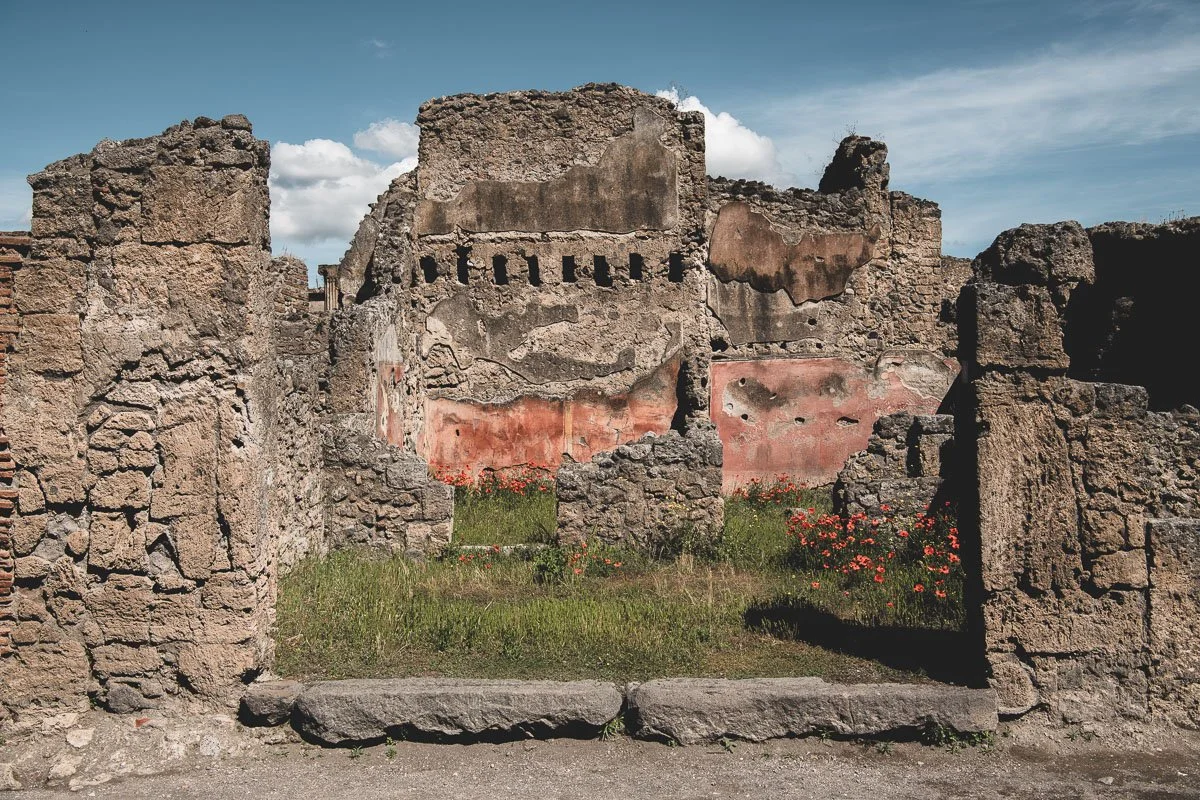
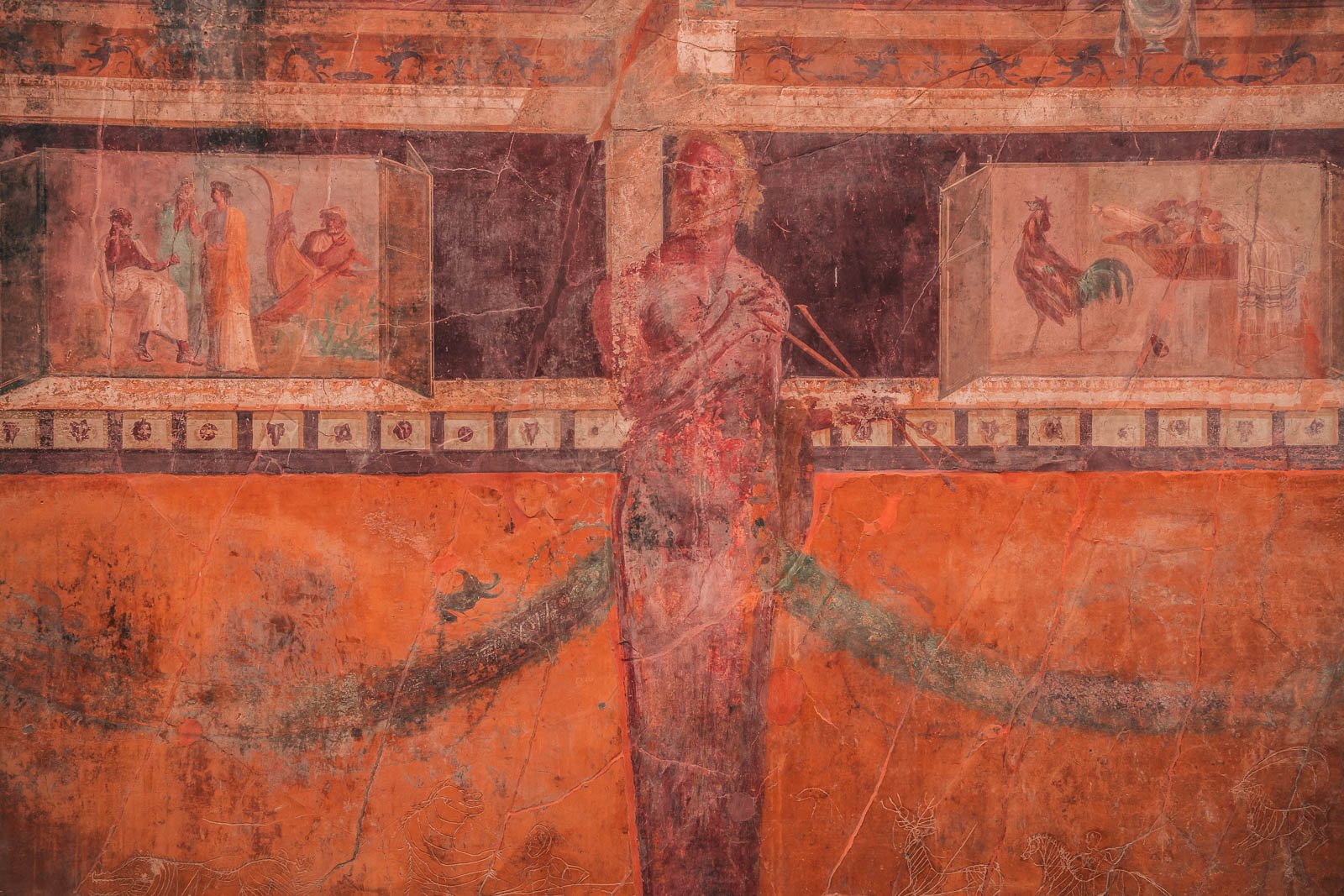
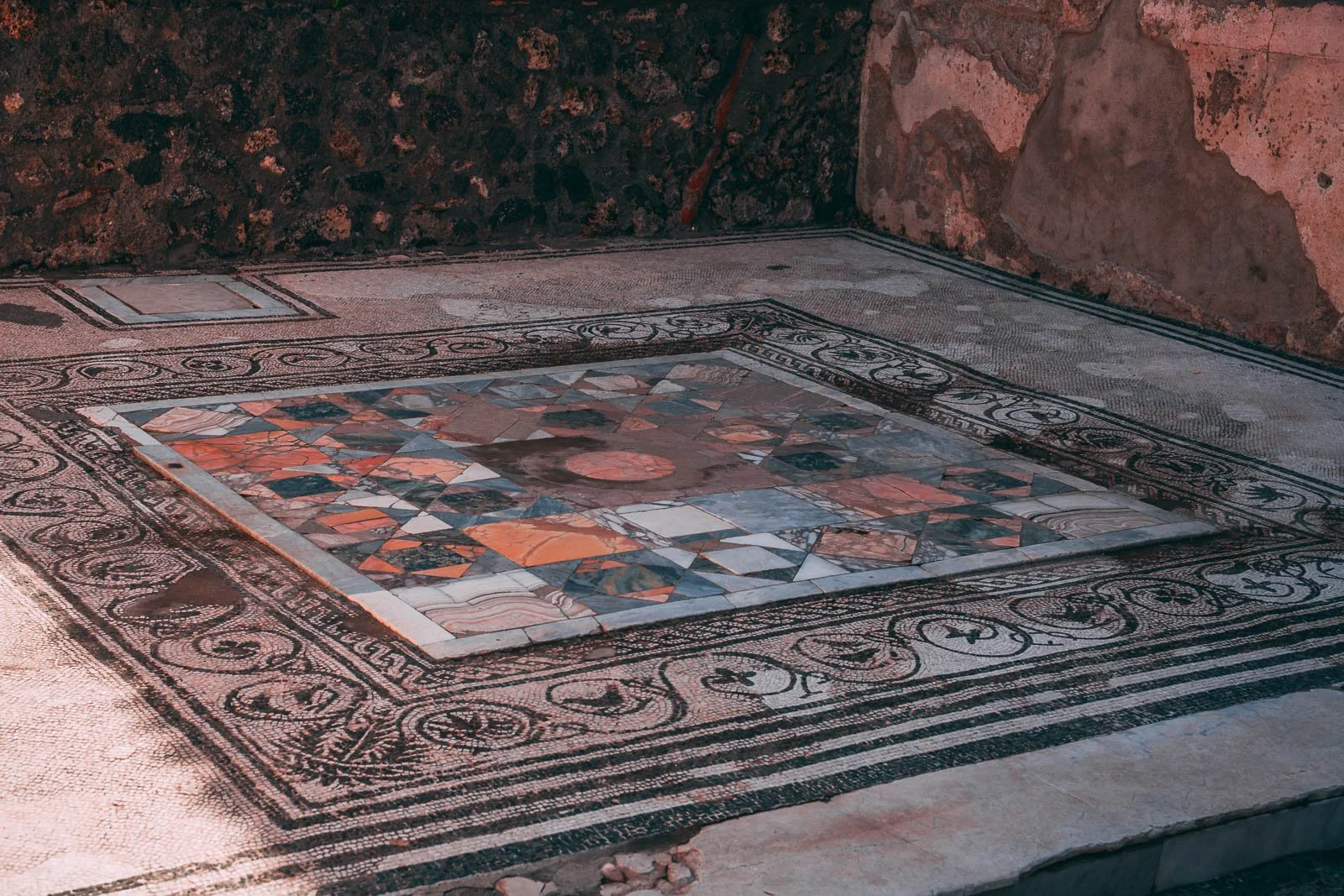
The archaeological remains depicted in these photographs are extraordinary artefacts of a Roman town preserved for posterity, telling fragments of stories from a long-gone empire.
Optional Further Reading
Beyond the Photographs
For those interested in the history behind these images, the following account explores the early photography of Pompeii, the ancient Roman city itself, and its volatile neighbour, Mount Vesuvius.
-
In 1859, a Russian photographer, Gabriel Ivanovic de Rumine, took a series of 32 large-format photographs at Pompeii. Photography was still a relatively new art form at this point of the nineteenth century, invented only a couple of decades before. The set of images represents one of the earliest photographic recordings of Pompeii, and especially on such a large scale. These photos are currently on display in the impressive Museo Archeologico Nazionale di Napoli (the Archaeological Museum of Naples). I spent a morning there and saw 14 of the photographs as part of an exhibition.
De Rumine was born in St. Petersburg to an educated aristocratic family. He was a contemporary and friend of Leo Tolstoy. He was also an official of the Russian Imperial Army when, in 1856—back from the Crimean War—he decided to dedicate himself to photography. He wanted to use the medium to help advance the art and practice of photography in Russia, which was some way behind the European capital cities. He opened a studio in Paris and joined two major photography societies of the time. In 1858, de Rumine put himself forward to join the Grand Duke Konstantin of Russia—brother of Tsar Alexander II and admiral of the Russian navy—on a long cruise of the Mediterranean that was to take in, among others, Palermo, Athens, Jerusalem, and Naples. And it was at this last stop, in 1859, where de Rumine shot his photographs of Pompeii.
What is striking about these photos is the eerie feeling that what we are looking at then remains very much the same as now, despite more than a century and a half having since passed. Much of the world moves on, transformed by technological innovation, economic prosperity, and advances in every field. Before and after photos of towns and cities 150 years apart are stark. Yet, Pompeii does not.
There is of course, a peculiar irony here. Photography allows us to preserve moments in time like no other medium. But Pompeii had already been preserved for nearly eighteen centuries before de Rumine arrived with his camera and all his equipment. And this preservation was not by design. It was by catastrophe.
Pompeii was an affluent town, both a bustling commercial hub and a much-sought destination for wealthy Romans, including senators and merchants. It had many of the features of our modern-day towns. Archaeologists have catalogued over 11,000 pieces of wall graffiti, covering everything from poetry and crude jokes to lost property notices and election endorsements. Indeed, at the site today, one such election endorsement remains intact on a wall, protected from the elements to maintain its preservation.
The unprecedented record of Roman life that survives today at Pompeii exists because of the very forces that led to its destruction. These forces came as warning signs—and they had been gathering long before the eruption.
The water in the area had begun to fail in the days and weeks leading up to the eruption, likely caused by the intense heat of the rising magma in the belly of Vesuvius disrupting the intricate aqueduct and water pipeline network. While this would have been a textbook warning of a possible impending eruption to volcanologists today, to the residents of Pompeii two thousand years ago it was simply a public utility failure and frustration.
There was another ominous sign too. Seventeen years before, in AD62, a catastrophic earthquake hit the Campanian region. It heavily damaged Pompeii, collapsing entire districts of the town. (When Vesuvius erupted in AD79, Pompeii was still a huge construction zone.) After the earthquake, the philosopher Seneca the Younger recorded that a flock of 600 sheep died instantly in the fields. Modern geologists believe they may have been suffocated by a sudden release of volcanic carbon dioxide escaping through new fissures in the earth—a possible indication of volcanic activity beneath the ground. Small tremors regularly shook the region for years afterwards. But because they were so common, the locals simply got used to them.
In his surviving letters, eyewitness Pliny the Younger notes that in the days just before the eruption, the earth tremors became more frequent and significantly stronger. He wrote that the shaking “was not particularly alarming because it is frequent in Campania.”
The Romans simply didn’t understand what these signs meant. They didn’t know Mount Vesuvius was a volcano. The word volcano didn’t even exist. They treated these incidents as the work of the gods. When the volcano erupted, the residents of Pompeii were dealt a further unlucky hand: the prevailing winds on that day blew the ash and pumice directly towards the city rather than out to sea. There was also an opportunity to flee before the devastating pyroclastic currents. Many did. But some stayed—and it cost them their lives. Out of an estimated population of 10,000 to 20,000 people, some 2,000 are estimated to have died.
Mount Vesuvius remains an active volcano. It last erupted in 1944. Volcanologists expect it to erupt again. Pompeii continues to lie at its feet. Naples has now joined it. Below the clouds. Waiting. And watching.
Your Reflections
If these photographs or the history behind them resonated with you, I'd welcome your thoughts.
Feel free to share this visual essay with others:
www.deeplifejourney.com/visual-essays/pompeii-below-the-clouds