
When Everything is Taken, What Remains
Man's Search for Meaning and 9/11: One Day in America—what we look for amidst the wreckage.
Deep Life Reflections | Essay 108 | James Gibb
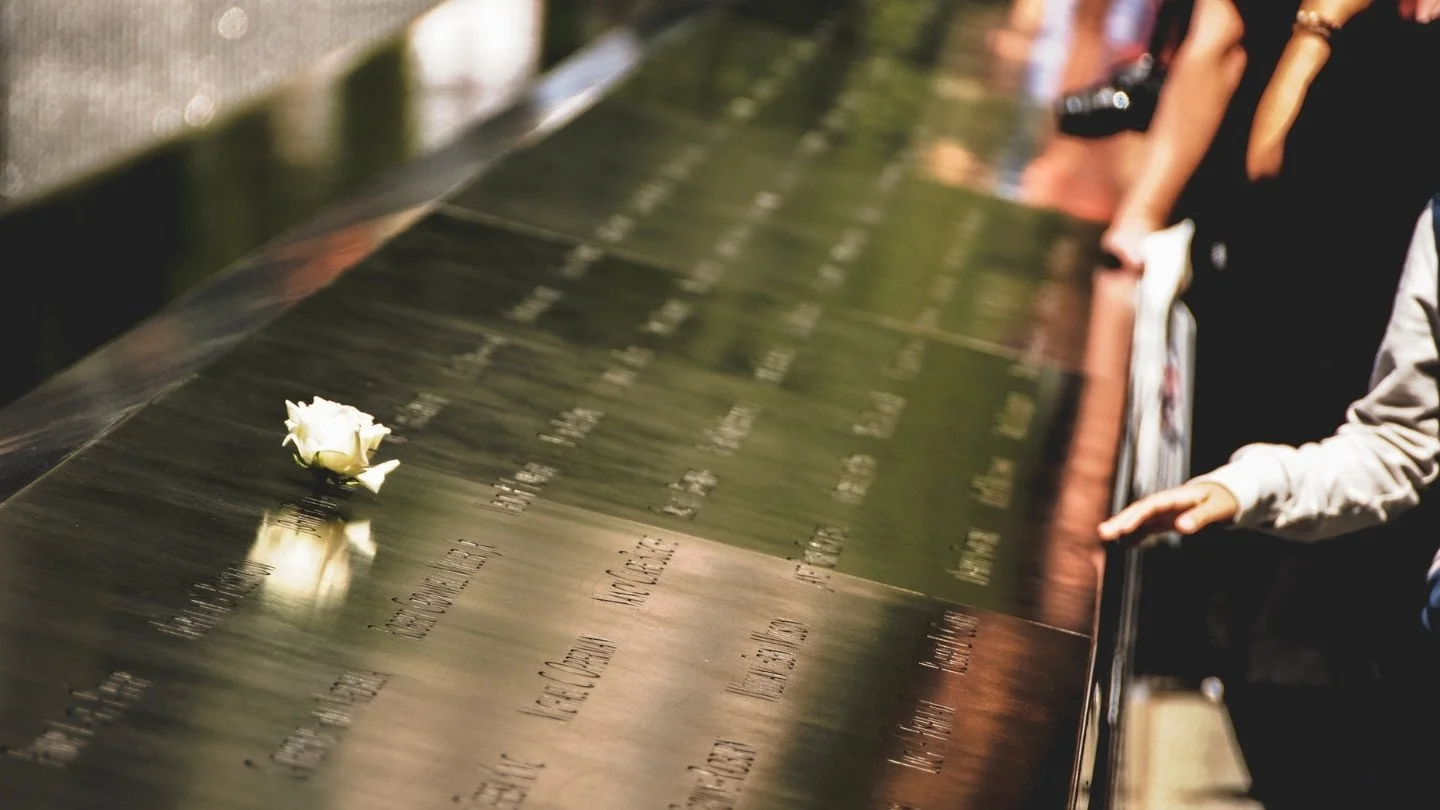
Everything can be taken from a person. Status. Work. Identity. Even the people they love. What remains is the only thing that ever mattered.
“In some ways, suffering ceases to be suffering at the moment it finds a meaning.”
—Viktor Frankl
Between 1942 and 1945, Austrian psychiatrist Viktor Frankl endured the destructive apparatus of four Nazi concentration camps, including Auschwitz. He survived. His parents, brother, and pregnant wife did not.
Frankl wrote Man’s Search for Meaning after the war. It is both testimony and philosophy. His core insight is that humans are not driven by the pursuit of pleasure, as Freud believed, or power, as Alfred Adler thought. Instead, we are driven by the search for meaning, our most urgent task in life.
He saw three sources of meaning:
In work (doing something significant)
In love (caring deeply for another)
And in suffering (choosing how we endure what we cannot escape)
We do not choose our suffering, Frankl tells us. But we always have the choice of how to respond to it. This is where freedom lives. Even in a concentration camp.
One of the book’s most powerful moments comes when Frankl recognises this freedom. The Nazi guards could strip him of everything in his outer life: his name, his clothes, his body. But not his inner life. That remained his alone behind an impenetrable steel door.
Frankl had arrived at the camp carrying the manuscript of his life’s work, early ideas that would later become his theory of logotherapy. It was confiscated and destroyed. So, he rewrote it. In his head, line by line, idea by idea. Sometimes tracing it in dry soil with a stick to keep the structure alive. A refusal to surrender the self.
He also kept his hope alive by the thought of seeing his wife again, and of one day lecturing to others about the psychological lessons of the camps. Several times in the book, he approvingly quotes the words of Nietzsche:
“He who has a Why to live for can bear almost any How.”
The book isn’t without its critics. Some have argued that Frankl’s implication—that a positive mindset made one more likely to survive—can feel insensitive or even cruel. Clearly, many prisoners who desperately wanted to live, died. Frankl doesn’t deny this, but his emphasis is elsewhere: less with the question of why most died than why anyone survived at all. His subject is meaning. And how it might be preserved when everything else has been cut to the bone.
There’s a scene in Arthur Miller’s play Incident at Vichy. A man stands before a Nazi officer who holds up his life, everything he’s accomplished: his degrees, credentials, letters of recognition. The officer asks him, “Is this all you have?” The man nods. The officer glances at them, then throws them in the bin. “Good,” he says. “Now you have nothing.” For the man, whose identity has always depended on the recognition of others, it is an annihilation. But for Frankl, he’d recognise that moment is the beginning of a choice. The freedom to choose is the one thing that Nazi officer cannot take away.
When everything is taken, what remains is not hope but choice.
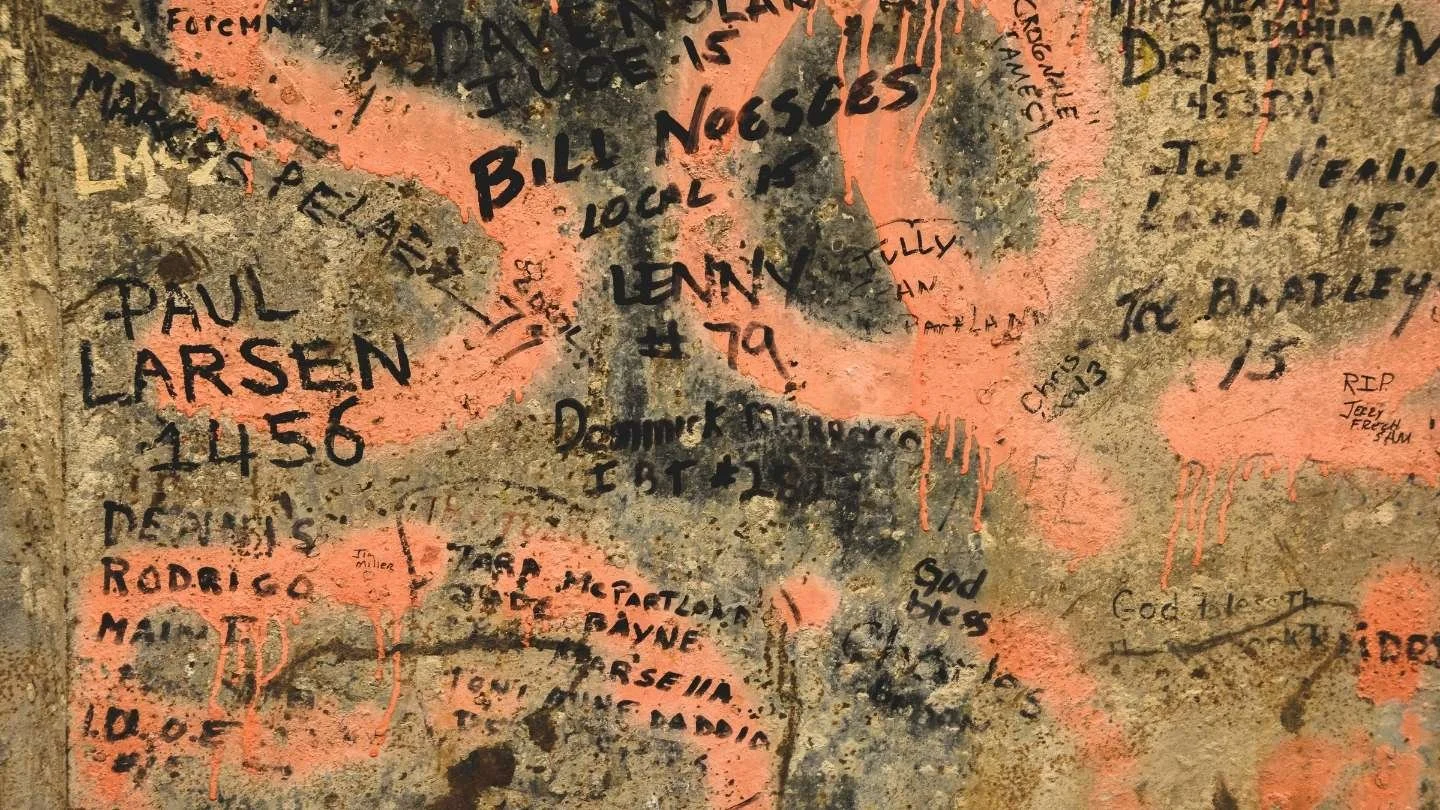
The 9/11 Memorial Museum in New York. Taken from my visit there in 2014.
Viktor Frankl found meaning in the slow erosion of everything that made him who he was. Others have found it in a single moment, when there is no time to think, only to act.
“The only real antidote for life’s pain is inside us. It is the courage within, the ability to build your own fires and find your own peace.”
―Joseph Pfeifer, Ordinary Heroes: A Memoir of 9/11
There have been many dignified documentaries made about one of the darkest chapters of modern history. 9/11: One Day in America may be the most definitive.
Created in collaboration with the 9/11 Memorial & Museum, this six-part series traces the events of that day through the eyes of those who lived it. The filmmakers sifted through nearly 1,000 hours of archival footage, some never seen before, and held 235 hours of interviews with 54 people.
From the start, it’s clear this is a documentary about human stories. Not politics, investigations, or conspiracies. Just the people who lived—and sometimes died—through September 11, 2001, whether in New York, Washington or on the four hijacked planes.
The timelines are familiar. So are the images, forever scorched into our minds. But the impact of the documentary isn’t so much what we see, but what we hear. Told entirely through personal testimony, 20 years later, but with the rawness of yesterday, these are stories of ordinary people making impossible decisions. Running into towers. Holding strangers’ hands. Crawling through smoke and tangled metal. And then returning home, often to tragedy.
Two stories in particular stay with me.
Joseph Pfeifer, an FDNY Battalion Chief, was among the first on scene. His calm leadership helped save many lives. His brother, also a firefighter, was not among them. The last time Joseph saw him, he was heading up the stairs of the burning World Trade Center. Months later, his body was found in the wreckage.
Another story comes from a former paramedic who on 9/11 was in a bad place, felled by drink and drugs and emotionally shut down. On that morning he barely noticed the attacks. But when his sister called, assuming he was out saving people, he felt shamed into action. He ventured out, motivated by the fact he could tell her he’d at least tried. He ended up climbing down into a 50-foot pit of fire and wreckage to rescue trapped firefighters. To this day, he doesn’t call it bravery.
“Something just put me there,” he says. “On that day.”
Like Frankl, these people responded. They made a choice. We hear stories of luck, courage, resilience, fear, compassion, anger, guilt, and redemption. Somewhere in the chaos and trauma came clarity, even if it took years to reach the surface.
At the end of the series, we see the 9/11 Memorial in New York. Each of the 2,996 people killed has a photo beside their name. The photos share one thing in common. All are smiling. That’s how the families want them remembered. Not as victims. As lives. Lives that mattered and had meaning.
I visited the World Trade Center in May 1998. My first time in New York. I stood on the roof and took a roll of black and white photos. I still have them and I’ve added one below. From the ground, I remember staring up at the towers, thinking how immovable they felt, steel pillars disappearing into the clear spring sky.
In July 2014, I returned, visiting the 9/11 Memorial, standing in the spot where those towers once stood. Reading the names of those who died.
Or more accurately, those who lived.
When everything else is taken, what remains is how we choose to respond.

May, 1998.
One of my black-and-white photos from that spring day in New York, —looking up at the towers that once felt immovable.
Pass It On
If this idea was worth your time, it may be worth someone else’s.
Share this essay with a friend:
https://www.deeplifejourney.com/deep-life-reflections/april-11-2025
If you have a thought you’d like to share, please leave a comment below.
You can read all previous issues of Deep Life Reflections here.