
The Story We Tell About Choice
The Road Not Taken, The Brutalist, and how much of our lives we actually choose.
Deep Life Reflections | Essay 107 | James Gibb
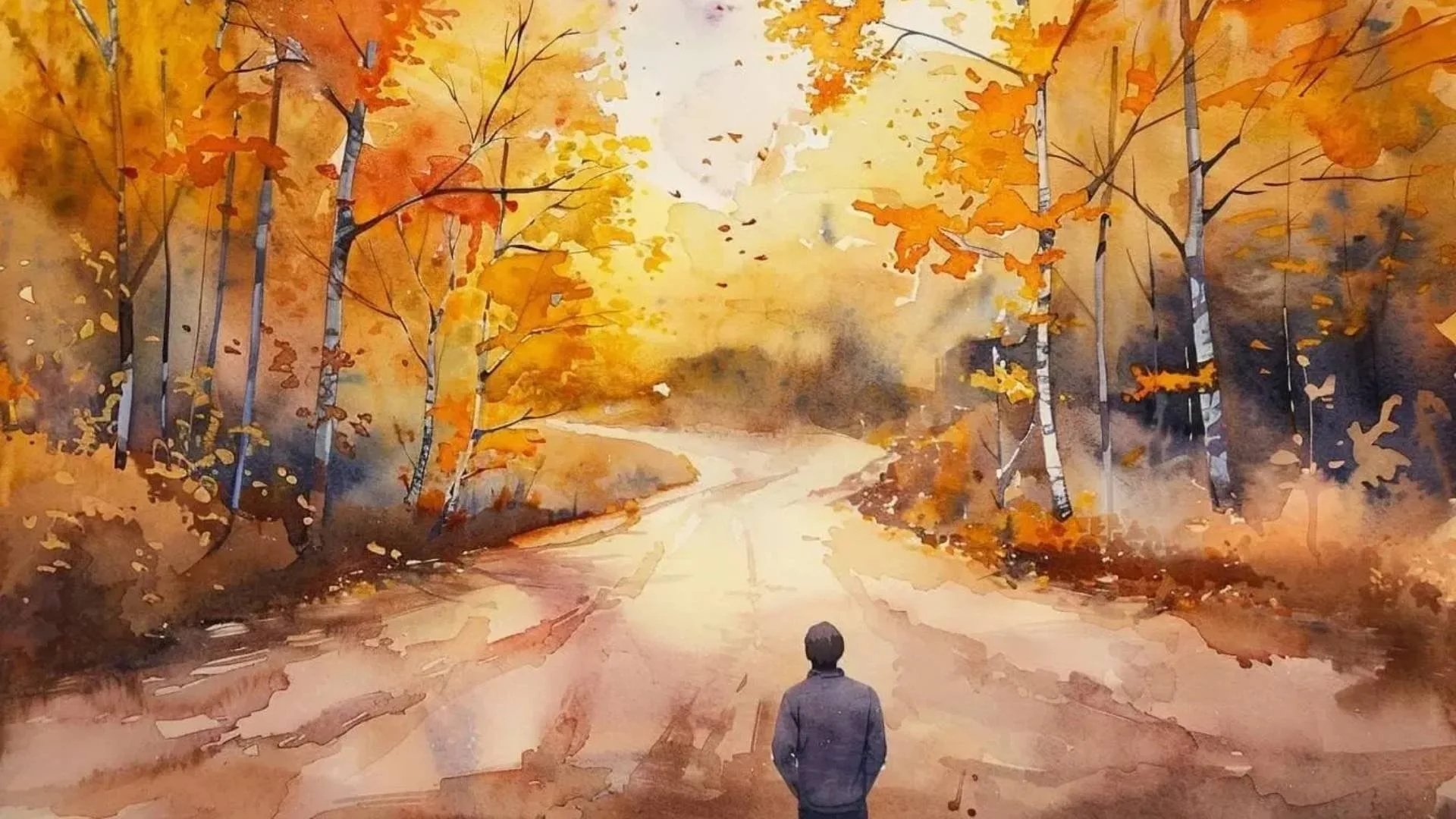
We like to believe we choose our lives. But some of those decisions are just stories we tell ourselves to make sense of where we’ve ended up.
“I took the one less travelled by,
And that has made all the difference.”
—Robert Frost, The Road Not Taken
Most people know these lines come from Robert Frost’s 1916 poem The Road Not Taken. And almost everyone interprets them the same way: as a celebration of bold, personal choice: the importance of following our own path in life.
But we might all be wrong.
Frost himself once warned of the poem, “You have to be careful with that one; it’s a tricky poem—very tricky.”
In 2015, David Orr, poetry critic for the New York Times Book Review, published a short book arguing that The Road Not Taken is the most misunderstood poem in America. As he puts it, “Almost everyone gets it wrong.”
Orr writes in The Paris Review:
“Most readers consider The Road Not Taken to be a paean to triumphant self-assertion, (“I took the one less travelled by”) but the literal meaning of the poem’s own lines seems completely at odds with this interpretation.”
The speaker in Frost’s poem claims he took the “less travelled” road, but earlier admits that both roads “equally lay / In leaves,” and that “the passing there / Had worn them really about the same.” He’s saying the two roads are indistinguishable. The choice is essentially an illusion.
Orr doesn’t read the poem as a tribute to can-do individualism, but as a critique of how we mythologise our lives. That our decision made “all the difference” is not a fact but a story we tell ourselves. A comforting fiction. A way of telling ourselves that where we ended up was the result of deliberate choice, rather than accident or chance. And that opens the door to something far more unsettling: the question of free will.
Frost originally wrote the poem as a playful poke at his friend Edward Thomas, who was famously indecisive during their walks together. Thomas would often regret the path they’d chosen, even while they were still on it. Whichever way they went, he felt they would miss something better on the other path.
Frost’s biographer, Lawrence Thompson, suggests the poem’s narrator is someone who consistently expends energy second-guessing, regretting their choices and wistfully sighing over the appealing alternatives they declined.
Orr acknowledges that poems by nature are meant to be interpreted rather than proven. And that any interpretation invites a range of possibilities. But he does argue that two things are certain:
The poem is not a straightforward and sentimental celebration of individuality.
Nor is the poem a knowing literary prank that has somehow fooled millions for over a century.
It’s something subtler: a poem about the idea of choice that somehow avoids making one. It both is and isn’t about individualism, a reflection on how we explain our decisions long after we make them. Or perhaps we never really made them at all.
Philosopher Soren Kierkegaard once described the “paralysis of choice,” the dread that comes not from having no options, but too many. When countless paths are open, commitment becomes impossible.
Just like the speaker in Frost’s poem.
At the edge of the woods.
Two leaf-shadowed roads.
Equally worn.
Equally chosen or unchosen.
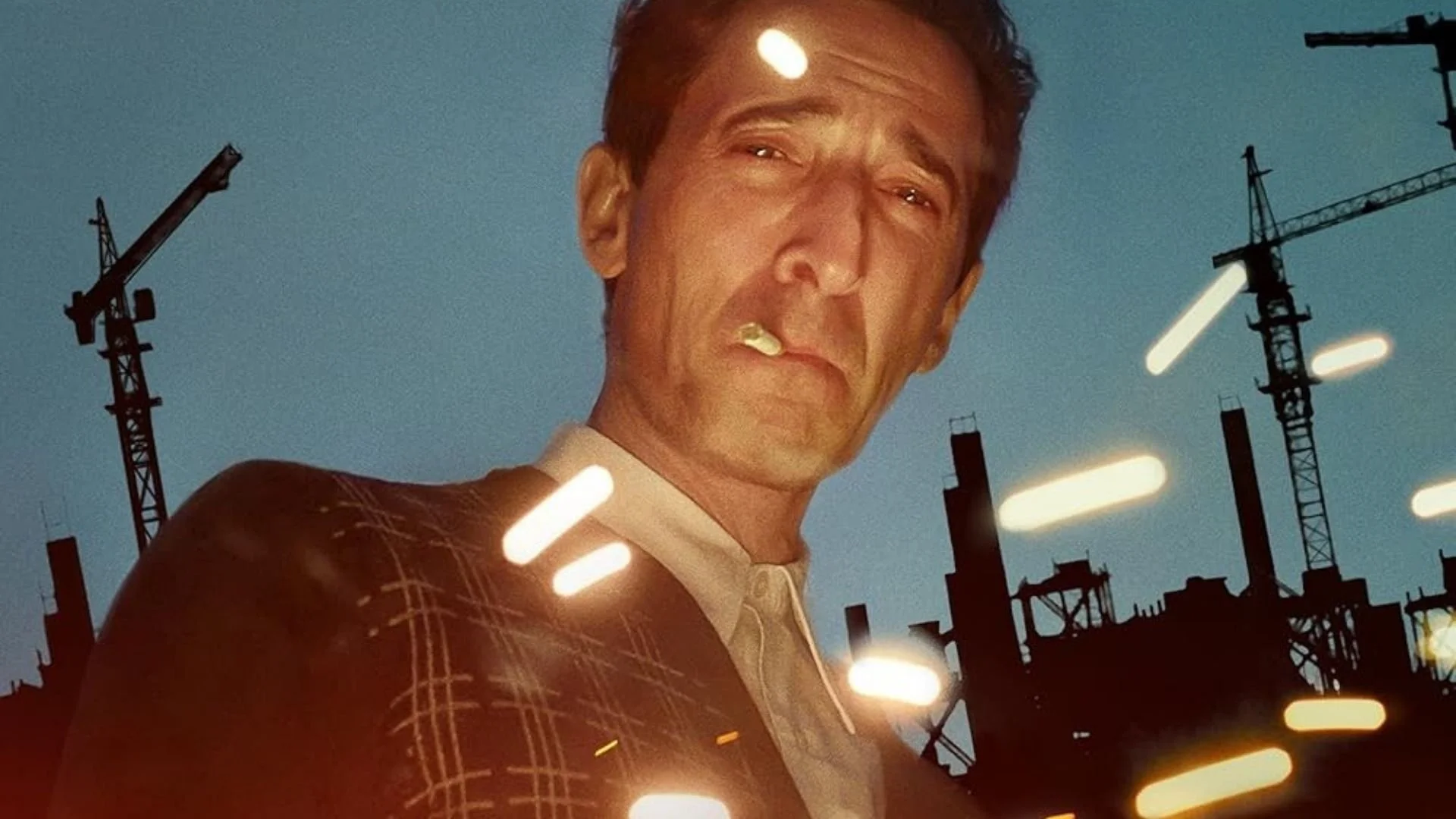
The Brutalist. 2024. Directed by Brady Corbet
“None are more hopelessly enslaved than those who falsely believe themselves free.”
—Goethe
In The Brutalist, we are shown what it looks like when choice was never there to begin with.
Nominated for ten Oscars, it won three, including Best Actor for Adrien Brody. Brody plays László Tóth, a visionary Hungarian architect who flees post-war Europe in 1947 to rebuild his legacy in the United States. Tóth is a master of Brutalism—a stark, polarising architectural style built on raw concrete, exposed structure, and minimalist intent. Nothing is hidden. Nothing unnecessary.
The same can’t be said of his life.
Shortly after arriving, Tóth comes into the orbit of Harrison Lee Van Buren Sr. (Guy Pearce), a wealthy businessman and self-styled patron of the arts. What begins as an invitation becomes a kind of silent entrapment. Van Buren commissions Tóth to design a new community space in rural Pennsylvania, encompassing a library, a theatre, a gymnasium, and a chapel. But the structure becomes something darker, a monument to subtle control and ownership.
The film is sweeping in scope: architecture, immigration, addiction, capitalism, class, art, violence. However, it’s fundamentally a film about post-war America. How immigrants helped remake America in their image and how America reshaped them in return. Some, like Tóth, became entombed in what they hoped would set them free.
The Brutalist opens with a striking image—Tóth emerges from a cramped, dark interior into daylight, his face lit with joy as he lays eyes on the Statue of Liberty. But director Brady Corbet twists the moment by presenting the iconic symbol upside down, floating at the top of the frame. A symbolic warping of the American Dream. Disorientation is a constant theme. And we experience this too. A number of times the film withholds subtitles for long stretches of non-English dialogue. We’re just as in the dark.
Despite the 3 hour and 36-minute runtime, complete with intermission, the story retains its grasp. The cinematography—shot on 70mm film stock—gives the film a haunting and strange look, including its odd, skewed opening credits, like something from a long-forgotten past.
The American myth says we’re free to choose.
Robert Frost suggests we rewrite our past to feel in control. Because we need the comfort of believing our path was intentional.
This week marked 13 years since I moved to Dubai. Later this year, I’ll move to Spain, closing one chapter and opening another. Recently, I realised that I’ve been living in 13-year cycles.
At 23, I moved to Glasgow to start my career.
At 36, to Dubai for something new.
At 49, to Spain for nature, culture, and whatever comes next.
Each of these moves felt deliberate. There was a purpose behind them, and I could explain the reasons: opportunity, curiosity, lifestyle. But part of me now wonders: Was I choosing freely? Or was I following the beats of something I hadn’t yet noticed?
That’s the uncomfortable terrain of free will. Not just whether free will exists, but how we’d ever know if we’re actually exercising it.
It leaves us wondering how much of the letter of our lives comes from our pen. And how much from the pen of others.
Maybe we don’t choose the road.
Only the story we tell about it.
Pass It On
If this idea was worth your time, it may be worth someone else’s.
Share this essay with a friend:
https://www.deeplifejourney.com/deep-life-reflections/april-4-2025
If you have a thought you’d like to share, please leave a comment below.
You can read all previous issues of Deep Life Reflections here.