
Flawless
Jonathan Haidt’s The Anxious Generation and Jakub Piatek’s Pianoforte on childhood, excellence, attention, and the pressure to hit every right note.
Deep Life Reflections | Essay 57 | James Gibb
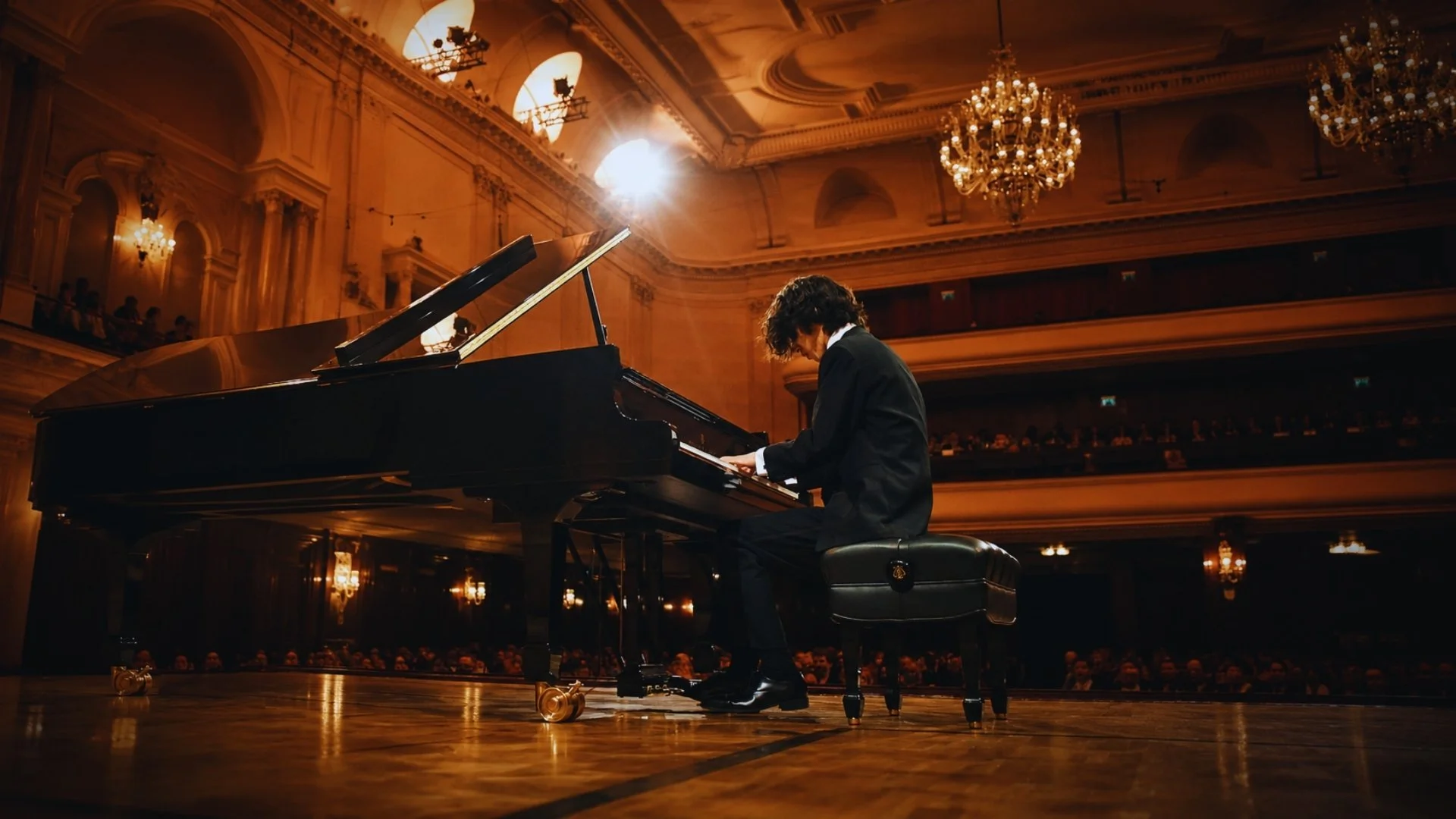
A culture that gives young people less freedom and more comparison teaches them to mistake achievement for worth.
Perfectionism is a rather strange and often vicious trait. On one hand, it’s the driving force behind some of the greatest works of art and human accomplishments on the planet. On the other, it can become a harbinger of perpetual dissatisfaction and misery; an endless, grating report card on every attempt to do something well.
It’s why perfectionism often looks like ambition from the outside, but from the inside it can feel like fear.
This fear has been given added incentive by our societal shift from a play-based childhood to a phone-based one. Constant comparison, fragmented attention and the loss of real-world independence are helping to create what Jonathan Haidt calls The Anxious Generation. In his book of the same title, Haidt brings a landslide of research and data to show how phone-based childhoods are causing significant damage to young people.
Haidt is a social psychologist who has been involved in debates about the effects of digital technology for years. His is an important voice. And this is an important book.
One study in The Anxious Generation found the typical adolescent now gets 237 notifications a day, roughly 15 every waking hour. Sustained attention is essential for doing almost anything hard, creative, or valuable, yet young people find their attention carved into little bits by notifications offering the possibility of high-pleasure, low-effort digital experiences.
Haidt also explores the wider cultural consequences of digital immersion, particularly during the crucial learning phase of 9 to 15 years. This period, traditionally enriched by the wisdom of older generations (family, teachers, elders), is now often the point when children get their first smartphone and sign themselves up—with or without parental permission—to consume vast oceans of content from random strangers.
Much of that content is produced in a few seconds, typically by other adolescents. This ‘swap-out’ of influence has created a generation largely cut off from older generations and to some extent, Haidt argues, from the accumulated wisdom of humankind, including knowledge about how to live a fulfilling life.
This might all feel bleak, but Haidt points the way toward a brighter future. His proposals reflect the predicament: No smartphones before high school, no social media before 16, phone-free schools, and more independence, free play, and responsibility in the real world.
One of Haidt’s most astute observations is that many parents are afraid to give children the level of independence and responsibility they themselves enjoyed when they were young, even though physical threats to children are considerably lower than in previous decades.
Haidt’s rallying call is clear: we didn’t know what we were doing in the early 2010s. Now we do. It’s time to dismantle the phone-based childhood and reinstate a more balanced, human approach to childhood.
The pressure is not only digital.
It also comes in environments where young people are given the message that their value depends on performance.
Competition can be brutal. Pianoforte, a 2023 Polish documentary by Jakub Piatek, drops us into the white heat of such a battleground: the Chopin Competition. This is the world’s most prestigious musical competition, notable for being devoted entirely to the works of a single composer, Frédéric Chopin. Taking place every five years in Warsaw since 1927, the event sees young pianist virtuosos compete against each other over a gruelling 21 days and four stages. They go through a process of elimination until only the winner is left standing.
The film follows several young musicians participating in the 2021 event, showcasing their incredible talent, the immense pressure they undergo to excel, and the sacrifices demanded by their art. Piatek uses the 90 minutes of film as skilfully as one of his featured virtuosos, capturing the thundering renditions of Chopin’s repertoire, their fingers expertly and vigorously striking keys. But he doesn’t omit the human element, capturing the nerve-racked musicians fidgeting, pacing, practicing, and ruminating over the smallest of details.
Piatek also takes an interest in the virtuosos as people, beyond the skills and techniques which the judges are solely focused on. In this respect I couldn’t differentiate—they all sounded flawless to me as a layperson. What’s notable is the varied attitude towards their art form. Some have incredible drive motivated by passion, others are driven by an almost resentful devotion. Some seem able to relax and see the bigger picture, while others see a world where only the piano and its 88 keys exists. In this world, the stereotype of the exacting, pushy parent is less evident, although of course they exist.
Pianoforte also captures the complex relationship between the pianists and their instructors. This is most notably contrasted between the 17-year-old Russian prodigy, Eva Gevorgyan, and her stern, tough-love teacher, and Hao Rao, a softly spoken Chinese virtuoso whose maestro is nurturing and gentle, even motherly. The second pairing share some laughs, the first do not. The film presents these student-teacher contrasts without judgment or commentary.
Just like a Chopin piece, Pianoforte is rich with feeling and a sense of the light and dark that illuminate and shadow the human experience. It also captures the absolute resilience required to chase excellence in the unforgiving arena of professional music competitions.
Seen together, The Anxious Generation and Pianoforte reinforce the many possible origins of perfectionism, which stretch deep into our past. For some, it begins with parental voices that associate love with achievement, or in classrooms where only the A+ receives acknowledgment. For others, it’s found in the portrayal of flawless lives on social media, where likes are the currency of approval. And for others still, it’s the pianist who considers being a finalist less an accomplishment and more an abject failure.
In all of these, the psychological toll is heavy and consistent. This is where perfectionism becomes dangerous. When it becomes tied to self-worth, it becomes corrosive, like a discarded piano chained to a railing, exposed to the rain.
The work is never finished. The applause is never loud or long enough.
Excellence can be noble. The application of discipline, standards, and ambition lie behind many great lives and many great works. But young people also need room to fail without feeling that failure has revealed a permanent and disastrous flaw in their character.
Worth is not erased by the cracks of life.
Sometimes, that is exactly where it becomes visible.
Pass It On
If this idea was worth your time, it may be worth someone else’s.
Share this essay with a friend:
https://www.deeplifejourney.com/deep-life-reflections/april-19-2024
If you have a thought you’d like to share, please leave a comment below.
You can read all previous issues of Deep Life Reflections here.