
No Finish Line
Shoe Dog and BlackBerry on entrepreneurship, disruption, and the brutal need to keep moving.
Deep Life Reflections | Essay 56 | James Gibb
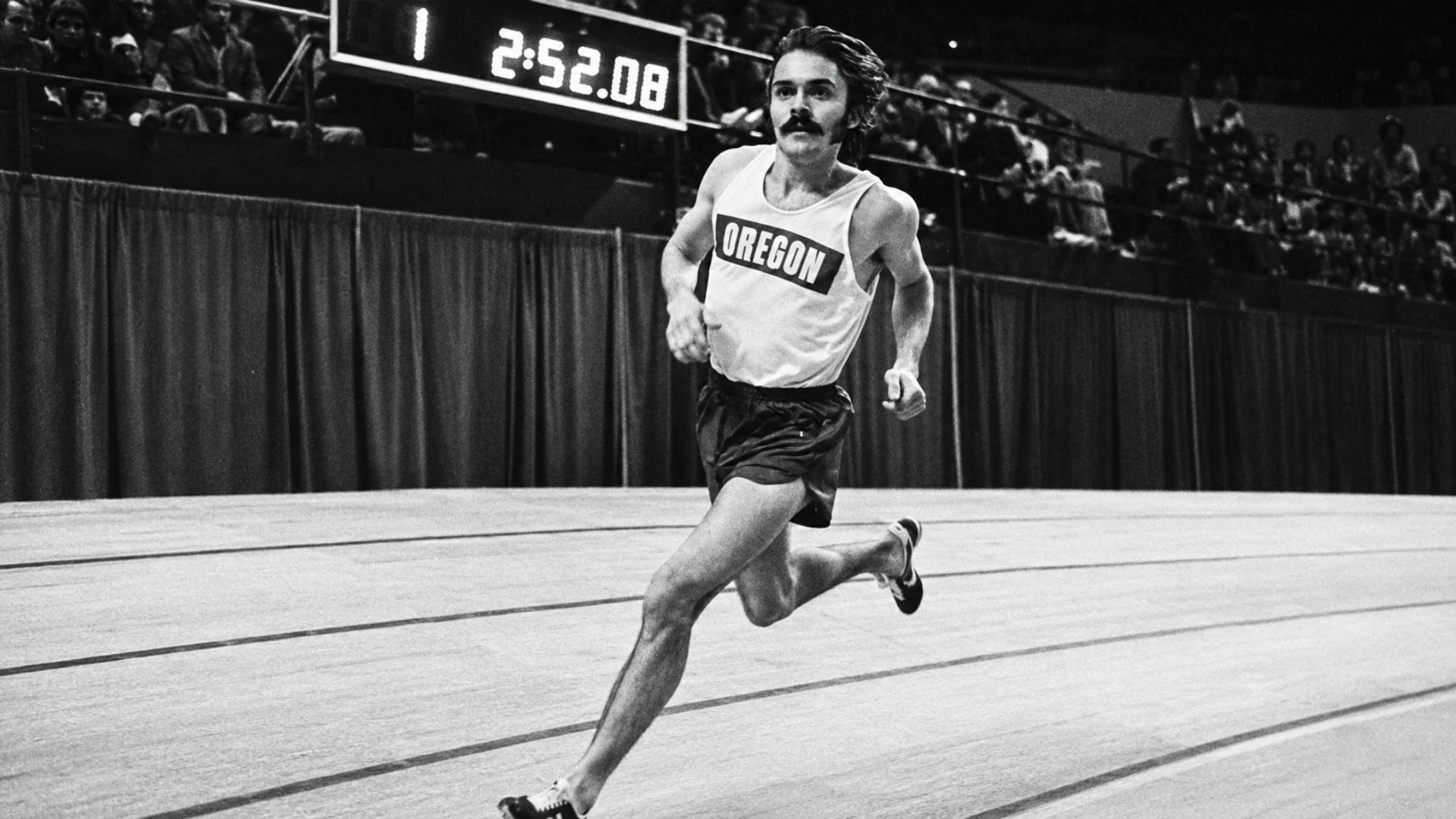
Building something great is hard enough. Staying great when the world inevitably changes is another race entirely.
It is a brutal fact of life that a company can create the future—and find itself completely absent from it. If you are of a certain age and held any kind of knowledge worker role, it’s likely you’ve also owned a BlackBerry. I had several. They piled up in an old shoe box. It might have been a Nike one. More on them shortly.
At the height of their powers, BlackBerry held half of the U.S. mobile phone market and roughly 20% globally. One out of every two phones sold in the U.S. was a BlackBerry. Then in 2007, Steve Jobs held aloft the iPhone, and in one swift keystroke, he sealed the fate of the BlackBerry. Today, BlackBerry holds 0% of the mobile phone market, while Apple has around 28%.
“Why would anyone want a phone without a keyboard.”
—Mike Lazaridis, Co-Founder of BlackBerry.
The 2023 film, BlackBerry, tells the story of the meteoric rise and fall of the world’s first smartphone. It’s a story about friendship, pride, and the brutality of the free market, a market that devours people like BlackBerry co-founder Mike Lazaridis. Lazaridis and his childhood friend Doug Fregin started Research in Motion (RIM) in 1984, a company that would later become BlackBerry.
Mike and Doug are smart yet socially awkward, ill-suited for the cut-throat negotiations that Corporate America demands. We see this in the first scene as Mike nervously introduces the name of their groundbreaking phone, the ‘Pocket Link,’ reflecting their tech-geek focus over market savvy. Enter Jim Balsillie as Co-CEO alongside Lazaridis. Balsillie’s aggressive sales tactics and winner-takes-all mentality are the shot in the arm the company needs. This creates a classic double-act, with Lazaridis and Balsillie making entrepreneurial magic as sales rocket and a global icon is born. It’s all hugely entertaining, backed by a terrific soundtrack.
BlackBerry is an ode to the outcasts and visionaries. Through the story of Lazaridis and Fregin, we witness the geeks inheriting the earth, recognising long before anyone else the huge potential of converging technologies into a single device. The BlackBerry 5810, launched in 2002, marked the dawn of the smartphone era, setting a standard that challenged the norms of mobile communication. But the pace of innovation can be unforgiving. When Steve Jobs unveiled the iPhone five years later, the tech landscape shifted irreversibly.
BlackBerry had no comeback. They were out of battery.
A company that seems to remain on full battery is Nike. I recently enjoyed Shoe Dog, the memoir of its co-founder, Phil Knight. It tells his journey from a college project in 1962 to creating Nike, one of the world’s most iconic brands. You’ve likely owned a Nike product and few brands can say that.
Knight is a candid and introspective guide, sharing his travels around the world, the founding of Blue Ribbon Sports (Nike’s original name), and the many hurdles faced along the way, including financial struggles, legal battles, and personal challenges. It’s also a story of perseverance, vision, and the power of building a team.
Shoe Dog is filled with stories revealing the inner-workings and iconic innovations of Nike. Highlights include the creation of the “waffle” shoe sole design, inspired by a waffle iron; the origin of Nike’s famous slogan “Just Do It,” rather sinisterly taken from the last words of death-row inmate Gary Gilmore; and the design of the now-iconic Nike swoosh, one of the most recognisable symbols in the world, created for just $35 by graphic design student Carolyn Davidson (who years later was given a gold ring and shares in the company).
In 1962 Knight took a trip to Japan. He was fresh out of business school and had the idea of importing Japanese athletic shoes to the Western market. This led to his partnership with Onitsuka Tiger (now known as ASICS), told in vivid, entertaining detail. When an initially unimpressed Japanese executive asked Knight which company he represented, he had no name ready. Thinking quickly and recalling the blue ribbons he won in races during his youth, he improvised on the spot, saying, “Gentlemen, I represent Blue Ribbon Sports of Portland, Oregon.”
Knight was quick on his feet. He also had an innate ability to see potential in a foreign market and the crucial role of strategic alliances. This venture laid the groundwork for what would eventually become Nike, a name Knight didn’t love, but went with as it was short, sweet, and had some memorable letters in it.
Shoe Dog shows a mid-to-late twentieth century path to business success. A lot of risk, doubt, setbacks, creativity and improvisation. It also celebrates the building of something from nothing. Knight is aware enough not to present himself as a genius with a master plan, but as someone moving, guessing, adapting, and surviving.
The stories of Nike and BlackBerry represent two contrasting examples of the unpredictability of entrepreneurship. Today, one is a global brand, the other is a cautionary tale. We may ask what gives a company longevity? While luck and timing are undeniable factors, even the traditional markers of success—innovation, leadership, sound finances—are no guarantee.
Consider the S&P 500: a stock market index that tracks 500 prominent companies listed on the New York Stock Exchange. Since its start in 1957, only 69 companies (14%) are still listed in the index today. That’s 431 that failed to keep up.
In business, as in nature, adaptation is survival. It’s the real work after success. Companies are not protected by what made them great. There is no finish line. There is only the next race.
BlackBerry was out of the race. Nike kept running.
Pass It On
If this idea was worth your time, it may be worth someone else’s.
Share this essay with a friend:
https://www.deeplifejourney.com/deep-life-reflections/april-12-2024
If you have a thought you’d like to share, please leave a comment below.
You can read all previous issues of Deep Life Reflections here.