
Above the Law
Live by Night and The Untouchables: two Prohibition-era works where crime, law and conscience become difficult to separate.
Deep Life Reflections | Essay 54 | James Gibb
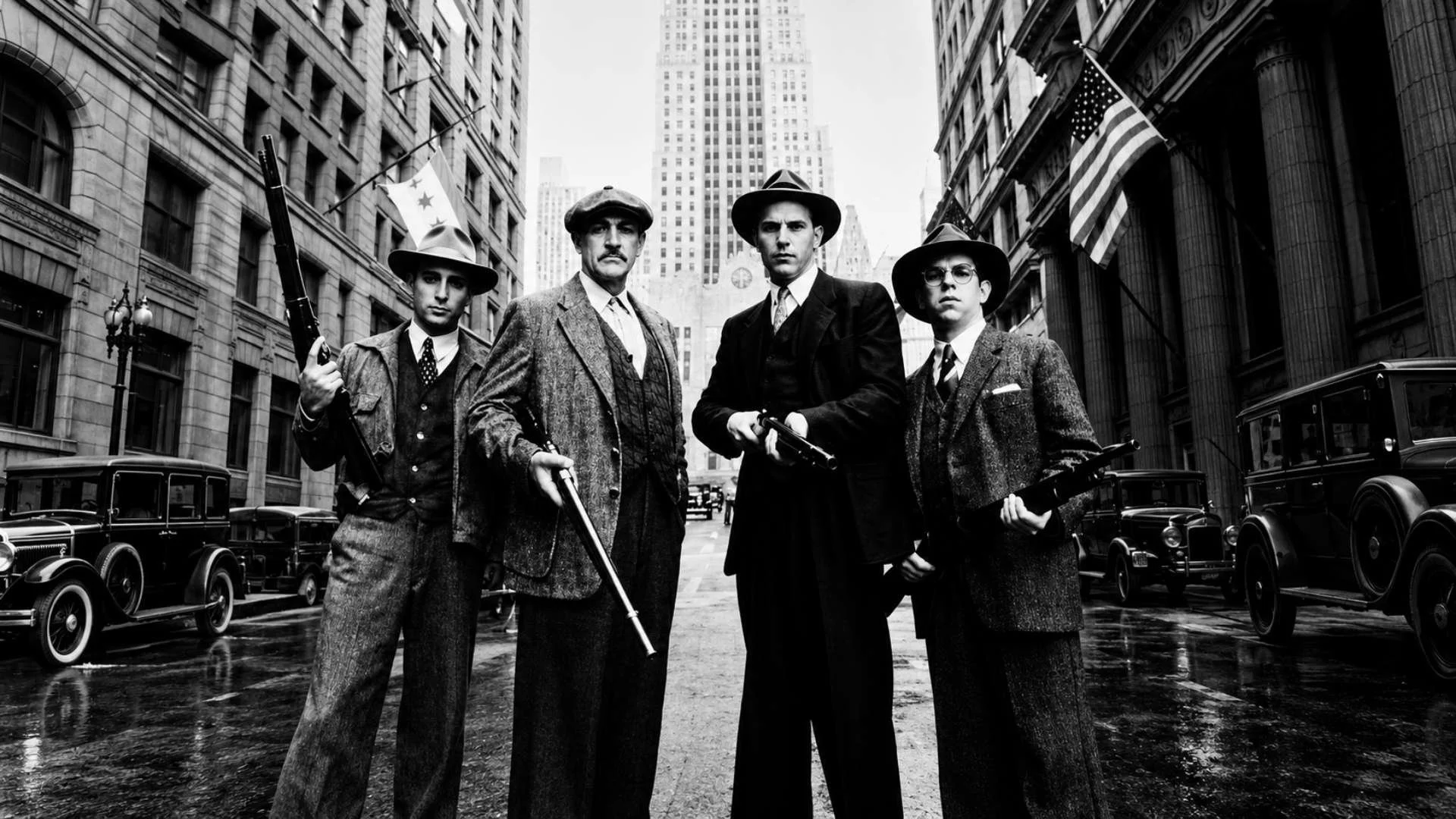
Power becomes dangerous when people start believing their own judgement is a higher law.
Dennis Lehane writes about crime and the choices people make. Most of those choices are poor, as is the wont of criminals. His novel, Live by Night, tells the story of Joe Coughlin, who goes from a nineteen-year-old small-time thief to one of America’s most feared gangsters.
Live by Night takes place in the 1920s, the Prohibition era, when selling alcohol was illegal in the United States. Joe’s journey takes him from the cold, tough streets of Boston to the stifling heat and rum runners of Tampa, Florida, where he builds his empire. It’s a journey plagued by violence, double-crossing, power struggles, and Joe’s sense of trying to do the right thing within the dangerous world he exists in. Lehane brings the Prohibition-era to life, with the illegal speakeasy bars, corrupt police, and the crime bosses who ran it all. He includes real historical figures like Charles ‘Lucky’ Luciano, who helped create the infamous National Crime Syndicate.
Lehane, one of America’s best crime fiction writers, is from inner-city Boston and no stranger to life’s struggles. He’s gifted at writing about the dark underbelly of crime and the moral ambiguity of his characters. Filmmakers have adapted many of his books into popular films, such as Mystic River,Shutter Island, and Gone Baby Gone. He once told an interviewer, “I’ve always been fascinated with loss of innocence or corruption of the soul at a young age.”
Live by Night is classic Lehane and through the character of Joe Coughlin, we get another take on the American Dream gone awry. The title comes from how Joe lives his life at night, which is when he feels he comes alive, using his natural talents such as his quick thinking and guile.
Awarded the 2013 Edgar Prize for Novel of the Year, Lehane’s novel shows the cost of ambition set against the backdrop of a semi-glamorous bygone era, as well as a mirror for today’s struggles with crime and conscience. Some things don’t change.
The Joe Coughlins of the world still exist, and I suspect, always will.
Staying in the Prohibition era, we swap the heat of Tampa for the bitter cold of Chicago.
Brian De Palma’s stylish and violent The Untouchables was nominated for four Academy Awards in 1987, winning Best Actor in a Supporting Role for Sean Connery. The film dramatises the true story of federal agent Eliot Ness’s crusade to bring down the ruthless Al Capone in Prohibition-era Chicago.
Kevin Costner plays Ness with conviction, and Robert De Niro gives a menacing performance as Capone. The film’s focus, however, is on Ness and the small, incorruptible team he assembles, including veteran cop Jim Malone (Connery) and rookie George Stone (a young Andy Garcia). Filmmaker De Palma puts together his own gifted team, including renowned playwright David Mamet, virtuoso composer Ennio Morricone, and accomplished cinematographer Stephen H. Burum. Giorgio Armani also provided the costumes.
This teamwork enables De Palma to recreate 1930s Chicago magnificently, with a deadpan script that hardly wastes a word and an operatic score that feels authentic to the time. The Untouchables is two hours of pure entertainment. The superb opening titles set the scene for what is to come.
The film also takes a sombre look at moral fibre and what causes it to fray. Ness faces a moral, ethical, and physical battle against Capone and his underworld, committed to doing everything within the law, but realising the law has its limits. This leads to one of the best and most famous lines in the film when Connery’s Malone tells him, “You wanna know how to get Capone? They pull a knife on you, you pull a gun. He sends one of yours to the hospital, you send one of his to the morgue. That’s the Chicago way!” This sets up the carnage that follows, as well as putting Ness in a perpetual ethical dilemma.
At the end of the film, a reporter asks the triumphant Ness what he will do if the government repeals prohibition, to which he replies sardonically, “I think I’ll have a drink.” Prohibition was indeed repealed in 1933 and Ness later became a heavy drinker in a twist of irony. When he died in 1957, his role in bringing down Al Capone had been completely forgotten. It was only when The Untouchables television series began in 1959 that the public learned of Ness’s heroic deeds.
The rest is American history.
The prohibition era may be a century in the past, but we still have our villains. On March 28, 2024, a judge sentenced Sam Bankman-Fried, the once-celebrated founder of the FTX cryptocurrency exchange, to 25 years in federal prison for fraud and conspiracy. At his peak, the Forbes 400 ranked Bankman-Fried as the 41st-richest American, only for him to experience one of the most dramatic downfalls in recent memory. But his fall from grace is not unique in American history.
The stories of Live by Night and The Untouchables, with their tales of crime and moral conundrums, find their modern counterpart in Bankman-Fried’s ruination, as another example of the struggle between ambition and legality.
While the crime landscape has changed significantly over the past century, especially with the influential role of technology, other aspects remain strikingly similar. Alcohol may be legal today but today’s prohibition-era equivalent, the War on Drugs, has led to the rise of powerful cartels and a cycle of violence, mirroring and exceeding the worst violence of the 1920s. Likewise, the pursuit of the American Dream, corrupted by greed and power, is still prevalent today, personified by figures like Sam Bankman-Fried. Different eras and different product, but identical driving forces.
In a poignant moment during Bankman-Fried’s sentencing, the judge recalled testimony from Caroline Ellison, once his girlfriend and the star witness against him. Ellison had shared a telling anecdote: Bankman-Fried had told her that if he could flip a coin with either humanity being destroyed or the world becoming twice as good, he would do it.
This persistent recklessness seems to be a hallmark of those who find themselves seduced by power and greed, whether it’s white-collar crime or the hard-nosed crime of the prohibition era.
The law eventually caught up with Bankman-Fried. By then, the damage caused by believing himself above it had already been done.
Pass It On
If this idea was worth your time, it may be worth someone else’s.
Share this essay with a friend:
https://www.deeplifejourney.com/deep-life-reflections/march-29-2024
If you have a thought you’d like to share, please leave a comment below.
You can read all previous issues of Deep Life Reflections here.