
How We Spend Our Lives
Work, freedom, and the cost of every choice.
Deep Life Reflections | Essay 53 | James Gibb
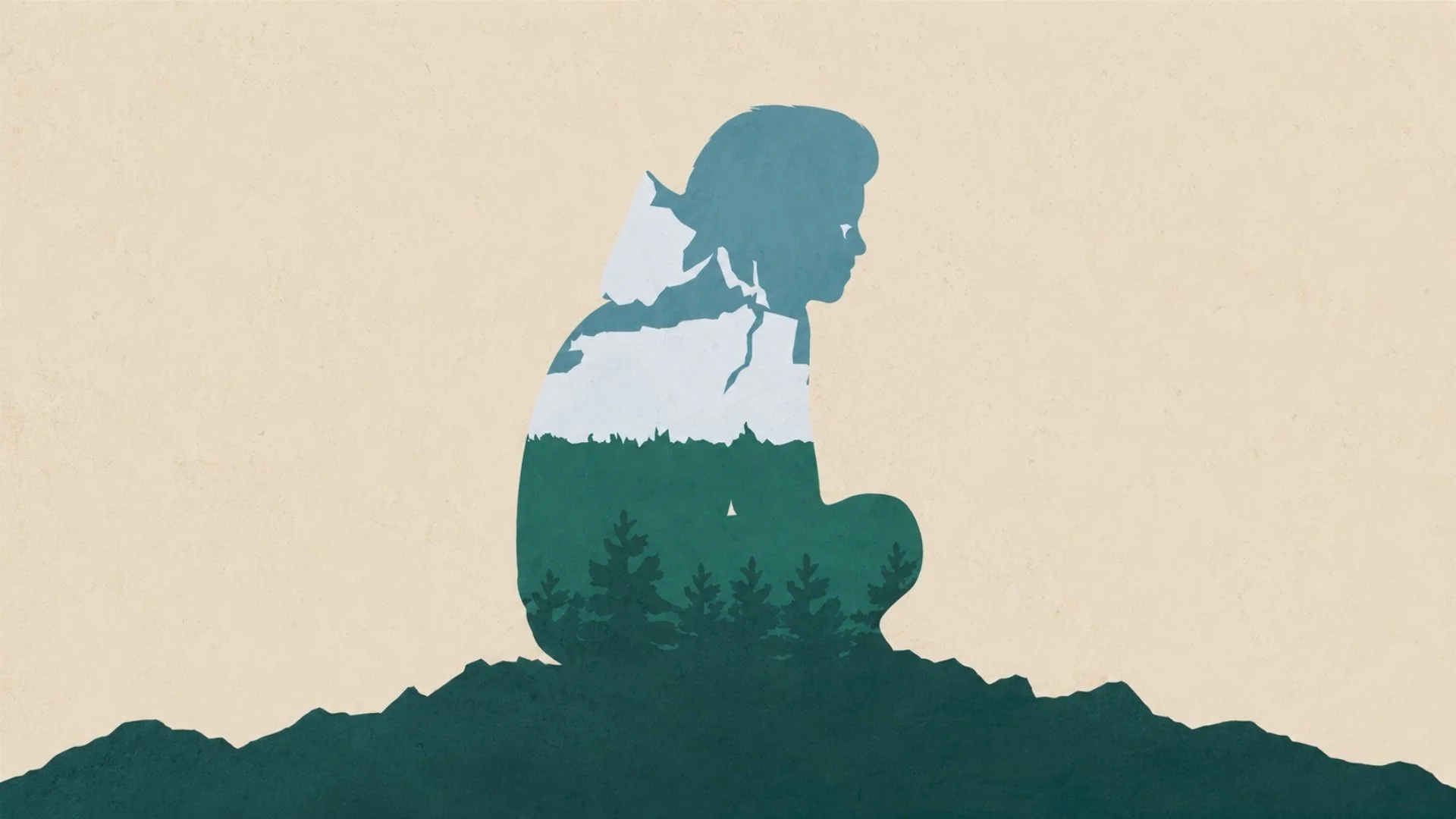
To commit our time to one thing is to make it unavailable to everything else.
In Walden, his 1854 reflection on living more deliberately, Henry David Thoreau wrote, “The cost of a thing is the amount of life which is to be exchanged for it, immediately or in the long run.”
It is an articulate formulation of what economists would later call the opportunity cost of any choice. That is, all the things you can no longer do with your money and time once you’ve committed them to something else. For example, if you choose to spend an evening replying to emails, you cannot spend that time going for a walk, and you cannot spend that time on something else. This emphasises the fundamental reality of economics: our finite resources of money and time shape much of our life experiences.
Life is essentially about choices. There is a cost to each.
In his book Slow Productivity, computer scientist Cal Newport brings another angle to this age-old discussion. He sees a world where people—in this case Western knowledge workers, his primary audience—are consumed with speed, hustle, and the need to show how busy they are. He believes this leaves many drained, disillusioned, and burned out. His answer is ‘slow productivity,’ which is built around three key maxims: do fewer things, work at your natural pace, and obsess over quality. (I’m not a fan of the word ‘obsess’ because at its root it has negative connotations, but I digress).
His argument is that if we do these three things reasonably well most of the time we can still accomplish good, even great things. In other words, it’s a slightly new incarnation of ‘doing less to do more.’ But this is a discredit to Newport. In the online world of productivity hacks and experts, Newport is definitely a tier above. For one, he’s an MIT-trained professor. Secondly, this is his eighth book. And thirdly, the man has never used Twitter, Instagram, Facebook, TikTok, or any social media beyond a recent foray into converting his podcast into a YouTube channel. I like what Newport has to say and how he says it. There is a sense he genuinely cares about this.
And I think he’s right. By tapping into our more natural rhythms and doing fewer things, we can feel a little clearer, calmer, and creative. We have some agency to do that ourselves, but we are still heavily dependent on others, particularly organisations, to help us out. As I see it, not many organisations are committed to lessening the load for their staff. Newport to be fair recognises this. His previous book A World Without Email was a set of promising ideas for twenty-first century organisations that got a bit lost amid an ill-judged title. Those ideas are still relevant.
One of the most interesting aspects of Slow Productivity is a detailed history of just how we ended up in this jumbled ‘always on’ mess in the first place. Newport shows why productivity became increasingly challenging to define as we moved from the measurable assembly lines of the factory to the individual autonomy of the office. It was much easier to track how and when a car was assembled than to track how a strategy report on the trends of U.S. car exports to Europe was put together.
Newport offers choices for how we might want to approach our working lives. He would argue a slower way is a better way, certainly a more humane way.
Beyond the office and the frenzy of modern work, the road stretches into the wilderness. Another kind of escape, and certainly another choice.
Into the Wild, written and directed by Sean Penn, is a film adaptation of Jon Krakauer’s non-fiction book of the same name. It’s based on the true story of Christopher McCandless, a young man disillusioned with society’s materialism and constraints. After graduating from college, McCandless abandons all his things and donates his entire $24,000 life savings to charity. Hitchhiking his way across the heartland of America, McCandless is driven by a singular goal: to reach the untamed wilderness of Alaska, hoping to live simply off the land. Along the way, he meets with various individuals who shape his journey and reflections.
The film, set in the early 1990s, captures the beauty, power, and occasional terror of nature. It presents the wilderness as not just a physical landscape but also as a place of solace, reflection, and spiritual renewal, especially for McCandless. McCandless is the dreamer we can all recognise in ourselves, albeit in varying degrees. While we might admire his courage, we may also condemn his selfishness, such as leaving without telling his parents.
Penn captures the energy and idealism of youth, as well as the danger of pushing love away. McCandless revels in being alone. He says at one point, “You don’t need human relationships to be happy, God has placed it all around us.”
Later in his journey, McCandless meets Ron, an older man. Ron intuitively senses a conflict within McCandless over the relationship he has with his parents. He leaves the younger man with some parting wisdom about forgiveness. It touches McCandless in a way we haven’t seen before, eventually leading him to inscribe five words into his book: “Happiness only real when shared.”
It is another version of where we make our commitments and the cost they have, both for ourselves and for others.
The impact of choice is all around us. I’m writing this essay from Thailand. Last night I went for dinner at a lakeside restaurant. The owner, Robert, introduced himself to me and we started talking. I learned that he was of Dutch-Brazilian origin and had moved to Thailand twenty-five years earlier to follow his dream of running his own restaurant after more than two decades running restaurants for other people. As we chatted, he showed me the coconut trees he had once planted that now stood tall around his restaurant. Visible and living symbols of his choice. He now spends his days talking easily with diners from around the world, doing his daily exercises, and being part of a weekly friendly debating club with his friends over coffee.
Living deliberately starts with recognising the life that is being exchanged in every choice. Whatever we choose, we spend a portion of our life on it. That moment can never be spent again.
But spent well, it can grow into something that lasts.
Pass It On
If this idea was worth your time, it may be worth someone else’s.
Share this essay with a friend:
https://www.deeplifejourney.com/deep-life-reflections/march-22-2024
If you have a thought you’d like to share, please leave a comment below.
You can read all previous issues of Deep Life Reflections here.