
The Burning Has Already Been Done
Fahrenheit 451 and 20 Days in Mariupol: On keeping difficult ideas and uncomfortable evidence within reach.
Deep Life Reflections | Essay 52 | James Gibb
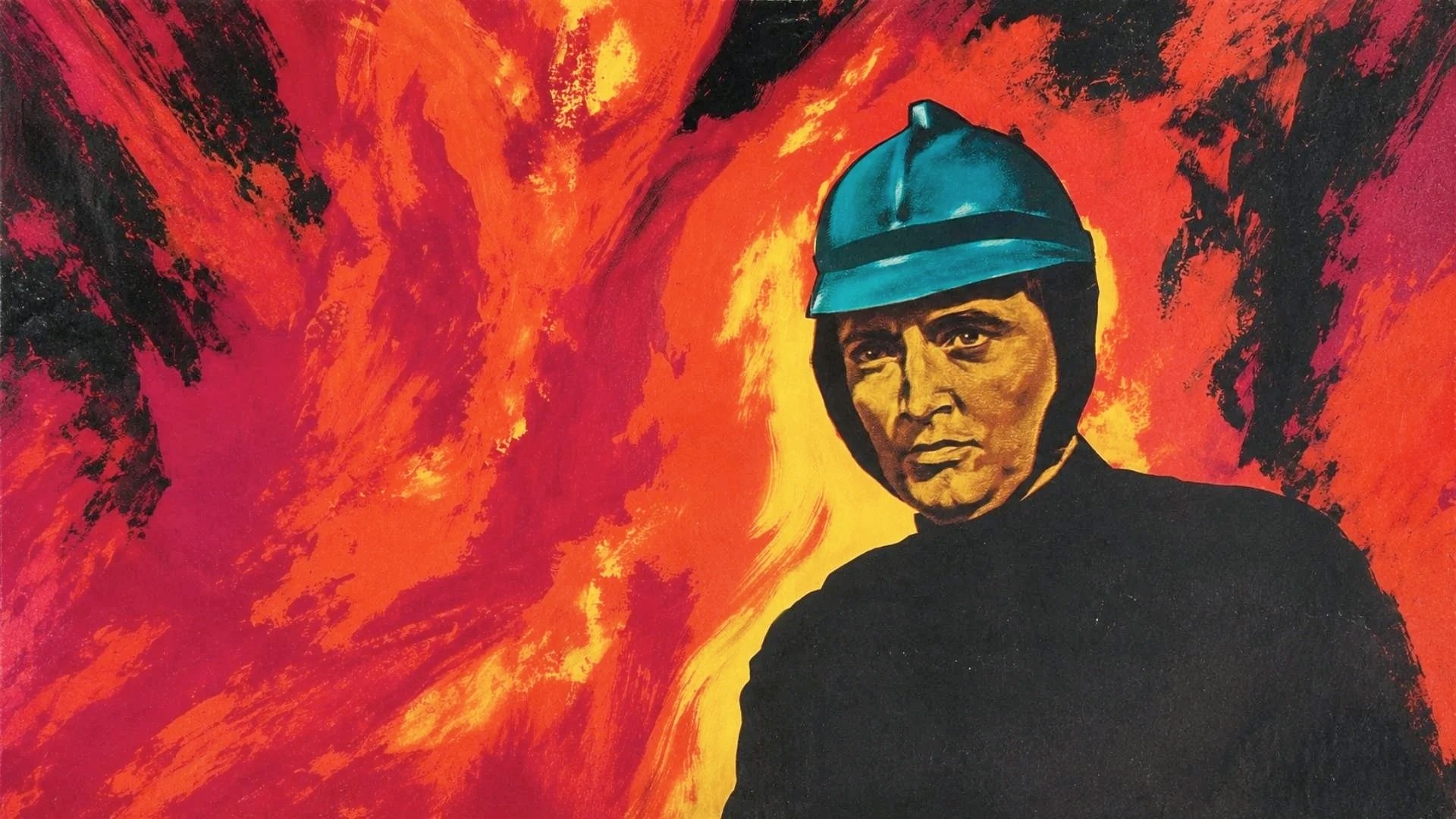
Once we begin removing difficult words, images, and testimony from public view, we also begin deciding what others are allowed to understand.
I hadn’t heard of the literary magazine Guernica until this week. British-born writer and translator Joanna Chen had written an essay for the publication called From the Edges of a Broken World, which they pushed live on March 4. A few days later, however, it was taken down. Many of the all-volunteer staff voiced their concerns over the essay, with some choosing to resign in protest. Central to their agitation was a conversation Chen recounted with an Israeli mother, which one staff member cited as “harmful” and “disorienting.” The upheaval culminated in Guernica’s decision to withdraw the essay on March 10, accompanied by an apology and the promise of a forthcoming explanation.
I’ve read the essay. Chen, who moved to Israel from the United Kingdom as a teenager, wrote a deeply meditative piece about the Israeli-Palestinian conflict that reflected her inner struggle with her principles and the fear, feelings of inadequacy, and conflicting loyalties that arose after October 7. It’s worth noting Chen’s background for additional context: she refused service in the Israeli military, spent years volunteering at a charity providing transportation for Palestinian children needing medical care, and works on Arabic and Hebrew translations to help bridge cultural divides.
In Western liberal democracies, writers are typically free to write things others may find unpopular, offensive, or provocative. As long as that piece of writing doesn’t contravene boundaries such as defamation, incitement, hate speech, privacy, and copyright, as well as journalistic ethical standards on things like accuracy, fact-checking, and fair representation of sources, then it’s a legitimate subject for publication and discourse. Chen’s essay falls nowhere near breaching those markers. In her essay, she speaks of her desire to reach those on the other side of the conflict and connect as a first step.
By retracting the essay, Guernica has denied its readers a similar connection: the opportunity to engage with a perspective that might challenge, enlighten, or even change their perspective. It has even denied the opportunity for someone to provide a counter essay. Let’s be clear though, this was not state censorship, nor the work of an authoritarian regime. It was something more culturally representative of our politically inflamed times: a literary publication deciding that a difficult perspective should no longer remain available to its readers.
Chen’s published and then retracted essay and ensuing fallout came a few days after I finished reading Ray Bradbury’s classic dystopian work Fahrenheit 451. The irony is not lost. Bradbury’s novel is about censorship. In the most extreme form. In Bradbury’s world, firemen race to a house not to put out a fire but to start one. Their target is books, which are banned and then burned to silence different opinions and control the population.
The title refers to the temperature at which book paper catches fire and burns. The novel paints a bleak picture of a future society that shuns books, intellectualism, and critical thinking. Instead, people have become emotionally vacant and shallow, lost to new forms of immersive, addictive technology.
Bradbury’s antihero, Guy Montag, is a fireman who begins to question the oppressive regime he’s part of after an encounter with a free-spirited young woman named Clarisse. This sets Montag on a difficult path of self-discovery as he grapples with the significance of literature and the consequences of a society that suppresses independent thought.
In the figure of Fire Chief Beatty, Bradbury creates a chilling antagonist who understands all too well the power of complacency and ignorance. Beatty predicts to Montag a future not of book burnings, but of society’s collective abandonment of curiosity and understanding—a self-inflicted wound; a world without readers, learners, and thinkers. In this desolate vision, there is no need for tyrants like Beatty to ignite the kerosene. The burning has already been done.
The novel, published in 1953, is an amalgamation of five short stories Bradbury had written earlier. Many years later, he would reflect, “I did not write Fahrenheit 451, it wrote me.” The book was influenced by Hitler’s book burnings in Germany in 1933, the ideological repression in Stalin’s Soviet Union, and the Salem witch trials in 1692. However, Bradbury’s biggest influence was his own love of books; he talks fondly about being introduced to Roman, Greek, and Egyptian mythology from the age of three. He also loved libraries. A trait I happen to share with him.
Ironically, for a book about the dangers of censorship, in 1953, no magazine publisher would touch it for serialisation. With McCarthyism in full swing, no one wanted to risk publishing a novel in serial form about past, present, or future censorship. It took a young Chicago editor with little money but a big vision to bring the book to life. He bought the manuscript and published it as a serial in his new magazine. The young man was Hugh Hefner, and the magazine was Playboy.
Fahrenheit 451 remains an important warning about the dangers of censorship and the sacredness of free speech.
From Bradbury’s imagined bleak future, we move to the very real destruction of the city of Mariupol in Ukraine.
20 Days in Mariupol is a documentary about the first 20 days of Russia’s invasion of Ukraine, which began on February 24, 2022. The port city of Mariupol was the first to feel the ferocity of the onslaught, and its name has become a byword for this war’s inhumanity. As many journalists understandably fled, three remained: Associated Press video journalist Mstyslav Chernov, and his two colleagues, photographer Evgeniy Maloletka, and producer Vasilisa Stepanenko. The three filmmakers courageously document the senseless destruction and death during those first three weeks.
Mariupol is pounded into rubble by Russian bombs, missiles, and artillery shells. Martial law is declared. Civilians huddle in basements as explosives rain down. Electricity, water, and internet service either stop or become near-useless. Chernov and his team capture all this carnage and work miracles to actually get the video footage edited and sent to the outside world despite almost no internet connectivity in the entire city (and they’re sending huge data files). This effort to document truth under extreme conditions shows the courage it takes to confront power with truth. Without these three journalists, the world would not have seen the horrors inflicted on Mariupol.
This is not just a war fought with military might, but also with the weapons of disinformation. The film exposes how Russian television news programs insist that reports of civilian casualties in Mariupol are “fake news” and that videos of atrocities against Ukrainian citizens have been altered or manufactured. When a British journalist, seeking accountability, confronts Russia’s UN ambassador and asks him to comment on Chernov’s unflinching reporting, he says, unsettlingly, “Who wins the information war, wins the war.” These words recognise the present-day power of media manipulation to shape conflicts and rewrite history.
20 Days in Mariupol won the Academy Award for Best Documentary. Receiving the award on stage, a restrained and solemn Chernov said, “We can make sure that the history record is set straight and the truth will prevail, and that the people of Mariupol, and those who have given their lives, will never be forgotten. Because cinema forms memories and memories form history.”
For anyone who has seen the film, those images of a city reduced to ruins are likely burned into your memory. As painful as it is to watch, it needs to be seen.
Just as Ray Bradbury defended the necessity of preserving books and the diverse ideas they contain, society should likewise protect and value the free exchange of perspectives, even, especially, when they provoke discomfort or disagreement. How might our understanding of complex issues like the Israeli-Palestinian conflict suffer if we only hear from one side? Not that all opinions are equally valid or beyond critique, and they must stand up to the scrutiny of the core tenets of journalism: truth, accuracy, fairness, and impartiality, but that the suppression of ideas and opinions we don’t like weakens the opportunity for growth, learning, and understanding. It is through our willingness to consider alternate views that we lay the groundwork for reasoned debate, steering us toward progress and, ultimately, a lasting peace.
Not every act of censorship involves flames, prisons, or an authoritarian state. Sometimes it takes the far less dramatic form of removing an essay from a specialist publication because its complexity has made some people uncomfortable. But the principle remains the same: once difficult testimony disappears, our understanding becomes smaller with it.
Literature cannot end wars, but it can preserve the human complexity that slogans, propaganda, and censorship try to black out. As long as we value and protect that complexity, the world of Fahrenheit 451 remains a cautionary tale, not a prophecy.
Pass It On
If this idea was worth your time, it may be worth someone else’s.
Share this essay with a friend:
https://www.deeplifejourney.com/deep-life-reflections/march-15-2024
If you have a thought you’d like to share, please leave a comment below.
You can read all previous issues of Deep Life Reflections here.