
Let Me In
What Aftersun tells us about memory and the pain of reinterpretation.
Deep Life Reflections | Essay 159 | James Gibb
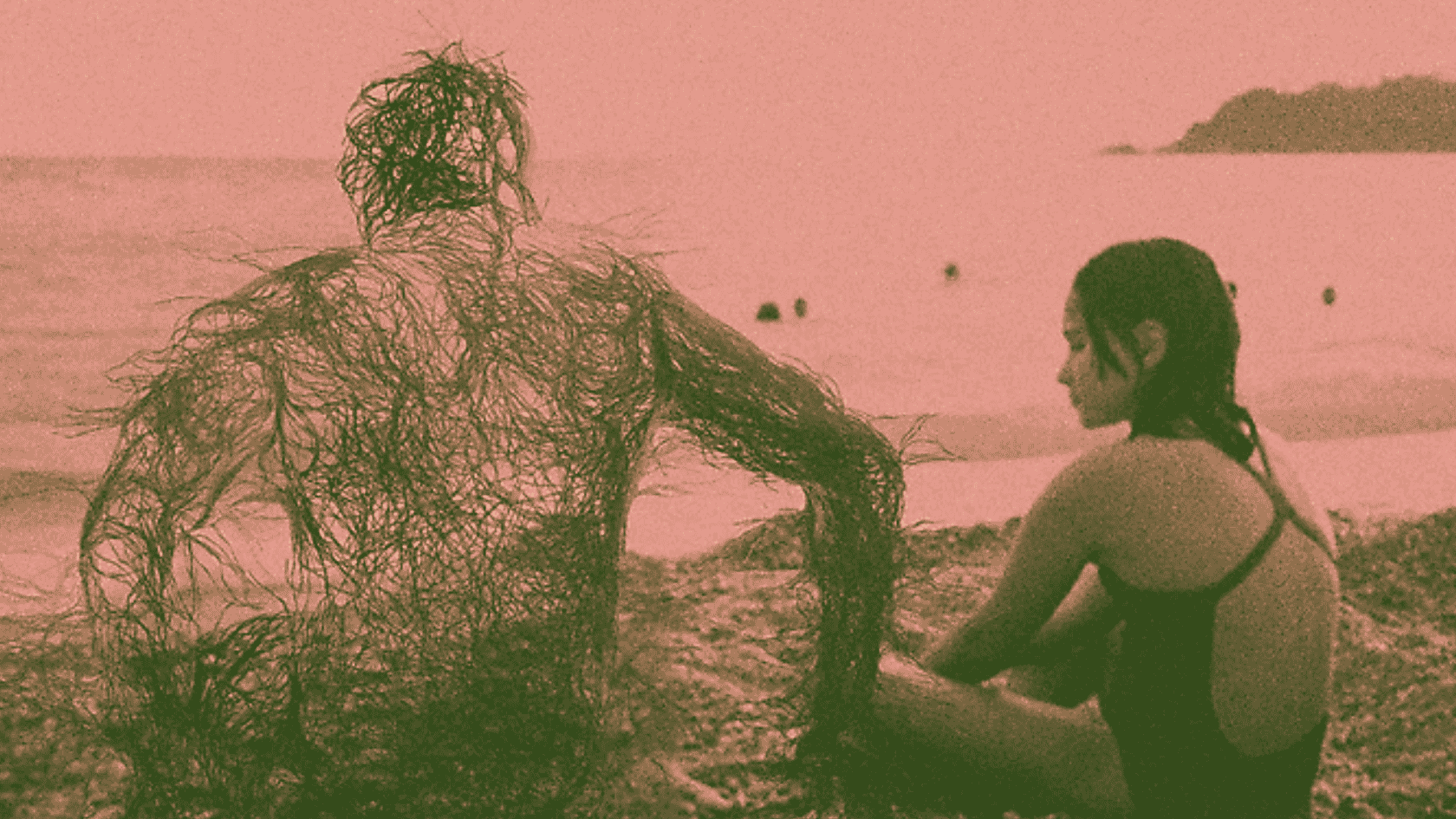
Memory is less about recall and more about reinterpretation. And it gets more painful the more we understand.
“Memory is seated predominantly in the heart.”
— Tennessee Williams, The Glass Menagerie
In 1987, I went on a family holiday to Greece. Our hotel, a plush, grand building, was billed as five-star, with a massive swimming pool and views over the Aegean Sea. It was all of those things. It was also due to close for refurbishments a few days into our holiday. That part we discovered ourselves. I can still recall the frustration and anger of my parents as we were packed off into a small bus and taken to the Greek equivalent of a Fawlty Towers. I don’t remember much about the second hotel except the dankness and a tired swimming pool with things floating in it. Still, as kids, we made the best of it. Perhaps we even enjoyed it. It was an early lesson in how two things can be true at once: parental anger and childhood joy.
This contradiction is central to Charlotte Wells’ debut film, Aftersun, released in 2022. It follows 11-year-old Sophie on a summer holiday in Turkey with her young father, Calum. Sophie is remembering this childhood holiday as an adult, some twenty years later. Pieced together through Sophie’s memory, what starts as a tender portrait of a father and daughter abroad transforms into something sadder and more elusive: an attempt to understand a parent she loved but never fully knew.
Wells has spoken of how personal the film was to her. “The emotion of the film and grief expressed is mine.” The feeling of chasing somebody lost. The two main characters are based on her and her father, with the same character traits. There is an energy and a bond between them. Those themes of grief, memory, and mental health help explain why the film has connected with people in such deep and emotive ways.
We sense something is amiss with Calum. He is warm and caring, a good dad, but there is a melancholy to him. Sophie can feel it too, but she cannot articulate it. Sophie is sensing things she can’t quite put into words. This is what children are often very good at. Wells uses objects, songs, and images to communicate some of the film’s underlying feelings. Each one suggests something different. A Polaroid photograph of Sophie and Calum on their last night slowly develops in front of our eyes, as if memory itself is forming and fading at the same time; Sophie performs a karaoke version of R.E.M.’s ‘Losing My Religion’, which was meant to be a duet, turning the song into something lonelier than it should be; Calum buys an expensive Turkish rug he can’t afford and sits and stares at its intricate patterns and weaves, as if they offer something the rest of his life cannot. Later, we see the adult Sophie has the same rug in her bedroom, suggesting both a physical connection to her father, as well as the continuation of his inwardness.
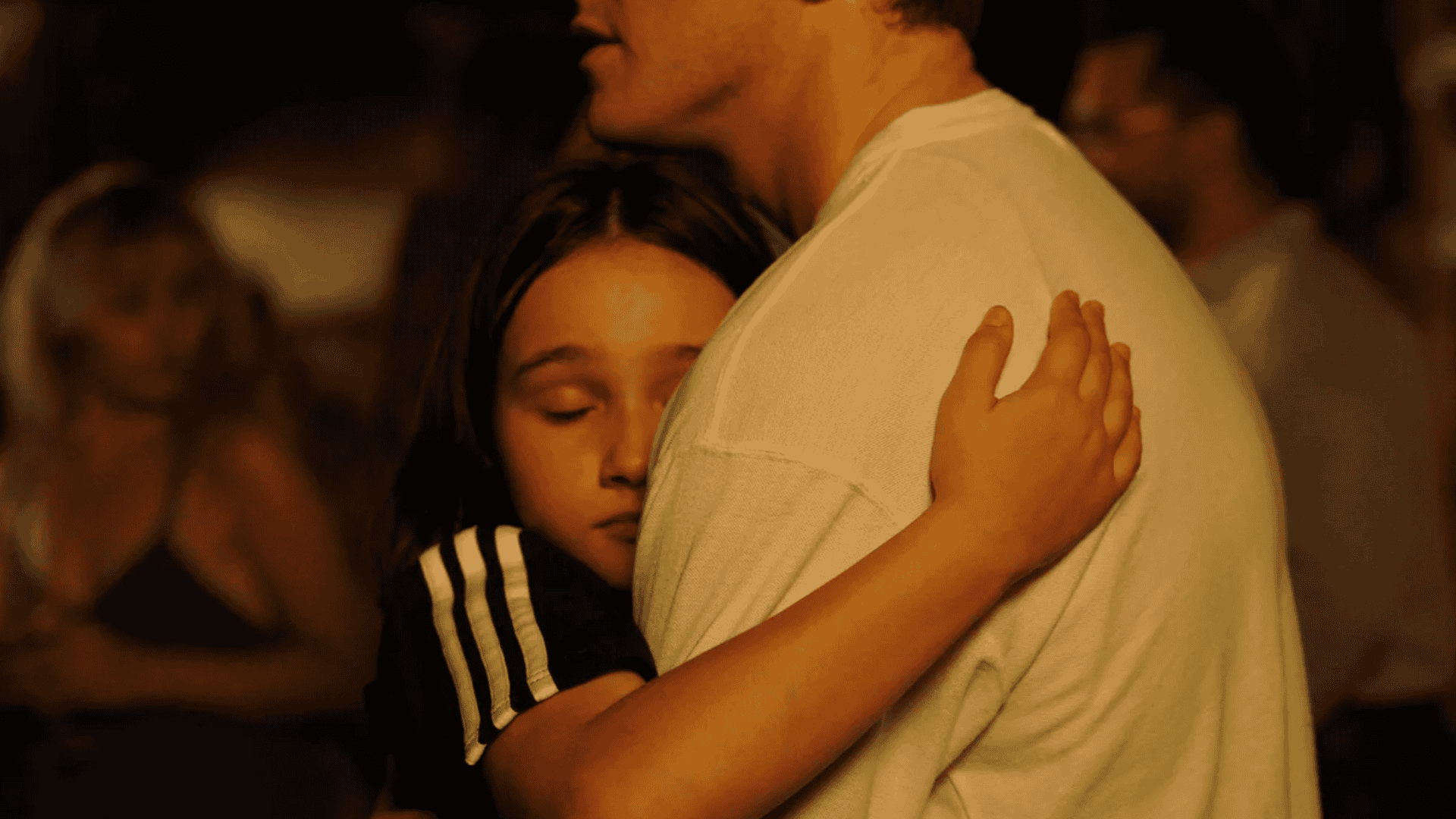
Frankie Corio and Paul Mescal in Charlotte Wells’ Aftersun (2022)
Aftersun shows how two realities can exist at once. Related to this is the theme of contradictions. Wells says, “I’m interested in contradictory things. I think people are not consistent.” Calum is a young father. His age isn’t stated, but we can place him in his early to mid-30s. Sophie sees her dad as a hero, despite or perhaps because he seems to be struggling with the very things adults are supposed to have figured out by now. She can feel his worries and how some things haven’t gone right for him. He is separated from Sophie’s mother, although he appears to have a supportive relationship with her. There are times when we can see the darkness envelop Calum. There is an unknowableness to him. Yet, despite Sophie seeing her father’s distress, she can still have a wonderful holiday.
When the film occasionally moves to the present day, to the adult Sophie, we see her not only remembering herself, but also trying to imagine her father. Research suggests adult memories of childhood are shaped by the person we become later. We fill in the blanks, make sense of things, and turn fragments into a story. Sophie is recovering that childhood experience with her father back in the late 1990s and translating it into a form she can understand. She is trying to get in, trying to reinterpret what was really there, imagining her father’s life more fully. She may have been trying a long time. It’s hinted Sophie may be carrying a similar weight to her father. That bridge from the past to the present is what gives the film its emotional resonance, and why so many have connected to it.
Throughout the film, Calum is obscured, both in form and emotion. We see him through reflections and partial images. Memory doesn’t serve a whole person, only glimpses. At one point, Sophie and Calum have a conversation through a camcorder. Calum is off-centre. We see his books, one on Tai Chi, others on meditation. We might assume these books have been sought to help rebalance him. The structure and style of the film are representative of memory. Bits are missing, blurred, left out completely. The look of the film is intentional too. The colour grade is matched to the old glossy family photos from the 1990s. Warm, bright, and lush. Aftersun has the look of one of those big colourful water parks you begged your parents to take you to. There might still be a photo in an old album somewhere.
If adult Sophie arrives at an understanding of her father, it is one that cannot be acted upon. Sophie can understand him better, but she cannot reach him. This comes to a head in the Queen and David Bowie version of ‘Under Pressure’, fused with the strobe-lit rave imagery, where past and present are briefly united, father and adult daughter struggling to find each other in the search for forgiveness. It is a crushing scene.
We don’t remember childhood whole. It comes back in fragments. The adult mind doesn’t recover the child’s experience intact. It translates it, and in translating it, it changes it. It can warm and it can wound. That is what we live with.
Like a Polaroid photo. Scratched, faded, still pinned to the side of a fridge, revealing more than it did when it was first taken.
Pass It On
If this idea was worth your time, it may be worth someone else’s.
Share this essay with a friend:
https://www.deeplifejourney.com/deep-life-reflections/april-3-2026
If you have a thought you’d like to share, please leave a comment below.
You can read all previous issues of Deep Life Reflections here.