
Thinking vs Understanding Yourself
Why some introspection leads to clarity, and some to illusion.
Deep Life Reflections | Essay 160 | James Gibb
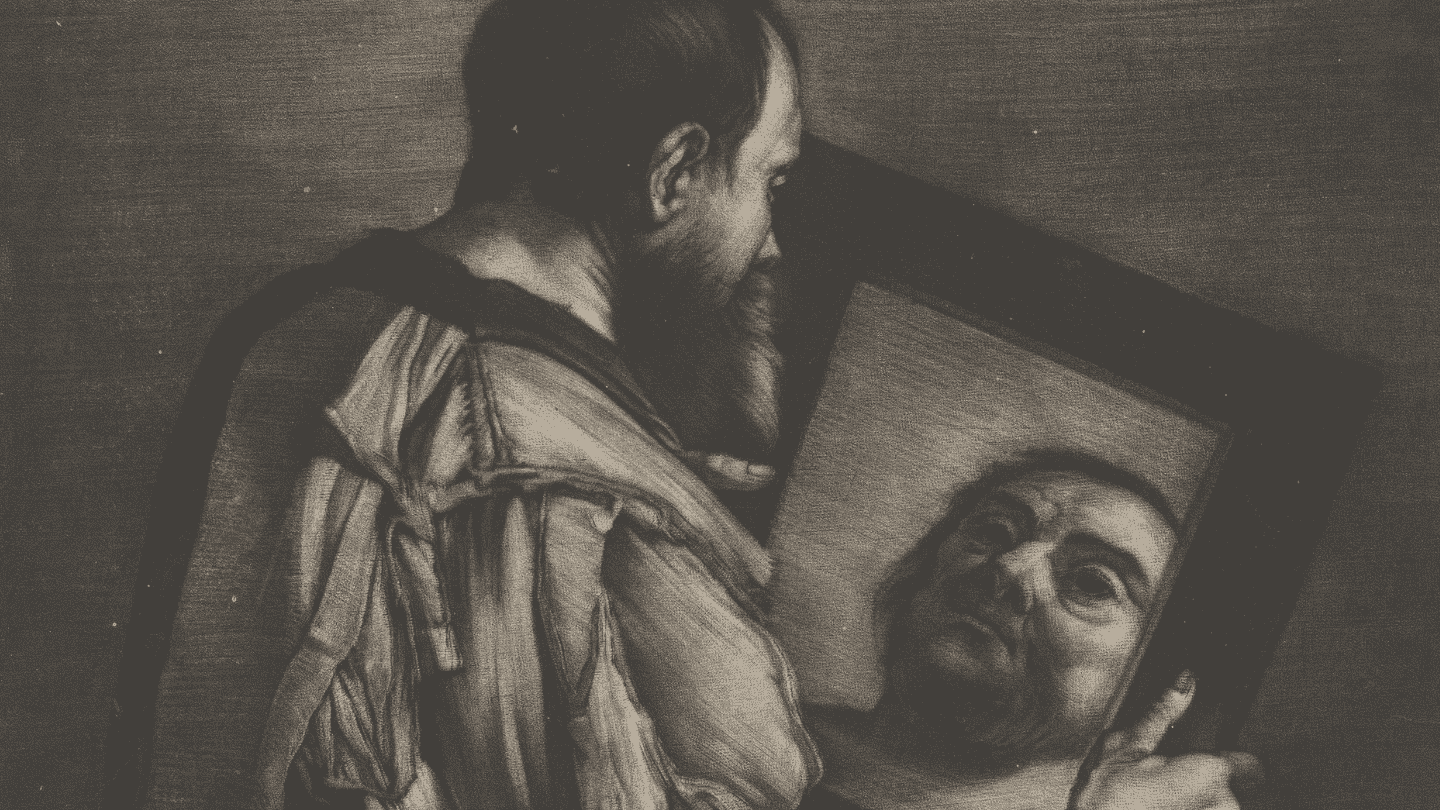
Introspection can clarify your life—or distort it. The difference is whether it produces insight or just better self-justification.
A few weeks ago, the billionaire tech investor Marc Andreessen said that he aims to have “zero” introspection in his life, or “as little as possible.” People who dwell on their inner world, he argued, get stuck there. Far better to move forward and never look back. He added that introspection is a folly invented in the 20th century. “If you go back 400 years ago, it never would have occurred to anybody to be introspective.” Following much criticism, Andreessen stood his ground: “It is 100% true that great men and women of the past were not sitting around moaning about their feelings. I regret nothing.”
Andreessen’s comments bear the blunt certainty of someone who has mistaken personal preference for universal truth. They also reflect much of the current Silicon Valley ethos, the relentless party line to “move fast and break things.” He is also incorrect in his understanding of history. Socrates, Marcus Aurelius, Thomas Aquinas, and a library full of writers, poets, inventors, artists, generals, philosophers, and scientists would all have something to say about introspection being a 20th-century creation. History has shown that men and women have long reflected, acted, and created in ways that have enriched humanity.
Andreessen’s claim is easy to dismiss, and indeed it should be. Yet there is something of a kernel of truth in there: that some introspection actually makes us worse.
To understand why introspection can go wrong, it helps to be precise about what it is. At its simplest, introspection involves two distinct acts. The first is noticing what you feel: the stream of emotions, impulses, and reactions that shape your experience moment to moment. The second is explaining those feelings: creating a story about where they come from and why they appeared. We are reasonably good at the first. If pressed, most people can put a name to what they are feeling.
We are not so good at the second. When asked to explain ourselves, we tend to fabricate something, generating an account that feels plausible and coherent, or at least acceptable. We tell ourselves we are angry because someone else was rude, when what we really felt was embarrassment. We say we don’t have enough time to exercise or read, when in truth we have decided other things matter more. In other words, we make things up without realising why we are doing it. The story may contain grains of truth, but it’s shaped as much by what we need to preserve—competence, control—as by what actually happened.
This is where introspection begins to fail. We look inward too quickly and too neatly. We immediately start editing the story instead of standing back and observing it. We tell the first story that makes us feel acceptable.
This is the difference between introspection and insight, and it’s a critical one. They’re often treated as the same thing, but they are very different. Introspection is the act of thinking about yourself. Insight is the accuracy of what you come to understand. It is entirely possible to have a great deal of the former and very little of the latter. Jean-Jacques Rousseau, one of the first great introspective writers, created rich, searing, and often beautiful reflections, but they tended to bend toward self-justification. His Confessions was deeply introspective but often defensive, and scholars have noted important inconsistencies between his accounts and the historical record.
Some research suggests introspection and insight can in fact move in opposite directions. People who spend more time reflecting on themselves are often more stressed, anxious, and less satisfied, not more. Reflection on its own doesn’t clarify for the simple reason that if the stories you tell yourself are flawed, then more time spent rehearsing them only makes them feel more true. Someone can spend hours examining themselves and come away knowing much less than when they started.
Our emotions are signals. Introspection is how we decide whether to trust them. To name a feeling is often to loosen its grip. To write things down is often to give them shape. And to recognise that emotions are part of how we make decisions is to see them not as interruptions to thought, but as part of thought itself.
People who are good at introspection are searching for insight, not just reflection. They tell stories that don’t airbrush flaws or setbacks. They have a full palette. As James Baldwin wrote, “Not everything that is faced can be changed, but nothing can be changed until it is faced.” They also tend not to ask why questions, but what, where, and when questions. Good introspectors notice their own patterns of behaviour without getting dragged into rumination or spiralling into self-absorption. They have a specific goal in mind, too. They don’t want to live in a permanent state of self-examination, but to understand themselves well enough to return their attention to the world and act on the daily matters at hand.
There is a useful way to think about the difference between good and bad introspection. The writer David Brooks likens bad introspection to archaeology. It keeps digging inward, convinced that somewhere beneath the layers there is a final buried truth waiting to be uncovered. Good introspection is closer to journalism. It requires some distance. You pay attention not just to what you think, but to what you do. You watch your own behaviour closely, as if reporting on someone else, and try to describe it honestly.
Bad introspection digs; good introspection observes.
I recently read Percival Everett’s 2001 novel Erasure, which was made into the 2023 film American Fiction. It is one of the few times I have held both the book and the film of the same source material in the same high regard. Its central character, Thelonious ‘Monk’ Ellison, is the embodiment of bad introspection. A gifted writer and intellectual, he is highly introspective, but his thoughts mostly confirm what he already believes. He tells himself the same fabricated story repeatedly, which reinforces his superiority and sharpens his critique of others. He is brilliant at spotting hypocrisy in the publishing industry, but when it comes to himself, he is rigid and distant.
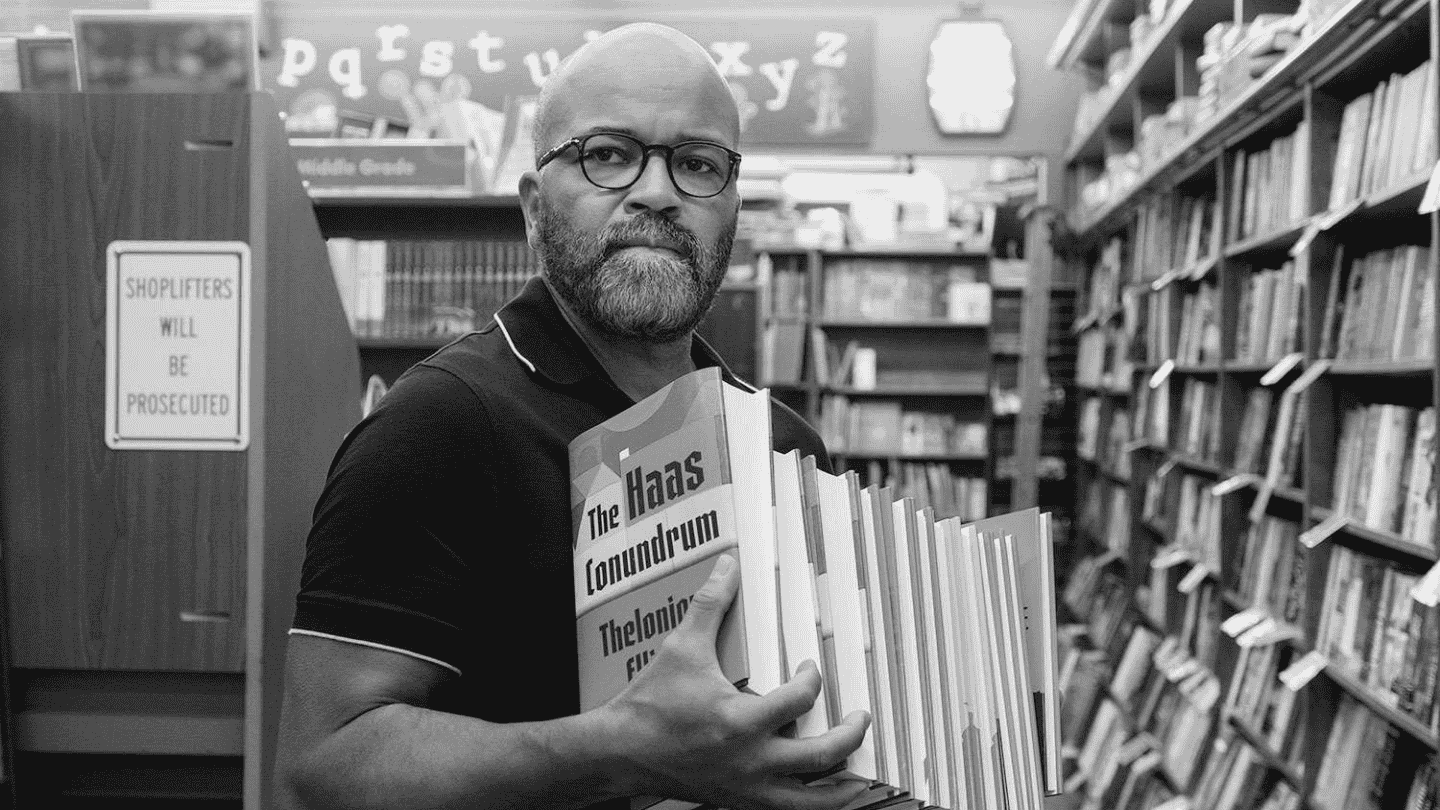
Jeffrey Wright as Thelonious ‘Monk’ Ellison in American Fiction, adapted from Percival Everett’s novel, Erasure
That isn’t to say Monk lacks self-awareness, because he has plenty of it. But he is also guilt-ridden and self-loathing, and his introspection doesn’t lead to revision. It justifies his thoughts and behaviour. This is one of the critical differences between the book and the film. In the film, Monk has some kind of redemption, or at least the beginning of it, by letting other people in, if only a little. That small window allows him to adjust.
On the flip side, the character of Samuel Hamilton from another novel I recently read, John Steinbeck’s East of Eden, shows the utility of good introspection. He is the pivotal moral character in the story. Samuel has self-knowledge, but he doesn’t wear it heavily. He understands his own limits, his disappointments, and the harder facts of life, yet this never thickens into self-pity. It gives him warmth, humour, and an ability to meet others where they are. His introspection leads outward, helping him see people more clearly, not just himself. That’s what makes him so valuable in the novel, and why others have a prodigious respect for him. He is not forever searching for some buried truth about his identity. He pays attention, takes stock, and then returns to the world with greater tenderness and wisdom.
Samuel’s introspection produces what Monk Ellison’s does not: adjustment, perspective, and the capacity to help others.
This capacity to help others is often the result of having gone through enough introspection to achieve some self-knowledge, and then turning your attention outward. This is what Andreessen badly misses. He is wrong to reject introspection entirely, but there is something valid in rejecting its worst form. The goal of introspection is not to think about yourself forever, but to understand yourself just enough so you can stop. Enough so you can act with a clearer mind and a sense of steadiness, purpose, and usefulness in the world.
History is full of such people.
They show that the value of introspection lies in what it offers once the self is no longer the only subject.
Pass It On
If this idea was worth your time, it may be worth someone else’s.
Share this essay with a friend:
https://www.deeplifejourney.com/deep-life-reflections/april-10-2026
If you have a thought you’d like to share, please leave a comment below.
You can read all previous issues of Deep Life Reflections here.
This week’s cover image is Socrates Looking in a Mirror by the artist Bernard Vaillant (Dutch, Lille 1632–1698 Leyden).