
Restarting the Engines
Why Artemis II matters as a return to civilisational ambition.
Deep Life Reflections | Essay 161 | James Gibb
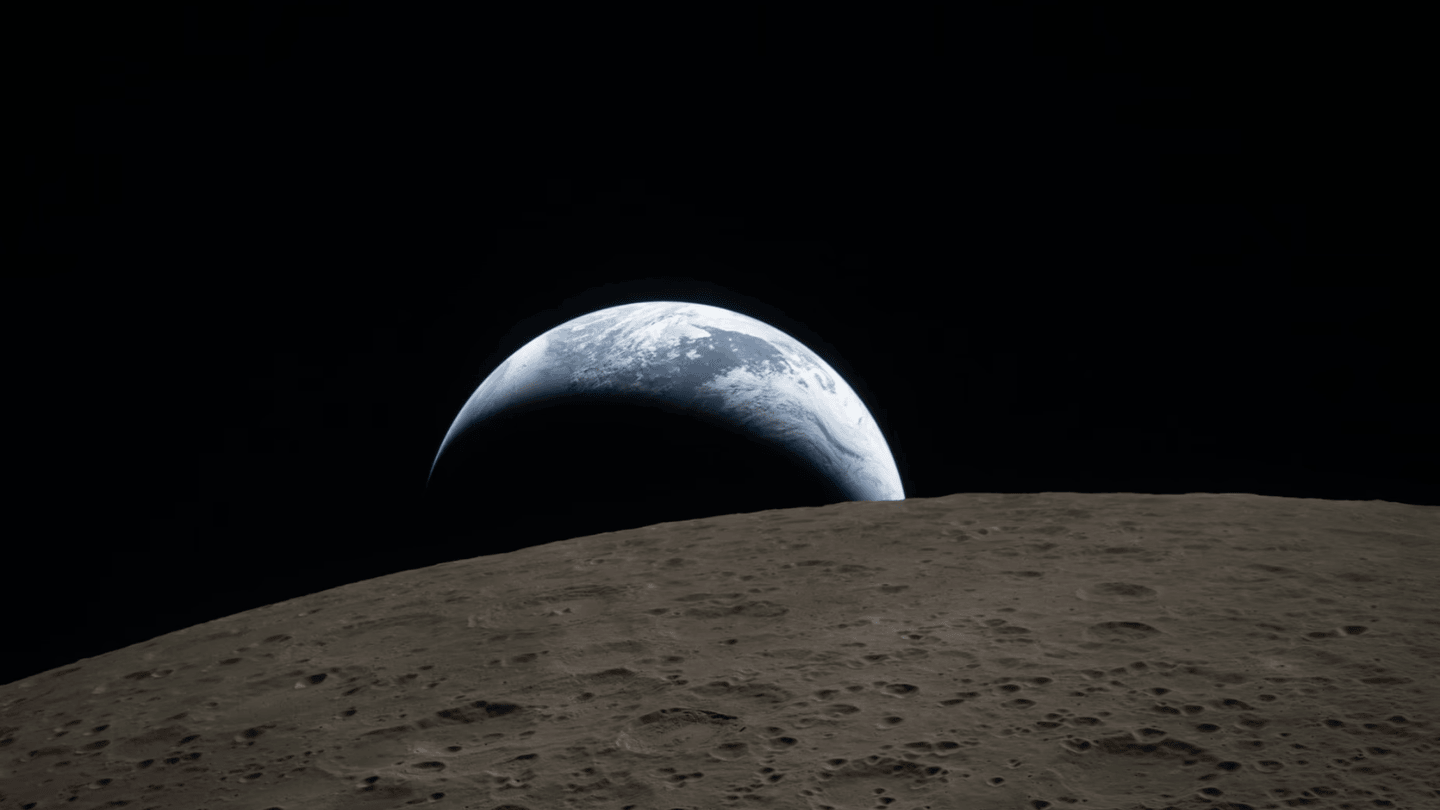
Our recent journey back to the moon matters because it pointed human ingenuity back toward difficult, civilisational goals at a time that has too often wasted invention on distraction and convenience.
“It suddenly struck me that that tiny pea, pretty and blue, was the Earth. I put up my thumb and shut one eye, and my thumb blotted out the planet Earth. I didn't feel like a giant. I felt very, very small.”
—Neil Armstrong, Apollo 11, 1969.
“There is nothing normal about this. Sending four humans 250,000 miles away is a Herculean effort, and we are now just realising the gravity of that.”
—Reid Wiseman, Artemis II, 2026.
The Ancient Egyptians gave us the Great Pyramid of Giza. The European Enlightenment rewrote the rules on science, politics, and democracy. The Ancient Greeks birthed rational inquiry while the Islamic Golden Age helped preserve and expand it. History offers many other examples across civilisation. They all had a pattern: doing something massively difficult, organising something highly complex, changing how humans think, and expanding the boundaries of the known world.
Today, we are still capable of civilisational feats, but we are uneven and often distracted. The Apollo 11 moon landing is arguably the best singular example of the realisation of human ambition. Since then, advances in DNA, gene therapies, global communication, distributed computing at a planetary scale, deep space observation, and artificial intelligence belong in the company of the Industrial Revolution, the Enlightenment, and the Apollo missions. But the intent is inconsistent. A lot of our best and brightest minds are focused on things like refining ad-targeting systems, optimising engagement loops, and building products that consume and waste our time and attention. This is hardly decoding the laws of physics, constructing aqueducts, or mapping the galaxy.
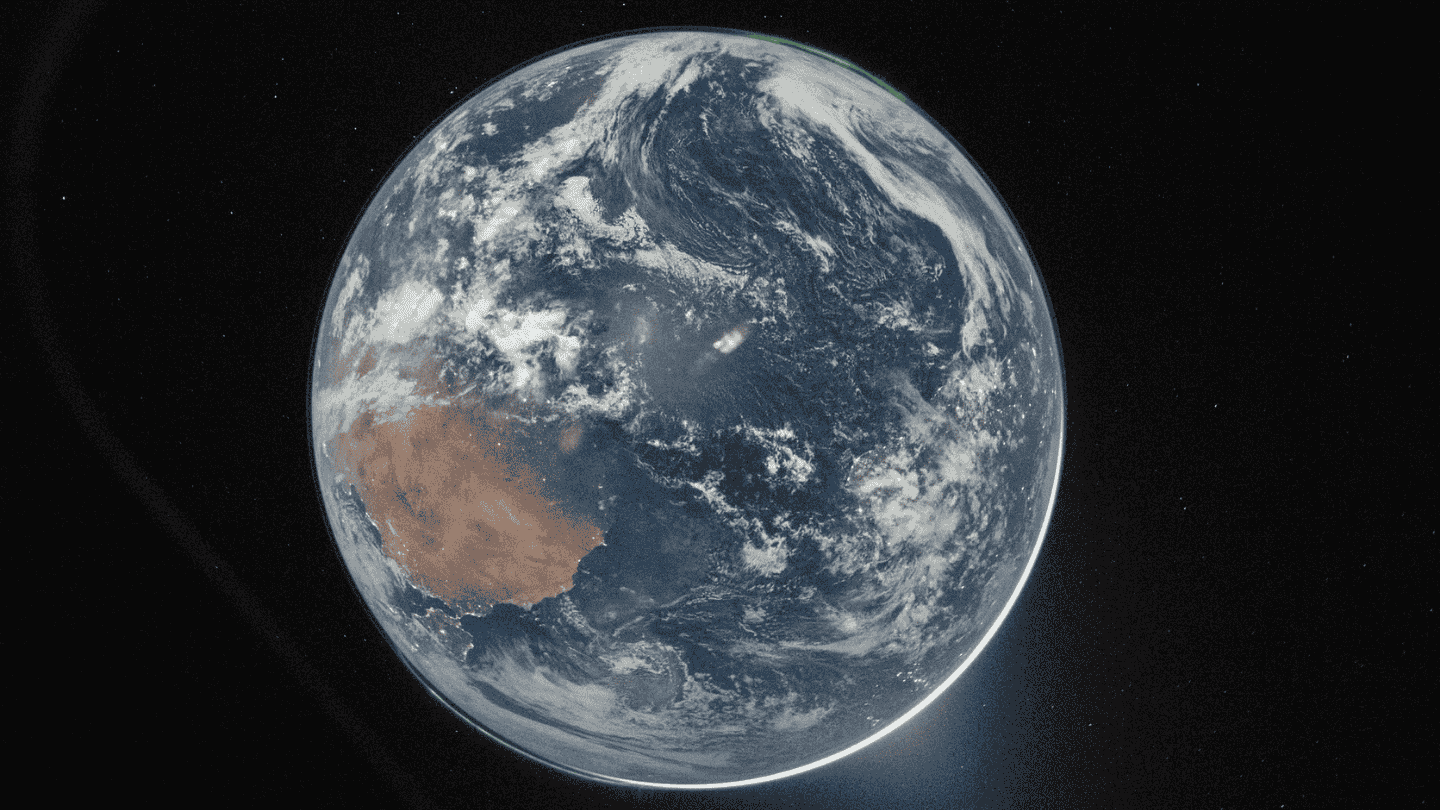
Reid Wiseman’s photo of Earth from Artemis II
Which is why I believe the recent success of Artemis II is so important. It is much closer to past civilisations’ efforts to make something that endures or expands the frontier, and has far less in common with today’s default setting: make something that scales quickly and captures attention. Artemis II followed a path that has too often been diluted and deprioritised. Mission commander Reid Wiseman’s words humbly capture the effort of getting back on that path.
By being the first crewed lunar flyby in over 50 years, Artemis II took its four astronauts farther from Earth than any humans had ever travelled. On April 6, 2026, Wiseman, Christina Koch, Victor Glover, and Jeremy Hansen swung around the far side of the moon. Yes, the astronauts didn’t leave their ship, nor did they set foot on the moon like the twelve men before them, the last being Gene Cernan in December 1972. But this mission was about foundations and continuity. NASA has plans for future moon landings and this mission was a vital cog in that long-term project. Future astronauts will lay the foundations for the space agency’s ambitious goal of a nuclear-powered moon base by 2030.
The photographs captured by the astronauts aboard NASA’s Orion spacecraft not only gave us views that reminded us of our infinite smallness, but also reinforced that the affairs of the world take on a different hue from that rarified atmosphere. Staring down at a vantage point only a handful of human beings have ever occupied must produce a sense of all-seeing wisdom, if only for a limited and temporary time. The joy of those images of Earth—the blue planet, the blue marble—is a gift to all those who inhabit it, except perhaps the flat earthers who must have endured a tough week.
There is some geopolitical symmetry between Artemis II and Apollo 8, that first historic lunar flyby in December 1968, commanded by Jim Lovell. Lovell and his two fellow astronauts looked down at a planet shadowed by the Vietnam War, as well as an America fractured by the recent assassinations of Martin Luther King and Robert Kennedy. By the time of Artemis II, the backdrop had shifted to war in the Middle East and a global energy crisis. There was a time when American exceptionalism in space drew generous praise from rival powers. A Soviet scientist once congratulated the United States on an Apollo mission, saying it marked a new “stage in the development of the universal culture of Earthmen.” It is hard to imagine that being replicated today.
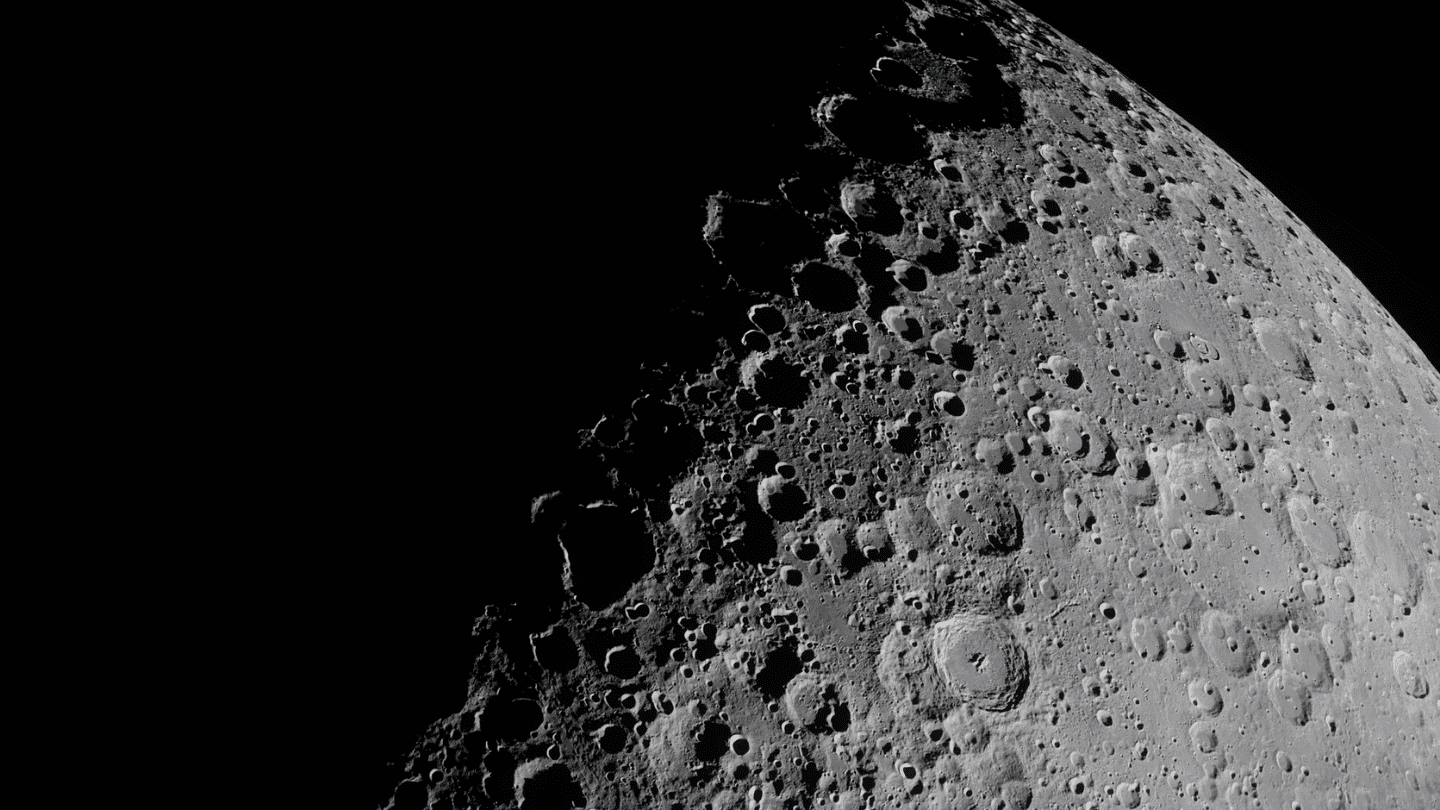
The crew of Artemis II capturing a portion of the moon coming into view
What we do know is that Apollo 11, which put man on the moon in July of the next year, did not lead to a glorious space future in the way its original architects had hoped. Nor did it fulfil the celestial visions of the filmmakers and artists who drew inspiration from NASA’s Mercury, Gemini and Apollo programs, and imagined futures far grander than the one that followed. Futures like those in Stanley Kubrick’s 2001: A Space Odyssey, in which space travel went beyond the moon to Jupiter, the infinite and beyond. For all the majesty of Apollo, the program took on a nostalgic glow because so many of the possibilities it opened were left unexplored, like those big shadowy craters on the far side of the moon.
But with Artemis II, those huge rocket engines have been restarted. It is a symbolic reorientation of intent toward something that expands our knowledge and understanding for future generations. Something larger than distraction and convenience.
A return to the difficult, civilisational goals that capture the best of human ingenuity.
Pass It On
If this idea was worth your time, it may be worth someone else’s.
Share this essay with a friend:
https://www.deeplifejourney.com/deep-life-reflections/april-17-2026
If you have a thought you’d like to share, please leave a comment below.
You can read all previous issues of Deep Life Reflections here.