
The Talented Mr. Pollock
On Jackson Pollock, learning to draw, and what we call talent.
Deep Life Reflections: Essay 180 | August 28, 2026 | By James Gibb
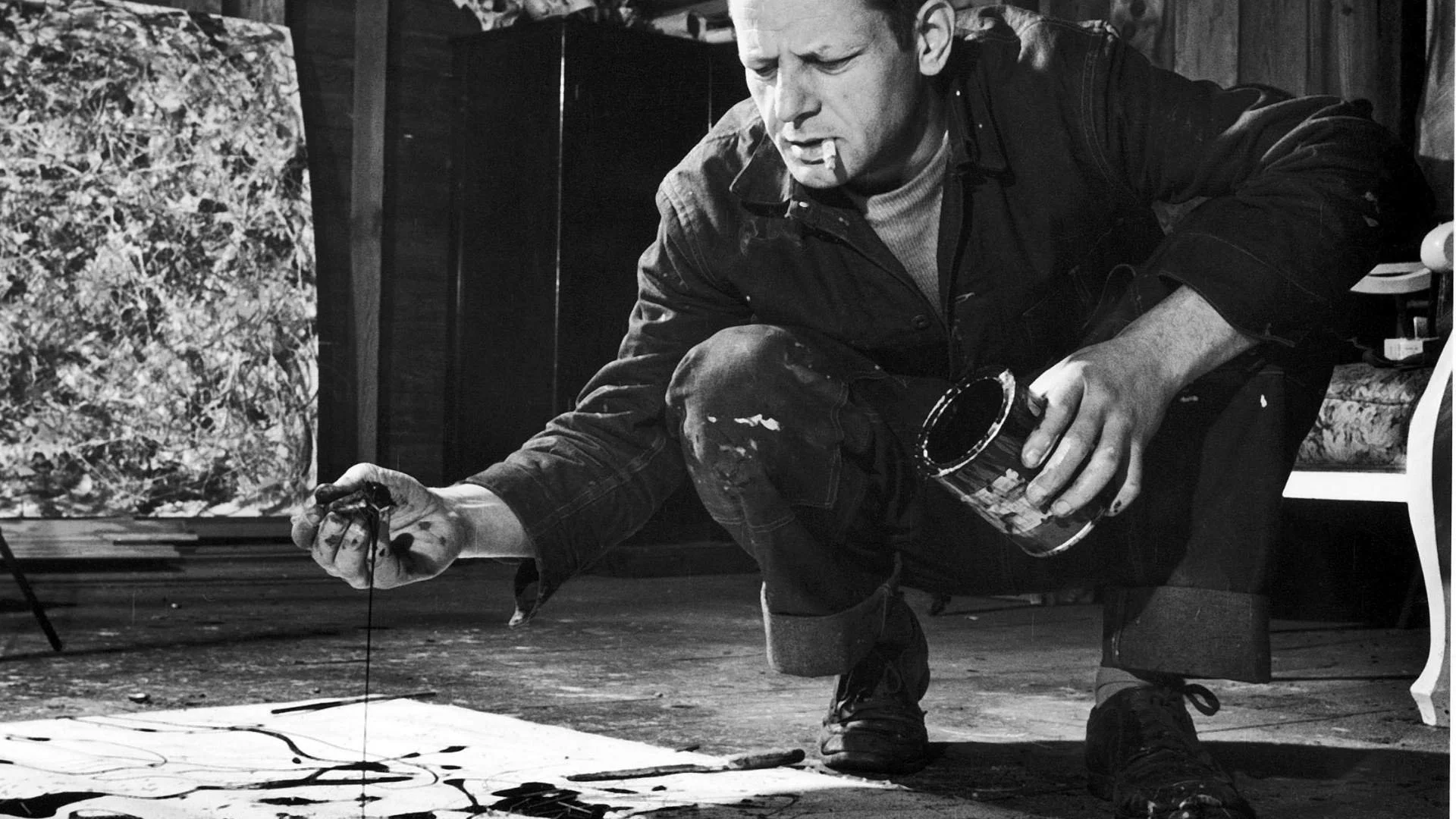
Talent is a word we use with remarkable confidence, both to explain what others can do and what we believe we can’t.
“Something in me knows where I’m going.”
—Jackson Pollock.
When it comes to the study of talent, the world of art and its creamy palette of geniuses is overflowing. In Jackson Pollock, one of America’s finest artists of the last one hundred years, we have a human study in talent, damage, obsession, support, failure, and the curious alchemy through which a person becomes more than they first appeared to be.
Jackson Pollock came from a poor and rootless rural American family so disconnected that even their surname was not their own. His father, given away as a child, perhaps even sold, was raised by a farming couple called the Pollocks who treated him more as a servant than a son.
Unlike, say a Pablo Picasso, whose artistic ability was recognised at an early age—his painting, Man in a Beret, at the age of just 14, already demonstrated astonishing technical assurance—Pollock’s trajectory was far less straightforward. Looking backwards, knowing what Pollock became, it’s easy to assume greatness must always have been there, simply waiting to reveal itself like the unveiling of one of his masterpieces. But Pollock in those early years was far from a trailblazer. When he arrived in New York at 18 to study art, his teacher, Thomas Hart Benton, recognised Pollock’s “intense interest” in art and felt he had the makings of “some kind of artist.” But he noted his apparent lack of facility. Hardly a prediction of future greatness. And yet, Pollock would go on to revolutionise modern art.
I first came across the work of Jackson Pollock in the early ‘90s through one of my favourite bands, The Stone Roses. Their debut album cover, painted by guitarist John Squire, a talented artist in his own right, was a direct homage to Pollock. Squire replicated Pollock’s iconic ‘drip technique,’ where liquid household paint is poured or splashed onto a horizontal surface. This unconventional approach would transform Pollock into the major figure of a new art movement.
In 2000, Ed Harris, who bears a striking physical resemblance to Jackson Pollock, both starred in and directed Pollock, a film dedicated to the life and career of the painter. Harris’s tortured portrayal earned him an Oscar nomination for Best Actor, a reward for the six years of struggle it took to bring this project to the big screen. The film convincingly recreates the beauty and originality of Pollock’s greatest works while also confronting his lifelong battles with depression and alcoholism. It’s not an easy watch at times, as Pollock frequently implodes with the same intensity as his art.
We meet Pollock as a desperate, failing artist struggling to survive in 1940s New York. Declared medically unfit for war due to alcohol dependence and depression, Pollock’s life was shaped by two pivotal relationships. The first was with fellow artist Lee Krasner, who became his wife, most ardent supporter, and critic. Her influence was crucial in refining his technique and pushing the boundaries of his creativity, ultimately leading to the development of his innovative drip painting style. Marcia Gay Harden’s portrayal of Krasner earned her a Best Supporting Actress Oscar, capturing the essence of Krasner’s intuition that greatness often comes from willingly allowing messes to be made.
The second crucial relationship for Pollock was with Peggy Guggenheim, the influential art collector who gave him his first solo exhibition and financial support. Her backing helped establish Pollock as a leading artistic figure, though he earned little money from his art during his lifetime. It wasn’t until after his death that his work gained widespread acclaim and value, with his masterpiece Number 5, 1948 selling for $140 million in 2006, one of the highest prices ever for a painting.
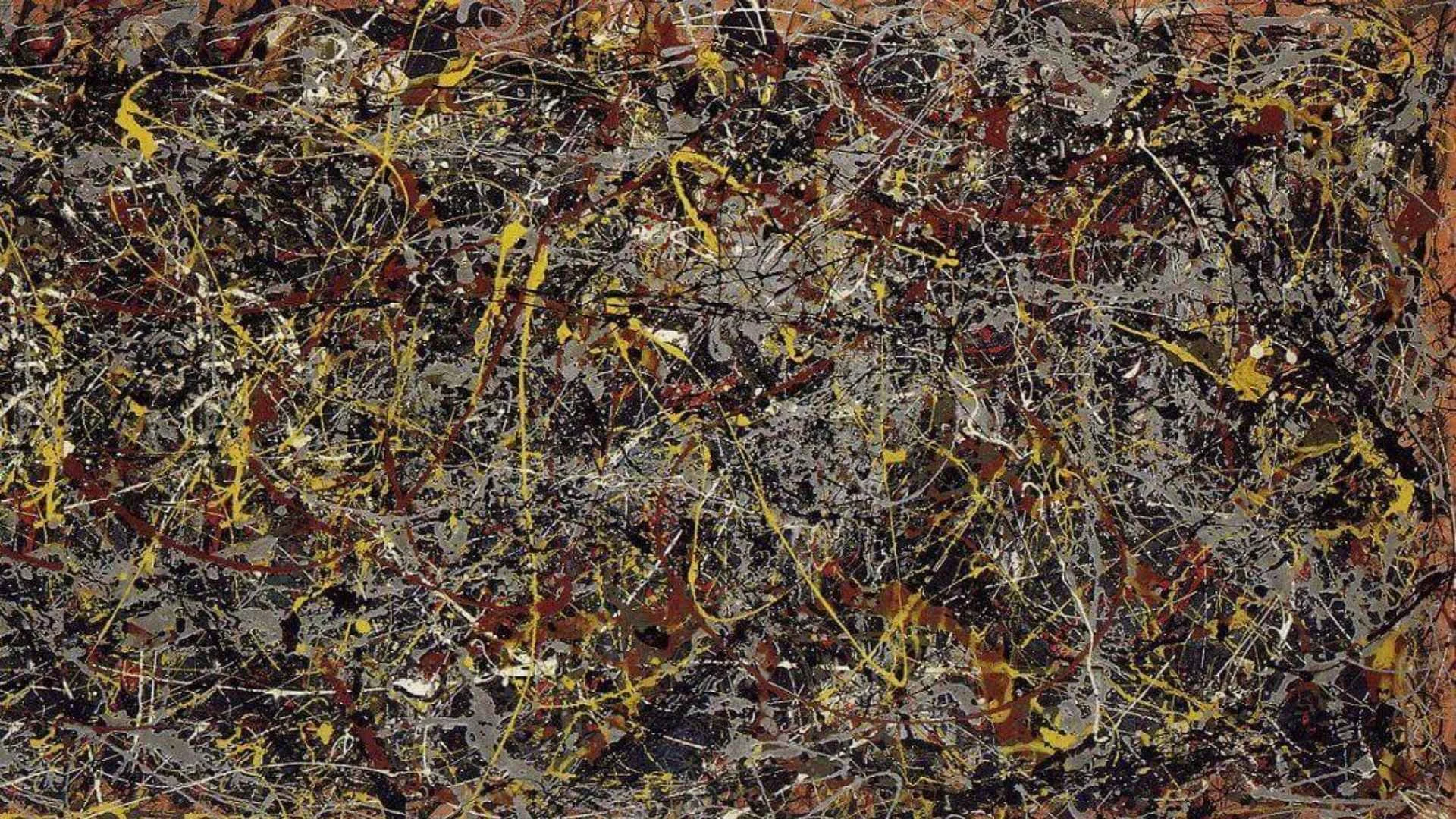
Number 5, 1948 by Jackson Pollock
Pollock needed the freedom to experiment. He also needed someone who could see something in him before others did, as well as the financial support that gave him breathing space and time to work. And he needed years in which to discover a way of painting that was unmistakably his own. It isn’t the usual blueprint of talent.
If the film does one thing especially well, it’s in the way it captures a fundamental aspect of Pollock’s worldview: he was wildly in love with the idea of being an artist—something Benton saw in his student all those years earlier. Art consumed Pollock’s thoughts and infused his soul. When he ran aground, support from people like Krasner got him back in the water. He honed his craft until his own Cambrian explosion produced a dizzying outpouring of original paintings that flowed from his febrile, unconscious mind. Pollock became the most famous face of the art movement that emerged in New York during the 1940s. Abstract Expressionism.
When I saw a Pollock exhibition at the New York Museum of Modern Art (MoMA) in 1998, each piece was sublime, unlike anything I’d seen before or since. Standing in front of these finished paintings, of course, you see none of what came before. Only the work itself. And because the work is extraordinary, extraordinary talent seems the obvious explanation.
I’ve long believed artistic talent is something you’re born with. Some people just have a particular talent for drawing and others don’t. This was reflected in my art classes at school. Today, many years later, I still consider myself pretty terrible at drawing. But I came across Betty Edwards’ Drawing on the Right Side of the Brain, which made me reconsider my view.
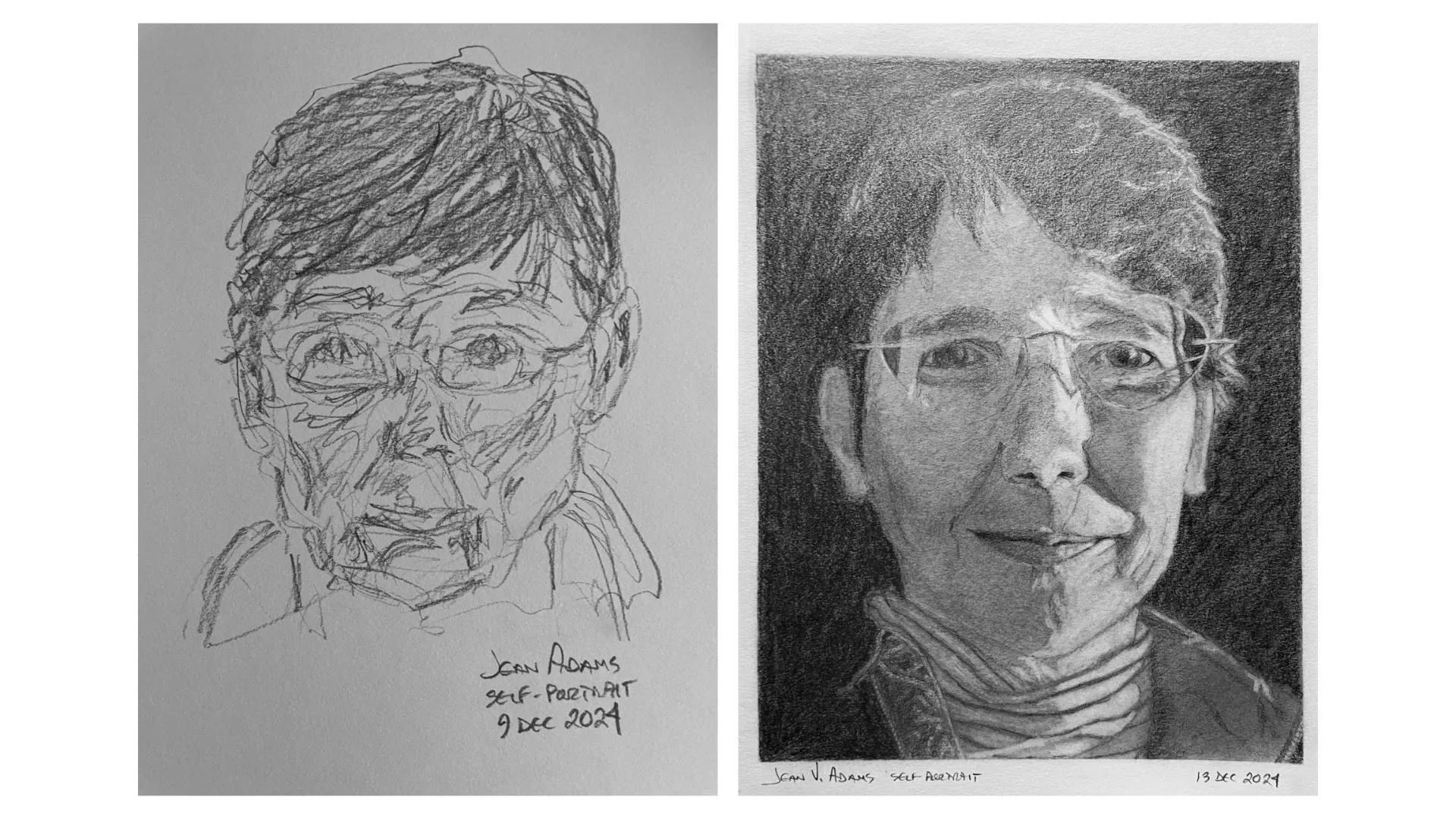
The results of Betty Edwards’ Drawing on the Right Side of the Brain intensive class. The same artist only five days apart.
In her book, Edwards shows before-and-after self-portraits from people who took her short drawing course. There are only five days between when they started the course and when they drew their self-portraits. And it’s like night and day. Edwards recognises that most people—like me—view drawing as a magical ability only a few possess. But this is partly because people don’t understand the learnable components of drawing, largely seeing skills not drawing skills. Anyone can learn these seeing skills: the ability to perceive edges, spaces, relationships, light, and shadows.
I’d always assumed my inability to draw was exactly that: an inability to draw. Edwards sees the problem further back, in how I was looking.
Can anyone do anything? I’m not sure about that. Probably not.
Natural ability clearly exists. People begin from different places and travel at different speeds. For Picasso the boy-genius there is Pollock the boy-average. Until there isn’t. Talent can be a strange word. We use it to explain what someone else can do, and just as easily, why we can’t do it ourselves.
Perhaps we’re too quick to decide what we’re capable of before we’ve properly understood what the capability actually requires.
Pass It On
If this idea was worth your time, it may be worth someone else’s.
Share this essay with a friend:
https://www.deeplifejourney.com/deep-life-reflections/august-28-2026
If you have a thought you’d like to share, please leave a comment below.
You can read all previous issues of Deep Life Reflections here.