
The Difficult Second Act
On second acts, the failed films of Ed Wood, and continuing anyway.
Deep Life Reflections: Essay 179 | August 21, 2026 | By James Gibb
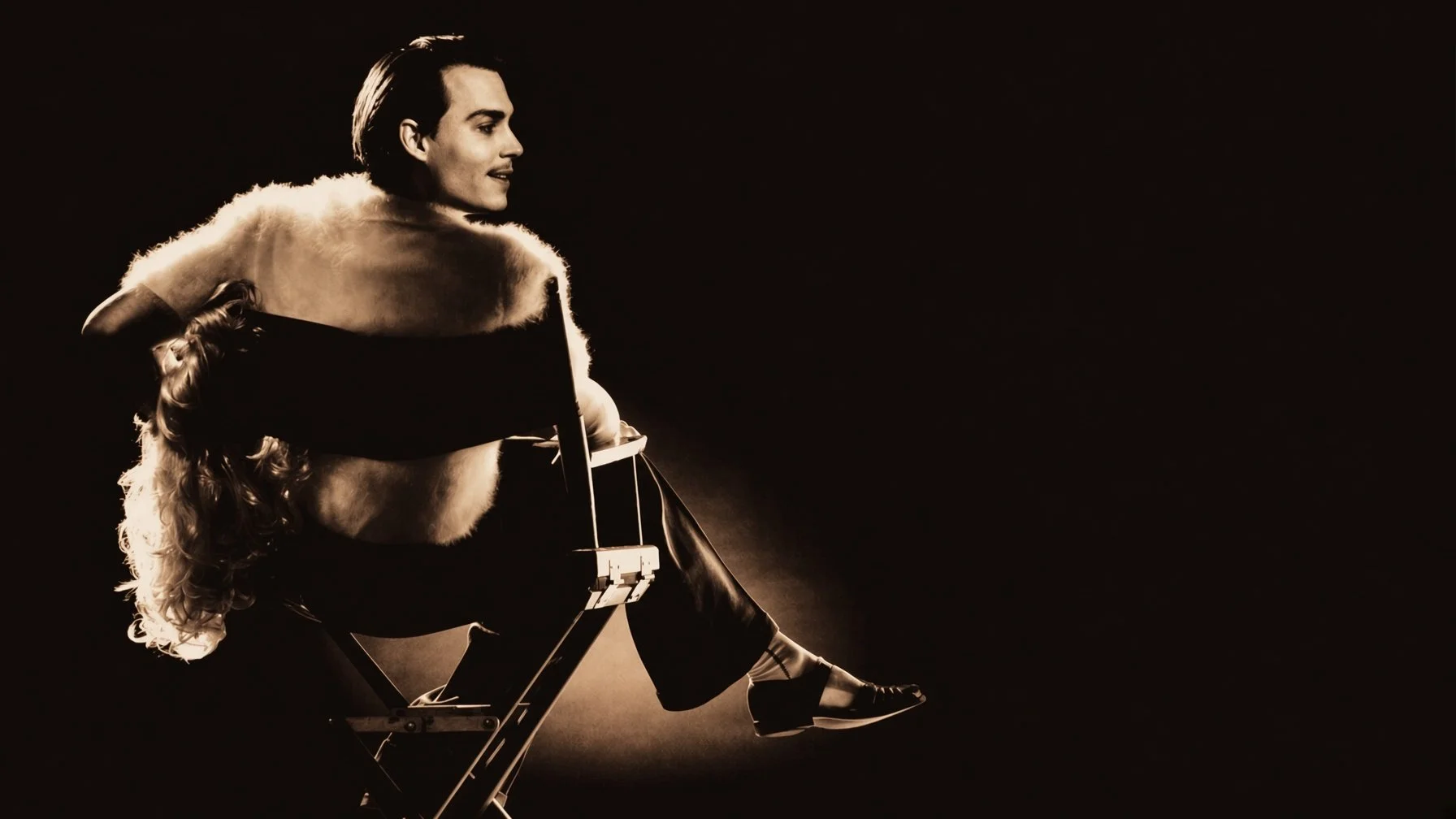
Reinvention doesn’t have to look impressive or even successful to matter. Sometimes the meaning is found in the work itself.
“This is the one. ‘This is the one I’ll be remembered for.”
—Ed Wood
Most people have heard of Orson Welles, the actor, writer, and director behind iconic and acclaimed films like Citizen Kane, The Magnificent Ambersons, and Touch of Evil. Far fewer people, however, have heard of Edward D. Wood Jr., an actor, writer, and director from the same period as Welles. Unlike his hero Welles, Wood was ignored throughout his spectacularly unsuccessful filmmaking career and died in penniless obscurity.
Wood was no undiscovered genius though, like say a Vincent Van Gogh. He was not a misunderstood creative ahead of his time. Wood made terrible films, and that’s being kind. He was only ‘rediscovered’ in the 1980s when he was labelled ‘The Worst Director of All Time.’ His 1958 film Plan 9 From Outer Space has a rating of 3.9 out of 10 on IMDb, one of the lowest scores in film history. It is not an unfair ranking. (As an aside, in Murcia, where I live, there is a bar close by called Plan 9 in homage to the film. I celebrated my 50th birthday there.)
In 1994, Wood was dusted down and given a full-length biopic by no less than Tim Burton, starring his go-to man, Johnny Depp. This film, Ed Wood, might be the strangest biographical film ever made, yet also one of the most charming. The Los Angeles Times called it “thoroughly entertaining if eccentric… amusing in a cheerfully preposterous way,” which is a pretty accurate description. The film won two Oscars, far eclipsing the profile and accomplishments of its real-life protagonist.
Burton tells the story of an ambitious and complex man who tries his best to realise his Hollywood dreams despite his very obvious lack of talent. It’s an ode to the peculiar, the persistent, and the iron rod of belief in oneself. Burton, in his own unique visual style, recreates 1950s Hollywood in glorious black and white. And rather than ridicule Wood, he honours him. Burton has made a film about the exquisite joy of making movies. Wood is never happier than when filming his movies; his energy, passion, and exuberance are relentless. He is a man who loves every scene. We never see him ask for a second take. Every take is “perfect” even when it is clearly not, as in one case when a character walks through a door and the fake cardboard wall shakes. Wood isn’t interested in whether the wall looks convincing, and Burton takes some delight in that. Wood is a director who doesn’t seem to ever improve. It’s a film that makes his ridiculousness endearing, even as it repeatedly undermines his work.
The film’s sublime moments are found in the relationship between Wood and his ‘leading man,’ Bela Lugosi. Lugosi, once a global superstar for his iconic portrayal of Count Dracula in 1931, is now a washed-up morphine addict haunted by his irrelevance. After the much younger Wood befriends Lugosi, he becomes his cheerleader and protector, although he can’t restore Lugosi to stardom. He has a hard enough time convincing studio executives that Lugosi is still alive. Martin Landau gives an outstanding performance as the tragic Lugosi, which earned him one of the film’s two Academy Awards, for Best Supporting Actor. Tim Burton said he was drawn to the story because of the similarities between Edward D. Wood Jr.’s relationship with Bela Lugosi and his own friendship with Vincent Price late in the actor’s life.
Depp is excellent as Wood, and you can’t help but like poor Ed for his earnestness, naivety, belief in himself, support of his oddball friends, and his grand vision. “When you rewrite a script it gets better and better,” Ed tells his girlfriend with a smile full of innocence. This is one of Tim Burton’s most overlooked films, but perhaps his best. Burton captures the heart of a man who, despite his shortcomings, has a vision and a process he believes in. Even if no-one else does.
The story of Ed Wood is something of a bulwark against our times. We are constantly being told how to live better, how to optimise our lives, and how to reinvent ourselves. Some of this advice is good, some less so, and some as ridiculous as several of Wood’s pictures.
I was reminded of the work of Arthur C. Brooks, a social scientist who studies human happiness. Brooks believes our professional decline happens much sooner than we think, placing it somewhere between our late 30s and early 50s. Fortunately, all is not lost. As we age, Brooks argues, we can develop new skills and strengths, and even find a renewed sense of purpose. In essence, we can make an intentional metaphorical leap from our ‘first curve’ to our ‘second curve’ in life.
The first curve is what Brooks calls fluid intelligence: the raw smarts that help us reason, think flexibly, and solve hard problems. Unfortunately, it declines with age. The second curve is built on crystallised intelligence: the knowledge and wisdom we accumulate through experience. This tends to increase as we age through our 40s, 50s, and 60s. The trick is to know when to make the leap from one to the other.
For Brooks, the second curve matters because it gives us somewhere to put what we’ve learned. Not just to keep busy, but to be of some use to others. This makes some sense. But knowing when that leap should happen is far from straightforward. For many people, that decision is made by other people or external circumstances: the loss of employment or the end of a relationship can push people into new lives. Others simply continue doing what they enjoy without necessarily progressing at all. Like Ed Wood.
Ed Wood gets much of his joy deep in the process of making movies and in his reverential and touching friendship with the older Bela Lugosi. Wood stands by him unequivocally, especially during his battles with addiction and self-doubt. But Wood never makes that jump to the second curve. If anything, he stays exactly where he is. And it doesn’t seem to bother him.
A meaningful second act isn’t necessarily found in the traditional vocabulary of progress, growth, and success. Not everyone finds purpose by putting accumulated knowledge and experience to use in the way Brooks suggests. Some just keep going, doing what brings them pleasure, even if that path is unconventional or leads nowhere artistically or economically. The Ed Wood I watched on screen struck me as significantly happier and more content than a lot of people we might consider successful.
There can be dignity and pleasure in continuing to make or do something even when there isn’t a theatre full of people applauding. Or even when it doesn’t produce conventional success. And perhaps even when you’re not particularly good at it.
Sometimes the meaning is found in the work itself.
Even if it stinks.
Pass It On
If this idea was worth your time, it may be worth someone else’s.
Share this essay with a friend:
https://www.deeplifejourney.com/deep-life-reflections/august-21-2026
If you have a thought you’d like to share, please leave a comment below.
You can read all previous issues of Deep Life Reflections here.