
Character on Trial
Marcus Aurelius, 12 Angry Men, and the discipline of remaining principled under pressure.
Deep Life Reflections: Essay 178 | August 14, 2026 | By James Gibb
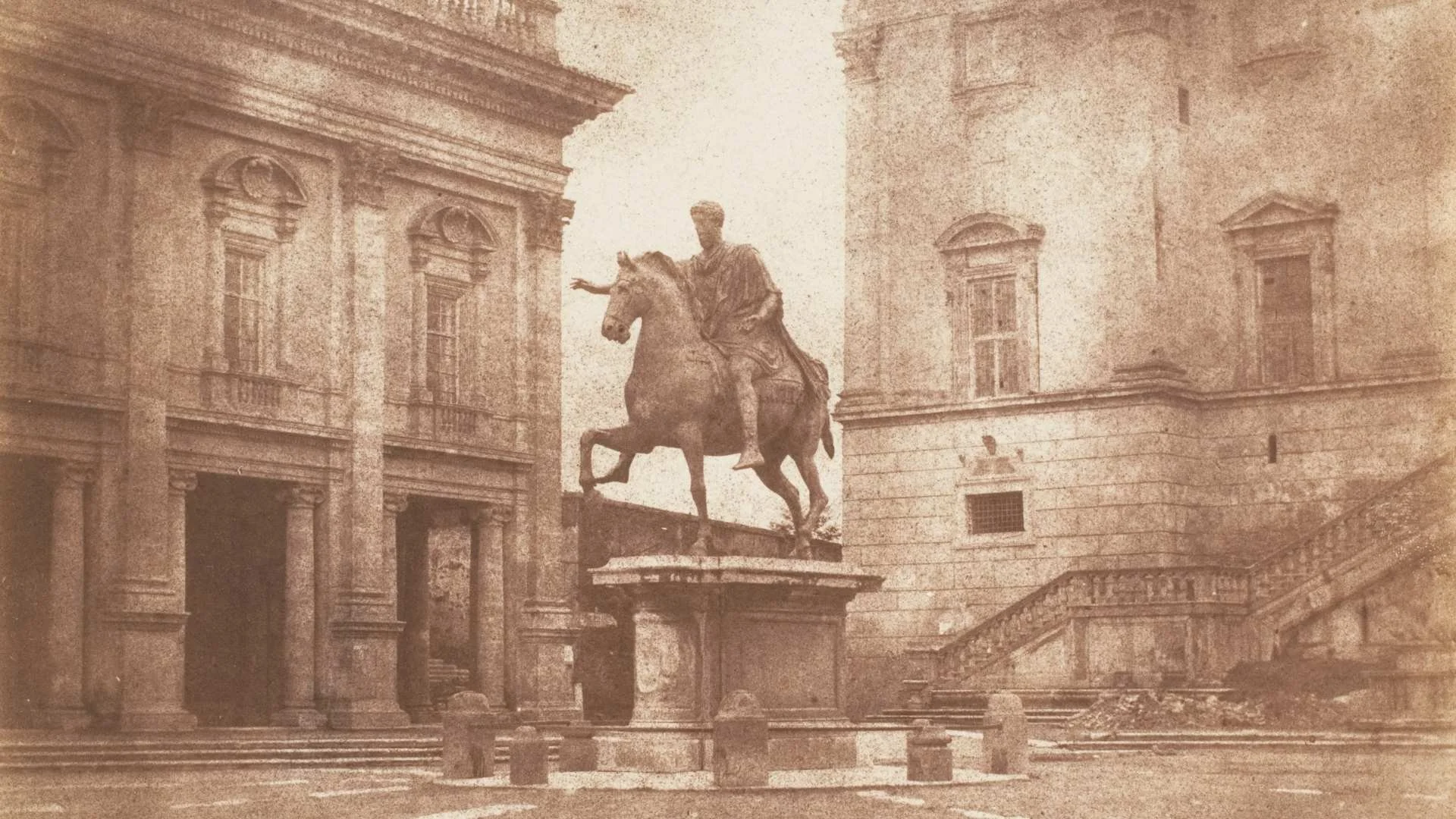
The true test of character is whether we can stay principled when pressure urges us to abandon ourselves.
“The soul becomes dyed with the colour of its thoughts.”
—Marcus Aurelius
I keep a copy of Marcus Aurelius’ Meditations on my bedside table, dipping in and out from time to time. It’s that kind of book, like a steady compass, easy to pick up and return to when the mind is seeking a little reorienting. Meditations is a collection of personal writings by the Roman Emperor who ruled from AD 161 to 180. It’s one of the most widely read works of philosophy ever written, which is a little ironic as scholars generally agree it was never meant to be read by anyone other than Aurelius himself.
Written in Greek, Meditations was created from his own private notes and philosophical reflections during different seasons of his life; the equivalent of a modern-day journal to better understand himself and the world around him.
“...because most of what we say and do is not essential. If you can eliminate it, you'll have more time and more tranquillity. Ask yourself at every moment, is this necessary…”
Because Aurelius wrote it for himself, Meditations has no real structure. His reflections jump from one topic to another, often repeating key ideas. Yet this repetition reinforces those recurring themes, revealing a mind returning to the principles it did not want to lose to time. And time has held them. As the back cover of my Penguin Classics edition notes, “[His words] have been consulted and admired by statesmen, thinkers, and readers throughout the centuries.”
Aurelius was writing within the Stoic tradition, but what gives Meditations its force is its discipline. Here was a man repeatedly returning himself to what he believed should govern his conduct. Aurelius continually challenges himself to focus on what lies within his control and to accept what doesn’t. This, he suggests, is essential for true self-understanding. As one of his meditations states, “People find pleasure in different ways. I find it in keeping my mind clear.”
History records that Marcus Aurelius treated his people with respect, kindness, and dignity during his reign, qualities that earned him recognition as one of the Five Good Emperors. He practiced what he preached. Aurelius understood life’s natural cycle: that everything comes from nature and will eventually return to it. But while we are here, he believed we should “live each day… without frenzy, without apathy, without pretense,” remaining focused on strong ethical principles.
For Aurelius, a good life was not measured by comfort or applause, but by simplicity, virtue and self-command.
Marcus Aurelius practised this discipline in the privacy of his own thoughts. In Sidney Lumet’s 12 Angry Men, Juror #8 has to practise it in public, specifically inside a jury room determined to rush toward certainty. But both are concerned with the challenge of how we remain governed by principle when pressure begins to build, pressure that can topple the best of us.
12 Angry Men is a courtroom drama that, except for three minutes, is filmed entirely in a tight, stuffy jury room on a sweltering day in New York City. Twelve men are doing their civic duty as jurors. At stake is a young boy’s life. He’s accused of murdering his father and the case seems clear as day. The boy is guilty. Hands down. Each man delivers their initial verdict of “Guilty” without hesitation. All except one. Juror #8, played by Henry Fonda.
From here begins one of the great 20th-century films about critical thinking, group pressure, and the essential role of discourse.
12 Angry Men was the debut film of Sidney Lumet. The film earned him an Oscar nomination for Best Director and it was also nominated for Best Picture. Shot in black and white, the film is technically masterful, with the cramped, claustrophobic jury room seeming to shrink as the long day wears on, mirroring the mounting tensions among the jurors. Lumet achieves this oppressive effect through skilful use of different lenses and camera angles. We feel the increasing humidity and psychological strain, the frustrations boiling over in the confined space as the intensity of the deliberation surges.
Lumet summed up the essence of the film in one word: ‘Listen.’ Like Gregory Peck’s Atticus Finch in To Kill a Mockingbird, Fonda’s Juror #8 embodies the voice of reason, patience, and integrity, standing alone but with conviction. It’s not that he has all the answers, or even that he’s sure of the boy’s innocence, but he has doubt and he wants to talk about it.
“We’re talking about someone’s life here. We can’t decide in five minutes. Supposing we’re wrong?”
He wants others to look closer, to question, to listen.
His integrity allows him to express that doubt, even in the face of everyone else’s conviction of the boy’s guilt. Over the course of the film, these debates take centre stage, as the simple act of discourse allows new perspectives to come to light. Within the jury room, there are some forceful personalities and egos, while others seem more interested in reaching a quick verdict so they can catch the evening’s baseball game. The film’s tension comes from these personality conflicts and subtle body language.
As the vote starts to turn, we start to better understand the personalities, backgrounds, occupations, emotions, and prejudices sitting within this powder keg of a room. In particular, the entrenched prejudices of Juror #3 (Lee J. Cobb.) The film shows nothing of the trial itself. We hear and see nothing for ourselves. We learn everything through the jurors and their interpretations, and the evidence is debated so thoroughly that we feel like a juror ourselves. We’re pulled into their deliberations, questioning whether a reasonable doubt exists, a fundamental principle behind the idea that one is innocent until proven guilty.
12 Angry Men was selected for preservation in the National Film Registry by the Library of Congress in 2007 for being “culturally, historically or aesthetically significant.”
In both works, character is not presented as a fixed possession, but as something examined and repeatedly tested, as if it were itself on trial, subjected to the rigour of the most formidable prosecution team. Aurelius returns to the same questions because he knows how easily the mind wanders from what it claims to value. Juror #8 stands alone because principle is easy to admire in theory but much harder to practise when others in the room want certainty, speed, and compliance. He wrestles with doubt, resists the pressure of the group, and ultimately makes a decision aligned with his sense of truth and justice. Had Marcus Aurelius been in that jury room, he would have recognised the discipline required.
If we were making a closing argument, we might end with something like this: staying close to our principles even when it would be far easier to stray from them is the real making of character.
Sometimes a life may depend on it.
Pass It On
If this idea was worth your time, it may be worth someone else’s.
Share this essay with a friend:
https://www.deeplifejourney.com/deep-life-reflections/august-14-2026
If you have a thought you’d like to share, please leave a comment below.
You can read all previous issues of Deep Life Reflections here.