
The Pinnacle of Human Togetherness
The boy who ran for his life, Paris 2024, and the golden aura of the Olympic Games.
Deep Life Reflections | Essay 73 | James Gibb
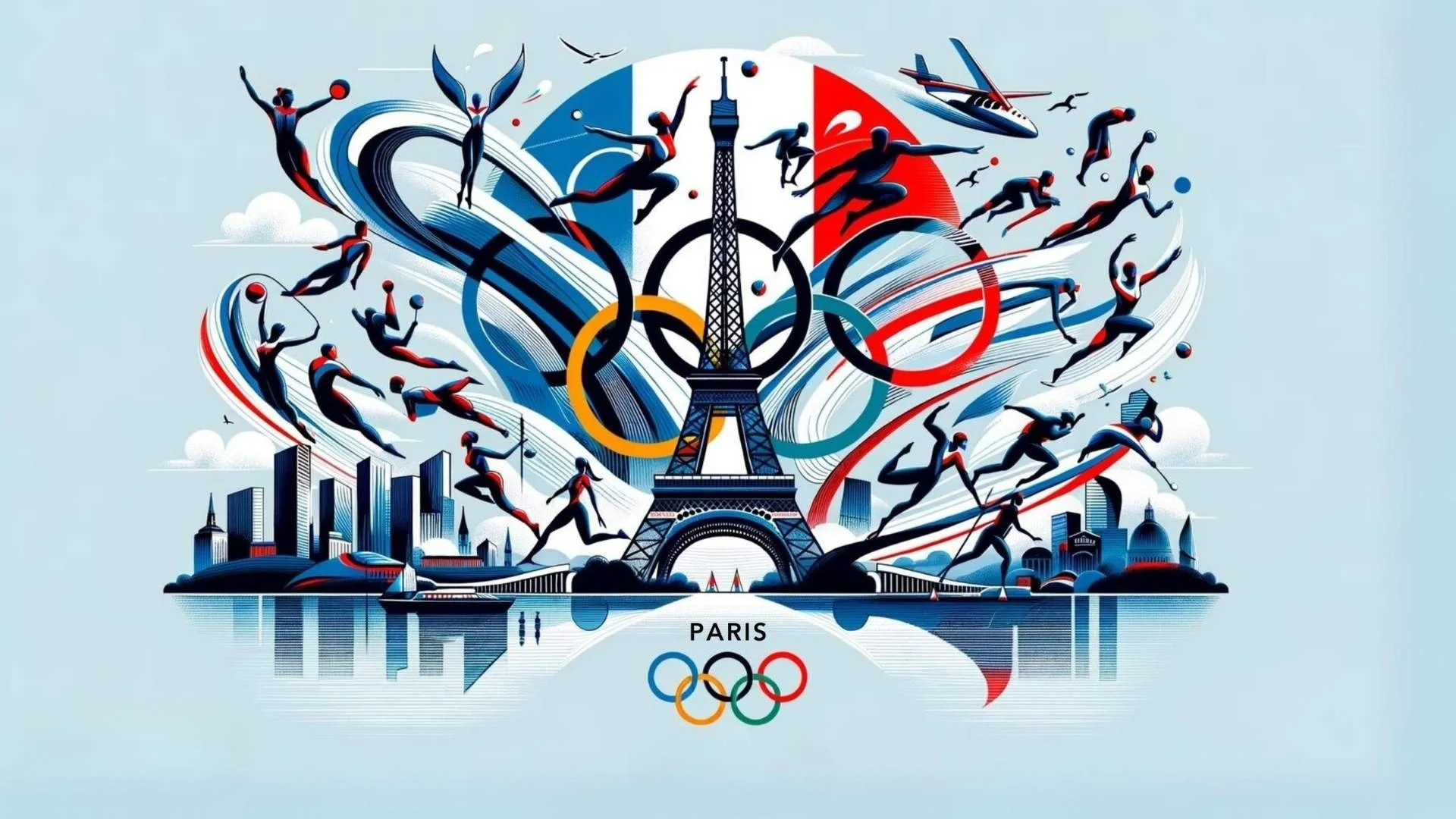
The Olympics continue to move us because they give us intimate portrayals of struggle that we can get behind and celebrate. Even if they’re strangers.
“When I ran, I did not think about conditions in the camp or the hunger in my belly. Running was my therapy, my release, my escape from the world around me.”
—Lopez Lomong
At just six years old, Lopez Lomong was abducted from his local church by the Sudan People’s Liberation Army. His family had little choice but to watch on. The army was a rebel group intent on turning Lomong into a child soldier to fight in the brutal Second Sudanese Civil War, which raged from 1987 to 2005. This conflict claimed the lives of two million people and left over 20,000 boys displaced or orphaned. These children came to be known as ‘The Lost Boys of Sudan.’ Lopez Lomong was one of them.
Most Olympic stories have humble beginnings, embodying the idea that Olympians are made, not born. This reflects the Olympic Creed that it’s not the triumph but the struggle that matters, mirroring the journey of life itself. Few Olympians would claim to have had a struggle quite like Lomong’s. In his book, Running for My Life: One Lost Boy’s Journey from the Killing Fields of Sudan to the Olympic Games, Lomong shares his extraordinary journey from a barefoot boy ripped away from his family to becoming a proud member of the U.S. Olympic Team at the 2008 Beijing Games.
His first step on that journey was escape.
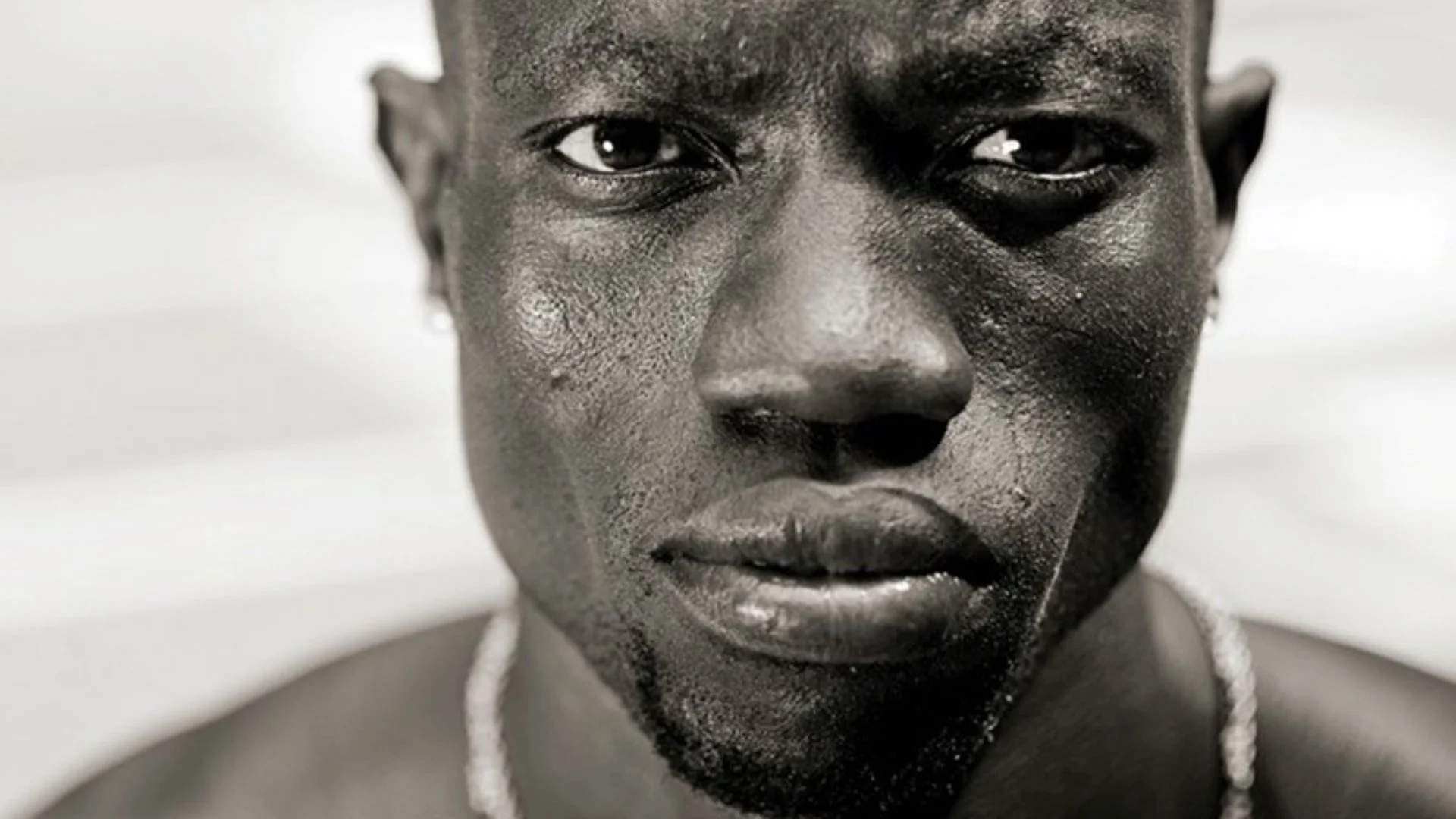
Lopez Lomong as an adult and Olympian
Held in a death-ridden prison camp by the rebel group, Lomong, along with three other boys, found a hole in the fence and ran as fast as they could, in what he describes as their “race to freedom.” For three days and nights, they ran across the rugged terrain of East Africa, too terrified to stop. Eventually, they reached the relative safety of Kenya, where Lomong was placed in a UN refugee camp, spending the next ten years of his life there.
Life was better, but not by much. Survival in the camp was a daily struggle. There was little food and constant uncertainty. As Lomong described it, “We were just living in a place that was a no-man’s-land. There was no flag flying over our heads. We had no place to call home.” Yet it was here, running around the perimeter of the camp and scavenging for scraps of food, that Lomong’s love for running and his natural talent took shape. It became his way of coping and forging an identity and purpose.
In 2001, Lomong’s journey took another dramatic turn. At 16, he was among nearly 4,000 Lost Boys resettled in various cities across the United States. Again, that wasn’t easy and there were a lot of false starts and paperwork that went nowhere. But eventually he was adopted by a family in a small town in upstate New York. The contrast overwhelmed him at first. He went to high school, he started doing normal teenage things. He was given some running shoes and this is where his passion and talent for running grew into something serious. Everyone rallied around him.
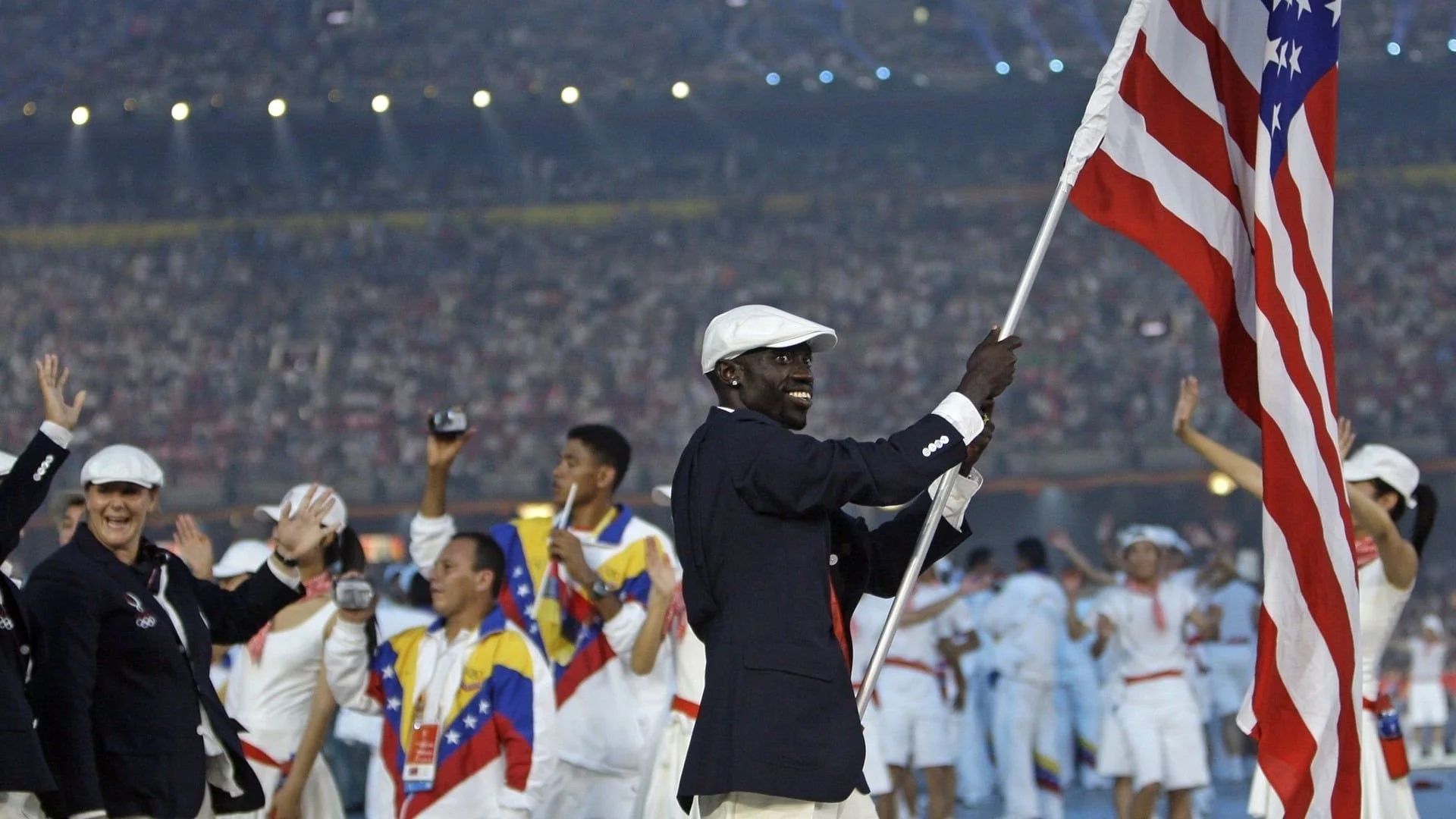
Lomong’s physical, emotional, and spiritual journey culminated in a defining moment at the 2008 Beijing Olympics, where he had the honour of carrying the U.S. flag during the opening ceremony. He competed in the 1500 metres. He also went on to compete in the 2012 London Olympics, placing 10th in the 5,000 metres. Two Olympics. From outrunning a machine gun to the pinnacle of sporting excellence.
Lomong tells a moving story in his memoir. In Africa, he watched Michael Johnson compete in the 2000 Sydney Olympics. It was the first time he had ever watched television and Johnson’s performance ignited something within him. That spark never went out, becoming an eternal metaphorical Olympic torch. Touched by the story, Michael Johnson later reflected on Lomong’s journey, saying, “Lopez Lomong’s story is one of true inspiration. His life is a story of courage, hard work, never giving up, and having hope where there is hopelessness all around.”
The history of the Olympics goes back some 3,000 years, to the Peloponnese in Ancient Greece, a mythic land where gods and heroes walked. We don’t know exactly why the Games were created, but we might feel confident that a story like Lopez Lomong’s would have felt right at home there.
Lomong’s story reveals why the Olympics still hold us. And in Paris, we have a whole new set of stories. Like many, I’ve been thoroughly enjoying the action from the Paris 2024 Olympics. While Tokyo 2020 had its share of special moments, the lack of crowds led to a more subdued and spectral atmosphere. In contrast, Paris 2024 is fully alive, giving the Games a buoyant feel, exactly 100 years since the city last hosted them.
Everyone has their own favourite events and moments from the Games. One of the genuine pleasures is experiencing both the familiar and the new, whether in the events themselves or the athletes competing. Yesterday, I watched the Speed Climbing Final, where two exceptionally nimble climbers raced up a 15-metre wall (49.2 feet) in well under five seconds, making even Spiderman seem slow in comparison. It’s fast and furious, where the slightest mistake can be costly.
I’ve also enjoyed watching gymnastics (pommel horse and rings), skateboarding, cycling (both velodrome and road), canoeing and kayaking, table tennis, and many other events. With 10,714 athletes competing in Paris, each one brings their own unique story of dedication, struggle, and commitment to their craft. It’s these stories that give the Olympics a deeply human feel. We also admire the incredible strength, flexibility, and skill on display, abilities that often seem well beyond the reach of normal human capacity.
My favourite Olympic events are always on the athletics track. As a runner who has competed in amateur club events in the 800m, 1500m, 5,000m and 400m relay, I love the track. Watching Keely Hodgkinson winning the 800m Gold, cementing her reputation as the best 800m runner in the world was a special highlight. As was Josh Kerr, a fellow Scot, taking Silver in the 1500m in what might be the greatest 1500m race in Olympic history. The battle between Kerr, World Champion, and Jakob Ingebrigtsen, the Norwegian Olympic Champion, was so ferocious that they essentially ran each other out, allowing American Cole Hocker to exploit the opportunity brilliantly in the final 50 metres to win Gold.
Netherlands’ victory in the Mixed 400M Relay was another highlight, capped by an incredible final leg from the brilliant Dutch runner Femke Bol. Despite starting the final leg a country mile behind, Bol’s class allowed her to overtake three world-class athletes in the final stretch, securing a remarkable win. It was redemption after she fell just a few metres from the line in the same race one year ago at the World Championships.
In the Men’s Pole Vault competition, Mondo Duplantis, a 24-year-old American-born Swedish phenomenon, broke his own world record on his final jump with a height of 6.25 metres, retaining his Olympic gold medal. This was the ninth time Duplantis had broken the world record. It must be quite a feeling swinging into the night sky, hanging in the air and then swooping down to an enthralled reception from 80,000 people. As Duplantis said, “I’m probably a bit biased, but I don’t think there’s anything that’s more entertaining than pole vaulting. It’s exotic, it’s kind of a circus-level event and I think it’s so special.”
He could have been talking about the Olympics themselves.
The Olympic Games have a unique ability to captivate the world. The 2016 Rio and 2020 Tokyo Games each drew over 3 billion viewers. Around 5 billion watched Paris 2024. That’s 84% of the potential global audience.
Why do we smile and cheer for athletes we’ve never met, who are competing in sports we rarely follow? It all comes down to our basic psychological needs. Humans crave belonging. When we rally behind a team or an athlete, we become part of something greater, transcending differences like race or gender. As Sonja Lyubomirsky, a professor of psychology specialising in happiness, explains, the key to happiness is connection. “Humans are hardwired to be together, support each other, and be in sync,” she says. The Olympics fulfil our need to fit in by supporting our country, while also allowing us to stand out by supporting individual athletes from across all nations.
Stories like that of Letsile Tebogo, who won Botswana’s first Olympic gold medal of any kind (for the Men’s 200m), further deepen our connection. Tebogo runs in memory of his mother, Seratiwa, who passed away in May aged just 44. His running shoe features the date of her birth as a tribute. His story, like many others, draws us in and makes us emotionally invested. Witnessing these moments of greatness can lead to a feeling of ‘elevation’, an uplifting sensation that comes from seeing hard work pay off or acts of kindness.
The Olympics will eventually come to an end, and life will go on. The athletes will return to their training camps and start the whole process again. Some may retire. Some may decide on a different direction altogether. Eventually our memories of what uplifted us so much on a warm summer night in Paris will fade.
But the gold is much more than the medal. The story of Lopez Lomong is a testament to that. It’s the struggle, the arduous journey, the person behind the moment.
That’s why we watch. It’s why we keep cheering. Even for those we don’t know. And it’s great.
Pass It On
If this idea was worth your time, it may be worth someone else’s.
Share this essay with a friend:
https://www.deeplifejourney.com/deep-life-reflections/august-9-2024
If you have a thought you’d like to share, please leave a comment below.
You can read all previous issues of Deep Life Reflections here.