
What Happens Next
Titanic, Jaws, and why suspense isn’t just for the movies.
Deep Life Reflections | Essay 74 | James Gibb
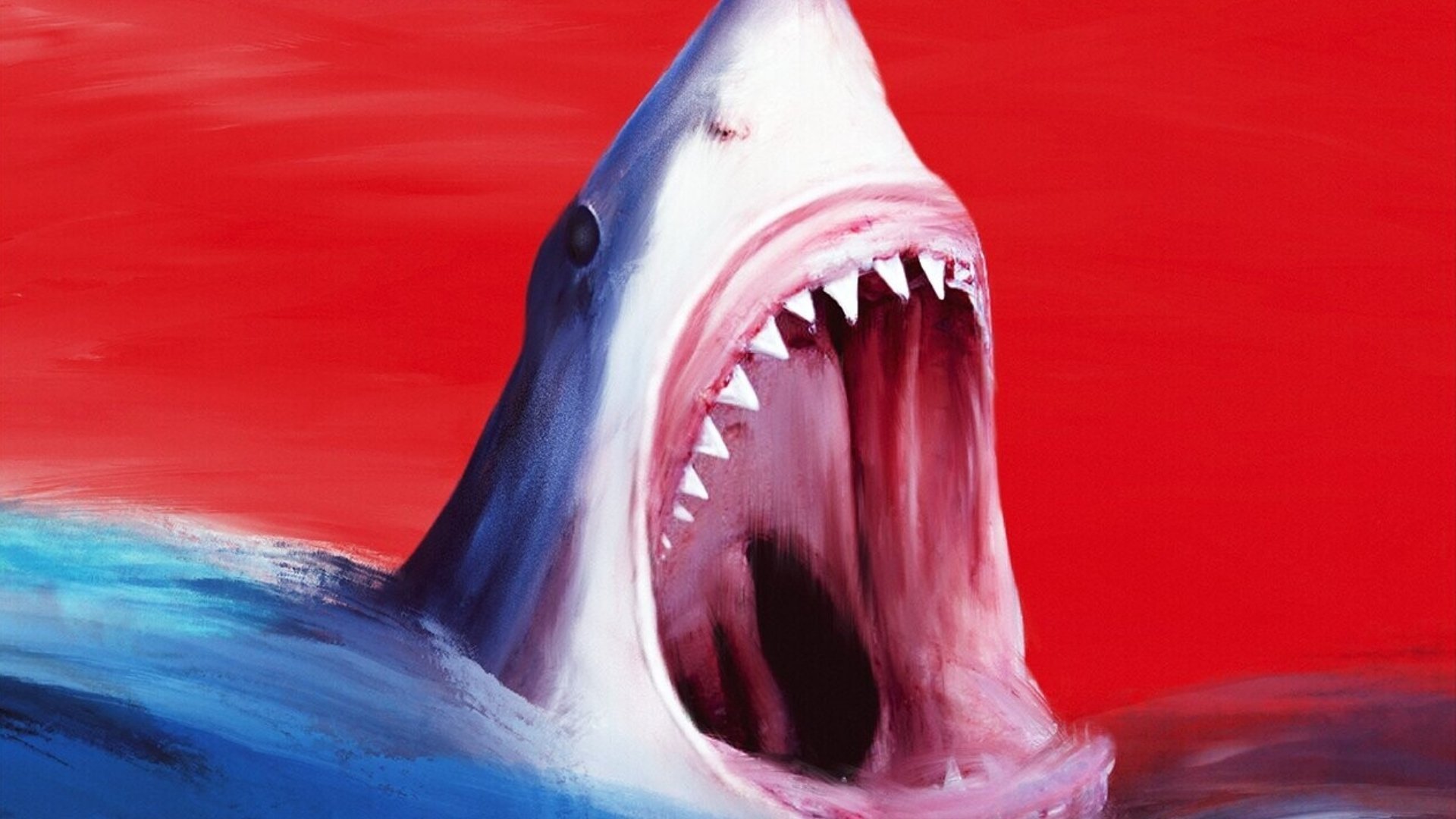
The question we wrestle with most is not why we are here, but what happens next.
“The suspense is terrible. I hope it will last.”
—Oscar Wilde (and later Willy Wonka as played by Gene Wilder in Charlie and the Chocolate Factory)
In 1907, the British shipping company White Star Line set out to create a new class of luxury ocean liners, aiming to build the largest and most luxurious ships ever seen. Their crowning achievement was the Titanic, named after the Titans, those mighty gods of Greek mythology who symbolised immense strength and authority. But today, the name Titanic no longer conjures images of power. Instead, it stands as a symbol of disaster and doom, of inevitable fate and human fallibility.
I've always had an interest in the Titanic, and last year my mum gave me a copy of Titanic—Destination Disaster: The Legends and the Reality. The book, written by two of the world’s leading Titanic experts, John Eaton and Charles Haas, presents a detailed summary of the disaster and its aftermath, with historic photographs, technical data, and a log of the ship’s brief life. If they needed any more credibility, Eaton and Haas also hold the distinction of being the only historians to have made the two-and-a-half-mile dive to the wreck.
The Titanic’s story is as familiar as the sea itself, thanks in large part to James Cameron’s multi-Oscar-winning 1997 film, which puts on screen an exceptional one-hour recreation of the ship’s break-up and sinking, still awe-inspiring today. Despite its fame, I’ve discovered there is still much to learn from this most famous of maritime disasters.
There is the story of the third funnel. Of the ship’s four funnels, the third was non-functional, a purely decorative addition to give the Titanic a more imposing and symmetrical appearance. This funnel became a symbol of the ship’s emphasis on appearance over practicality, and survivors later recounted seeing it split and collapse during the sinking. Another fascinating aspect is that the Titanic had a fully functioning printing press on board, which produced a daily newspaper called the Atlantic Daily Bulletin, featuring news, stock prices, horse-racing results, and society gossip.
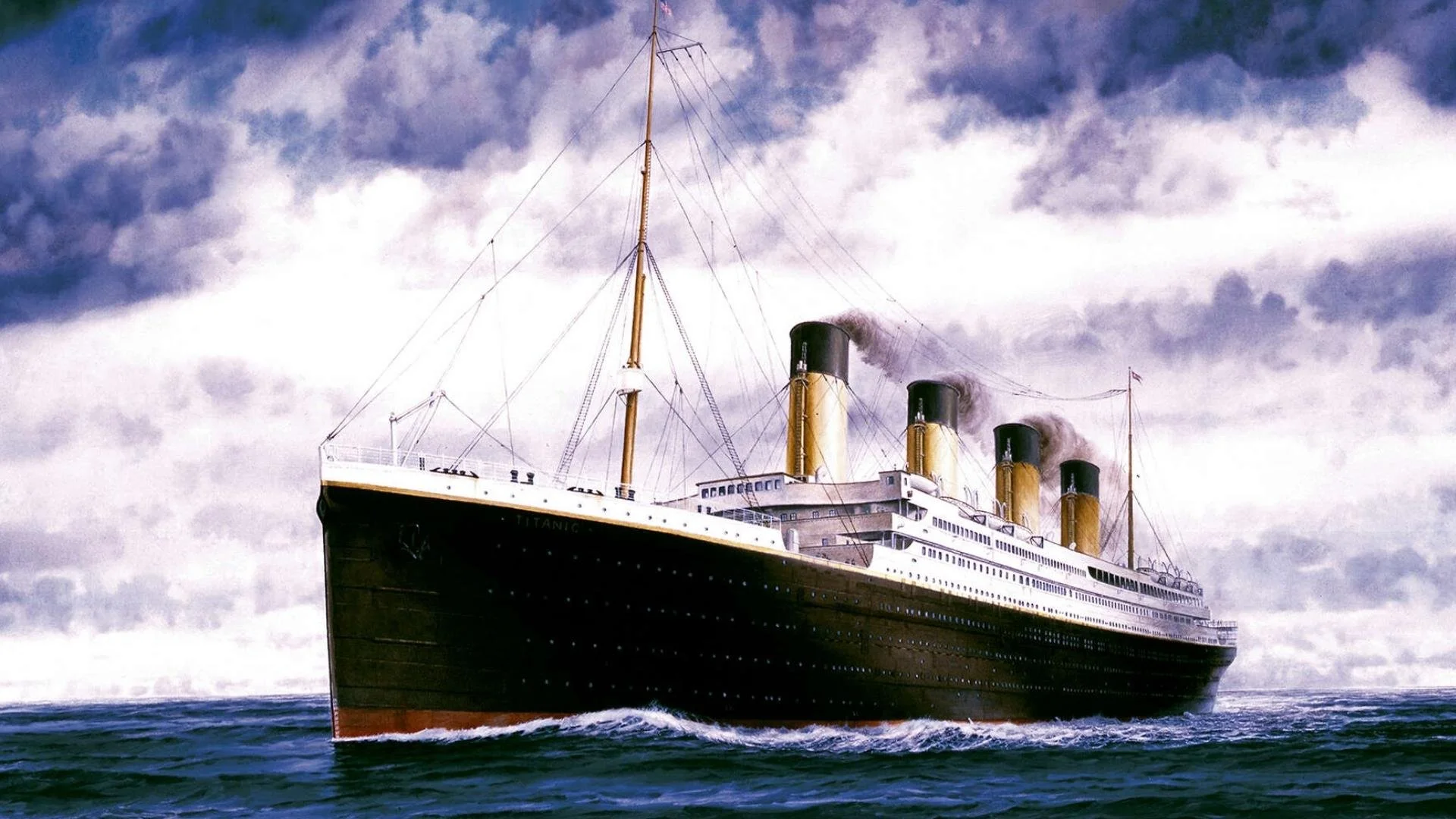
The Titanic. “The pride of the shipbuilders was as great as the iceberg that would humble it.”
One of the most famous aspects of the disaster is the misplaced confidence of its builders, who touted the Titanic as “unsinkable” due to its advanced design. On the day of the tragedy, April 14, 1912, a lifeboat drill was scheduled but was inexplicably cancelled by Captain Edward Smith. The reason for the cancellation remains a mystery. Another unresolved mystery involves the SS Californian, which had stopped for the night due to ice and was within range to see the Titanic’s distress rockets. However, the crew either failed to recognise the rockets as a call for help or chose not to respond.
Over 1,500 lives were lost in the Titanic disaster. While its story and timeline are well known, we remain drawn to the suspense, the ‘what ifs,’ and, of course, the human tragedy. Much like the Titan gods who were ultimately overthrown by the Olympians, the Titanic experienced its own dramatic fall from grace, creating a modern-day mythology all of its own.
There’s another modern-day mythology that comes from the sea. Like the iceberg, it keeps its threat below the surface for as long as possible. But it’s waiting and watching.
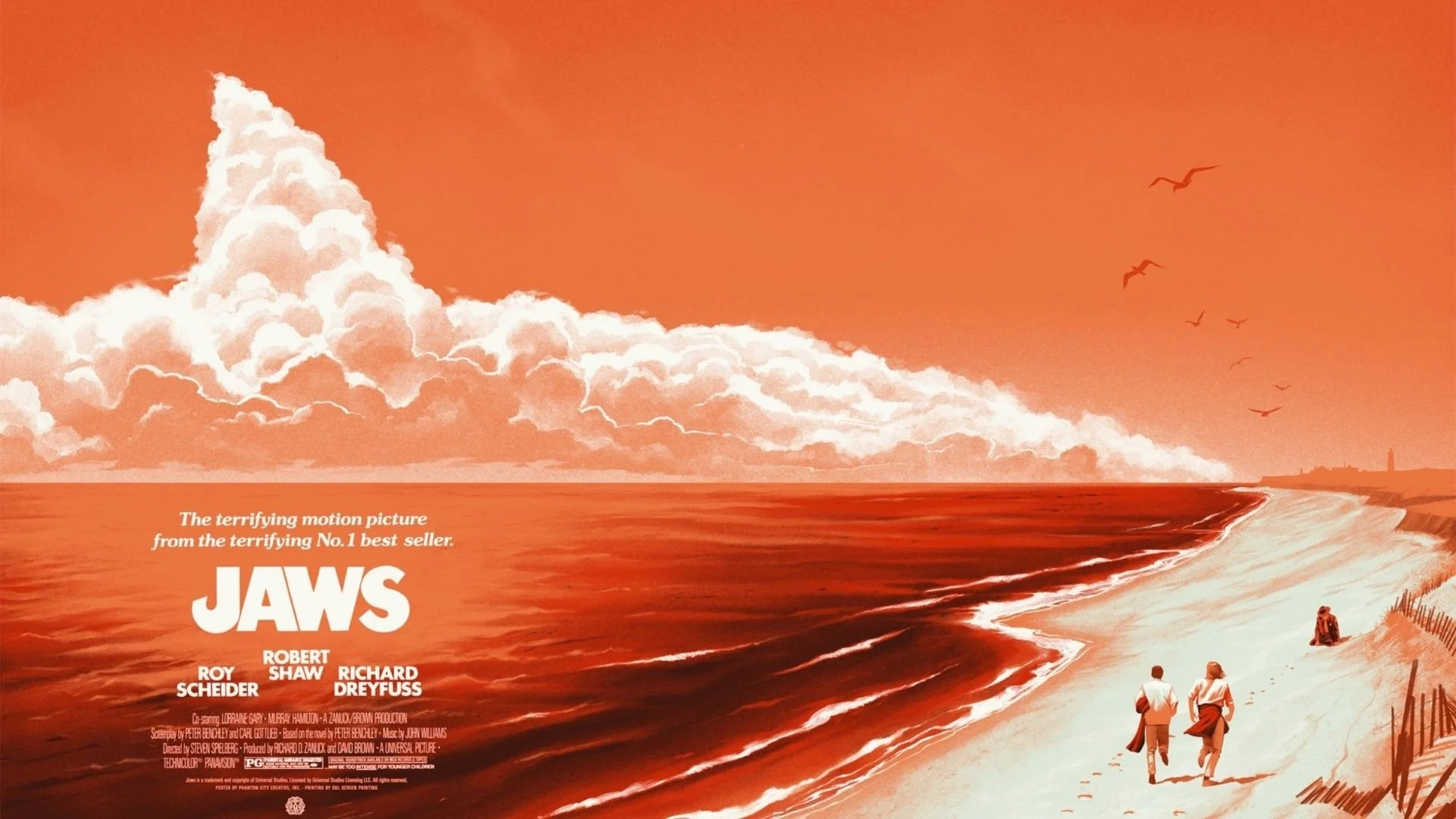
Jaws (1975). Directed by Steven Spielberg.
There are only a select few films I can count as all-time favourites both as a child and as an adult. Jaws is one of them. Although I was too young to see it when it was first released in 1975, the year I was born, incidentally, it became a staple of my VHS collection in the ‘80s, watched with ice pops and drawn curtains in our pitch-black living room. I’ve watched the film countless times, and that’s a testament to Spielberg’s talent for storytelling. Because Jaws is classic storytelling at its finest.
When Jaws was released that summer, over 67 million people in the US packed into cinemas to experience it. It became the first true summer blockbuster, a term coined because of this very film. Before Jaws, summer was considered a poor time to release movies, but Spielberg changed that. Like the Titanic, the story of Jaws is familiar to many: a great white shark terrorises the residents of a small Cape Cod town, the fictional Amity Island. It falls to three men to hunt down the shark at sea and save what’s left of the tourist season, although each of the three men have their own reasons for being there and none involve the health of the town’s balance sheet.
The movie peaks when this unlikely trio climb aboard their small vessel, the Orca, in search of the shark, much like Captain Ahab in Moby Dick. All three actors are excellent in their defining roles: Roy Scheider as the honest and competent Police Chief Brody, a man afraid of the water; Robert Shaw as the cantankerous and colourful shark-hunter Quint; and Richard Dreyfuss as the young, wealthy, and likable marine biologist Hooper.
As they bicker and bond, the tension builds as they venture away from land and out to sea. Spielberg wanted to create that feeling of detachment and danger, which is why around 25% of the film was shot from water level, giving viewers the perspective of treading water, heightening the tension. The movie’s best scene is Quint’s dark retelling of the fate of the USS Indianapolis. The ship delivered the atomic bomb only to be torpedoed, sending 890 men into the water, where more than 500 were killed by sharks. Only 316 survived. Quint’s chilling description of the shark, “he’s got lifeless eyes. Black eyes. Like a doll’s eyes,” is haunting and sinister amid the blackness and silence.
One of the film’s most iconic moments comes when Brody first glimpses the enormous shark and mutters the now-famous line, “You’re gonna need a bigger boat,” which was ad-libbed by Roy Scheider. This phrase has since become synonymous with challenges that seem insurmountable.
Suspense is central to the entire film, thanks to Spielberg’s genius decision not to reveal the shark until much later. It plays into our primal fear of the unseen, knowing that something menacing is out there. Watching. Stalking. The music of John Williams is another stroke of brilliance. Spielberg himself said the movie would only have been half as successful without Williams’ score. The legendary theme, just two notes, won Williams an Oscar for Best Music and Best Sound, and he credits the film as his breakthrough moment.
Jaws is ultimately about a man, Chief Brody, overcoming his fears and rising to the challenge. His fear of water and his duty to protect the island are primal conflicts, much like the shark itself. And like the shark, we too keep coming back, drawn by the faint thrashing of limbs in the water and the scent of the next reveal.
In both the story of the Titanic and Jaws, suspense plays a central role. In Jaws, suspense is overt, as we are constantly on edge, unsure of what will happen next. In contrast, with the Titanic, we already know the outcome, yet we are still compelled by the story. The suspense remains high, despite the inevitability. And that goes for all the rewatches of Jaws too.
I read an interesting article in The New Yorker about the role of suspense in both literature and life. The article’s author suggested that for certain groups such as philosophers, theologians, and everyday soul-searchers, the fundamental question of life is about its meaning: why are we here? But for most of us, the pressing question isn’t about life’s meaning, but its plot. In other words, what happens next? Will you get that promotion? Who will win the big game tonight? Will the person you took out for dinner call you back?
These uncertainties in everyday life create suspense, that state of slight distress produced by the desire to know what the future holds. Since uncertainty is inherent to the human condition, suspense is central to our emotional experience. We can feel it about almost anything, no matter how significant or trivial. From the pause before a doctor reveals your scan results to the “someone is typing...” message that appears when you’re waiting for a reply to your last text message.
Even the weather can be suspenseful (will that storm hit before you finish your morning run?), or those seemingly endless miles to the nearest service station can become highly suspenseful if you’re running low on fuel or your tyre pressure is dropping fast (I’ve been there a few times).
Suspense surrounds us all the time, moulding our experiences and emotions while we wait for life to reveal its next scene.
To reveal what happens next.
Pass It On
If this idea was worth your time, it may be worth someone else’s.
Share this essay with a friend:
https://www.deeplifejourney.com/deep-life-reflections/august-16-2024
If you have a thought you’d like to share, please leave a comment below.
You can read all previous issues of Deep Life Reflections here.