
The Psychologist and the Artist
How Carol Dweck and Jackson Pollock help us better understand the role belief plays in who we become.
Deep Life Reflections | Essay 75 | James Gibb
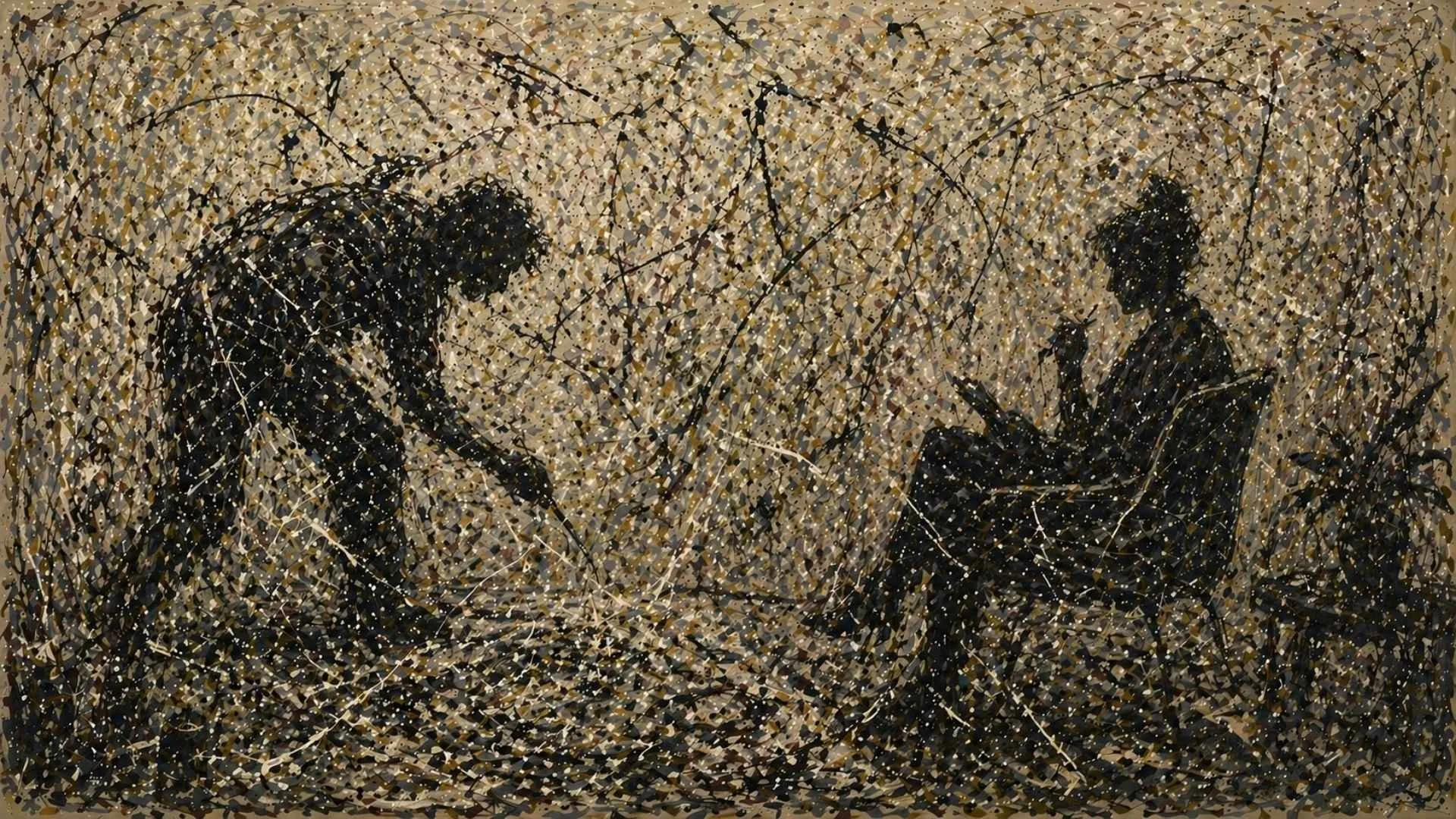
Our beliefs about ability can define us. They can also limit us. We need to loosen the jacket of certainty about ourselves, giving ourselves a little more room to breathe and become.
“Becoming is better than being. The fixed mindset does not allow people the luxury of becoming. They have to already be.”
—Carol Dweck
Throughout history, people have thought, acted, and fared differently, raising questions about why some are smarter or more successful than others. This age-old debate between nature and nurture continues today, with most experts agreeing that it’s not an either-or scenario but rather a constant give and take between genes and environment. Meanwhile, scientists are discovering that our capacity for lifelong learning and brain development is greater than once believed. As Alfred Binet, the inventor of the IQ test, recognised, it’s not always those who start out the smartest who end up the smartest.
In her 2006 book, Mindset: The New Psychology of Success, Stanford University psychologist Carol Dweck introduced a concept that has since become foundational in understanding human potential: that our success in almost every area of life is dramatically influenced by how we perceive our talents and abilities. Those with a fixed mindset—believing that abilities are innate and unchangeable—are less likely to flourish than those with a growth mindset—believing that abilities can be developed.
Dweck’s book is structured into eight chapters that guide the reader through how we think and why we think that way. She illustrates her points with research and real-life examples from both contemporary and historical contexts. A striking contrast is drawn between CEOs Jack Welch of General Electric and Lee Iacocca of Chrysler. Welch embodies the growth mindset, emphasising the importance of teamwork, while Iacocca represents the fixed mindset, often seeing himself as the hero. As Welch wrote in his autobiography, “I hate having to use the first person. Nearly everything I’ve done in my life has been accomplished with other people… Please remember that every time you see the word ‘I’ in these pages, it refers to all those colleagues and friends, and some I might have missed.”
There’s also a valuable section for parents and teachers on the importance of how they praise children. Dweck acknowledges that parents often praise their children’s intelligence and talent with the best of intentions, aiming to instil permanent confidence. They say things like:
“You picked that up so fast! You’re a natural at this!”
“This essay is amazing. You’re the next Shakespeare!”
“You’re so brilliant, you got an A without even studying!”
However, Dweck’s research shows that this kind of praise can backfire, making children doubt themselves as soon as they encounter challenges. The underlying message children hear about these statements is:
If I don’t learn something quickly, I’m not smart.
I shouldn’t try something difficult, or they’ll see I’m no Shakespeare.
I’d better not study too hard, or they won’t think I’m brilliant.
Dweck suggests the best gift a parent can give their children is to teach them to love challenges, be intrigued by mistakes, enjoy effort, seek new strategies, and keep learning. This creates a deeper, more resilient growth mindset, equipping children with the tools they need to build genuine self-confidence.
Yesterday, 16-year-old students across England, Wales, and Northern Ireland received their GCSE results. For some, these results may have been disappointing, around 40 percent of students failed to pass their maths GCSE. Perhaps some of these students were affected by well-meaning but ultimately unhelpful statements like those Dweck warns against.
Our beliefs about our capabilities are hugely influential in how we learn and the paths we take in life. By cultivating the right mindset, we can transform our own lives as well as those we lead, teach, and care for.
When it comes to the study of mindset in action, the world of art and its rich palette of geniuses is overflowing. In Jackson Pollock, one of America’s finest artists of the last one hundred years, we have a human study in talent, damage, obsession, support, failure, and the curious alchemy through which a person becomes more than they first appeared to be.
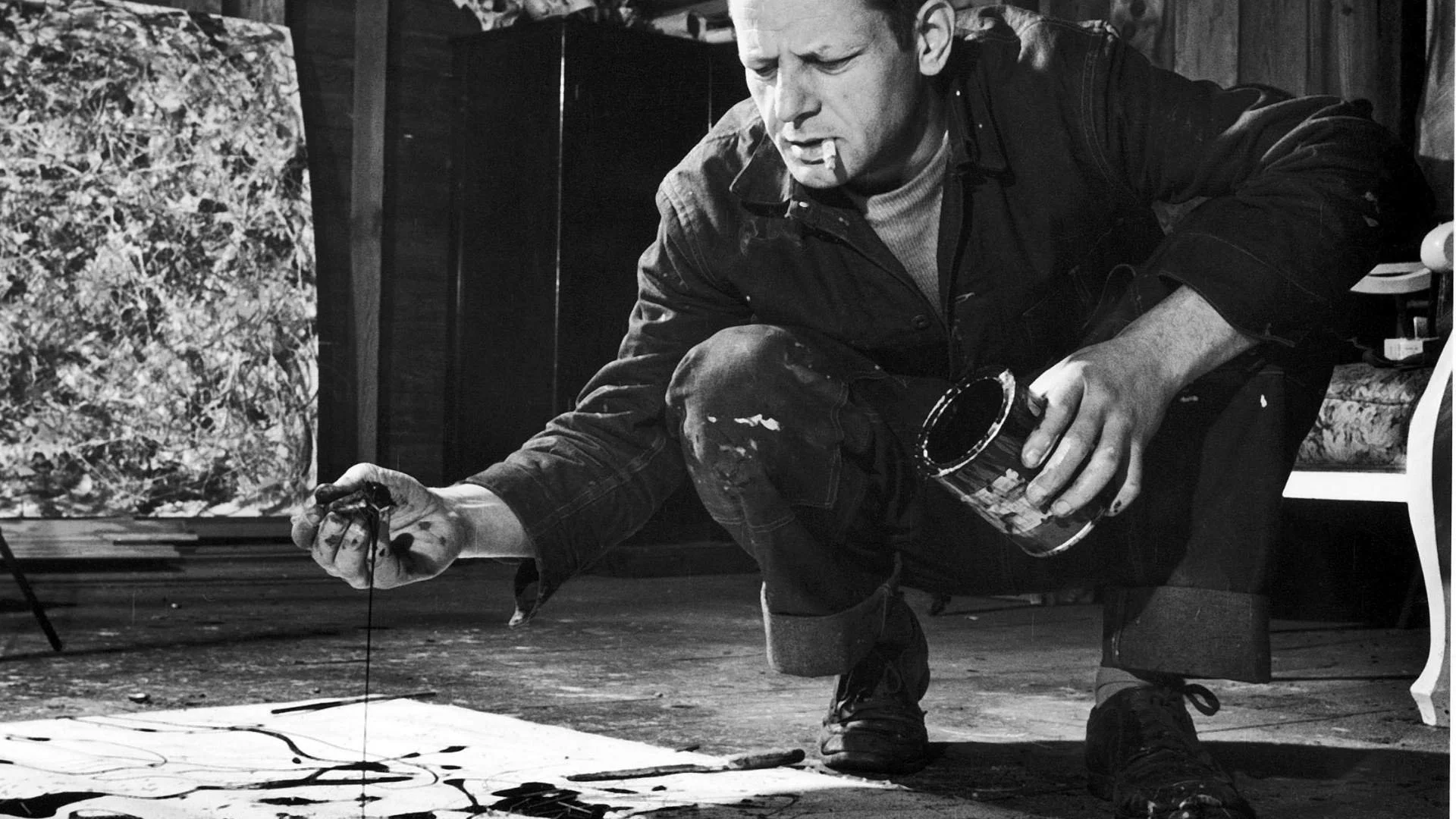
American painter Jackson Pollock
“Something in me knows where I’m going.”
—Jackson Pollock.
Jackson Pollock came from a poor and rootless rural American family so disconnected that even their surname was not their own. His father, given away as a child, perhaps even sold, was raised by a farming couple called the Pollocks who treated him more as a servant than a son. Despite showing little innate talent as a young artist, Jackson Pollock would become one of the greatest painters of the twentieth century, revolutionising modern art.
I first came across the work of Jackson Pollock in the early ‘90s through one of my favourite bands, The Stone Roses. Their debut album cover, painted by guitarist John Squire, a talented artist in his own right, was a direct homage to Pollock. Squire replicated Pollock’s iconic “drip technique,” where liquid household paint is poured or splashed onto a horizontal surface. This innovative and unconventional approach transformed Pollock into a major figure in the abstract expressionist movement.
In 2000, Ed Harris, who bears a striking physical resemblance to Jackson Pollock, both starred in and directed Pollock, a film dedicated to the life and career of the iconic painter. Harris’s tortured and unflinching portrayal earned him an Oscar for Best Actor, a reward for the six years of struggle it took to bring this project to the big screen. The film convincingly recreates the beauty and originality of Pollock’s greatest works while also confronting his lifelong battles with depression and alcoholism. It’s not an easy watch at times, as Pollock frequently implodes, but it is engrossing from start to finish.
We meet Pollock as a desperate, failing artist struggling to survive in 1940s New York. Declared medically unfit for war due to alcohol dependence and depression, Pollock’s life was shaped by two pivotal relationships. The first was with fellow artist Lee Krasner, who became his wife, most ardent supporter, and critic. Her influence was crucial in refining his technique and pushing the boundaries of his creativity, ultimately leading to the development of his iconic drip painting style. Marcia Gay Harden’s portrayal of Krasner earned her a Best Actress Oscar, capturing the essence of Krasner’s intuition that greatness often comes not from avoiding messes, but from allowing them to be made in the first place.
The second crucial relationship for Pollock was with Peggy Guggenheim, an influential art collector who gave him his first solo exhibition and financial support, allowing him to focus entirely on his work. Her backing helped establish Pollock as a leading figure in abstract expressionism, though he earned little from his art during his lifetime. It wasn’t until after his death that his work gained widespread acclaim and value, with his masterpiece ‘Number 5 1948’ selling for $140 million in 2006, one of the highest prices ever for a painting.
The film captures a key aspect of Pollock’s journey and mindset: he was wildly in love with the idea of being an artist. Art consumed his thoughts and actions, and with support from mentors like Lee Krasner, he honed his craft until he produced dazzling original works. These paintings allowed him to draw from his unconscious mind, expressing a huge range of feelings.
When I saw a Pollock exhibition at the New York Museum of Modern Art in 1998, each piece was sublime, unlike anything I’d seen before or since.
As Carol Dweck explains in Mindset, our beliefs are nuanced: we may embrace a growth mindset in some areas of our lives while holding onto fixed beliefs in others. As a coach, I often see clients who are held back by fixed beliefs in specific areas of their lives. My role is to help them recognise and reframe these beliefs, but the change ultimately comes from within themselves.
We are all susceptible to these fixed beliefs. That includes me. I’ve long believed that artistic talent is something you’re born with, for example. Some people just have a particular talent for drawing and others don’t. This was reflected in my art classes at school. Today, many years later, I still consider myself terrible at drawing. But recently, I came across Betty Edwards’ Drawing on the Right Side of the Brain, which made me reconsider my (fixed) view.
In her book, Edwards shows before-and-after self-portraits from people who took her short drawing course. There are only five days between when they started the course and when they drew their self-portraits. And it’s like night and day. Edwards recognises that most people, ahem, like me, view drawing as a magical ability only a few possess. But this is only because people don’t understand the learnable components of drawing, largely seeing skills not drawing skills. Anyone can learn these seeing skills: the ability to perceive edges, spaces, relationships, light, and shadows.
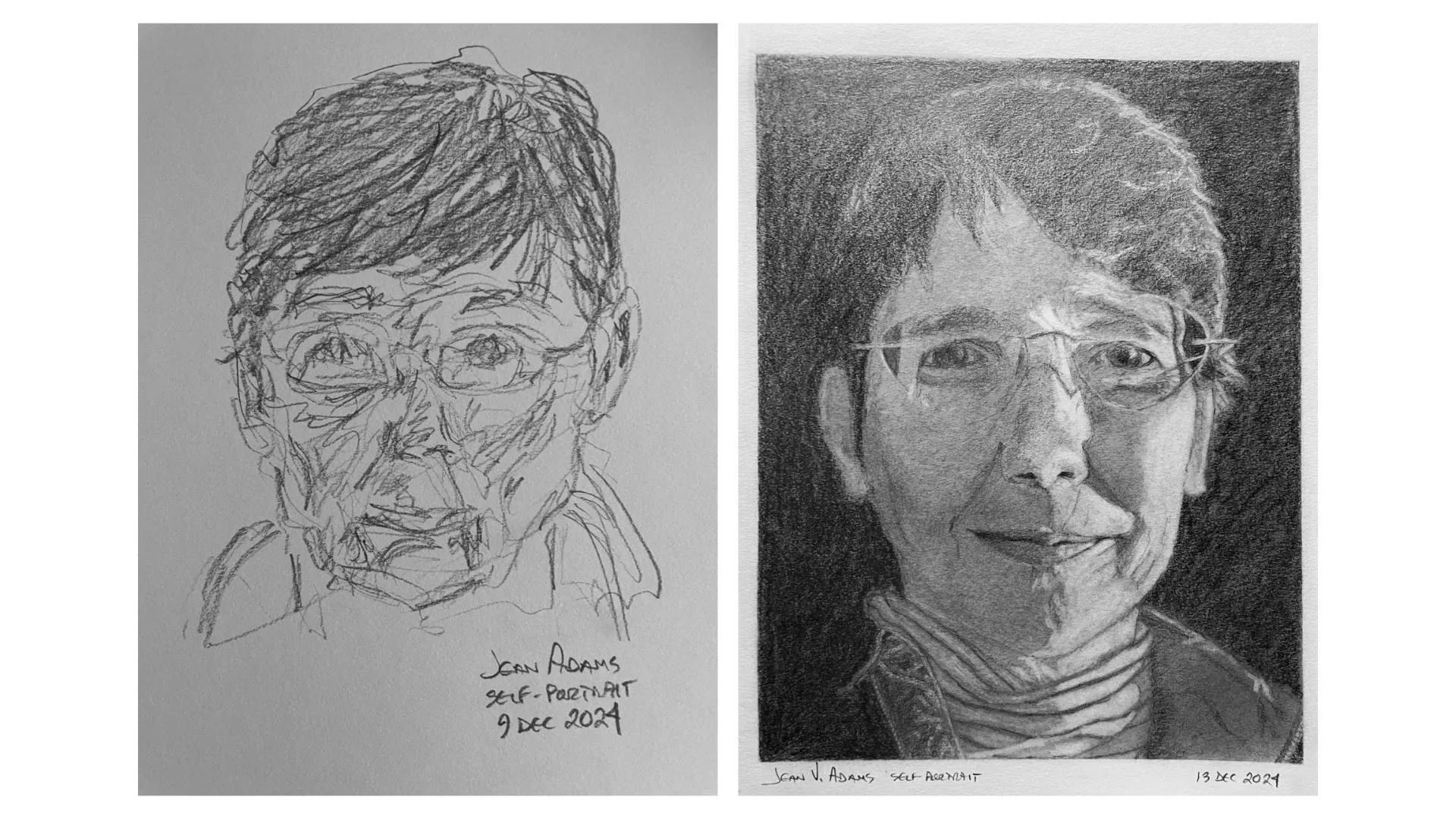
The results of Betty Edwards’ Drawing on the Right Side of the Brain intensive class. The same artist only five days apart.
This changed my thinking about drawing. That just because some people excel with little training and natural talent doesn’t mean others can’t achieve similar or even greater results with practice. That’s the essence of a growth mindset. A potent reminder that growth is possible in areas where we might feel limited. Maybe I’ll be an artist yet.
Can anyone do anything? I’m not sure about that. But Pollock’s journey and Dweck’s insights show us that we are almost certainly capable of far more than we first believe.
We just need to stay open to who we might still become.
Pass It On
If this idea was worth your time, it may be worth someone else’s.
Share this essay with a friend:
https://www.deeplifejourney.com/deep-life-reflections/august-23-2024
If you have a thought you’d like to share, please leave a comment below.
You can read all previous issues of Deep Life Reflections here.