
When Anxiety Works for Us and When It Doesn’t
On the difference between anxiety that burdens us and anxiety that strengthens us.
Deep Life Reflections | Essay 76 | James Gibb
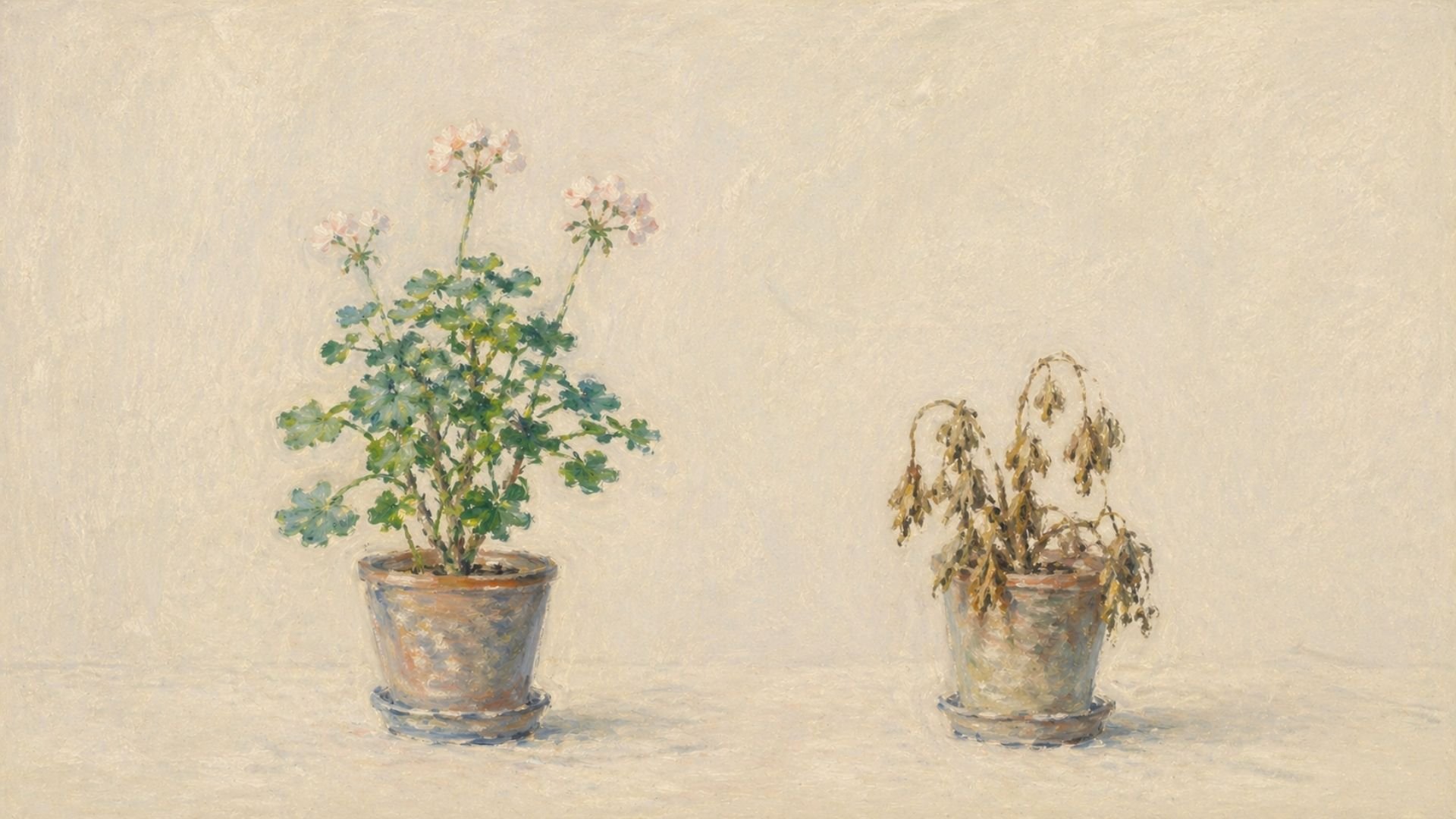
Not all anxiety is harmful to us. In fact, the right anxiety can be beneficial in our lives.
“The greatest weapon against stress is our ability to choose one thought over another.”
—William James
How did you feel in the minutes before your last big presentation, salary negotiation, or when awaiting important medical results? The tension, racing thoughts, and heightened alertness are all universal signs of anxiety, but not all anxiety is harmful. In fact, small doses of stress can actually protect your health. Richard A. Friedman, a professor of clinical psychiatry, explores this concept in a recent article for The Atlantic, arguing that the right kind of anxiety can be as beneficial as exercise.
Friedman challenges much of the advice from the past decade, where anxiety of any kind has been viewed as detrimental to health. He instead sees two types of anxiety: one harmful, the other beneficial. He distinguishes between “growth anxiety,” which arises from challenges that are uncomfortable but manageable, like giving a public talk, and “toxic anxiety,” which stems from overwhelming situations, such as being constantly swamped by work demands.
As Friedman puts it, “It’s the difference between finding a leak in your basement and losing your house in a hurricane.”
When we get anxious, it triggers a brief surge of cortisol and something called norepinephrine, releasing glucose for energy and preparing the body for a fight-or-flight response. Your body is primed for action. This type of growth anxiety, a normal response to challenges, can strengthen neural connections in the brain, boosting memory and learning. However, chronic anxiety, with prolonged elevation of these two stress hormones, can lead to serious health issues like diabetes and cognitive decline, as it impairs neuron growth and shrinks the brain. While toxic anxiety is damaging, growth anxiety, like physical exercise, can improve resilience and health when kept within healthy limits.
Friedman believes we are all capable of transforming toxic anxiety into growth anxiety, using it as a catalyst for personal growth. By taking immediate actions and developing long-term strategies, we can regain a sense of control and balance, overcoming the feeling of being overwhelmed.
Sometimes that switch can be achieved in relatively simple and practical terms. We’ve heard many times the benefit of breaking a large, looming task into smaller pieces. Preparing properly for the meeting you’ve been avoiding is also somewhat easy to implement. Likewise, going for a walk instead of sitting with the ruminations in your head. Small acts that turn anxiety from something abstract into something you can work with.
Friedman emphasises that we shouldn’t fear growth anxiety any more than we do the soreness after a good workout.
“Both can be uncomfortable but make us stronger in the long run.”
Friedman writes about anxiety in the controlled conditions of modern life, where pressure can be relatively well managed. But what about in much more extreme environments, like war? We know what anxiety looks like at 5-10% of the spectrum. But what about at 100%?
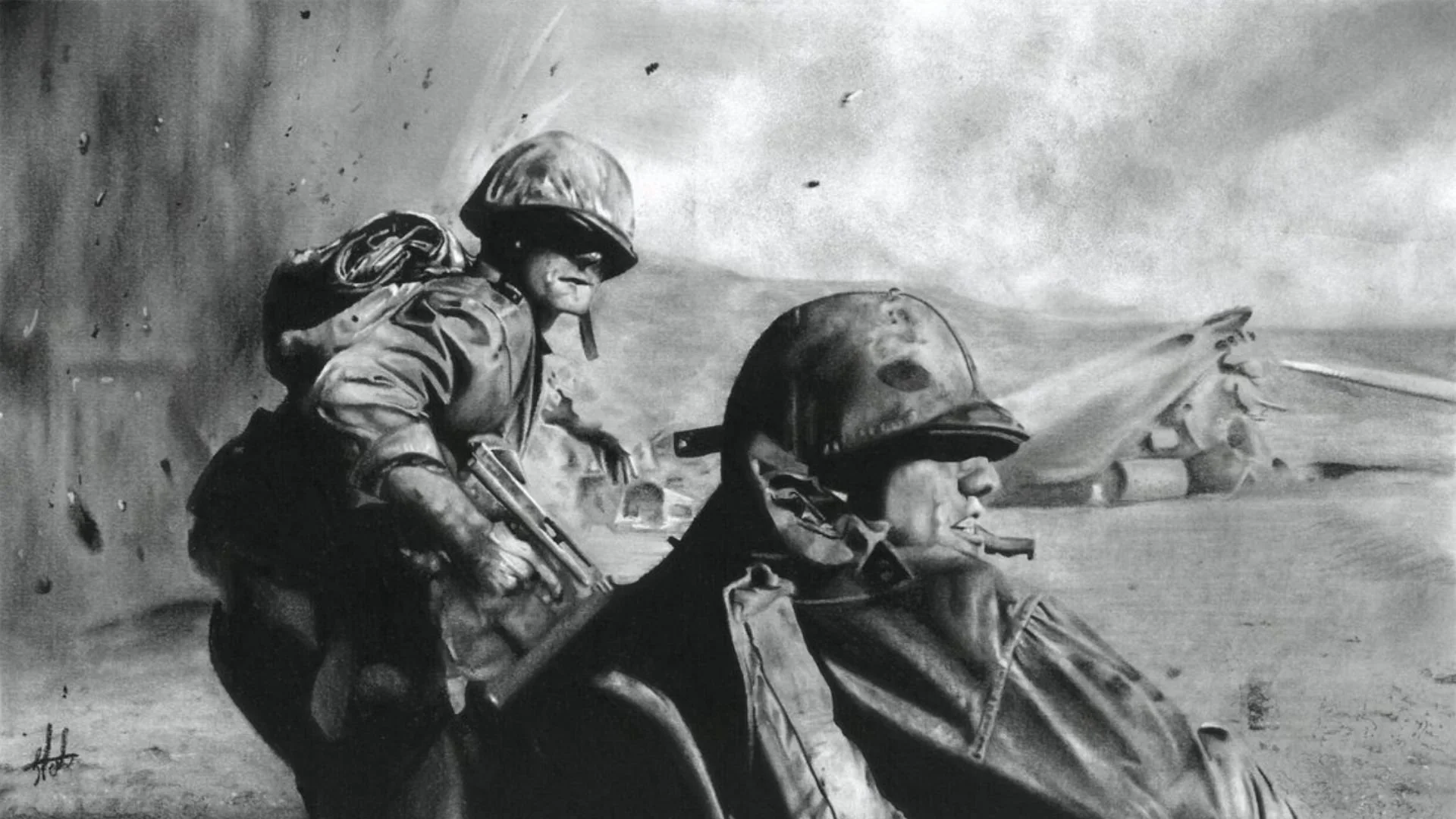
HBOs The Pacific. Photo credit: Simon Powell Illustrations
I recently watched The Pacific, HBOs ten-part mini-series that follows the experiences of U.S. Marines during World War II. Sent 10,000 miles across the world, that same human response to anxiety is pushed far beyond anything it was designed to handle.
Thrust into the savage campaign against Japan in the South Pacific, these Marines go through some of the most ferocious battles I’ve seen on screen. Backed by a $200 million production budget and the vision of executive producers Steven Spielberg and Tom Hanks, the series won eight Emmy Awards. Few war dramas capture this level of brutality and psychological toll of combat.
The narrative arc focuses on the individual stories of three young men: Privates Robert Leckie and Eugene Sledge, and Sergeant John Basilone, who becomes a national hero after his heroism at Guadalcanal. Through their eyes, we not only witness the realities of war but also the lasting psychological scars it leaves behind. Leckie and Sledge both wrote memoirs after the war. Through their stories, we too are dropped into some of the most infamous and ferocious battles, including Guadalcanal, Peleliu, Iwo Jima, and Okinawa. All are terrible, both in the severity of battle and the cost of lives on both sides.
The war in the Pacific is perhaps not as well-known today compared to the European conflict against Nazi Germany, which has historically received more attention in film and books. However, through the efforts of Spielberg, Hanks, and a talented cast and crew, The Pacific sheds light on this equally brutal theatre of war, which ended with the atomic bombings of Hiroshima and Nagasaki. Both wars were of course horrendous and full of death, but the Pacific campaign, unlike Europe, exposed U.S. Marines to some of the most appalling conditions possible: mud, heat, malaria, near starvation, isolation, and an enemy that refused to surrender.
Huge sacrifices were made, and it’s striking to realise how young these men were, many barely in their 20s. We see how invincible and impervious to death they feel before going into battle for the first time, and then the awful realisation, for the ones still standing, that each sunset might be their last. Day after day after day. The constant exposure to death and destruction had a monumental impact on them, both physically and mentally.
The Pacific captures the chaos of war as it unfolds around the characters we’ve invested in. And in the white heat of the battle, we are right there with them. As critic Emily St. James wrote:
“It’s a series about the cost of war on men’s minds, yes, but it’s also a series about what it takes to remain basically good…how when the normal rules you’re expecting don’t apply, just about anyone is capable of some pretty horrendous things. And it’s a series about just how hard it is to cling to your own humanity in the face of plenty of things that seem to prove that humanity simply isn’t worth clinging to.”
In Friedman’s writing and in The Pacific’s storytelling, we see the physiological and psychological experiences of anxiety across very different contexts, from everyday life to the extreme and inhumane conditions of war.
The scope of anxiety is huge, from growth-inducing challenges to debilitating and traumatic stress. In watching The Pacific and reading the memoirs of those that survived, it seems almost impossible that some eventually managed to return to a relatively normal life. At the end of the series, we learn that many of the characters went on to live normal lives as car salesmen, husbands, journalists, fathers. And the world moved quickly on, too. We are good at that.
These men somehow adapted and survived under immense pressure, highlighting anxiety’s dual nature as both a burden and a potential catalyst for learning and growth. Anxiety will always be part of the human experience. What it comes down to is our ability to recognise when its working for us and when its working against us.
Anxiety doesn’t change its nature. What changes is whether we can use it for good, or whether it overwhelms us.
We may have more choice here than we first thought.
Pass It On
If this idea was worth your time, it may be worth someone else’s.
Share this essay with a friend:
https://www.deeplifejourney.com/deep-life-reflections/august-30-2024
If you have a thought you’d like to share, please leave a comment below.
You can read all previous issues of Deep Life Reflections here.