
Way Down in the Hole
The Metamorphosis and The Wire on the human cost of institutions built to preserve themselves.
Deep Life Reflections | Essay 46 | James Gibb
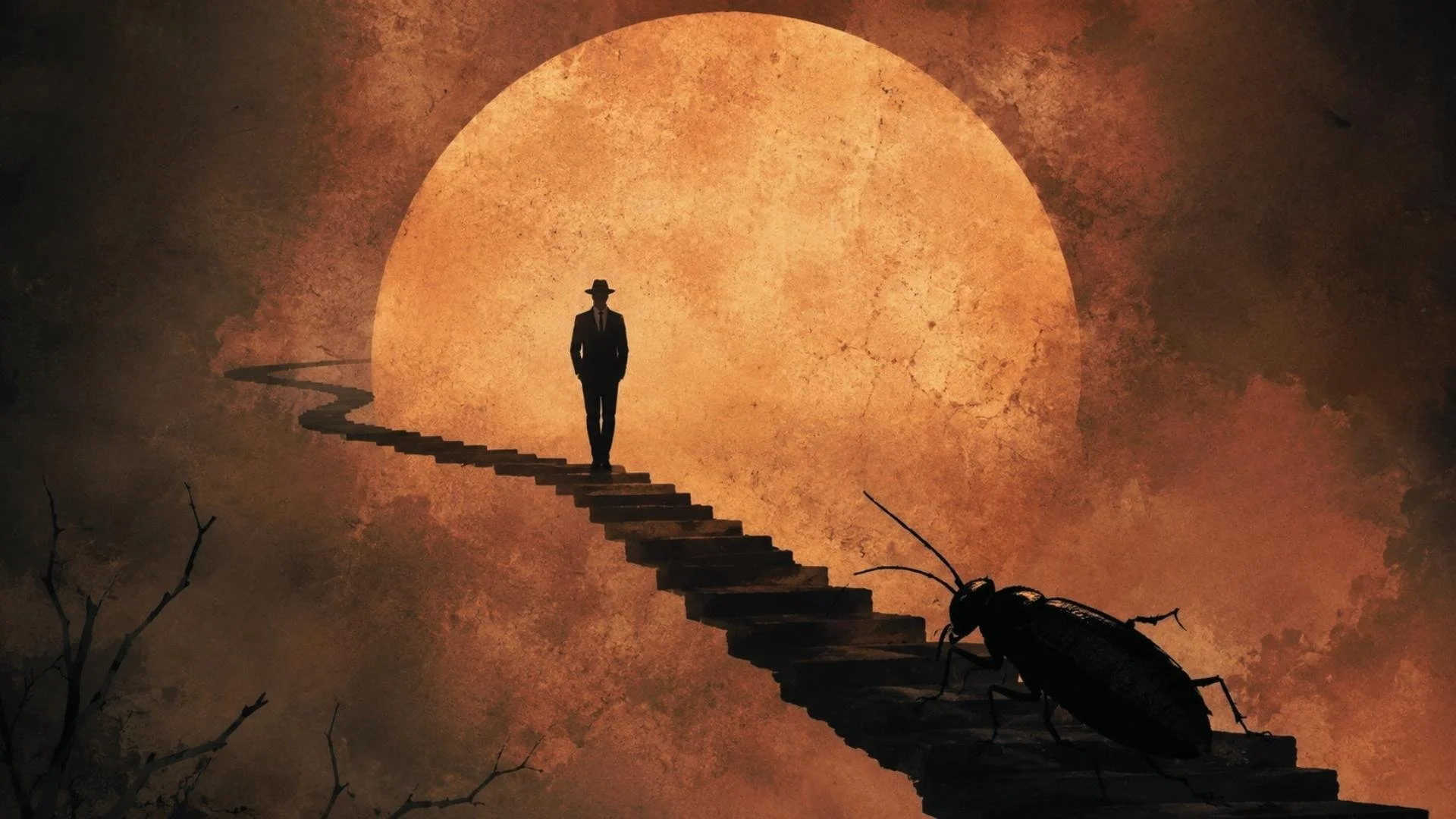
Institutions turn people into roles, then punish them when they can no longer perform them.
“When Gregor Samsa woke one morning from troubled dreams, he found that he had been transformed—in his bed—into a kind of giant bug.”
This is the opening line from Franz Kafka’s most famous work, The Metamorphosis, written in 1912. What is most striking about that opening passage is not only that Gregor wakes as a giant insect, but that his most immediate concern is how he is going to get to work. He is late. His train has gone. His employer is going to be irate. Even in monstrous form, the institution has already entered the room.
The Metamorphosis is both weird and wonderful, comedic and brutal. Kafka takes us into his favourite terrain, an isolated protagonist facing a bizarre situation. We bear witness to Gregor's distressing transformation, his family’s reaction, and his own growing sense of isolation. We feel Gregor’s pain and frustration. As he worries about losing his job, we learn that Gregor, in fact, hates his work. This might be Kafka’s own subtle critique of work and its oppressive nature, the “giant bug” we all have to bear. Kafka, a man riddled with his own anxieties, captured the anxieties of his era, one marked by rapid industrialisation and the alienation of the individual within bureaucratic societies.
Kafka’s metaphor extends to the human condition, exploring alienation, absurdity, powerlessness, and the dehumanising effects of modern life (as it was over a century ago, and as it is today). We see Gregor unable to effectively communicate and connect with others in his new physical capacity. He has no human voice, literally and figuratively. This chasm between mind and body points to the disconnect between our inner selves and how we’re perceived. As a salesman, Gregor was the sole provider for the family. Now, transformed, he feels the scorn of his family, especially from his father, highlighting the burden of familial expectations when one’s societal role is altered. Gregor becomes misunderstood and marginalised, his place in the structure of society forever lost.
In Gregor Samsa, Kafka presents the personification of alienation, powerless in the face of an absurd, disorienting, and impenetrable reality.
From Gregor’s locked bedroom, the frame widens to the American city of Baltimore.
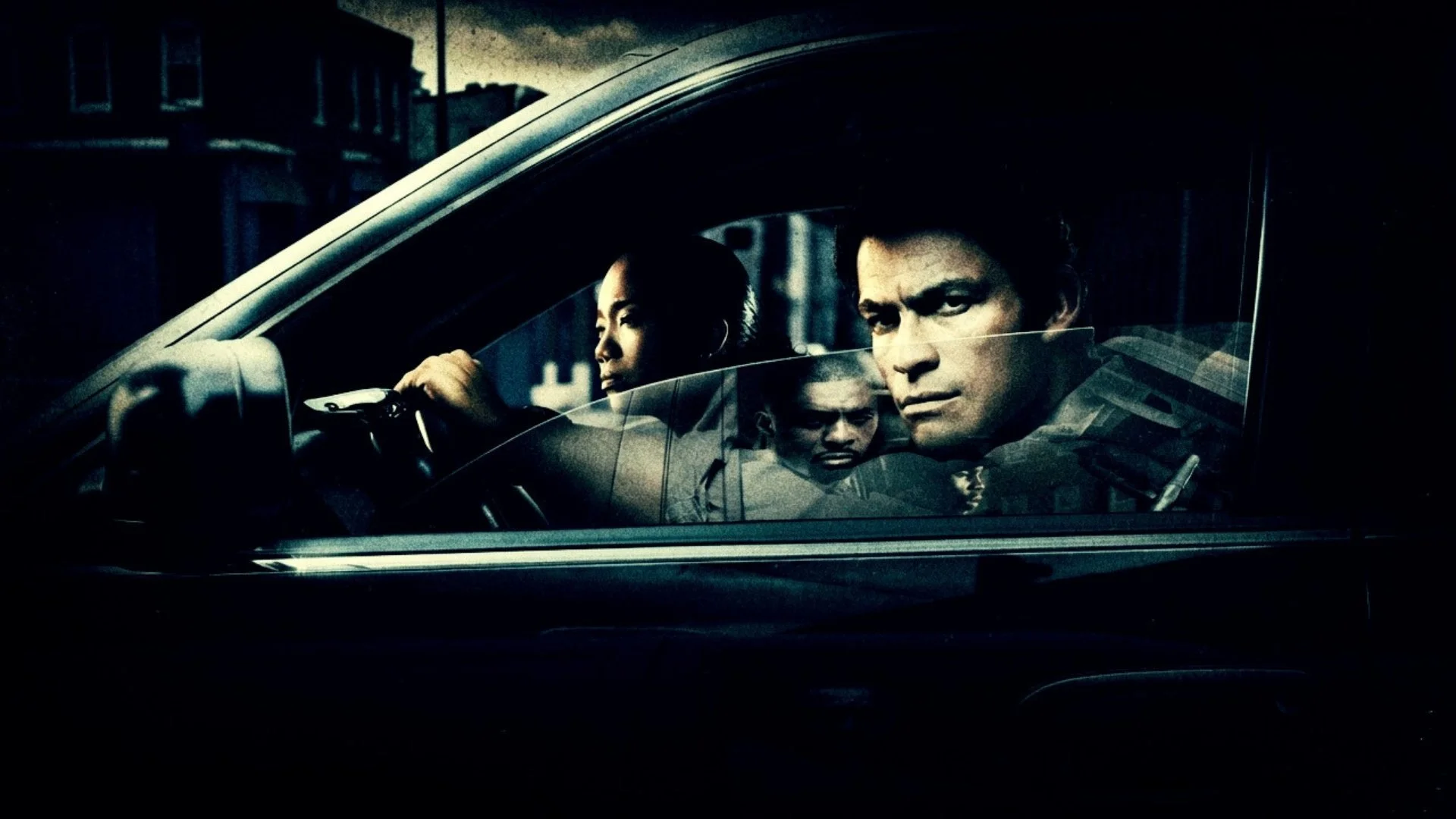
“All the pieces matter.” - Detective Lester Freamon
When people talk about the greatest television shows of all time, The Wire frequently makes the list. I’ve watched the series in its entirety three times. It’s lost none of its impact. It’s Shakespeare for the 21st century.
Set against the backdrop of Baltimore, Maryland, The Wire dissects an American city’s struggle with institutional decay, symbolic of America’s broader urban decline. The series reveals a society caught in the stranglehold of systemic failure, from law enforcement and the drug trade to education, politics, and the press. It shows a world where the powerful are often paralysed by the very systems they command, powerless to effect real change, and reduced to “juking the stats” (manipulating statistics to keep a higher power happy). As one character says, “The more things change, the more they stay the same.” The “wire” of the title represents the unseen undercurrent that connects everything across the city, where every action triggers a reaction, often with destructive and lasting outcomes.
Creator David Simon, a seasoned journalist with The Baltimore Sun, and writing partner Ed Burns, an experienced detective with the Baltimore Police Department, bring realism and flair to the narrative, drawing from their firsthand experiences. This is their city. The series introduces an array of memorable characters, from Dominic West's flawed detective, Jimmy McNulty, to Idris Elba’s Russell ‘Stringer’ Bell, a ruthless drug dealer who studies economics at night school, to the late Michael K. Williams’ Omar Little, a Robin Hood-esque figure who lives by his own moral code. These characters, each with their limitations and contradictions, are the essence of the show, steeped in reality yet touched by the absurd and the tragic, a vivid picture of the city’s many and complex challenges.
While some may find The Wire’s honest portrayal of human struggle bleak, its brilliance in capturing a specific time and place at the start of the 21st century is undeniable. We may be in the present now, but as the characters of The Wire might say, “the game stays the same.”
David Simon has talked at length about his motivations behind creating The Wire, including the failure of the drug war, the systematic failure of institutions, and the decline of journalism. Both The Wire and TheMetamorphosis offer cautionary tales of institutional influence. They show us that while institutions are created by humans, they often evolve to serve their self-preservation, rather than means to address problems for the good of most people.
In Kafka's Metamorphosis, the institution manifests in its most primal and influential form: the family. The Samsa household, a microcosm of societal expectations and obligations, shapes Gregor’s life as profoundly as any government or corporation. His grotesque transformation into a giant bug exposes the fragile nature of familial support. Gregor, once the provider for the family, finds his worth, and by extension, his human identity, eroded and then destroyed when he can no longer fulfil his role in the family institution.
The Wire presents a broader canvas, depicting the city of Baltimore as a mosaic of institutional powers: the police department, the drug trade, the schools, the political sphere, and the media. Each of these entities exerts a gravitational pull on the individuals within them, often dictating the paths available to a person based on their socio-economic status, race, and other factors. Characters such as McNulty, Stringer Bell, and Omar are semi-autonomous players in this complex network, sometimes exploiting institutional weaknesses to their advantage, while at other times crushed by the indifferent weight of the system.
The Metamorphosis and The Wire do not let us pretend that good intentions are enough to defeat bad systems. That kind of story is left for Disney movies. But they do insist that behind every role, statistic, file, badge, title or function, there is still a person, and that person, even fallible, can carry a great deal of humanity. When institutions forget this, that humanity is bled out in a backroom.
The cruellest institutions don’t always destroy people directly but simply stop seeing them as people. We are all, in some way, a Gregor Samsa or a David Simon character. Doing our best to remain human inside systems that are built to fight that impulse.
Pass It On
If this idea was worth your time, it may be worth someone else’s.
Share this essay with a friend:
https://www.deeplifejourney.com/deep-life-reflections/february-2-2024
If you have a thought you’d like to share, please leave a comment below.
You can read all previous issues of Deep Life Reflections here.