
The Brink
What happens just before the point of no return—and why we need to interrupt it.
Deep Life Reflections | Essay 101 | James Gibb
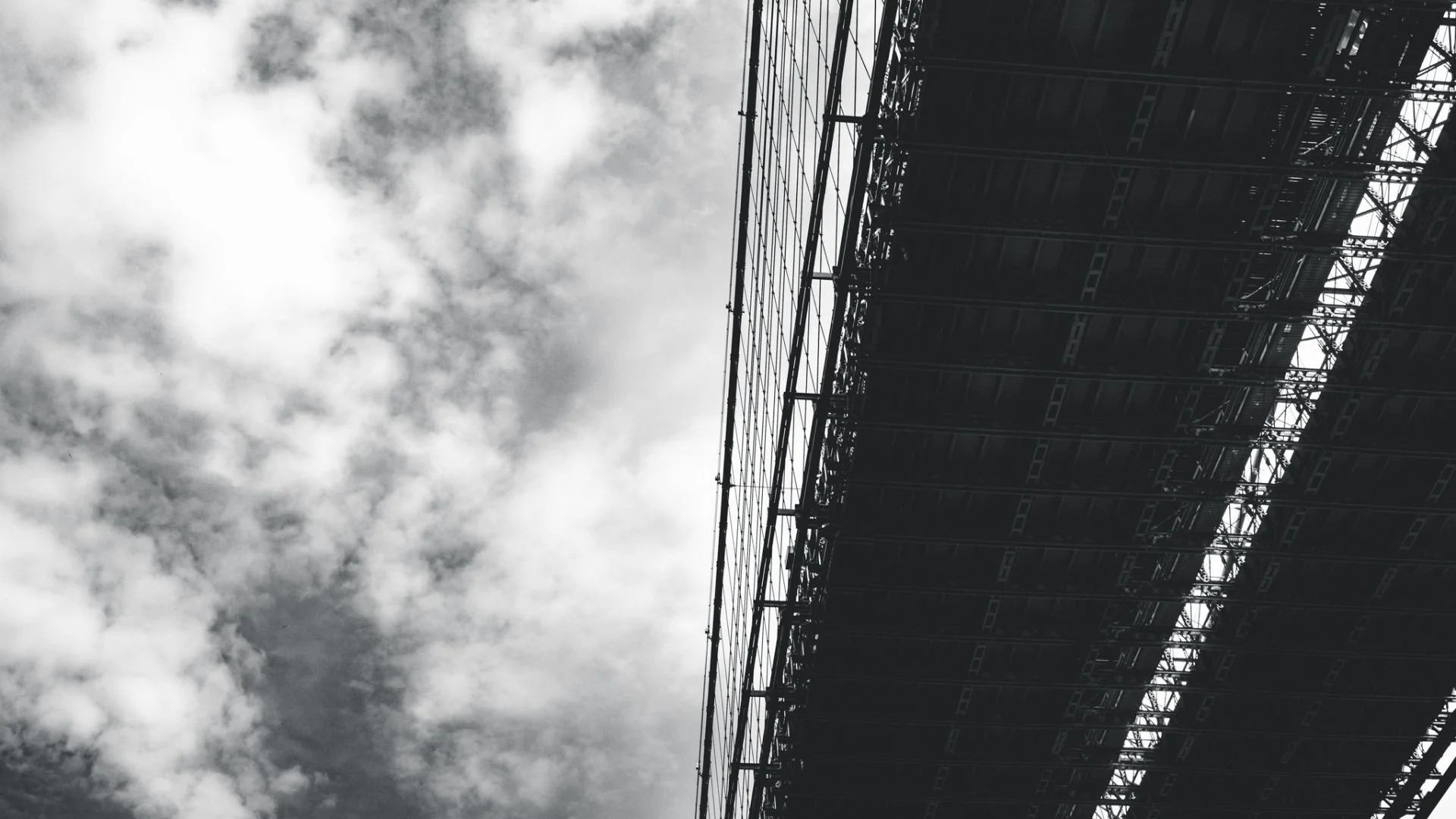
The brink isn’t the fall. It’s the moment just before. And we need to interrupt it.
“If one person smiles at me, I will not jump.”
Ken Baldwin remembers the moment his hands left the railing. As he sped downward, he had a pristine moment of clarity.
“I instantly realised that everything in my life that I’d thought was unfixable was totally fixable—except for having just jumped.”
Baldwin is one of the rare few who have survived a jump from the Golden Gate Bridge, the world’s most infamous suicide site. The drop is 220 feet. The body plummets for four seconds, reaching 75 mph before slamming into the water with the force of an explosion. Vertebrae snap. Ribs shatter inward, puncturing lungs and heart. Organs rupture. For most, death is immediate. For others, it comes more slowly, as they plunge, broken, into the depths, and drown.
In 2003, Tad Friend wrote an investigative piece called Jumpers for The New Yorker. Ken Baldwin is one of those featured in the article. Since its opening in 1937, about 2,000 people are estimated to have jumped to their deaths from the Golden Gate Bridge, an average of about two people per month. The article sheds light on these tragedies and explores the long-running debate over anti-suicide barriers.
The bridge itself is an architectural marvel, a gleaming Art Deco span that is iconic and ingenious. It’s a passage, a threshold, both in geography and in the minds of those who stand at its edge. At least twelve hundred people have been seen jumping or have been found in the water. The true number is likely far higher. Many sneak onto the bridge after sundown, when the walkway is closed. They jump and are carried to sea, never discovered. Many leave notes behind, wrapped in plastic in their pockets.
“Survival of the fittest. Adios—unfit,” wrote one seventy-year-old.
To jump, you must commit completely. Many survivors, including Baldwin and Kevin Hines, describe the same ritual: counting down to ten, freezing, starting over, until finally vaulting over the railing before fear could pull them back. But those who survive, who hit the water just right, feet first at an angle, often say the same thing: they wished, in midair, that they hadn’t.
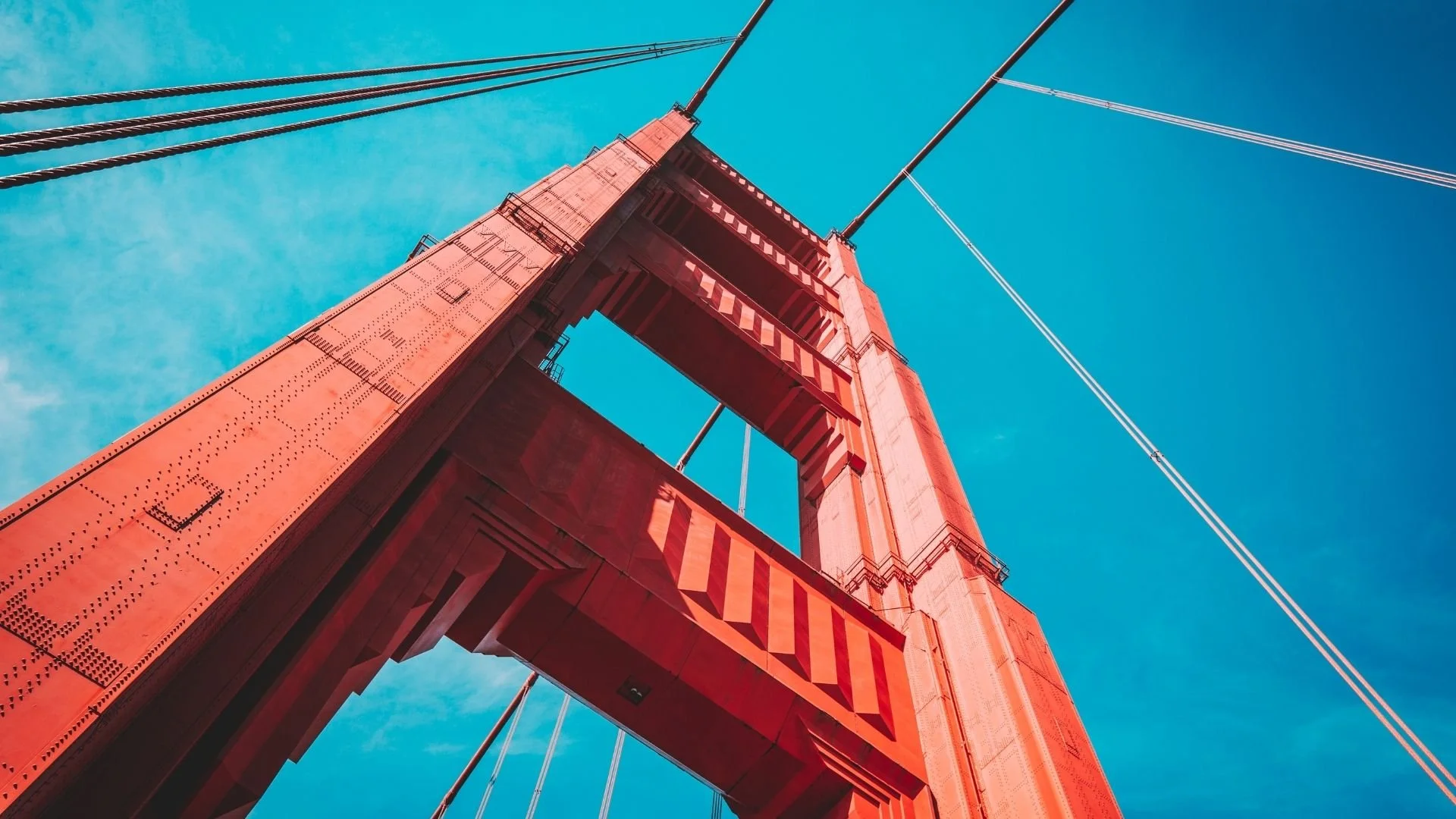
Jumpers often idealise what will happen after they step off the bridge. Studies reveal a romanticised perception of suicide from the Golden Gate Bridge, its aesthetic beauty making it feel like a pure and fantastical gateway to something else, something better.
Dr. Richard Seiden’s 1978 study, Where Are They Now?, followed 515 people who had been stopped from jumping between 1937 and 1971. More than 90% were still alive decades later or had died of natural causes. Suicide, he concluded from his research, is a crisis-oriented decision, an acute impulse rather than a lifelong certainty. A person who can be talked through their worst hour might never return to the edge. Seiden put the high-risk period at ninety days.
Patrol officer Kevin Briggs has stood between hundreds of would-be jumpers and the void. He starts with a simple question: “How are you feeling today?” If they don’t have an answer, he asks, “What’s your plan for tomorrow?” If they don’t have a plan, they make one. “If it doesn’t work out, you can always come back here later.”
For some, that intervention is enough. The non-physical barrier catches between fifty and eighty people a year, and misses about thirty. Dr. Jerome Motto, a longtime Bay Area psychiatrist, has fought—and failed—twice to secure a suicide barrier. He recalls his most affected case: a patient who jumped in 1963. “The guy was in his thirties, lived alone, pretty bare apartment. He’d written a note. It said, ‘I’m going to walk to the bridge. If one person smiles at me on the way, I will not jump.’”
When Joseph Strauss built the Golden Gate Bridge, he believed it would demonstrate man’s control over nature. But as the article’s closing line reminds us, “No engineer has discovered a way to control the wildness within.”
As of January 1, 2024, the Golden Gate Bridge now has a continuous suicide barrier spanning its entire length. Suicides have dropped significantly.
A physical interruption, placed between impulse and action.

Free Solo. Directed by Jimmy Chin and Elizabeth Chai Vasarhelyi
On one side of the brink, the moment overwhelms the person. On the other, it is rehearsed, studied, and controlled. The edge is the same, but the relationship to it is not. Alex Honnold and the documentary Free Solo embodies that other side.
Free Solo follows Honnold’s 2017 ascent of El Capitan, a 3,000-foot vertical monolith in Yosemite. No ropes. No protection. Just him. And us. I’ve seen this film several times and every time it is pure exhilaration and pure dread. The film won the Best Documentary Oscar, largely because it forces us into his world. We are on that exposed rock face with him, whether we like it or not, hanging in the sky.
Some people think Alex Honnold has a death wish, especially when they see him scaling massive rock faces without a rope. They assume he’s reckless. The truth is the opposite. Every move is rehearsed, memorised, drilled. Each foot placement, each grip, every shift in balance is logged and repeated until the wall is imprinted in his mind. It’s an exquisite demonstration of mastery.
For most climbers, El Capitan is a lifetime challenge. For Honnold, it’s a problem to solve. Composed almost entirely of a pale, coarse-grained granite approximately one hundred million years old, Honnold spends years breaking it into sections, assigning difficulty ratings to each pitch, mapping a perfect route. Then he rehearses it over and over, roped in, until there is no uncertainty left. Control is everything.
But Honnold isn’t just meticulous, he is wired differently. His amygdala, the brain’s fear centre, doesn’t react like most people’s. Neuroscientists have studied it. His brain simply doesn’t register threats in the same way. So when he climbs into ropeless situations that would cause almost any other person to freeze in terror, he very likely feels no fear up there. But he rejects the idea that he’s fearless. Fear exists. He just manages it better than anyone else.
Honnold is fascinating because of his contradictions. Intensely laid back, his nickname is No Big Deal. Yet, he is obsessed. He needs to be in those wildly exposed, potentially fatal positions, just like his heroes, the ropeless daredevil climbers of the 80s and 90s, but with control and precision, not recklessness. Honnold is unshakable but also emotionally distant. His partner struggles with his detachment. Honnold is wholly committed to climbing but can’t explain why. He knows free soloing could kill him. He also knows he can’t afford to make a mistake up there on the rock face. It is the highest possible stakes.
The final magnificent twenty minutes of Free Solo are among the most electrifying ever filmed. Before dawn, Honnold sets off. Filmmaker Jimmy Chin, a world-class climber himself, watches in hushed awe, “He’s off and he’s moving fast.” Honnold is locked in. Flow state.
There are moments where the margin for error disappears completely. The Boulder Problem, the most technical section of the climb, is a sequence requiring a karate kick to a tiny ledge and a pinky-finger grip on a razor-thin hold. It’s the key moment. A collective intake of breath. A mistake here is fatal. Honnold executes it exactly as he planned and it looks effortless. It is anything but.
He reaches the summit, stands, and smiles. He’s happy, but there’s no wild celebration, no excess emotion. He did what he came to do. No Big Deal.
But it is a big deal.
As one critic memorably put it,
“One incredible climb for an athlete, one quantum leap for mankind.”
Not everyone is an Alex Honnold. Most moments at the edge aren’t rehearsed or mastered. They arrive unannounced. Usually we meet them unprepared, uncertain, and often alone.
I’ve stood on the Golden Gate Bridge. The idea of falling from it, willingly or otherwise, is horrifying. Reading in Jumpers that nearly all survivors report instant regret mid-fall lingers in my mind. In that split second, everything changes—and nothing can be changed.
Much of life is lived on the symbolic cliff edge, just beyond the railing. Suicide barriers on the Golden Gate are an acknowledgment of this reality: that we don’t always understand each other; that crisis decisions often don’t need a permanent solution, just an interruption.
Not stopping. Just interrupting.
I think about the man in Jumpers whose note read, “If one person smiles at me, I will not jump.” That’s a need to be seen, to be acknowledged, to have the moment interrupted.
Alex Honnold, by contrast, doesn’t seek interruption. He builds total self-reliance. He rehearses the edge until it is no longer a question. He has removed doubt, fear, impulse. He is the opposite of the jumper because he controls the moment rather than the moment controlling him. But he is also on the brink by the very nature of what he does. One misstep is all that separates him from this world and the next.
Most of us aren’t free soloists or standing on the Golden Gate Bridge. But we all experience high-stakes moments in life, moments where our world shrinks and the decision feels vitally important. Maybe we can’t master those moments like Honnold. But maybe they don’t need to be mastered. Perhaps they just need to be interrupted. By someone we trust, someone we can rely on. Or even a stranger. Another voice, another perspective.
Today, there are special telephones on the Golden Gate Bridge that link directly to suicide crisis hotlines, a promise of a voice placed between impulse and consequence. Sometimes, that might be enough.
Not solve, not rescue. Just interrupt… long enough for the moment to pass.
Because the moment is everything.
Pass It On
If this idea was worth your time, it may be worth someone else’s.
Share this essay with a friend:
https://www.deeplifejourney.com/deep-life-reflections/february-21-2025
If you have a thought you’d like to share, please leave a comment below.
You can read all previous issues of Deep Life Reflections here.