
The Problem with Trying to Matter
The Denial of Death and Train Dreams—why trying to matter makes death harder to face.
Deep Life Reflections | Essay 154 | James Gibb
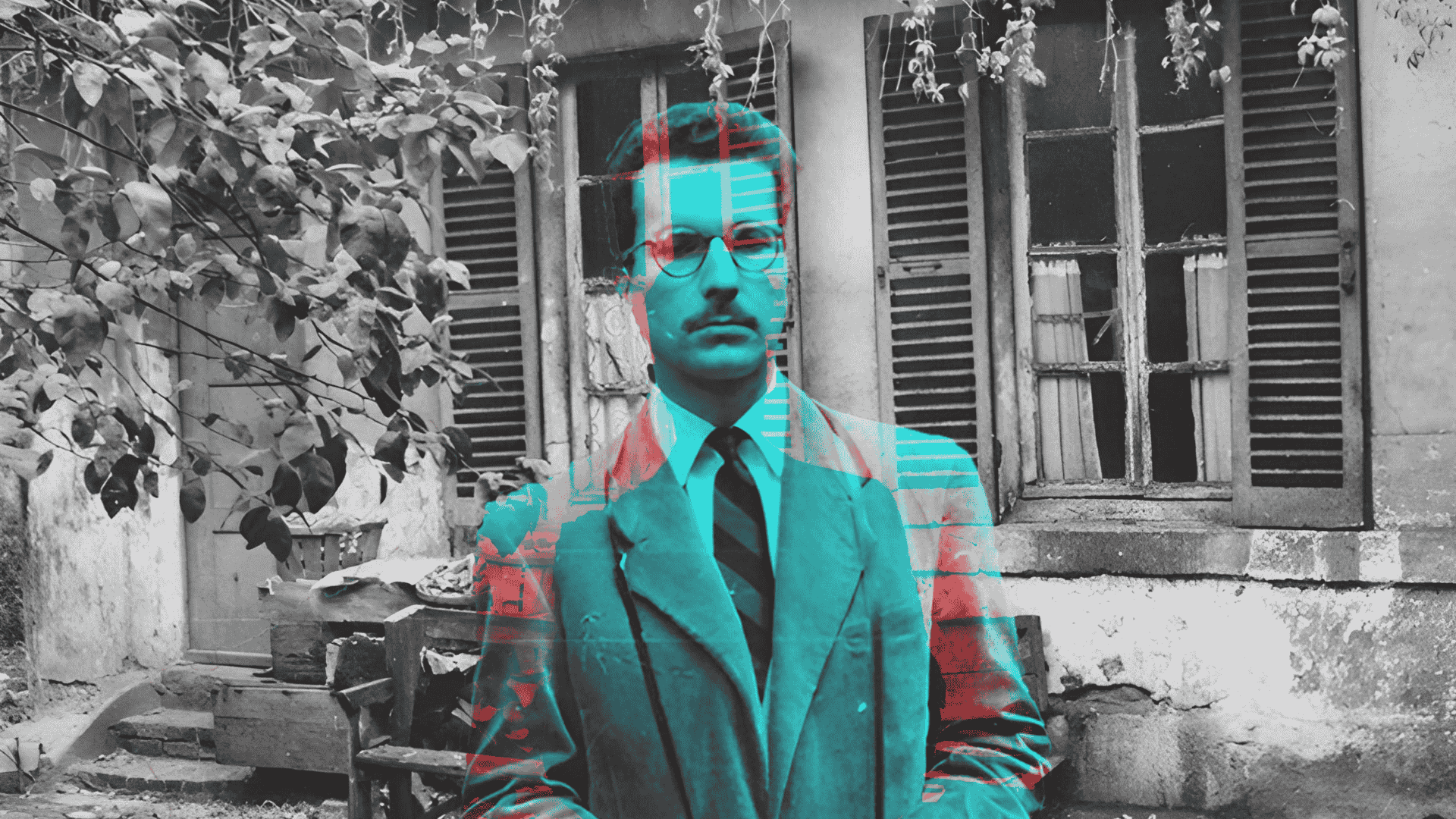
The more we try to matter, the harder it becomes to accept that we won’t.
“The irony of man’s condition is that the deepest need is to be free of the anxiety of death and annihilation; but it is life itself which awakens it, and so we must shrink from being fully alive.”
—Ernest Becker, The Denial of Death
Ernest Becker was dying of colon cancer. On his deathbed, the author and philosopher Sam Keen interviewed him. The first words Becker spoke as Keen entered his hospital room were:
“You are catching me in extremis. This is a test of everything I’ve written about death. And I’ve got a chance to show how one dies, the attitude one takes… how one accepts his death.”
Becker died soon after. He was 49. Only a year earlier, in 1973, he’d published the culmination of his life’s work, The Denial of Death, which won the Pulitzer Prize and opened a new debate on the ‘why’ of human existence. I finished the book around a month ago and it’s taken some time to capture my thoughts. The ideas are so rich and dense I found myself spending half an hour on a single page. It might be the slowest 280 pages I’ve read.
The basic premise of Becker’s work is that we create so we can become immortal. This gives our lives meaning. But paradoxically, this need to matter is what generates our fear and suffering. Where Freud saw sex at the heart of human suffering, Becker saw the fear of death. Our very consciousness of death—which Becker believed separated us from animals—creates an omnipresent, inevitable terror that develops early in childhood. The threat of oblivion for a species so convinced of the importance of their inner lives is so awful that we seek to escape it. Any way we can.
The Denial of Death is not a light read and at times it feels bleak and unsettling. But it is fascinating. As someone who is statistically 63% of the way through life and far more aware of my mortality than at 25 or 35, I wanted to explore Becker’s contribution to the discussion of life and death. I suspected it would make me think deeply. It did.
Becker’s philosophy is anchored to four main pillars:
The first is that the world is terrifying. Mother Nature is brutal and destroys what she creates.
The second is that the basic motivation for human behaviour is our biological need to control our basic anxiety, to deny the terror of death. We are naturally anxious because we are ultimately helpless and abandoned in a world where we are fated to die.
Because the terror of death is so overwhelming, we work hard to keep it unconscious. This forms Becker’s third pillar. It begins with the development of ‘character armour’—the defensive personality structure every child absorbs from adults, especially parents. It acts as a shield: “If I am like my all-powerful, godlike father, I will not die.” But the price we pay is high, argues Becker. Life escapes us while we huddle within the fortress of character. Beyond the individual, society provides another defence against our natural helplessness by creating a hero system that allows us to believe we transcend death by taking part in something of lasting worth. Here, Becker gave us the term ‘immortality projects.’ One example is having children, seeking immortality through our genes. But these projects also apply to corporations and nations. Returning a profit or defeating a rival nation may have less to do with economic advancement or political peace than they admit. Beneath it sits the same unconscious need: to assure ourselves we have achieved something of lasting worth.
And in the fourth pillar, Becker argues our heroic projects that are aimed at destroying evil have the paradoxical effect of bringing more evil into the world. Our desire for the best becomes the cause of the worst. Our need to gain self-esteem, deny our mortality, and achieve a heroic image pits my gods against your gods, my immortality project against your immortality project. It is a fairly grim diagnosis of the human condition.
Throughout the book, Becker turns to enlightened thinkers and practitioners, including the great psychoanalysts Freud, Jung, Fromm, James, and Rank, as well as philosophers like Søren Kierkegaard, who is given a dedicated chapter. Their work shapes Becker’s conclusion, which is neither neat nor triumphant. He doesn’t arrive at it directly either. But throughout the book, Becker suggests people need something beyond themselves, something that exists independently, an entity that acknowledges the reality that the body will decay and the spirit will endure. What ultimately fits this description for Becker is faith.
“I would say that the most important thing is to know that beyond the absurdity of one’s life, beyond the human viewpoint, beyond what is happening to us, there is the fact of the tremendous creative energies of the cosmos that are using us for some purposes we don’t know.”
Returning to that deathbed interview, Becker tells Keen that although he was an atheist for many years, the birth of his first child jolted him into belief in God—“seeing something pop in from the void and seeing how magnificent it was.” He felt the only valuable conversation man can have is a ‘vertical’ one. Becker insisted death hadn’t made him more religious, but had let him shed his ‘character armour’. That he was at peace with the idea of returning to a place of dust.
There was no denial of death.
Becker explains why we spend our lives trying to matter. In Train Dreams, we see what a life looks like when, by most measures, it doesn’t.
Train Dreams is a film of reverberations. Beautifully shot and narrated, it tells the story of Robert Grainier, a logger and railroad worker in early twentieth century America. A seemingly ordinary man. A quiet, insular man who believed his existence was soured by guilt and trauma. In following this birth-to-death character study, we bear witness to the full layers of life, from the wonderful to the devastating to the mundane. The film reflects on the beauty of the ordinary and on how everything is connected.
“There were once passageways to the old world; strange trails, hidden paths. You’d turn a corner and suddenly find yourself face-to-face with the great mystery, the foundation of all things. And even though that old world is gone now, even though its been rolled up like a scroll and put somewhere, you can still feel the echo of it.”
—Narrator, Train Dreams
The film is based on a novella by Denis Johnson. It traces the passage of time, smooth for long stretches, then suddenly jagged. The symbol of the train, and especially its railroad tracks, represent a particular duality: both progress and destruction. The laying of railroad track at this time in America’s history made the world smaller by connecting people, and irreversibly altered the landscape by scything down great areas of trees that had stood for centuries. On one hand, human progress, on the other, a tearing up of nature’s blueprint.
One of the film’s best lines recognises this delicate relationship between what has been and what is here now: “The dead tree is as important as the living one.”
Early in the film, on a logging job with hundreds of other workers, Robert witnesses the senseless murder of a co-worker accused of stealing. The man is a Chinese immigrant. There’s no trial or inquiry. The bosses throw him off a bridge. This haunts Robert for the rest of his life. His inaction. It won’t be his only guilt. There is more devastation to come. And, as is often the case, it comes after a period of joy, the kind so fiercely sought in the human condition.
Train Dreams has a strong philosophical core. It reminded me of the work of Terrence Malick, especially The Thin Red Line, in its search for innate beauty behind the destruction wrought by human hands. Robert Grainier finds beauty but has trouble identifying it. At a time of great change, he is central to the world around him: nature, relationships, work, family, fatherhood, progress. But each comes and goes like the seasons. Different blankets pulled tight, discarded, or taken away. All this is handled with cinematic grace by director Clint Bentley and his cinematographer Adolpho Veloso, who became the first Brazilian to be nominated for an Oscar in the Best Cinematography category.
We are left with fragments. Fragments of Robert’s bruised yet lived life fitting together seamlessly. But the whole can only be seen once all the fragments come together. Like the final piece of railroad track.
Without it, the train cannot complete its journey. Nor can Robert.
“When Robert Grainier died in his sleep sometime in November of 1968, his life ended as quietly as it had begun. He’d never purchased a firearm or spoken into a telephone. He had no idea who his parents might have been and he left no heirs behind him. But on that spring day, as he misplaced all sense of up and down, he felt, at last, connected to it all.”
By Becker’s definition, Robert Grainier built no obvious immortality project. And yet, his life doesn’t feel like a failure, especially with that final sense of connection.
Becker’s concept of immortality projects deserves further inspection. These are projects we all build because we’re all searching for meaning. It’s built into us. We can see immortality projects in the familiar shapes of career, status, identity, role, achievement. We build armour for each. Many people don’t consciously choose their immortality project. They inherit it from others: parents, culture, expectation. Then they perform it and cling to it for dear life.
When old immortality projects die, people tend to do one of three things: They rebuild the same project in disguise (a new job, another promotion to chase, a new set of metrics to measure your worth); They retreat into bitterness or cynicism (“well nothing matters anyway”); Or they consciously construct a smaller, truer meaning system (one that accepts limits, fragility, and time).
The third is the hardest. But it offers something different. It might be smaller and less performative, but it is the one most likely to bring something approaching peace.
And importantly, it asks for less.
Pass It On
If this idea was worth your time, it may be worth someone else’s.
Share this essay with a friend:
https://www.deeplifejourney.com/deep-life-reflections/february-27-2026
If you have a thought you’d like to share, please leave a comment below.
You can read all previous issues of Deep Life Reflections here.