
Not All Lives Need Fixing
How Nomadland reveals dignity among the weary and the weathered.
Deep Life Reflections |Essay 151 | James Gibb
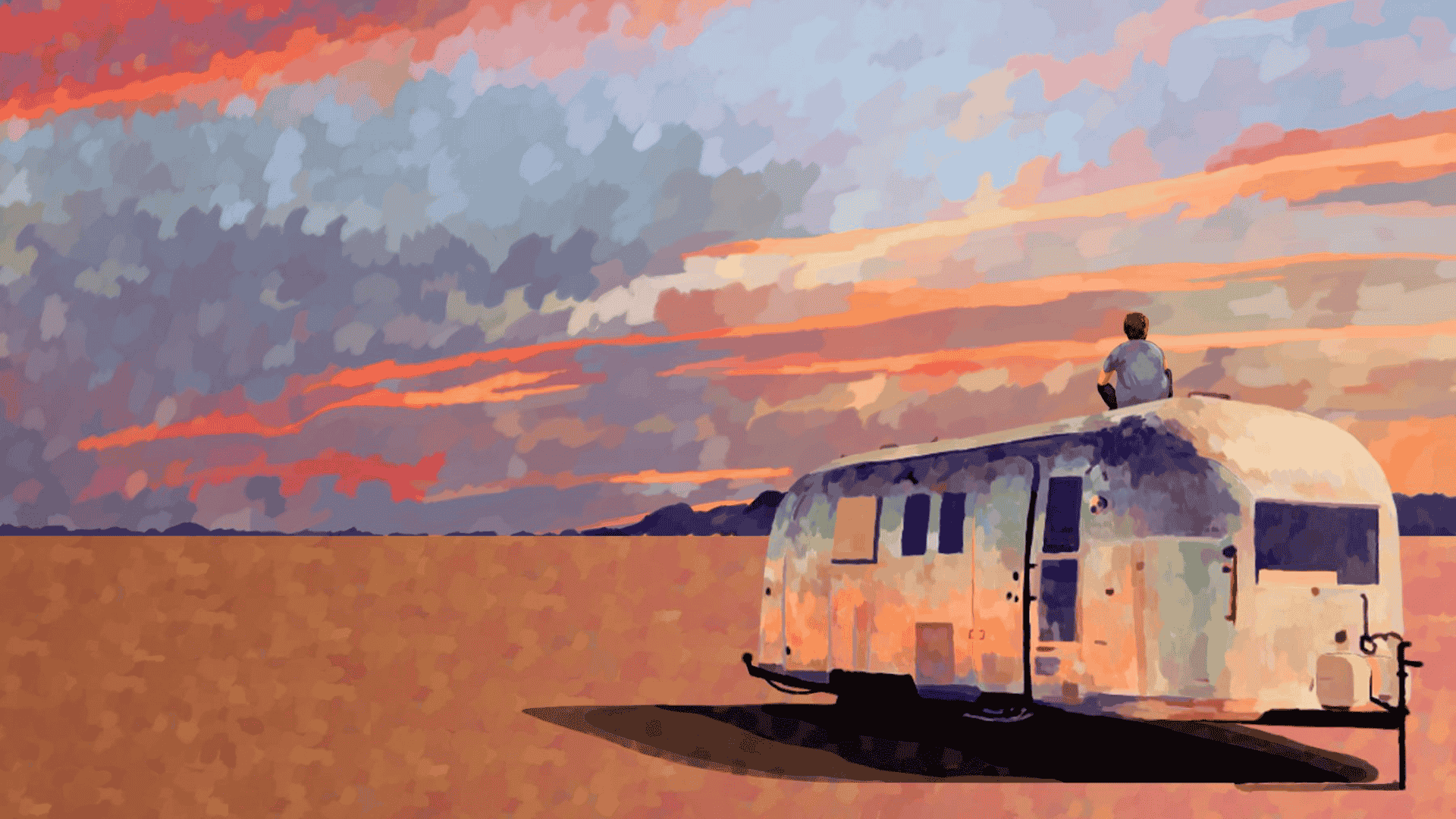
We assume every life needs direction, resolution, or repair. Some don’t.
There is a character in the film Nomadland called Bob, a kind of mentor and sage to people struggling with the hardships of life. Whenever Bob says goodbye to someone, he never says it as a final goodbye. Instead, he says “I’ll see you down the road.” He’s said it for years. It’s part of his philosophy of life. That there’s always an invisible connection between people; that somewhere down the line he’ll see them again, whether it’s a month, a year, a decade, or in the place beyond the horizon. Not saying goodbye means he never has to confront the idea that he won’t see them again.
Fern will never see her husband again. We learn he died of a terminal illness. It’s likely she said a final goodbye to him. Fern has lost much: her house, her husband, her stability. She is grieving a life and love ripped away from her. Yet, she stands firm.
The film opens with a stark piece of twenty-first-century economic reality. In 2011, US Gypsum, a building materials corporation, closed the mine in their company town of Empire, Nevada. They subsequently closed the town with it. Workers and their families were allowed five months of residency to get their affairs in order before being asked to leave. Then the town was closed. Even the zip codes would later become discontinued as Empire became a ghost town. This really happened.
Fern seems to have been relatively happy in Empire. But when we meet her, she is alone with only her van and a few personal and practical items stuffed into it. She’s homeless, although she prefers her word, “houseless.” It becomes clear she’s someone who can manage, although there is a persistent hum of sadness and loneliness in her, unmoored from a life she once knew. She takes to the road in search of seasonal work across the vast stretches of the American landscape. Along the way, she meets other nomads, those who live day-to-day in their vans and RVs, occasionally forming makeshift communities and sharing their tales.
Nomadland won Best Picture at the Academy Awards, as well as Best Actress for Frances McDormand in her portrayal of Fern. We see the world through Fern’s eyes and McDormand gives a brilliant and subtle performance. This is about as unglamourous a performance as you’ll see on film. Fern is a seemingly average woman. Films are not usually made about people like this. But she is also a complex character. We see her independence, her restlessness, and almost self-sabotaging urge to deny herself any kind of romantic happiness that would disrespect her grief. Yet, we also see her make friends with anyone and everyone. She has a gift for conversation and is warm and open with people. McDormand pours a complete and whole life into this performance.
I didn’t realise that most people in the film are real, i.e. non-actors. They are living life on the road. Real nomads. The conversations in the film reflect this real-world easiness. They feel natural and improvised, without a script in sight. Sometimes it feels like you’re watching a documentary, and in some ways, I suppose it is.
Typically, a film follows a three-arc structure. A character has a problem they need to solve. Then we watch them attempt to overcome that problem in the face of a seemingly insurmountable challenge. Finally, they overcome that challenge, learning something profound about themselves. This is the hero’s journey that has been the silent infrastructure of cinema for over a century. In Nomadland, we get no such journey.
Fern has no problem to solve, and she doesn’t believe she needs to be saved or redeemed. She is a woman in her sixties who could be anyone. She wants to work and enjoys work. And she gets work: Amazon warehouse worker, toilet-cleaner, burger-flipper, campsite groundkeeper. The film never sneers at work. It sees dignity in work. Honest labour, even if modest and temporary. It gives Fern rhythm. It also puts essential money in her pocket. Fern seeks freedom and yet is tied to the past. And she is grieving, yes. As many people do. She is an average woman and yet her story is more relevant than the fantastical figures that bind most films.
As critic Brian Tallerico wrote:
“Nomadland is a movie that finds poetry in the story of a seemingly average woman. It is a gorgeous film that’s alternatively dreamlike in the way it captures the beauty of this country and grounded in its story about the kind of person we don’t usually see in movies. I love everything about it.”
Nomadland is the kind of film that lingers because it awakens the idea that so many people still have stories to tell, grief to hold or unburden, and dreams that may or may not be realised. Because Fern isn’t shown as a lost or hopeless case, the film is not laced in misery or sadness. I think it recognises that many people today are simply unsure of their future and their footing, at the mercy of the economic, social, cultural, and political challenges that dominate the news. Unsure where to go next or what to do.
But the tonic is the same that has served humanity for millennia: the simplicity and beauty of the smaller things around us. A pink and orange sunset against the distant cool mountains. A warm conversation with a stranger. A helping hand to someone in need. A recognition and peace that all living things must eventually die.
Maybe getting on the road gives us a better chance to see others.
And to realise that not every life needs to be fixed.
“I worked for corporate America for 20 years. My friend Bill worked for the same company. He had liver failure. A week before he was due to retire, HR called him in hospice and said let’s talk about your retirement. And he died 10 days later, having never been able to take that sailboat that he bought out of his driveway. And he missed out on everything. Then he told me before he died, just don’t waste any time. So I retired as soon as I could. I didn’t want my sailboat to be in the driveway when I died. So... yeah. And it’s not. My sailboat is out here in the desert.”
—Nomadland.
Pass It On
If this idea was worth your time, it may be worth someone else’s.
Share this essay with a friend:
https://www.deeplifejourney.com/deep-life-reflections/february-6-2026
If you have a thought you’d like to share, please leave a comment below.
You can read all previous issues of Deep Life Reflections here.