
The Erosion of the Village
How the anti-social century is fraying the fragile connections that hold us together.
Deep Life Reflections | Essay 95 | James Gibb
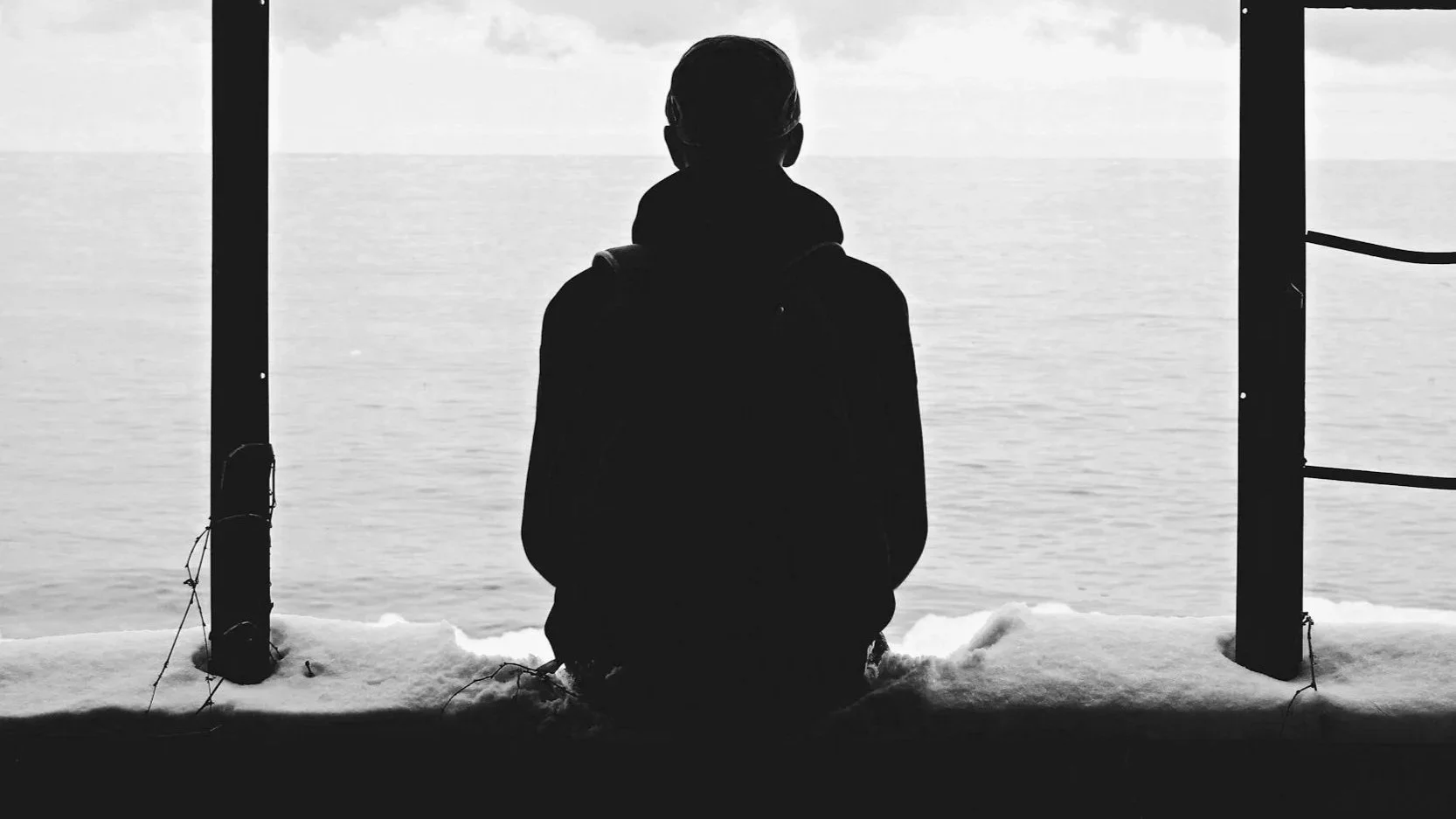
Connection is not only found in intimacy, but in the wider human bonds we often notice only when they begin to disappear.
“What is the opposite of two?
A lonely me, a lonely you.”
—Richard Wilbur, poet.
As we enter the twenty-fifth year of this century, several writers have reflected on how it stands apart from those that came before. In The Atlantic, Derek Thompson contributes to this discourse with The Anti-Social Century, a rich and analytical essay on how Americans are spending more time alone than ever. This is a trend reshaping civic life, personal happiness, and even our perception of reality. While Thompson’s focus is solely on America, it’s hard not to feel the familiarity of this phenomenon in other countries given our global nature.
Thompson describes the shift to a “home-based, phone-based culture,” where solitude has become a defining feature of modern life. Our connections now cluster at two extremes: the inner ring of close family and friends, and the outer ring of shared tribes linked by common affinities. Yet, the middle ring—the familiar but not intimate relationships, the acquaintances, the neighbours—has eroded. Thompson calls this middle ring “the village,” the space where we learn to engage in productive disagreements and compromises, the foundation of democracy itself. Without it, politics becomes polarised, a vicious battleground where every election feels like an existential war.
This erosion of the village isn’t just a consequence of modern technology but an evolution decades in the making argues Thompson. Starting in the 1970s, the car and the television began the decline of social interaction, a trend now sped up by smartphones and endless screens. Home is now a sanctuary for many, and the screen is the centrepiece. Screens now occupy 30% of a teenager’s waking hours, reshaping how friendships are formed and maintained. Today, Americans are spending less time with others than at any point in history. This isn’t post-pandemic driven, it’s self-imposed.
Thompson distinguishes between loneliness and solitude. Feeling some loneliness is healthy, a biological cue that nudges us off the couch and into face-to-face interaction. The real problem, as Thompson sees it, is that many people are no longer responding to this cue. Instead, solitude has become something many actively choose, and even prefer.
Interestingly, it’s not that we’ve necessarily become lonelier. Measures of loneliness haven’t significantly risen, but levels of solitude have. This shift reflects what Thompson calls the “century of solitude,” where the conveniences of home entertainment and digital interaction offer an attractive but ultimately isolating way of life. And it comes at a cost.
Why are we choosing this? Many of us mistakenly assume that others aren’t interested in talking to us, or fear being burdensome. But research suggests otherwise. Simple interactions like a hello or a compliment almost always get a positive response. This is the principle of reciprocity, fundamental to human nature. Social interaction is far less uncertain than we think, and connection often brings more joy than solitude. How often have you put off meeting a friend, only to realise later how worthwhile it was?
Thompson argues that our “mistaken” preference for solitude is slowly rewiring us, with significant consequences for our happiness, communities, and politics. He suggests resisting the “convenience curse” by talking to more strangers, joining more groups, and stepping out into the world more often. After all, the way we spend our minutes is the way we spend our decades.
In a future where AI might become an emotional surrogate for human connection, rebuilding the “village”—that middle ring of connections—through public social infrastructure and intentional face-to-face interactions might be the antidote to our growing isolation. As Thompson puts it, “Our smallest actions create norms. Our norms create values. Our values drive behaviour. And our behaviours cascade.”
While solitude can be both liberating and comforting, it is connection that truly makes us human.
In contrast to Thompson’s writing about a voluntary retreat from the village, a new mini-series, Lockerbie: A Search for Truth, shows something different: a village forced to come together by catastrophe, and people left isolated by the long search for truth.
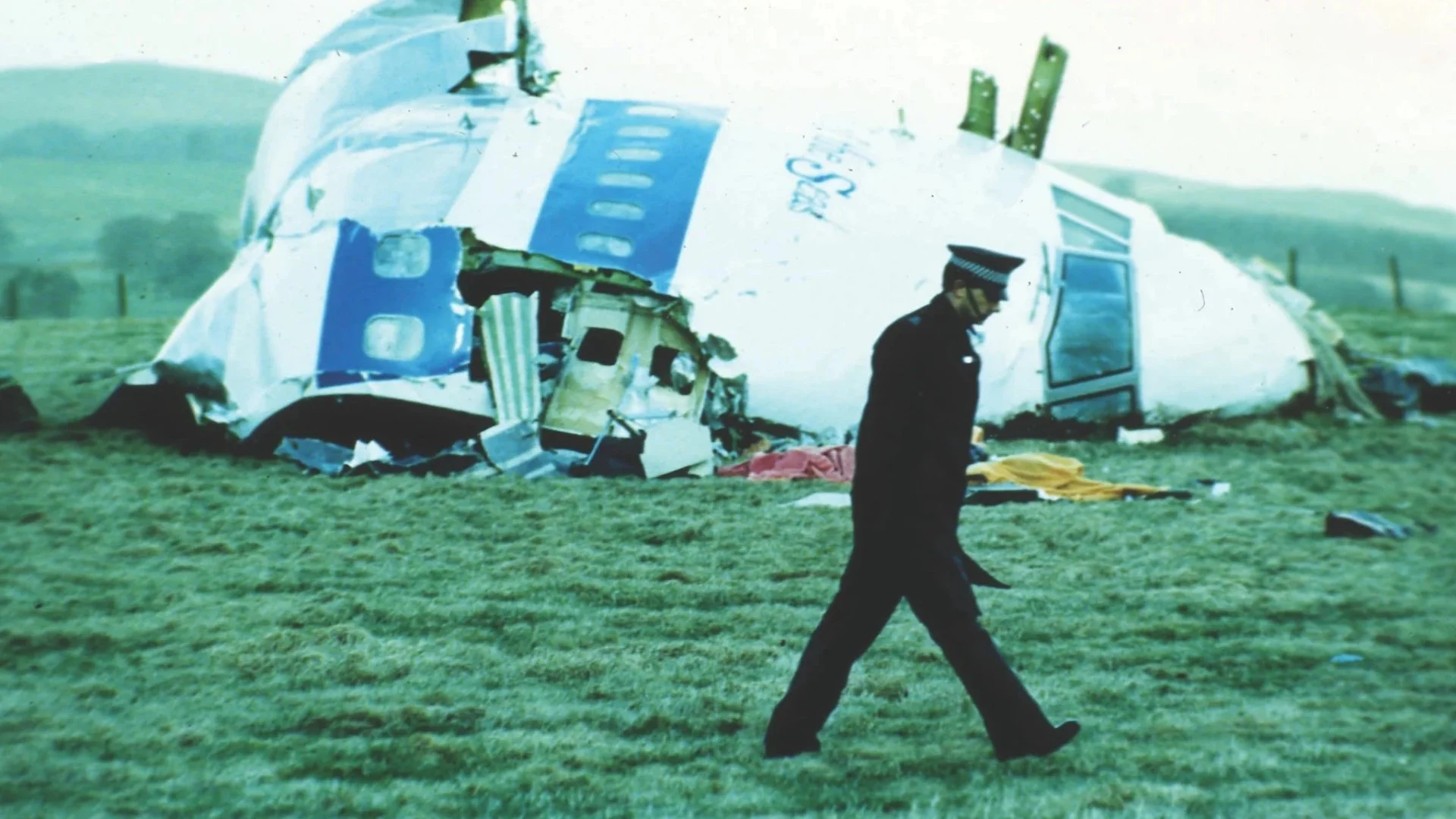
Wreckage of Pan Am Flight 103, Lockerbie, Scotland, 1988
On December 21, 1988, Pan Am Flight 103 from London to New York exploded over the small market town of Lockerbie in Scotland, killing all 259 passengers and crew, along with 11 residents on the ground. It remains the deadliest terrorist attack in UK history. Lockerbie: A Search for Truth is an excellent 5-part mini-series that explores the tragic events of that day and the subsequent 30-plus years trying to piece together what actually happened and why. It’s based on the book The Lockerbie Bombing: A Father’s Search for Justice by Dr. Jim Swire, whose daughter Flora was a passenger on the flight.
The Lockerbie disaster is a very personal event for me. My hometown of Dumfries is only a 20-minute drive away, and I had friends in Lockerbie. My dad saw the explosion in the sky as he drove home from work, and my mum, a nurse, was put on standby to help with the expected casualties at Dumfries Infirmary Hospital. But there were no casualties. The bomb killed everyone. I was 14 years old and remember the day with absolute clarity. My mum, sister, and I had been Christmas shopping in town, and later that evening, I heard a special news bulletin on the television. The news was unbelievable. This hitherto unknown Scottish town had suddenly become the focus of global headlines, and the carnage and tragedy on the ground were unimaginable.
Colin Firth plays Jim Swire, the grieving and angry father on a decades-long crusade for the truth behind the bombing. Over the five episodes, Swire’s obsession uncovers a dark, twisting and complex maze involving Libya, Iran, Syria, and the CIA; suppressed security alerts; a Semtex bomb hidden in a Toshiba radio; a highly controversial trial and incarceration in the Netherlands (the first of its kind); as well as a myriad of geopolitical themes that span oil, diplomacy, 9/11, and international politics.
The first episode deals with the bombing and its aftermath: a grisly and powerful opening that brings back the horror of that night. We then emerge into a detailed chronicling of the tragedy and the inconsistencies that surround it, seen through the eyes of Swire and his long-suffering family. At one point, Swire even meets Libyan leader Muammar Gaddafi, a move that drew heavy criticism. Later episodes cover the trial and his unlikely friendship with Abdelbaset al-Megrahi, the Libyan intelligence agent convicted of the bombing.
Throughout, Firth is excellent as the defiant and grieving father, stumbling through the nightmare in a permanent state of subdued devastation and dignified intelligence, his Lockerbie badge stubbornly pinned to his jacket. He is a man haunted by grief, yet consumed by a relentless need for answers, even as it isolates those left behind. He, like everyone else, still waits for the truth to emerge, almost thirty-six years to the day. There has still been no national inquiry into Lockerbie, and key documents remain classified.
The search for the truth continues.
Reflecting, I think about my own relationship with solitude and connection. I certainly value solitude, as it’s where I find clarity and creativity, but human connection will always surpass it. I’ve experienced the richness of connection in the most unexpected moments. Two months after the Lockerbie disaster, my friend and I completed a sponsored run to help raise funds for the town. Everything about it was physical, right down to the handwritten letter of thanks we each received from the local community. It’s a letter I still have. Looking back, it feels like a piece of the “village” Thompson describes.
The village is tangible.
It is the neighbour, the stranger, the handwritten letter, the person who turns toward us when it would be easier to stay alone.
The village is us.
Pass It On
If this idea was worth your time, it may be worth someone else’s.
Share this essay with a friend:
https://www.deeplifejourney.com/deep-life-reflections/january-10-2025
If you have a thought you’d like to share, please leave a comment below.
You can read all previous issues of Deep Life Reflections here.