
What We Trade Away
Billy Wilder’s The Apartment and the cost of chasing something better.
Deep Life Reflections | Essay 147 | James Gibb
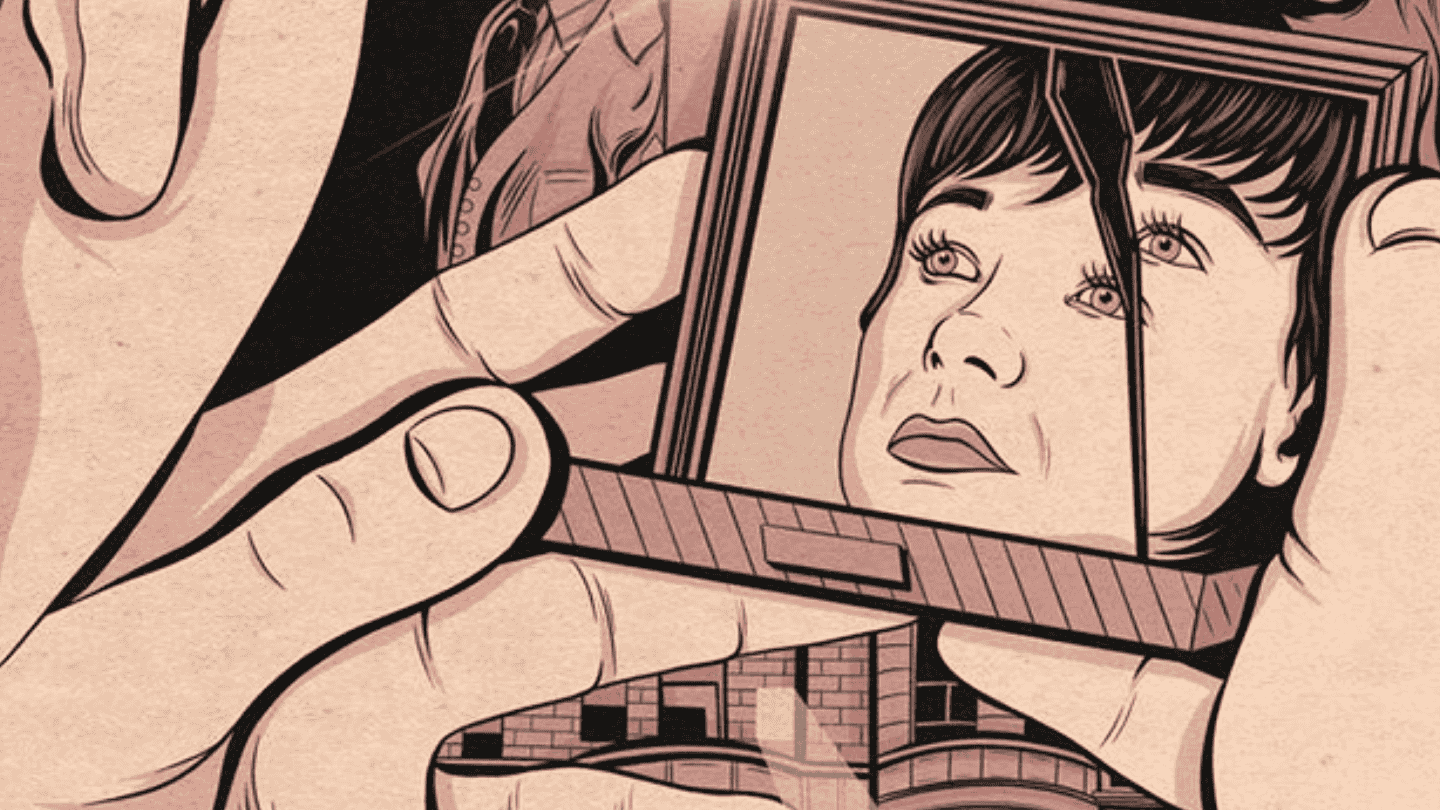
Not all debts are financial. Some of the most important are never written down—and take years to pay.
“That’s the way it crumbles… cookie-wise.” —C.C Baxter, The Apartment
C.C. Baxter is one of 31,259 employees at Consolidated Life, a faceless insurance conglomerate housed in a New York City skyscraper. He sits at desk 861, Section W, on the 19th floor. A sea of colleagues surrounds him. Desks line up in parallel rows, stretching all the way back to the horizon. Baxter is anonymous. A grey drop of saltwater in a dull corporate ocean. The only difference is when the evening bell rings; they all make for the elevator and home. He stays seated.
Baxter can’t go home. His apartment is the location of choice for the illicit affairs of his many adulterous bosses. Through the promise of career advancement, along with some not-so-subtle threats, Baxter has effectively sacrificed his home, and his life, for the sake of his career prospects. His neighbours think he’s a “good time Charlie” on account of the various comings and goings. But rather than refute it, he accepts it. We watch him outside, pacing the sidewalk, resentful and impatient to get back in. Yet also resigned.
Billy Wilder’s The Apartment is a sharp social satire on the workplace, the organisation, and the company man. It’s also a commentary on the complexities of love and melancholy. Of people who have become jaded realists long before their time, trapped under the immovable tonnage of the large American organisation of the mid-twentieth century.
While films about the workplace are common today, in 1960, the time of the film’s release, it was a relatively new phenomenon. Audiences related to what they saw: tiresome bureaucracy, a bewildering hierarchy of relationships, and the exploitation of the low-on-the-rung white collar worker. This was post-War America, fuelled by immense economic prosperity and confidence, creating the very white-collar jobs the Baxters of the world found themselves in. The film exposed the crushing reality behind the aspirational promise of middle-class professional life.
Jack Lemmon was the perfect choice for this embattled everyman. All nervous energy, he is the definitive lonely guy. The audience sympathises with him. Baxter’s exasperation in dealing with the demands of his supervisors and his reluctance to stand up for himself was familiar to many. There’s also a sorrow to Baxter, a yearning for something simpler, although he can’t articulate it. Again, the audience related.
Jack Lemmon said of his character:
“As I saw it, [Baxter] was ambitious; a nice guy but gullible, easily intimidated, and fast to excuse his behaviour. In the end, he changes because he faces up to having rationalised his morals. He realizes he’s been a dumb kid, he’s been had.”
Baxter isn’t the only one who’s been had. Fran Kubelik (Shirley MacLaine) the elevator operator, has been involved in an affair with the company’s top executive, Jeff D. Sheldrake. Fran, or Miss Kubelik as she’s better known around the office, is still reeling from the affair, which she thought was over, but has been reignited by Sheldrake’s talk of divorcing his wife. He has no intention of doing so. Sheldrake is a textbook example of the phony-sincere executive, saying all the right things to get what he wants.
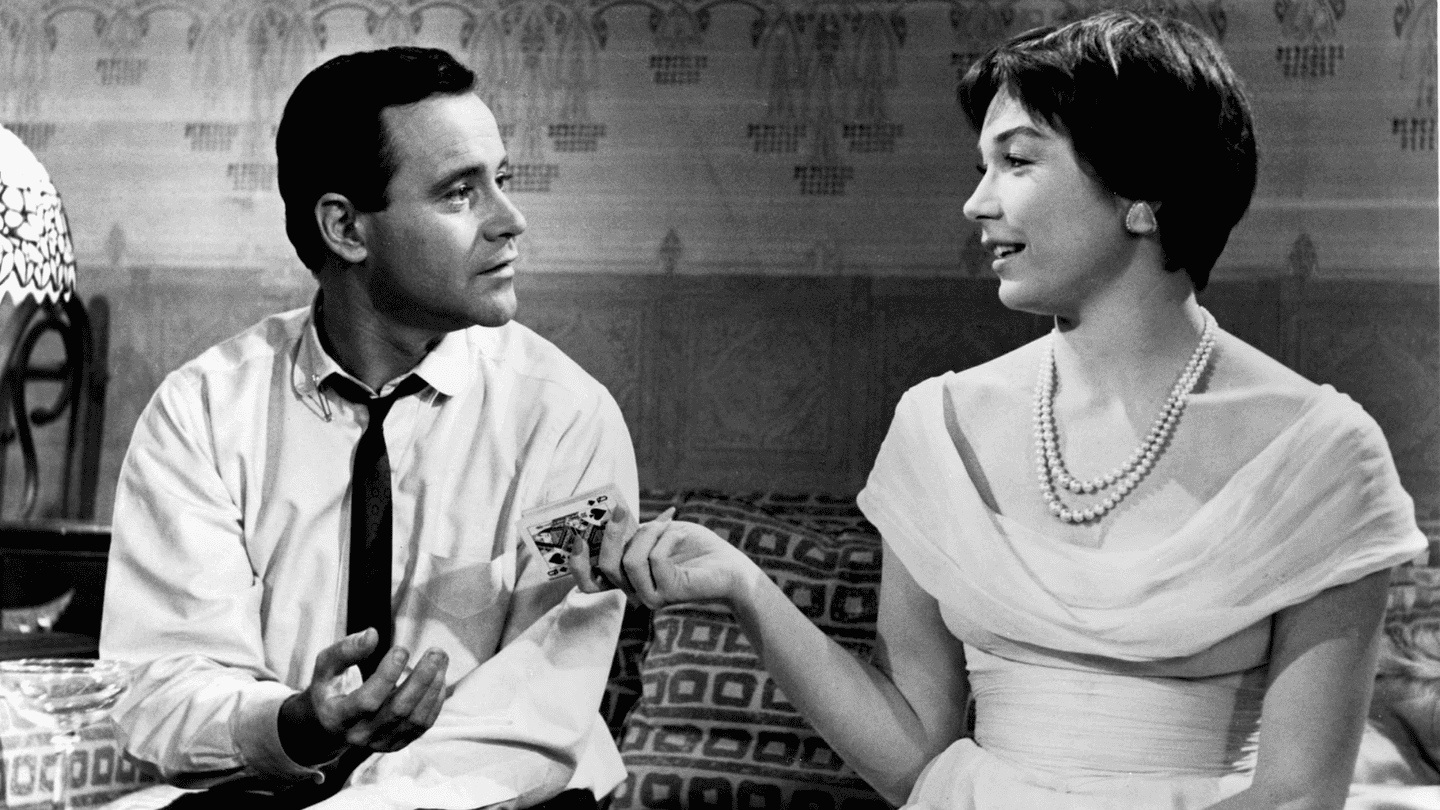
MacLaine plays Fran as a woman of integrity and weariness, someone who knows she’s been played. Her character has seriousness and depth, and gives a voice to women trying to survive in this aggressively male environment. By 1960, the number of women entering the workforce had tripled. The Apartment reflects this cultural shift, but also the limits and barriers that remained, despite their growing social and political capital. We see the casual sexism of the male bosses, the harassment, and the struggle for workplace equality.
C.C. Baxter: “The mirror… it’s broken.”
Fran Kubelik: “Yes, I know. I like it that way. Makes me look the way I feel.”
Matthew Weiner’s Mad Men, several decades later, captures the gender exploitation and imbalance within the American workplace of the 1960s, as well as the impeccable style of fitted suits, pearls, and furs that could be from no other era than the tail-end of the seductive 1950s. An America that looks like progress, but is really a carefully calibrated advert.
The Apartment’s screenplay is a delicate balance between satire and sadness, comedy and drama. The film takes a long, dark turn in the second act when Fran attempts suicide. Much of the remaining story is Baxter’s efforts to nurse, comfort, and protect her. In the characters of Baxter and Fran, we see two fundamentally good, if damaged, people who are both subservient to—and blinded by—the organisation. He wants to be an executive. She wants to be the boss’ wife. Neither can see beyond those blinkered horizons. They’re trapped, until both experience an earned moment of realisation at the end.
The film won five Oscars, and Billy Wilder became the first person to take home Academy Awards for Best Picture, Best Director, and Best Screenplay. Wilder’s film holds up 65 years later because of its adult sensibility and emotional relatability. His characters feel human, real people weighed down by the weight of working for a living, and all the compromises and responsibilities that come with it.
But the genius of Wilder is his ability to show that even jaded realists battered by the machinery of the organisation can find new feelings and something like hope, even if it’s just over a game of gin rummy and pasta served with a tennis racket.
Fast-forward 65 years.
The cubicles may (largely) be gone. But the worship continues. It’s no longer subservience to the organisation and boss like in The Apartment. Now it’s to ourselves.
Julie Beck’s recent article in The Atlantic explores the rising trend of the “5 to 9 after the 9 to 5”—the weekday hours between 5pm and 9pm, meticulously documented by young professionals on social media. Some share their 5am–9am versions too. Whether morning or evening, the pattern is the same: hyper-structured, highly aestheticised routines designed to extract maximum value from every spare hour.
Beck opens with the exhaustive details of one woman’s post-work routine, tracked to the minute: she leaves the office at 5pm, drives home, arrives at 5:45. Starts a load of laundry at 5:50, changes into her workout clothes at 6pm, hits the treadmill at 6:25 for exactly 30 minutes. Grabs a grocery delivery from her front door and unloads it at 7:00. At 7:15 she makes an electrolyte drink, showers at 7:25. At 8pm she cooks salmon and broccoli, at 8:25 she plates her dinner and packs up the leftovers. Not a moment is wasted.
These video routines, posted on social media, are hypnotically edited, with quick cuts, time stamps, and checklists. Hours pass in just a couple of minutes. The compressed time highlights a sense of efficiency. The implied message is clear: leisure is only worthwhile if it’s efficient. If boxes are ticked. Beck observes that the logic of productivity has begun to seep into our supposed free time or leisure time. This is time that ideally would be free of such concerns. It feeds into the sense that when life revolves around work, even leisure becomes labour. The 5 to 9 becomes an extension of the 9 to 5.
Most of these videos are created by people in their early 20s. Beck reasonably sees this as a generation entering the workforce and trying to gain some measure of control over their time. But in doing so, she argues, many of them “End up reproducing a version of the thing they are trying to distance themselves from. If you clock out, go home, and continue checking things off a list, you haven’t really left the values of work behind.”
Beck details the five “non-negotiables” of one creator’s nightly 5-9 routine: exercise, a healthy, home-cooked meal, a shower, a skin-care routine, and a clean kitchen. It doesn’t leave much time for the spontaneous or the unplanned. The threat of waste is palpable. The ugliness of the unproductive hour, almost shameful. Noticeably missing from most of the videos Beck watched is any kind of socialising. People can be a pesky obstacle to productivity. They are too unpredictable, they interfere with precision.
In 1948, the German philosopher Josef Pieper argued that time away from work is often still about work. In his book Leisure: The Basis of Culture, he wrote:
“The simple ‘break’ from work—the kind that lasts an hour, or the kind that lasts a week or longer is there for the sake of work. It is supposed to provide ‘new strength’ for ‘new work,’ as the word ‘refreshment’ indicates: one is refreshed for work through being refreshed from work.”
This, as Beck sees it, is the trap of leisure in a culture fixated by work. Work for many has become the focus of life, the place to find purpose and a sense of self—‘workism’ as the writer Derek Thompson calls it. The religion of work. We may no longer be working to please the boss or the organisation, but we are still working to please, or perfect, the self. We became the boss. And the boss never clocks out.
According to Pieper, “Nobody who wants leisure merely for the sake of ‘refreshment,’ will experience its authentic fruit.” The fruit is important. For much of the 19th and early 20th centuries, leisure was where life’s richest experiences were found. It was where we were meant to realise our full humanity. Outside of labour, not in service to it.
The experts Beck interviews argue that what’s needed for people to experience their leisure as being fully disconnected from their work is a collective mindset shift. Psychiatrist Pooja Lakshmin calls the current mode of over-structured downtime—characterised by achievement and optimisation—as “faux self-care,” a reaction to burnout. Real self-care, she argues, means being engaged with your own reality. It’s not about what you do, but why—and how.
We might say that real leisure is unmeasurable. Moments whose worth cannot be measured in output. Simply doing something because you enjoy doing it. And letting that be enough.
The Apartment has its share of sadness and compromise, but at least people knew when they were on the clock. Today, the clock appears to be constantly ticking.
In 1962, the drama critic Walter Kerr wrote that the ethos of work is using time for something, turning it into a tool to drill your way to some desired future payoff. But worshipping that ethos too much means we lose control of the drill. We lose the capacity to notice what’s around us, the peace and awe that can sneak up on us. The sudden sense of being fully alive.
Unstructured. In a useless hour. Just existing.
That’s a trade we make more often than we think.
Pass It On
If this idea was worth your time, it may be worth someone else’s.
Share this essay with a friend:
https://www.deeplifejourney.com/deep-life-reflections/january-9-2026
If you have a thought you’d like to share, please leave a comment below.
You can read all previous issues of Deep Life Reflections here.