
How Habits Form Like Frost
You don't see it happen. Until it's everywhere.
Deep Life Reflections | Essay 146 | James Gibb
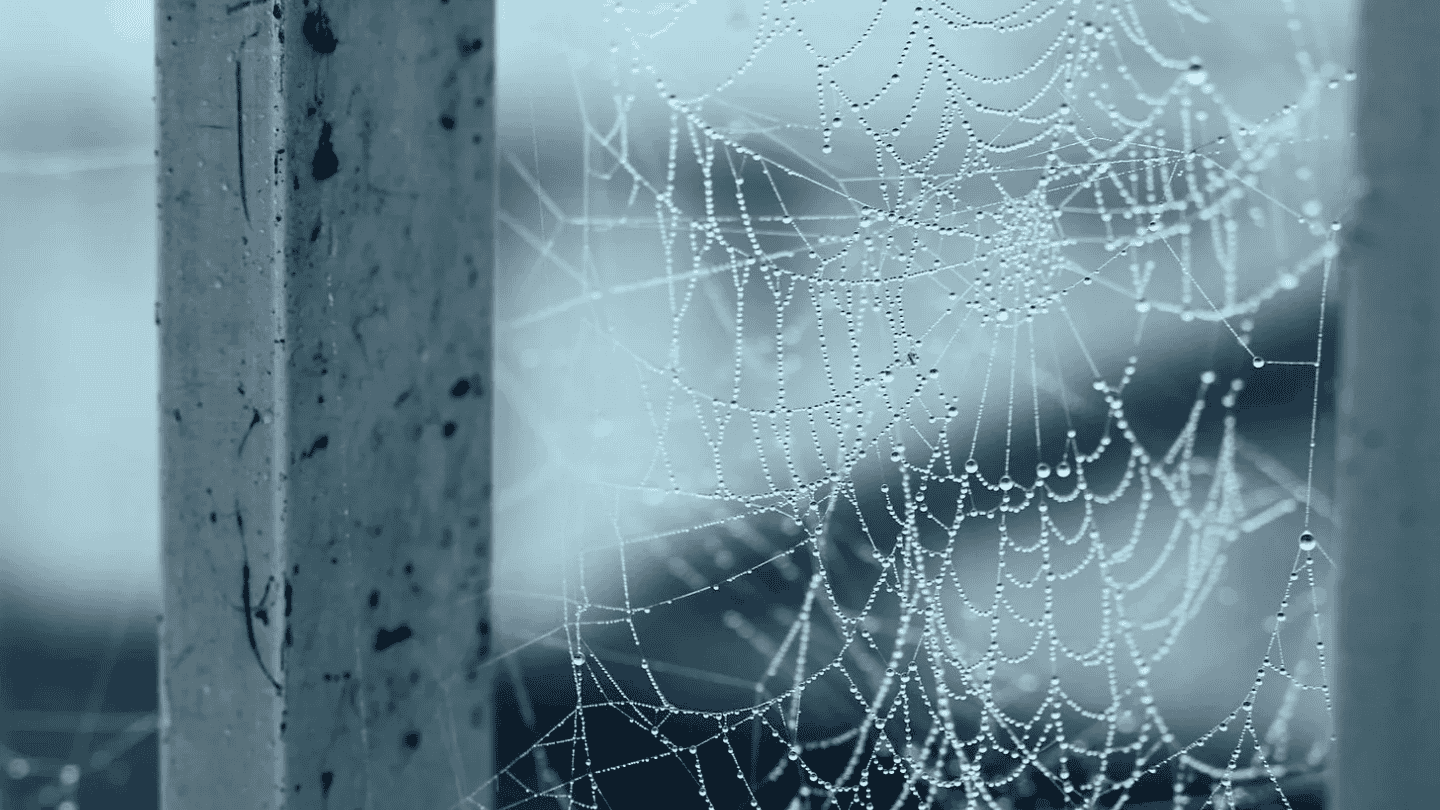
Frost starts at the edges. Given time, it covers everything.
I’m writing this first essay of 2026 from the Lake District in rural England. A land of rain-soaked fells, stone walls, and patchwork fields. A country sometimes called “the republic of shepherds and agriculturalists.”
Yesterday morning, I woke to frost on my window.
Frost is deceptive. A few crystals spider out: delicate and tentative. But given time—on the right kind of morning, one bathed in ice, and a low, dull winter sun—the whole pane transforms. What was once transparent becomes a veil. You don’t see it happen. But later, it’s there. Unmistakable.
That’s how frost works. That’s how most things work.
That image was in my mind as I looked back at all 52 essays of Deep Life Reflections from 2025.
One issue, every week, for a year.
I asked myself: Is writing these essays a habit or a necessity? When I say necessity, I mean a necessity for me.
First, some definitions.
A habit is something done regularly and often automatically, triggered by a cue, and requiring little deliberation.
A necessity is something that must be done, whether or not you feel like doing it.
A necessity becomes a habit when it’s repeated enough to run on autopilot. And many habits begin as necessities.
But where do these habits, or the desires behind them, start?
The writer Stephen Guise offers a useful distinction about how we form interests that later become habits: some begin with pull, others with push.
Pull interests emerge from exposure. You’re drawn to something that naturally fascinates you. This might be a book, a skill, a conversation. It catches your attention and pulls you closer.
Push interests, by contrast, are fashioned through discomfort. You’re pushed into action by pain, frustration, or loss. The pain becomes the entry point.
Guise gives a powerful example. People don’t typically wake up fascinated by ALS or dementia. But when a loved one suffers or dies from that disease, it creates a push—an emotional shove into advocacy, research, or fundraising. Later, the pull might kick in. But the initial ignition was pain.
Deep Life Reflections was definitely a pull interest. I had wanted to write essays for some time.
But perhaps you have habits that are a combination of pull and push. Can you see the distinction in your own life?
Some other notes on habits that may be timely, especially if you’re thinking about behavioural change for the new year ahead.
A few of these go against the perceived wisdom:
Flexibility over rigidity
Good habits don’t have to happen at the same time each day. This is something I’ve built into my own life, especially since my move to Spain. I used to exercise first thing in the morning. Now I move it around. On some days I prefer training mid-to-late afternoon as many Spaniards take their siesta and the gym is less busy.Consistency doesn’t require uniformity.
Use the context of your life and stay flexible.Freedom within structure
Make every effort to get your key habits done daily, but give yourself the freedom to complete it anytime before bed. This maintains momentum while allowing room for spontaneous moments and the unexpected impacts of daily life. We might feel the ‘window has gone’ if we miss our usual time slot. But that’s not true. It’s just a belief we tell ourselves.Progress is always worth celebrating
Small steps matter because a tiny action can spark a larger leap. The “go big or go home” mentality often backfires because it frames anything less than perfect as failure. A writer working on a book might set themselves a target of 500 words a day. That’s not a lot, but like the frost metaphor earlier, it accumulates. One layer at a time.Change is always possible
No age limit, no expiry. Change is less about motivation and more about strategy. With the right structure, anyone can shift their habits, even after decades of doing things another way. There are countless stories proving this. Maybe your own life is one of them.
Whatever habits you choose to start, keep, adapt, or let go of in 2026, the words of Marcus Aurelius are worth remembering:
You have power over your mind – not outside events.
Realise this, and you will find strength.—Marcus Aurelius
And then, one morning, you’ll find the frost everywhere.
Pass It On
If this idea was worth your time, it may be worth someone else’s.
Share this essay with a friend:
https://www.deeplifejourney.com/deep-life-reflections/2-january-2026
If you have a thought you’d like to share, please leave a comment below.
You can read all previous issues of Deep Life Reflections here.