
The Problem with Predicting the Future
21 Lessons for the 21st Century, The Conversation, and why we so often get the future wrong.
Deep Life Reflections | Essay 69 | James Gibb
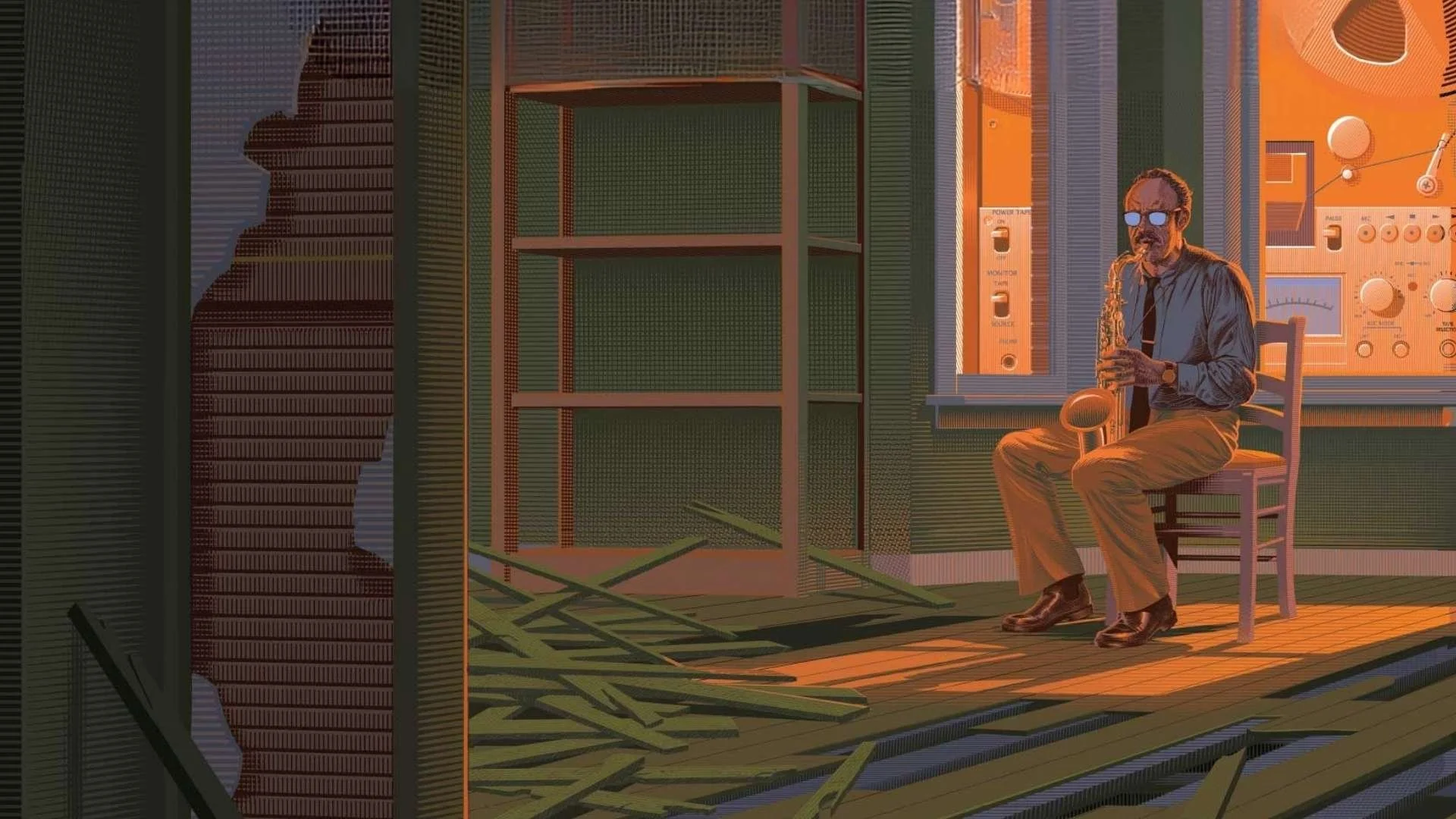
We survive by making predictions, but we live better when we remain humble enough to remember how often they fail.
“The trouble with our times is that the future is not what it used to be.”
—Paul Valéry
We love to make predictions. It’s part of our evolutionary design. The act of prediction has been central to our survival. Reacting—or not reacting—to a rustle in the bushes on the African savannah could mean the difference between life and death. We spend a lot of time anticipating what will happen next. Philosopher Daniel Dennett aptly described us as “anticipation machines.”
But history has shown us repeatedly just how often we get it wrong.
In his 2018 book, 21 Lessons for the 21st Century, Yuval Noah Harari’s lessons are deeply rooted in the concept of prediction, although he is careful to recognise that the future is never predicted accurately. His lessons instead emphasise the importance of open discussion rather than precise forecasting. He tackles what he sees as the most pressing global questions, such as nuclear war, climate change, fake news, and technological disruption. He wrote this before the pandemic, the rapid rise in generative AI, and the current conflicts in Europe and the Middle East. The 21st century is indeed moving fast.
In his introduction, Harari writes, “In a world deluged by irrelevant information, clarity is power.” It’s this clarity that enables Harari’s work to stand out. He often uses what I call his ‘rule of threes’—presenting three connected yet distinct examples to clarify his points.
The book is divided into five parts: The Technological Challenge, The Political Challenge, Despair & Hope (covering topics like Terrorism, War, and God), Truth, and Resilience. In each section Harari takes a deliberate step to write without self-censorship, valuing freedom of expression over potentially offending or upsetting people.
Three topics stood out to me:
Artificial Intelligence and its impact on work: Harari notes humans possess two types of abilities: physical and cognitive. Machines have long competed with humans in physical tasks (spurring the Industrial Revolution), and now they rival us cognitively, which has huge implications. He talks about the two specific cognitive advantages AI has over humans: connectivity and (rapid) updateability.
Education and its role in self-reinvention: Harari highlights the calls from teaching experts to transform education from traditional subjects to the 4Cs: critical thinking, communication, collaboration, and creativity. This approach prepares students to deal with constant change, as by 2050 we won’t just be inventing new ideas and products, we’ll be reinventing ourselves over and over.
The importance of questioning in a post-truth world: Harari offers this wisdom for dealing with unverified information and the threat of deception: “Questions you cannot answer are usually far better for you than answers you cannot question.”
Harari has teed up an important conversation, mapping the questions that may define the century. The rest is on us.
Working decades earlier, Francis Ford Coppola approached the same problem from a different angle. His 1974 film, The Conversation, is strangely prescient about what was coming.
The film stars Gene Hackman as Harry Caul, a surveillance expert who experiences a crisis of confidence when he suspects the couple he is spying on will be murdered. Hackman is a long way from his hard-boiled, tough-guy character Popeye Doyle in The French Connection. Caul is a loner. He’s weary, unhappy, paranoid, and a little meek. As the film progresses, he becomes one of the most tragic characters of the 1970s, with Coppola telling the story of a man who places too much trust in technology and becomes haunted by a guilty conscience.
Coppola has stated that The Conversation is his favourite film he directed. Gene Hackman also considers it his favourite performance. The film is prophetic about the pervasive role of surveillance in society and the ethical dilemmas it poses: the advances in technology that enable everyone to be watched and the discomfort that comes with it. Caul’s descent into paranoia reflects a broader anxiety about privacy and the loss of control over personal information. The film warns of a future where technology not only observes but also shapes our lives, often without our consent or awareness. That feels very current.
The film slowly and deliberately pulls the viewer into Caul’s increasingly claustrophobic world, masterfully using sound to achieve this effect (earning it a nomination for Best Sound). Every whisper and background noise carries significant weight. The film opens with a long surveillance sequence where the audio quality fluctuates, mirroring Caul’s obsession with capturing clear sound. The layered use of audio recordings throughout the film not only heightens the sense of paranoia but also highlights the invasive nature of surveillance.
The Conversation is a bleak and intelligent thriller, but not one of blood and thunder. Instead, it gets under your skin, evoking a sense of being filmed without knowing why or by whom. As one critic observed, “The movie is a sadly observant character study, about a man who has removed himself from life. Here is a man who seeks the truth, but it always remains hidden.”
Whether through prediction or insight, The Conversation was prophetic in highlighting the dual role of technology as both a benefit and a threat to society, particularly concerning surveillance. Today, it’s not so much video cameras that concern us, but algorithms and their murky owners and origins.
The final scene is the most tragic of the entire film. It wasn’t until I watched it for the second time that I recognised its brilliance. The message I think is one of futility: you can try, but you can never really see.
We will continue to make predictions, of course, as part of our human nature. But perhaps the only thing we can accurately foresee is how inaccurate our predictions will be. Which brings us to perhaps the most valuable lesson: the future is never fully visible, even when it appears to be. The best we can do is stay alert, stay humble, and remember that our view is always obscured.
We are anticipation machines, yes. But we are rather poor prophecy machines, despite what we might think.
Pass It On
If this idea was worth your time, it may be worth someone else’s.
Share this essay with a friend:
https://www.deeplifejourney.com/deep-life-reflections/july-12-2024
If you have a thought you’d like to share, please leave a comment below.
You can read all previous issues of Deep Life Reflections here.