
Facing the Giant
Michelangelo understood that the defining moments in life are not the deeds, but the decisions before them.
Deep Life Reflections | Essay 169 | James Gibb
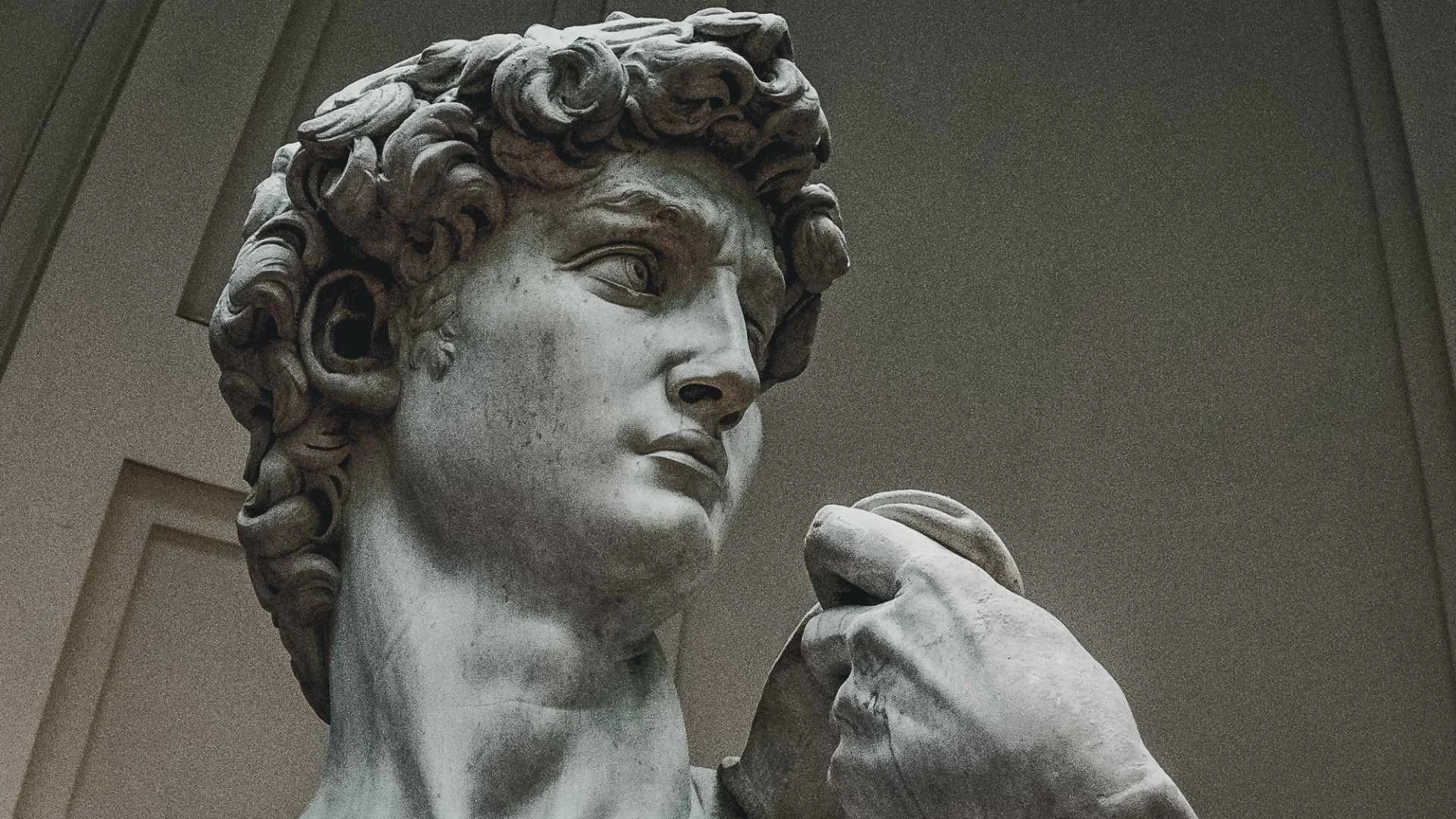
Michelangelo’s David continues to reach deep into us because it captures the moment when character becomes visible: the decision made even in the face of doubt.
In the dystopian film, Children of Men, the main character Theo visits his influential brother Nigel to seek a favour. Here is a world that is decaying and devoid of colour, ravaged by war, anarchy, and infertility. Nigel has money. He lives in a high-security, minimalist building, sealed off from the rest of London. He has the penthouse. There he has collected what remains of the world’s art masterpieces. We watch as Theo stares incredulously at Michelangelo’s David, rescued from Florence and now standing in Nigel’s pristine and enormous hallway. It’s jarring to see. Even more jarring is that the statue is missing the lower portion of its left leg.
Without the leg—that most powerful bodily expression of forward intention—the statue feels permanently impeded and vulnerable. As a visual, it hits like a sledgehammer because of what that statue represents.
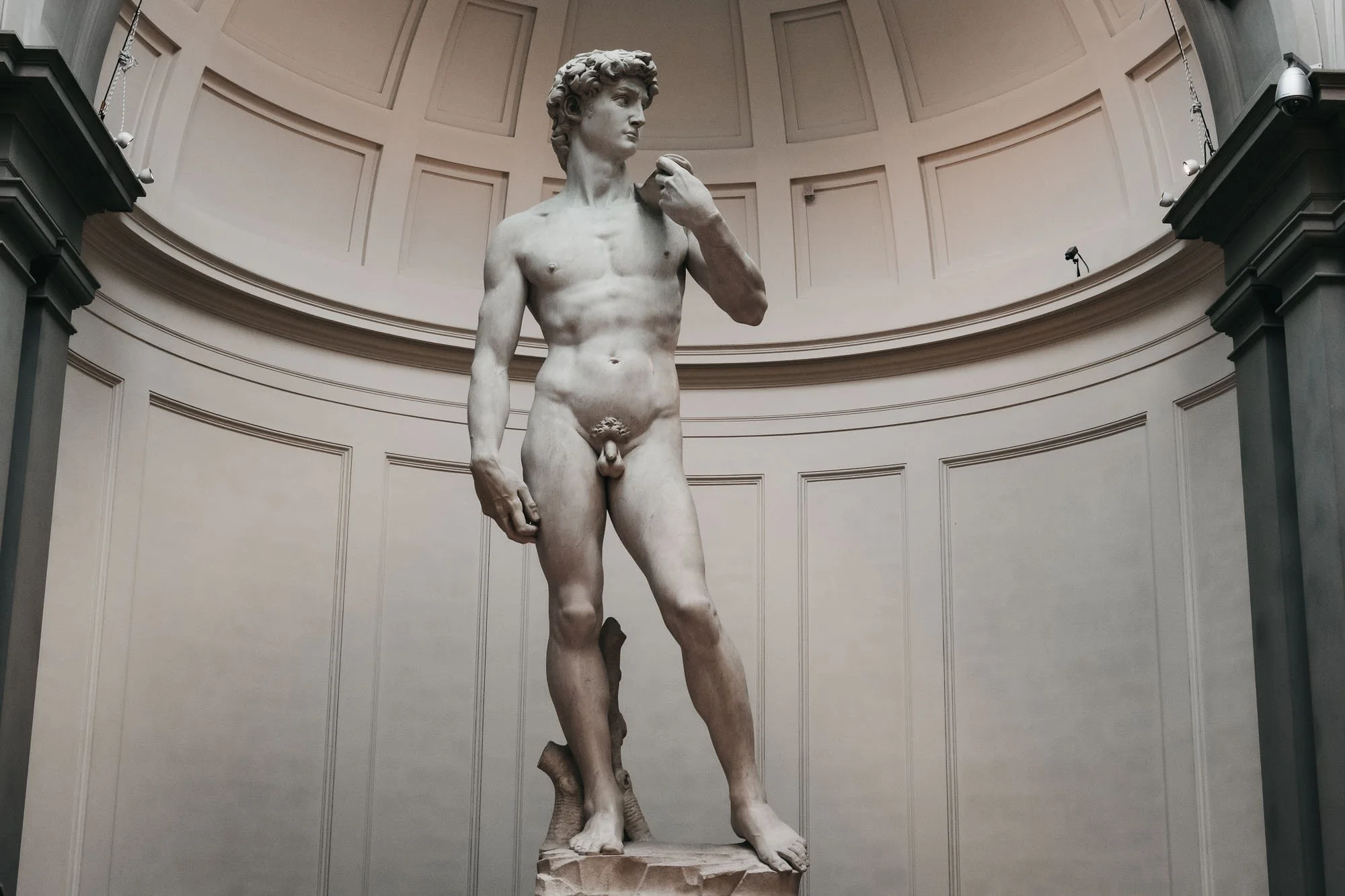
Completed in 1504, Michelangelo’s David resides in Florence’s Galleria dell ‘Accademia. Standing over five metres tall, and carved from a block of marble considered flawed and unusable by many earlier artists, Michelangelo sculpted the David at the age of just twenty-seven, three years after his beautiful Pietà. I’ve had the privilege to see the David with my own eyes. As someone fascinated by the lives of remarkable human beings, I recently read Irving Stone’s biographical novel of Michelangelo: The Agony and the Ecstasy.
Heavily researched but written with novelistic flair, Stone’s account of the life and times of Michelangelo Buonarroti is simply tremendous reading. And in his creation of the David, we better understand how the great artist wrestled with finding the right portrayal in his sculpture. Many artists traditionally showed David after his victory over Goliath. Yet Michelangelo felt the moment after the battle was an anticlimax; David’s great moment having already passed. He considered the instant of the kill: when David released with deadly accuracy the shot from the sling. Or the moment just before entering the battle, when he decided the Israelites must be freed. But in both, he felt the critical moment had again already passed. What Michelangelo eventually realised was this: the critical moment was not the action. The critical moment was the moment David knew he must try.
This realisation that the decision was more important than the act itself is what gives the David its lasting power. Michelangelo carved something in stone yet gave it life and momentum. And doubt too.
He made David human.
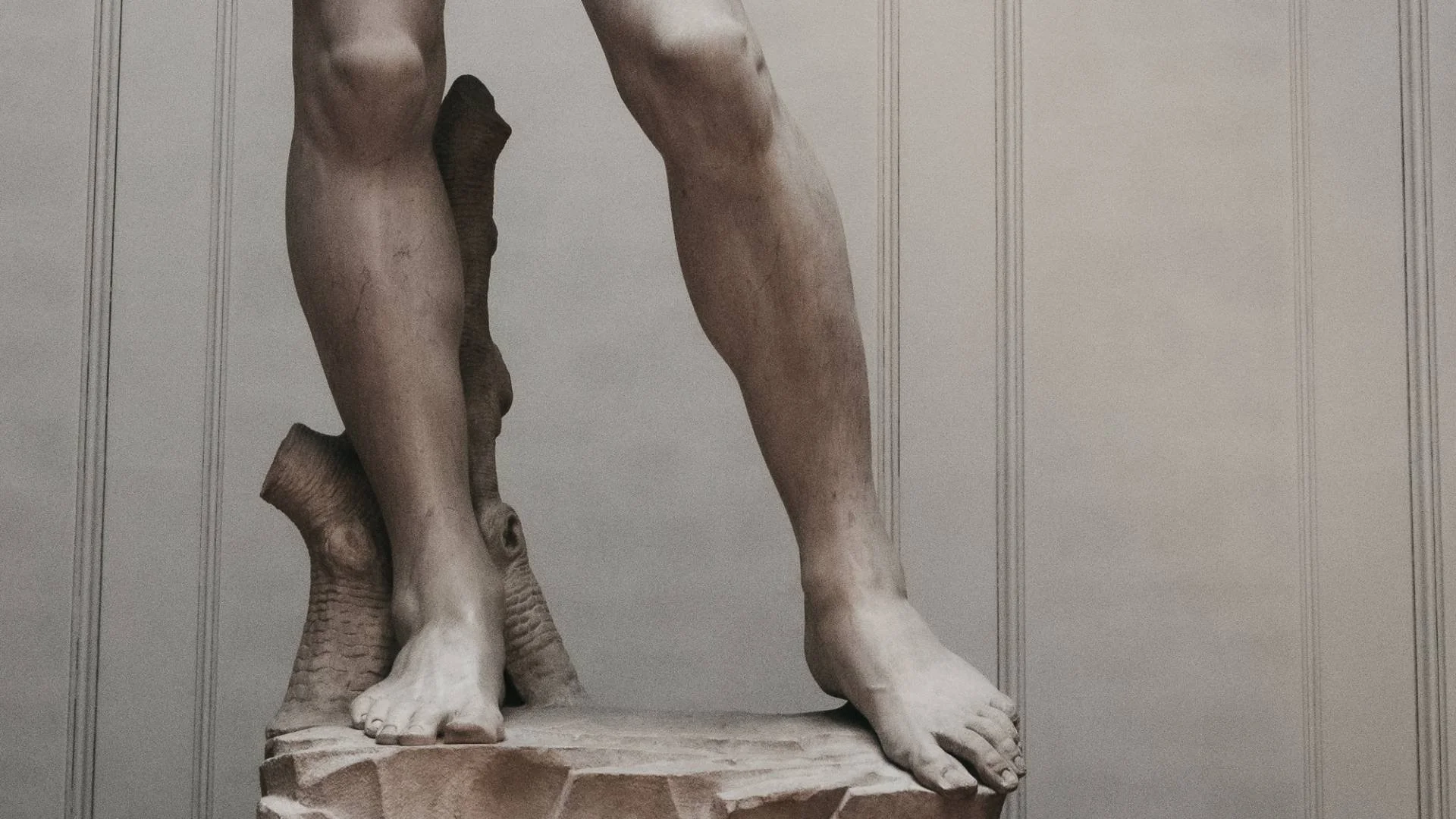
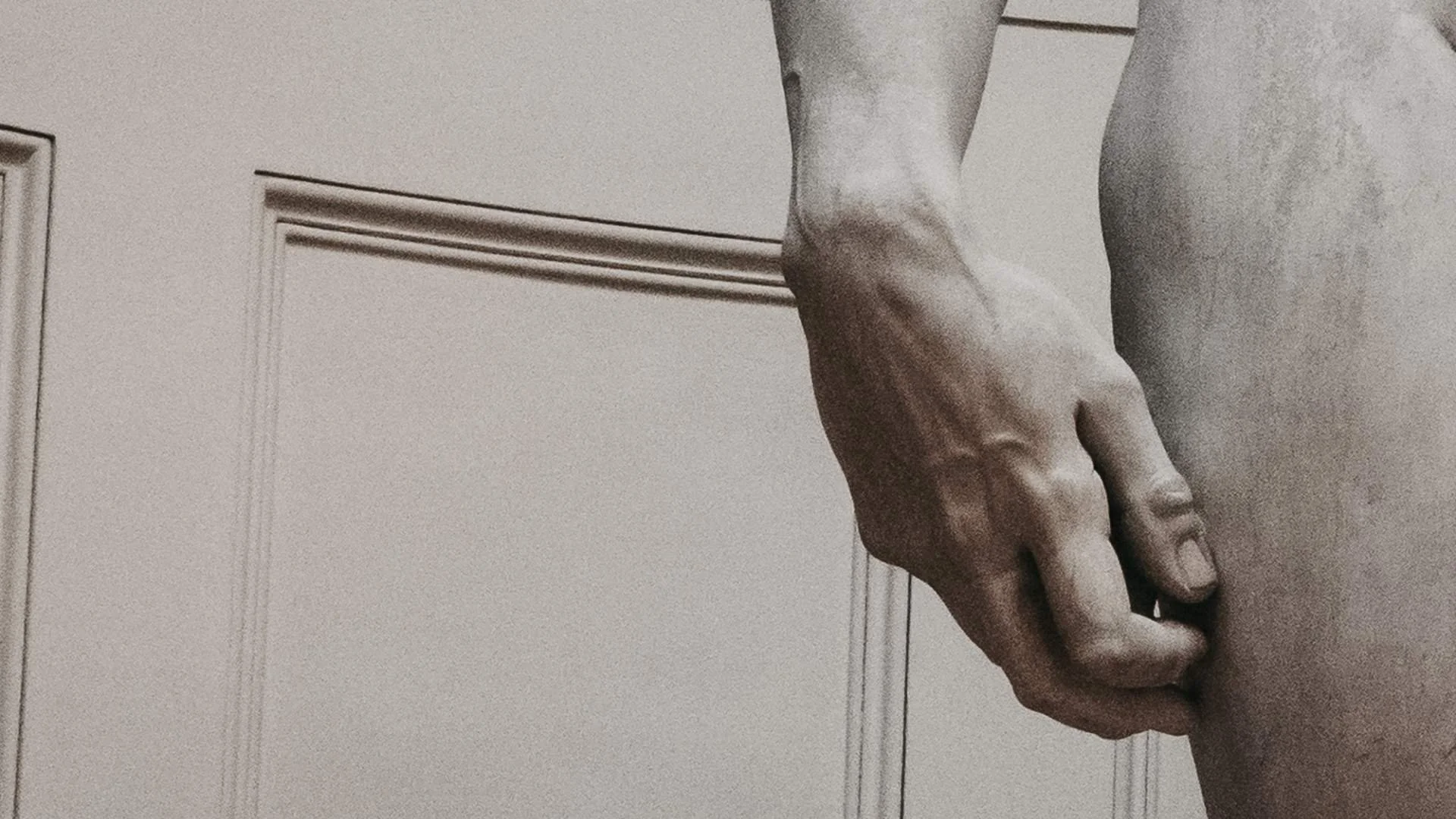
Michelangelo used a technique called contrapposto. He shifts David’s weight onto the right, supporting leg, while the left leg is free and set slightly forward. The rest of the body—hips, shoulders, and limbs—holds the figure in poise. He might be standing still, but this body carries what art historians often call potential energy, the sense that movement is imminent. David’s left arm rises to hold the sling over the shoulder, almost inconspicuously, while his right arm hangs lower, the right hand enlarged and tense, with veins protruding. The gaze is fixed outward, as if he is measuring something beyond the horizon. The risk. The uncertainty of the outcome.
Michelangelo builds a sculpture out of arrested momentum. David is a man who has decided, and yet is moving forward and holding back at the same time.
Ready, but not released.
For Michelangelo, it was David’s decision that made him a giant, not his killing of Goliath. He saw a distinction between action and decision. That actions are visible, and can be impulsive and accidental. Decisions are different. They are usually the result of what has already been built inside a person. And crucially, they are invisible. Yet they reveal character.
Our lives are often less defined by what we finally do than by the decisions we come to inwardly. The statue captured the moment that made triumph possible. That very private moment when a person chooses to stand. It’s notable that the citizens of Florence called the statue not the David but the Giant when it was finished. They sensed what it held.
By the time Michelangelo completed David in 1504, Florence was no longer the assured city of Lorenzo the Magnificent. The Medici were gone, the republic was politically exposed, foreign invasion had shaken Italy, and Florence was still locked in a conflict with Pisa. It was a city in need of a restored self-belief, and new symbols of defiance and pride.
David became the greatest of those symbols. The statue was placed at the entrance to the Palazzo della Signoria as a symbol of moral and civic force. In Stone’s novel, the residents of Florence began attaching little handwritten notes to it.
You have given us back our self-respect.
We are proud to be Florentines.
Never can they tell me man is vile; he is the proudest creature on earth. You have made a thing of beauty. Bravo!
In his David, motionless in stone, Michelangelo captured the moral moment: the private, internal decision that comes before action, making courage possible.
And in doing so, he made the David live.
Pass It On
If this idea was worth your time, it may be worth someone else’s.
Share this essay with a friend:
https://www.deeplifejourney.com/deep-life-reflections/june-12-2026
If you have a thought you’d like to share, please leave a comment below.
You can read all previous issues of Deep Life Reflections here.
All photos of David are my own, taken during my trip to Florence in 2022