
We All Go a Little Mad Sometimes
How Hitchcock and Psycho discarded excess and made something so exact it altered cinema.
Deep Life Reflections | Essay 168 | James Gibb
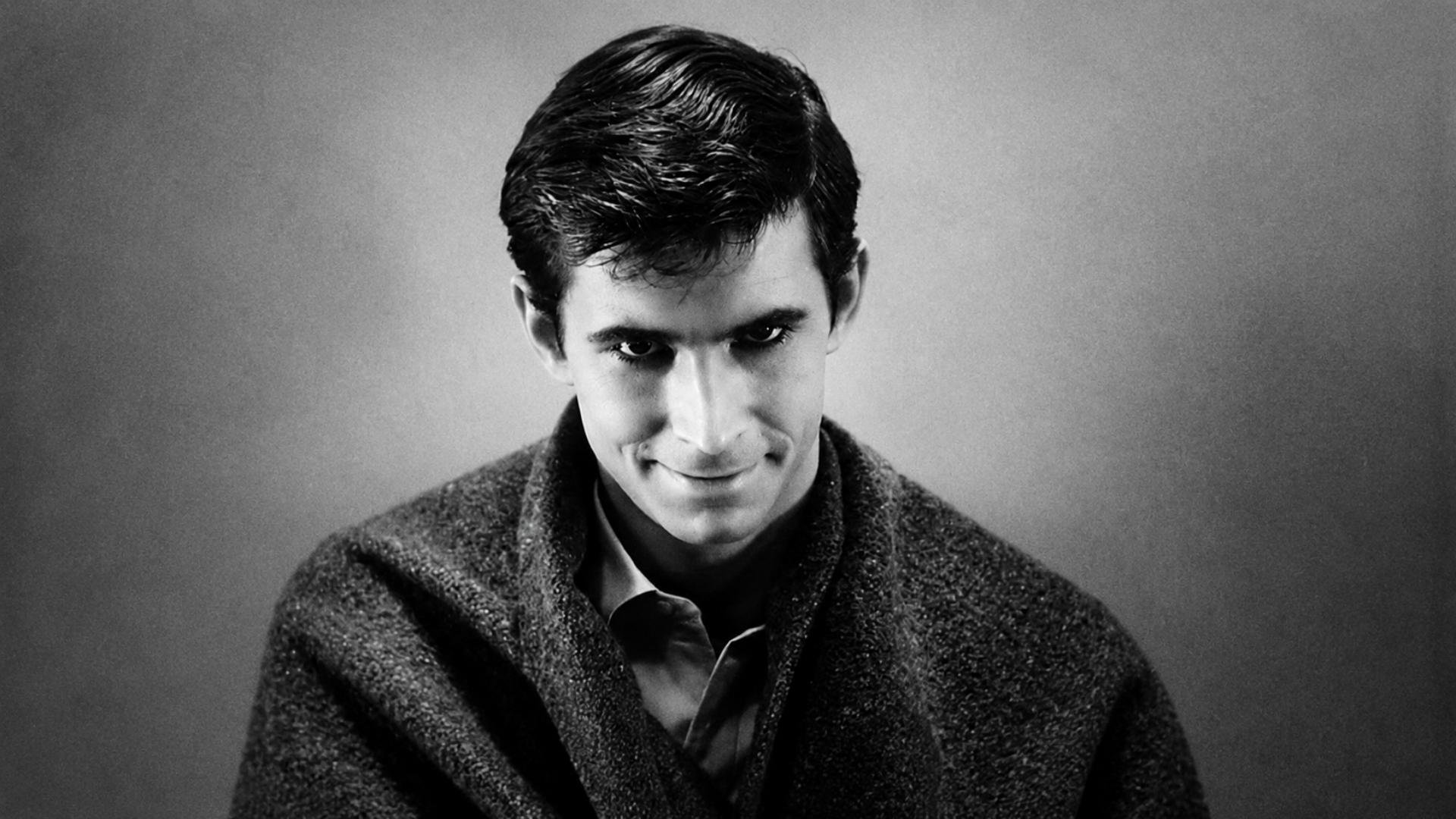
We don’t always need grandiosity, money, or prestige to create something lasting. But we do need the courage to strip away the excess until only nerve and the essential remain.
François Truffaut: “Mr. Hitchcock, you were born in London on August 13, 1899. The only thing I know about your childhood is the incident at the police station. Is that story true?”
Alfred Hitchcock: “Yes, it is. I must have been about four or five years old. My father sent me to the police station with a note. The chief of police read it and locked me in a cell for five to ten minutes, saying, ‘This is what we do to naughty boys.’”
This is one of the many snippets of conversations between the two great directors as part of a filmed series in 1962. From it, we might infer Alfred Hitchcock learned early about fear, punishment, and authority. Perhaps also something about concealment. What did the note say? Later in that interview he said this to Truffaut of his 1960 masterpiece Psycho, “I was directing the viewers. You might say I was playing them, like an organ.” The film shocked audiences in a way they had never been shocked before. Perhaps even since.
Psycho is one of cinema’s great films, nominated for four Academy Awards and included on the National Film Registry for its cultural significance. It changed the way people watch films.
The story of Psycho is the story of a master filmmaker who stripped everything back and in the process invented a picture so full of artistry, control, and menace that it seeped into the bloodstream of our culture and there it remains today.
By 1960, Hitchcock wanted a change from the big-budget, all-star movies he’d recently been making. Inspired, even motivated, by the 1955 French film Les Diaboliques, Hitchcock, then 60, wanted to make a great black-and-white picture. He also wanted to experiment with the more efficient and spare style that television filmmaking gave him. He sought a gritty, small-scale project with no big names, a low budget, and a crew largely recruited from television. That project became Psycho.
When the cast and crew turned up for work on the first day, Hitchcock set the tone immediately. They had to raise their right hands and swear an oath not to speak one word of the story. He withheld the ending of the script. He bought up copies of Robert Bloch’s novel, on which the film was based, to stop people knowing the ending. Even before the film existed in the world, Hitchcock was tightening his grip on how it would be seen.
The events of the film are well known by now. Marion Crane steals $40,000 from her boss, leaves town in a hurry, and ends up in an empty motel somewhere off the highway. It’s the Bates Motel. It has no guests. “Oh, we have twelve cabins, twelve vacancies,” says the young, affable, and slightly odd owner, Norman Bates. His mother lives in the house that looms over the hotel. Or so we are told. Norman and Marion talk over sandwiches and milk. An unsettling collection of stuffed birds hover over them until she excuses herself for the night and decides to take a shower.
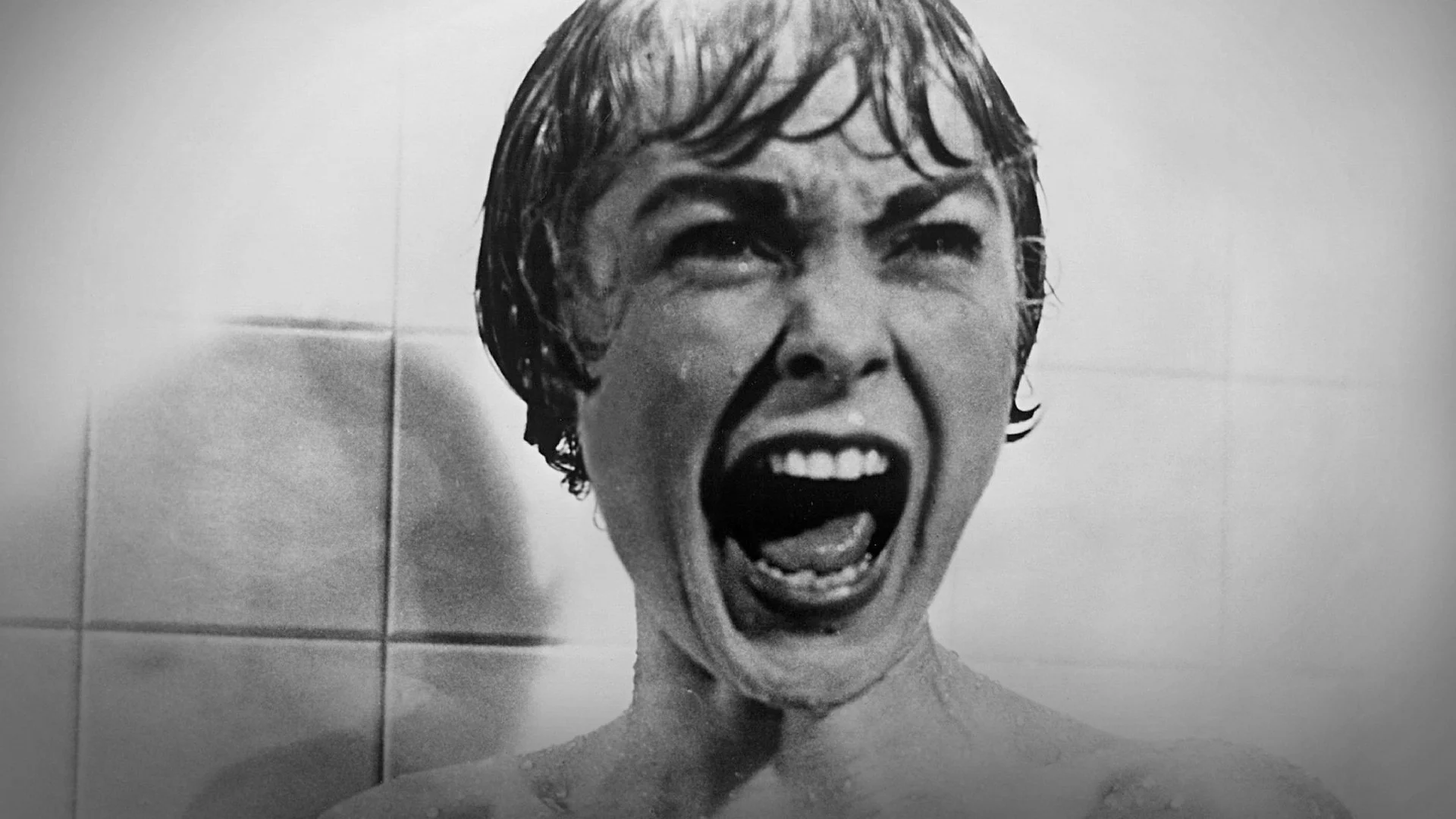
Janet Leigh as Marion Crane in Psycho.
The infamous shower scene is Hitchcock in pure control. He uses fifty different camera angles and seventy-seven cuts. It’s also a masterful illusion as we never see the knife enter the body. And there’s not much blood. Yet, the scene is violent and intense and frightening because the mind is supplying what is being withheld by the camera. It’s ever so subtle: the shadow of the intruder moving toward the shower curtain, the downward motion of the blade, the water mixed with blood gurgling down the shower drain, the extreme close-up of the eyeball.
Then there’s the music. The composer Bernard Herrmann used only strings in the score. He wanted the black-and-white movie to have a black-and-white score. The shrieking attack of the violins in the shower scene feels like an assault. Hitchcock later said that a third of the effect of Psycho was due to the music. I’d say it was at least half.
Even the design of the film feels exact. Saul Bass’s opening titles are slashed apart like a wound, not only foreshadowing the murders to come but also the dual nature of Norman Bates. And then the house. Mother’s house.
Based on Edward Hopper’s 1925 oil painting House by the Railroad, it is as much a character as Norman Bates and Marion Crane. It towers above the motel, always shot from below. It’s gothic and queasy, with superimposed storm clouds and an evil moon that race behind it. I cannot think of a better house in cinematic history. One that cannot be escaped. It belongs to the pared-back visual power of the film: one house, one motel, one sign. Together they feel like the architecture of Norman Bates’s divided mind, sinister and trapped.
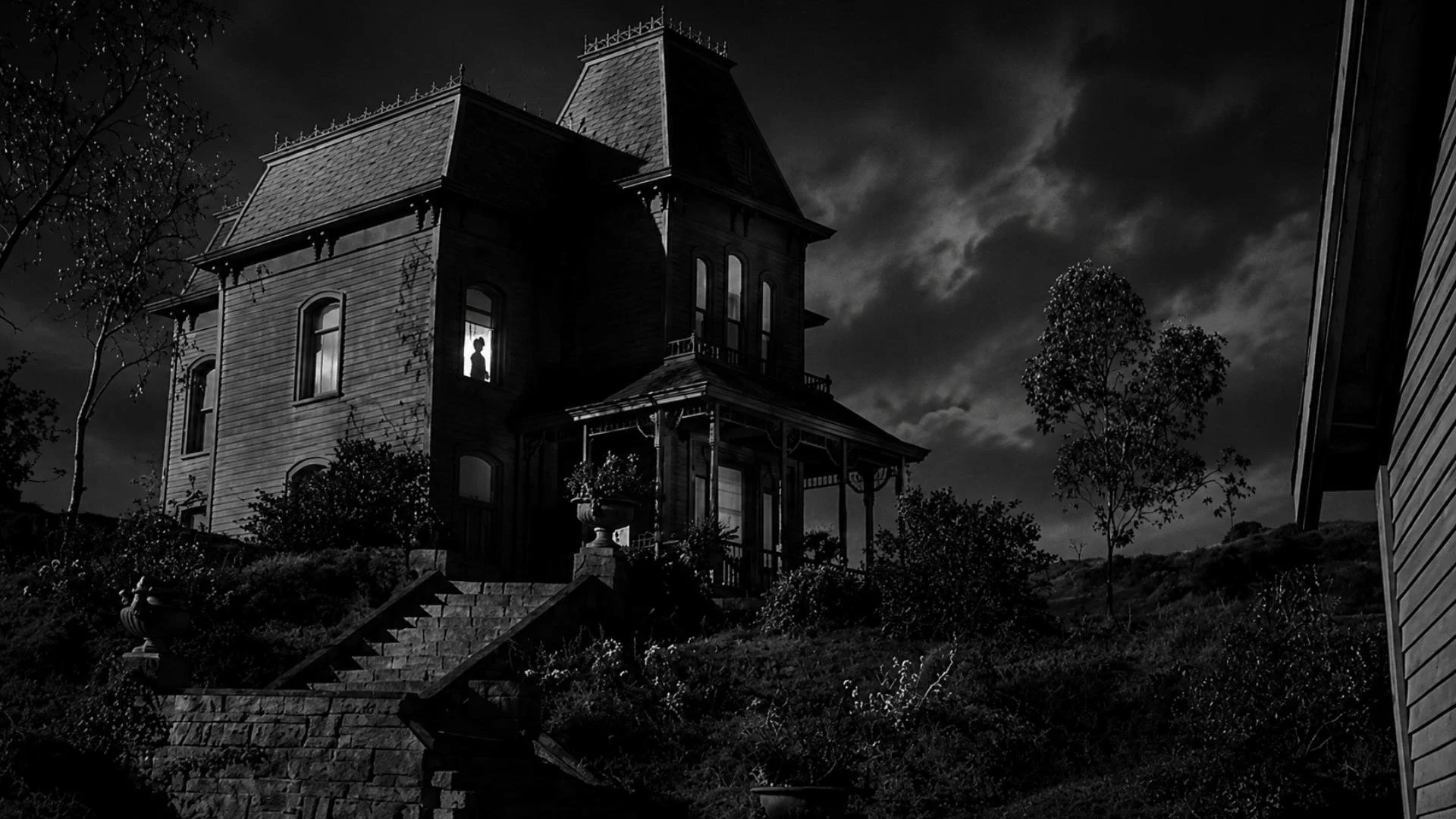
The Bates House, based on Edward Hopper’s 1925 painting.
By cutting everything back, Hitchcock gained concentration. It also gave him room for innovative and bold moves, like killing off his main character only a third of the way in, introducing a new main character halfway through (Marion’s worried sister), and switching the protagonist from Marion to Norman after her death. He even makes us feel some sympathy for Norman. I think back to what Hitchcock said to Truffaut in that interview:
“You might say I was playing them, like an organ.”
Hitchcock’s control didn’t end with the film itself. He famously had a cardboard cut-out of himself sent to all theatres showing the film. It showed him pointing to his wristwatch with a note saying:
“The manager of this theatre has been instructed at the risk of his life, not to admit to the theatre any persons after the picture starts. Any spurious attempts to enter by side doors, fire escapes or ventilating shafts will be met by force. The entire objective of this extraordinary policy, of course, is to help you enjoy Psycho more. Alfred Hitchcock”
Hitchcock’s stunt effectively barred the casual drifting in and out of films, as moviegoers tended to do back then. Psycho had to be seen from beginning to end, on time, and on his terms. That too was part of his design. It set in motion how all films would eventually be seen in theatres.
As Truffaut remarked of Hitchcock, “His work kept on living, like the watches on the wrist of dead soldiers.”
Psycho indeed left its mark. Janet Leigh said she never took a shower again. Anthony Perkins never escaped Norman Bates. British critic C.A. Lejeune resigned in protest at what she saw as the moral decline of the cinema.
Hitchcock himself remained characteristically unruffled about the whole thing. When an angry father wrote to complain that his daughter had refused to bathe after Les Diaboliques and now refused to shower after Psycho, Hitchcock replied: “Send her to the dry cleaners.”
Echoing his most famous character: “We all go a little mad sometimes.”
Pass It On
If this idea was worth your time, it may be worth someone else’s.
Share this essay with a friend:
https://www.deeplifejourney.com/deep-life-reflections/june-5-2026
If you have a thought you’d like to share, please leave a comment below.
You can read all previous issues of Deep Life Reflections here.