
The Last Thing Standing
The Road, Warfare, and what remains after everything else is gone.
Deep Life Reflections | Essay 117 | James Gibb
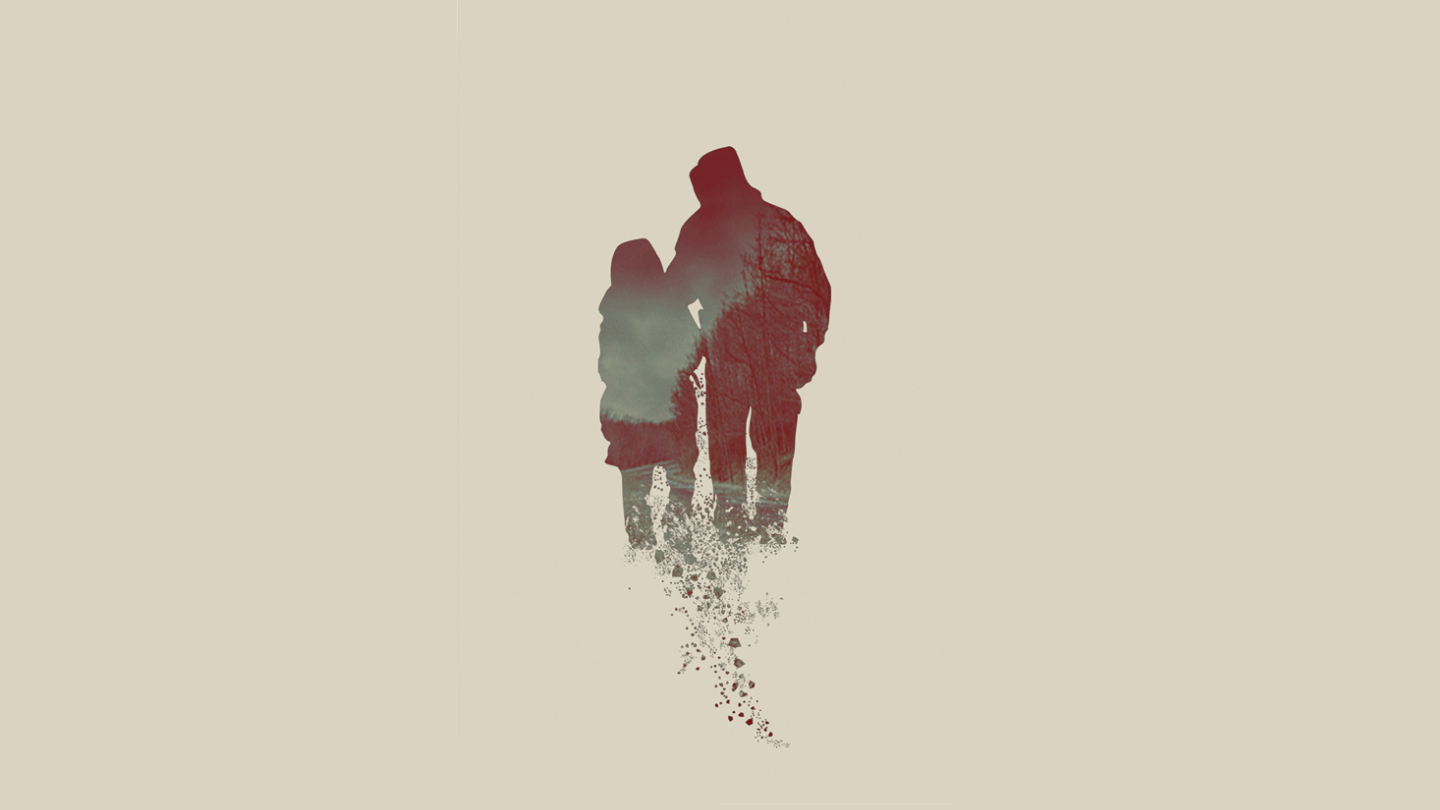
In extreme conditions, and in the absence of the familiar, meaning comes from a responsibility to others.
“The country was looted, ransacked, ravaged. Rifled of every crumb. The nights were blinding cold and casket black and the long reach of the morning had a terrible silence to it. Like a dawn before battle.”
—The Road, Cormac McCarthy
When I think of the natural habitat of the world, I picture a kaleidoscope of colours. Blues and greens especially, in their many shades and contours. Vibrant and rich. Seas, trees, clouds. In The Road, Cormac McCarthy’s Pulitzer-Prize winning 2005 novel, only one colour exists: grey. And it’s a grey stripped of life.
This is a manufactured, choking grey for a ruined world. A world completely beyond everyday experience. There are no birds, no sunrises, no sunsets, no stars, no societies. This is a world shrouded in a perpetual dirty fog, smothered by a blanket of cold, wet ash.
“By day the banished sun circles the earth like a grieving mother with a lamp.”
Amidst this destroyed world, a man and his son travel slowly south along the road, heading for the coast, with no idea what, if anything, awaits them. They’ve been on the road a long time. Everything they own is piled into a supermarket trolley with a defective wheel. Others have survived, but most are feral, roaming the wastelands to survive by any means. They are “the bad guys” as the boy has named them. Many have turned to cannibalism.
Cormac McCarthy’s post-apocalyptic masterpiece is immediate. There’s no backstory. We don’t know how the world ended. The father and son are simply the man and the boy. We assume it’s America, but no cities or states are named. Everything is stripped back to the bone. Back to something primitive. Pre-language. Pre-law.
McCarthy mirrors this in his writing. There are no chapters, commas are scarce, quotation marks extinct. The rules of grammar, like the rules of society, no longer apply. Yet, the writing is magnificent. Poetic. Stark and urgent.
“He walked out in the gray light and stood and he saw for a brief moment the absolute truth of the world… Darkness implacable. The blind dogs of the sun in their running. The crushing black vacuum of the universe. And somewhere two hunted animals trembling like ground-foxes in their cover. Borrowed time and borrowed world and borrowed eyes with which to sorrow it.”
The power of McCarthy’s novel lies in the collision of the mundane and the apocalyptic. A tin of peaches. A bunk-bed. A scorched earth. Barely alive humans locked in a cellar. The father and son are desperate and determined, scavenging for food, for warmth. Yet they will not allow themselves to be lost to the world, even if the world is lost to them.
The boy asks if they’re still carrying “the fire”—his last symbol of something good. Memory, meaning, and humanity. McCarthy gives us no reason to hope, and yet insists on hope anyway.
The son seeks reassurance in this wasted, tormented world, where trees are charred black, and the sea is a grey, toxic sludge. And the father provides it as best he can. Even in this cold and broken place, something human flickers and burns: the love of a father for his son. (McCarthy dedicated the book to his own son.)
“You have my whole heart. You always did.”
He will do whatever it takes to protect him, even if that means taking another human life. Among their meagre, dirty belongings, the man carries a gun. He has saved one bullet. For the son. Capture would be a fate worse than death, and he knows what he may have to do. If or when the unthinkable comes, he ruminates on whether he’ll have the courage to deliver this terrible mercy.
In The Road, McCarthy transforms the fantastical into an all too plausible reality. End-of-the-world stories aren’t new. We’ve always been drawn to them. McCarthy has spoken of his willingness to allow the reader to interpret the novel however they please. For him however, it’s the story of a father and son fighting for survival in the midst of universal destruction.
That puts us on the road with them. Like them, we’re sometimes disoriented, but still able to recognise the familiar among the ruins. To celebrate small victories like finding a can of food or warm shelter from the dank rain.
When I finished The Road, I felt an appreciation for the things we still have. For the role of parents to protect their children. For the seas, the trees, and the sound of birdsong. For the natural progression of the stages of life. For the joy of discovery and creativity. For a world where there is still hope.
Reading The Road reminds me more than any other book of what we have.
And to protect it at all costs.
“Where men can’t live gods fare no better.”
- Cormac McCarthy, The Road.
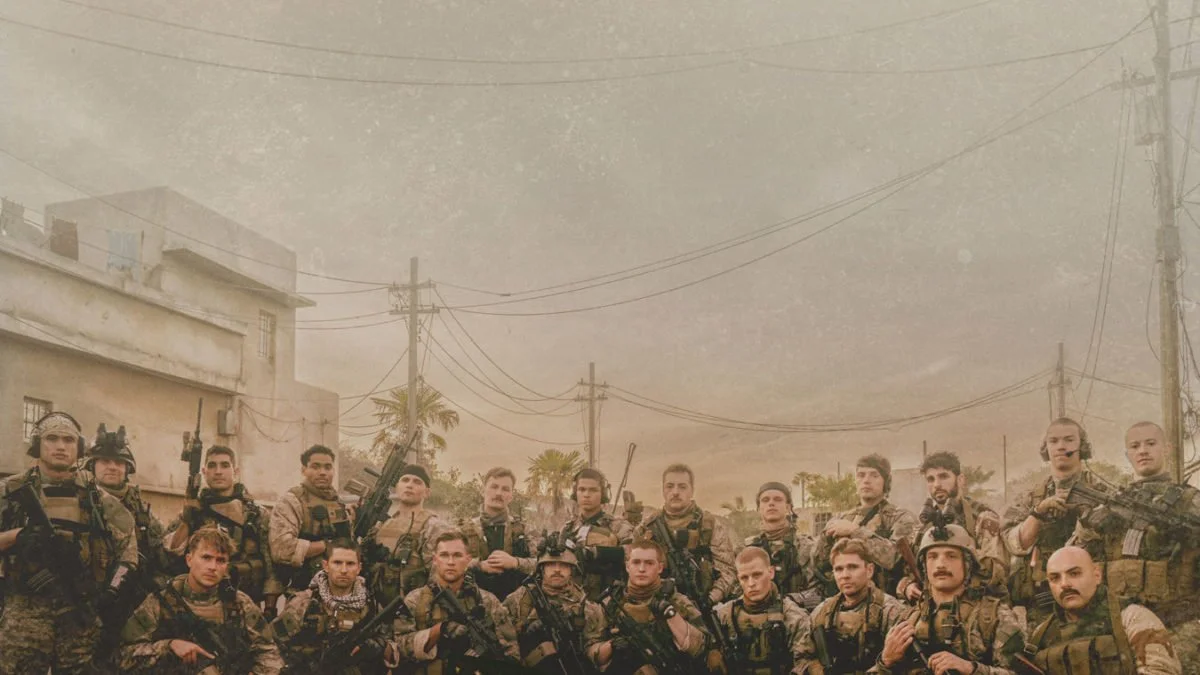
Warfare (2025). Directed by Alex Garland and Ray Mendoza.
If responsibility is all that’s left in The Road, in Warfare, it’s all they have.
Alex Garland’s Warfare begins with one of the best opening scenes I’ve seen in a war film. Maybe the best since Stanley Kubrick shaved the heads of new recruits to ‘Hello Vietnam’ in Full Metal Jacket. This time, it’s Iraq, 2006. The War on Terror. A different war, a different anthem, but another show of solidarity: Erik Prydz’s thumping ‘Call on Me.’ Video and all. It’s brilliantly shot. A moment of misdirection, I wondered if I’d put on the wrong film at first. Then the camera pulls back, and we see the soldiers grinning, dancing, and then erupting together in pure joy.
It doesn’t last.
In a split second, we are on the streets of Ramadi, Iraq. The same soldiers—Navy SEALs—are on a dangerous mission. They enter the home of an Iraqi family, secure it, and then wait for further orders. As with The Road, we get no backstory. We don’t know what they’re there to do. The mission is never revealed. That’s not the point of Warfare. In fact, it’s irrelevant. There are no character arcs, no political grandstanding, no morality lessons. There are no names to remember or memories of home to yearn for.
Instead, we get the brutal machinery of combat, the essence of warfare: carrying out orders, long periods of waiting, watching, reporting. And then, utter carnage.
Local insurgents begin to recognise the situation. A grenade is lobbed into the occupied home. From here, the previous quiet is blown apart. The soldiers are pinned down and we witness truly horrendous things. They group together even more tightly. A Bradley fighting vehicle sent to rescue the SEALs is destroyed by an explosive device, with fatalities. More insurgents appear on neighbouring rooftops with an array of weapons. Unusually, few are hit by U.S. fire. The familiar high US kill-count seen in most war films is absent.
This is a film to experience, and to endure. It’s incredibly effective at thrusting us into the middle of combat. The dread, the dust, the noise, the silence, the disorientation, the blood, the destruction. It’s exhaustive and gruelling. Questions pile up. No answers come. Context feels like a luxury.
“Part of the genius of Warfare’s ending is that it admits that war rarely—if ever—contains endings at all.” – Robbie Collin, The Telegraph.
A note on the sound. Fourteen people are credited on the sound design team. They make it feel like you’re hearing an entire neighbourhood come apart as it gradually collapses under the bullets, explosions, and “show of force” fly-bys.
Warfare is co-directed by Ray Mendoza, a former Navy SEAL who recounted this story to Garland during the making of Civil War. That lived experience shows in Warfare. The film’s realism and technical competence have been praised by many current and former soldiers, recognising its authentic coded language, rituals, and comradeship.
Mendoza and Garland set out to recreate a specific memory of a real-life event—and show what it felt like for those who had no choice but to endure it. Regardless of political views, the sacrifice of those following orders was real. So was the cost to the innocent caught in the crossfire.
One viewer put it plainly:
“Before Congress and the President deploy any U.S. service members into harm’s way, the CEOs of Raytheon, Blackrock, Vanguard, and Halliburton should be forced to watch this movie. And a law should be passed that all of their children should be the first deployed. Call it the ‘No Fortunate Son’ law. I think we’d see fewer wars if that happened.”
These two works deal with bleak, terrible circumstances. In both The Road and Warfare, we are given little, if any, background or exposition. Objectives and goals boil down to basic survival. Purpose, mission, character arcs, and memories are all absent.
They deal instead with the experience of collapse: in Warfare, it’s the immediate environment; in The Road it’s the entire world. Everything is stripped back and bare. Harrowing. Just the experience.
Two collapsable universes with no maps and no salvation.
Only a responsibility to others.
Pass It On
If this idea was worth your time, it may be worth someone else’s.
Share this essay with a friend:
https://www.deeplifejourney.com/deep-life-reflections/june-13-2025
If you have a thought you’d like to share, please leave a comment below.
You can read all previous issues of Deep Life Reflections here.