
The Serious Business of Laughter
Mel Brooks, The Big Sick, and how humour helps us face what we’d rather avoid.
Deep Life Reflections | Essay 67 | James Gibb
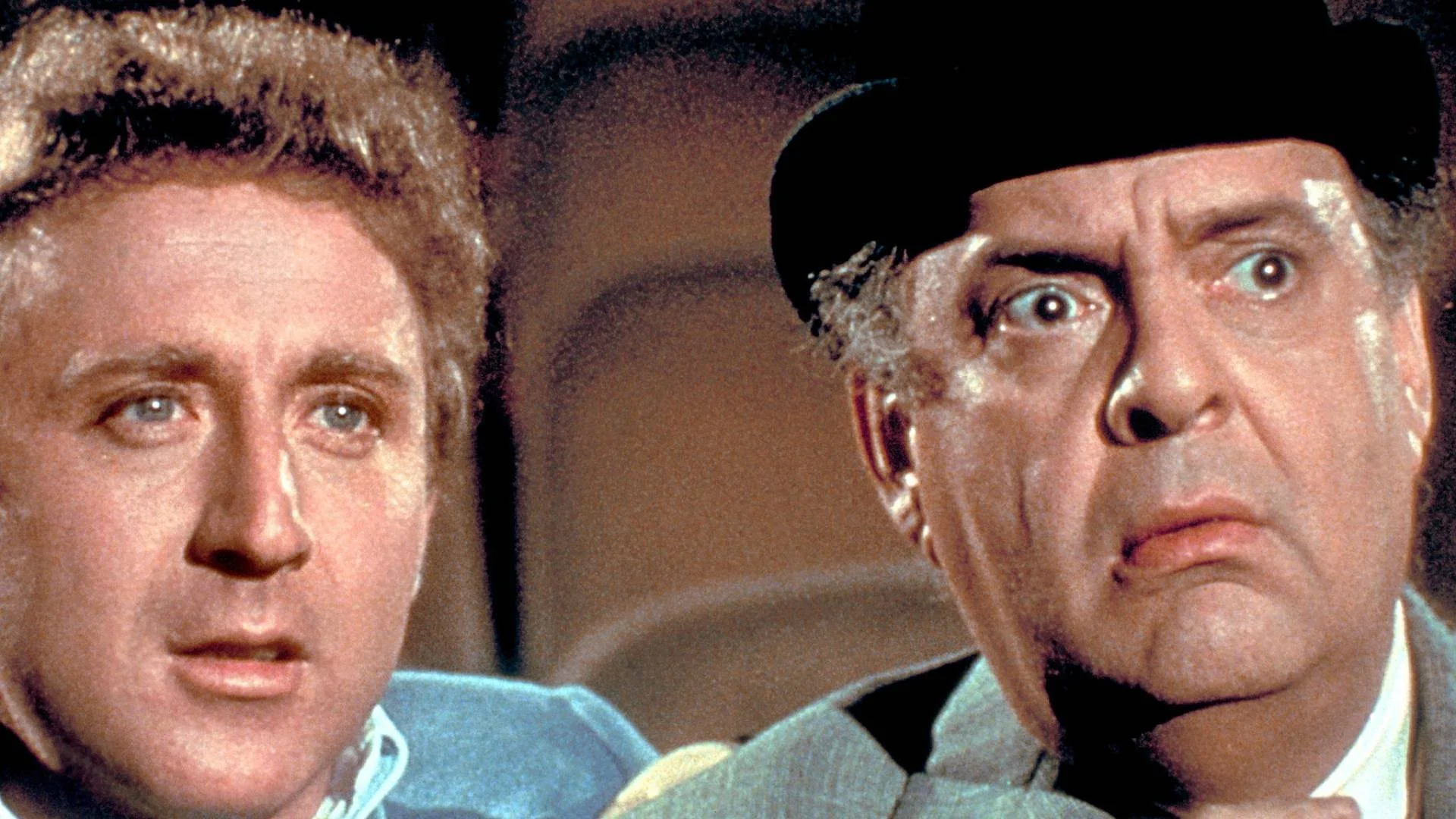
Humour is a vital response to reality, and we laugh because it’s one of the few ways we can face what doesn’t make sense.
“Tragedy is when I cut my finger. Comedy is when you fall into an open sewer and die.”
—Mel Brooks
Mel Brooks is 98 and still going strong. The actor, comedian, and filmmaker has been making people laugh for over seven decades. Three of his films, Blazing Saddles, The Producers, and Young Frankenstein, are ranked in the top 15 of the American Film Institute’s list of the top 100 comedy films of the past 100 years. Brooks is the reason many comedians got into comedy. And fortunately for them and us, Brooks hasn’t (yet) fallen into an open sewer and died.
Last year, the director and producer Judd Apatow interviewed Brooks for The Atlantic. In celebration of Brooks entering his 99th year, I revisited the article. Brooks talked to Apatow about his time in World War II, his life in comedy, and the secret to happiness. As always with Brooks, he’s funny and irreverent, offhand and wise, still sharp as a tack.
Brooks talked about his experiences in World War II. Initially a radio operator, he was reassigned in Europe as a combat engineer, tasked with building bridges and defusing mines and booby traps. He said he was told he was going to love it. The reality was a little different: he spent every day thinking, “Any day now, I’m going to get blown up.” He returned in one piece, remembering fondly the camaraderie with his fellow troops.
He also spoke about his childhood and the importance of his older brother Irving, who taught him about life after their father died when Brooks was two. Irving, who was ten, took on the fatherly role, teaching him everything from maths to manners. “He made me an aware human being,” Brooks said. He also reminisced lovingly about his late wife, Anne Bancroft, who died in 2005 and gave him huge reserves of belief when he doubted himself.
In comedy, Brooks always pushed boundaries. “It was always to get the biggest laugh. Never to make a political point; I was never making any points. I was always: Surprise them!” He emphasised the importance of an uncensored writers’ room: “Nothing is off the table. Nothing. It’s not for us to censor ourselves. There are plenty of censors around, you know? Every joke is an experiment that could succeed or fail spectacularly.” Brooks believes the comedian is the court jester, whispering in the king’s ear when he goes off track. “We have a good job to do.”
Brooks never dwells on his enormous body of work. He’s aware of it, but as Apatow recalls Brooks once saying, “We should enjoy life; we should not future ourselves so much. We should now ourselves more.” When asked if this had always been his philosophy, Brooks quipped, “No, I just made that up at the moment.”
My favourite Mel Brooks film is The Producers. A down-on-his-luck theatre producer, Max Bialystock, and his cowering accountant, Leo Bloom, come up with a sure-fire way to make a fortune by producing a sure-fire flop. Their play is ‘Springtime for Hitler’ and includes a song with the line, ‘Don’t be stupid, be a smarty. Come and join the Nazi party.’
Mel Brooks once said, “I’ve been accused of vulgarity. I say that’s bullshit.”
Mel Brooks remains Mel Brooks. Still capable of a surprise.
Staying on surprises, every now and then I watch a film without prior knowledge or expectations and end up pleasantly surprised. Recently I stumbled upon a highly amusing clip on YouTube, which turned out to be from The Big Sick. The film is about a Pakistan-born comedian, Kumail Nanjiani, who falls in love with a grad student, Emily Gardner, but struggles as their cultures clash. When Emily falls into a coma due to a mysterious illness, Kumail does a lot of soul searching about himself and his relationships.
Although this doesn’t sound like a comedy, it works brilliantly. Director Michael Showalter balances romance, comedy, and drama, throwing us jokes from The X Files to ISIS. The Big Sick was nominated for an Oscar for Best Original Screenplay, co-written by the real-life Kumail and Emily, with Kumail playing himself in the film. It’s loosely based on their real-life courtship before their marriage in 2007.
Kumail Nanjiani is excellent as his on-screen persona. When we first meet him, he’s struggling to make ends meet, working as an Uber driver by day and a stand-up comic by night. He sleeps on an air mattress in a dodgy neighbourhood in Chicago with his needy roommate, Chris. One night at the comedy club, he’s teasingly heckled by the smart and fun Emily (Zoe Kazan, also excellent) and they fall hard for each other.
We also meet Kumail’s family: devout Muslims who are none too pleased with his career choice and insistent on arranging a marriage for him, with eligible Muslim girls always ‘dropping by’ for dinner. His parents just want him to be happy, of course, as long as that happiness involves an arranged marriage or two. Kumail doesn’t want an arranged marriage. He’s not really sure what he wants. Just some time to figure it all out.
The Big Sick also explores the dilemmas of modern times: cultural conflict, family strife, expectations of others, communication, sacrifice, and racism that is both casual and pointed. But it’s the potentially deadly illness—and the movie’s title—that provides both the drama and the dark humour that allows the film’s characters to evolve in ways that feel genuine. When Emily’s parents arrive, as flawed but good-hearted, the film takes on a new perspective as a little more grief, humour, and complexity are thrown lovingly into the mix.
We’re left with a film that is both funny and poignant, light and dark. The real-life Kumail and Emily mine their personal history to perfection, digging up some hard-earned wisdom amid the heartbreak and humour. Even in sickness, there is still the serious business of laughter.
Recently, comedian Jerry Seinfeld delivered a commencement address to the students of Duke University. Seinfeld offered both a compliment and a warning to his Gen Z audience.
First, the compliment: “I totally admire the ambitions of your generation to create a more just and inclusive society. I think it’s also wonderful that you care so much about not hurting other people’s feelings in the million and one ways we all do that.”
Then came the warning: “What I need to tell you as a comedian: Do not lose your sense of humour. You can have no idea at this point in your life how much you are going to need it to get through. Not enough of life makes sense for you to be able to survive it without humour.” Humour, he said, is “the most survival-essential quality you will ever have or need to navigate through the human experience.”
Whether to surprise, like Mel Brooks, or to endure, as depicted in The Big Sick, humour can be a formidable tool in our human armoury. It’s one of the few honest responses to an often absurd world. Humour might not solve anything, but it sure makes things bearable.
Sometimes that is enough.
Pass It On
If this idea was worth your time, it may be worth someone else’s.
Share this essay with a friend:
https://www.deeplifejourney.com/deep-life-reflections/june-28-2024
If you have a thought you’d like to share, please leave a comment below.
You can read all previous issues of Deep Life Reflections here.