
The True Cost of a Sacrifice
What Tarkovsky’s final film reveals about human responsibility and sacrifice.
Deep Life Reflections | Essay 157 | James Gibb
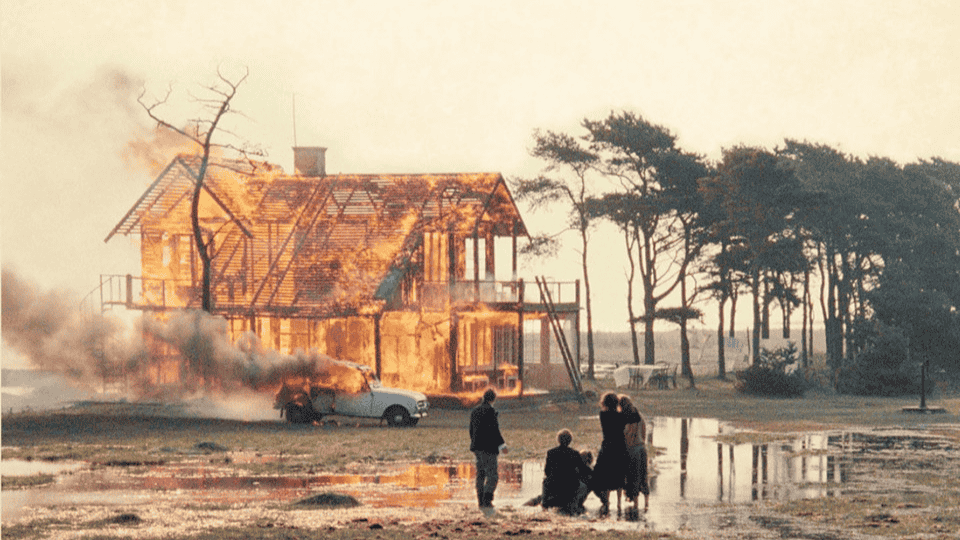
A true sacrifice is only real when it destroys your identity, not just your comfort.
In 1986, the Soviet filmmaker and screenwriter Andrei Tarkovsky made The Sacrifice, his eighth and final feature film. When making the film, he knew he was terminally ill with lung cancer. It would take his life before the year was out. Tarkovsky was only 54. He dedicated the film to his son, Andrei, “with hope and confidence.”
Tarkovsky had been separated from his family for several years, living in exile after deciding not to return to the Soviet Union after traveling to Italy in 1982 to film Nostalgia. The Soviet authorities refused to let his son and wife leave to join him, essentially using his son as leverage. After international pressure, his son was finally allowed to leave the USSR in 1986 and they were reunited in Europe, a few months before Tarkovsky’s death in Paris.
Knowing these details of Tarkovsky’s final years helps us understand The Sacrifice a little more, or at least understand something of Tarkovsky’s motivations. This is a film that is poetic, spiritual, serene, and devastating, with a final scene that is one of cinema’s most audacious and unforgettable.
Set on a remote Swedish island, The Sacrifice follows Alexander, a former actor and intellectual, as news breaks of an imminent nuclear catastrophe—a third world war. Faced with the possible end of the world, he turns to prayer and makes a vow: if everything is restored, he will give up all he loves: his son, his wife, his friends, his home, his voice, his identity. All of it.
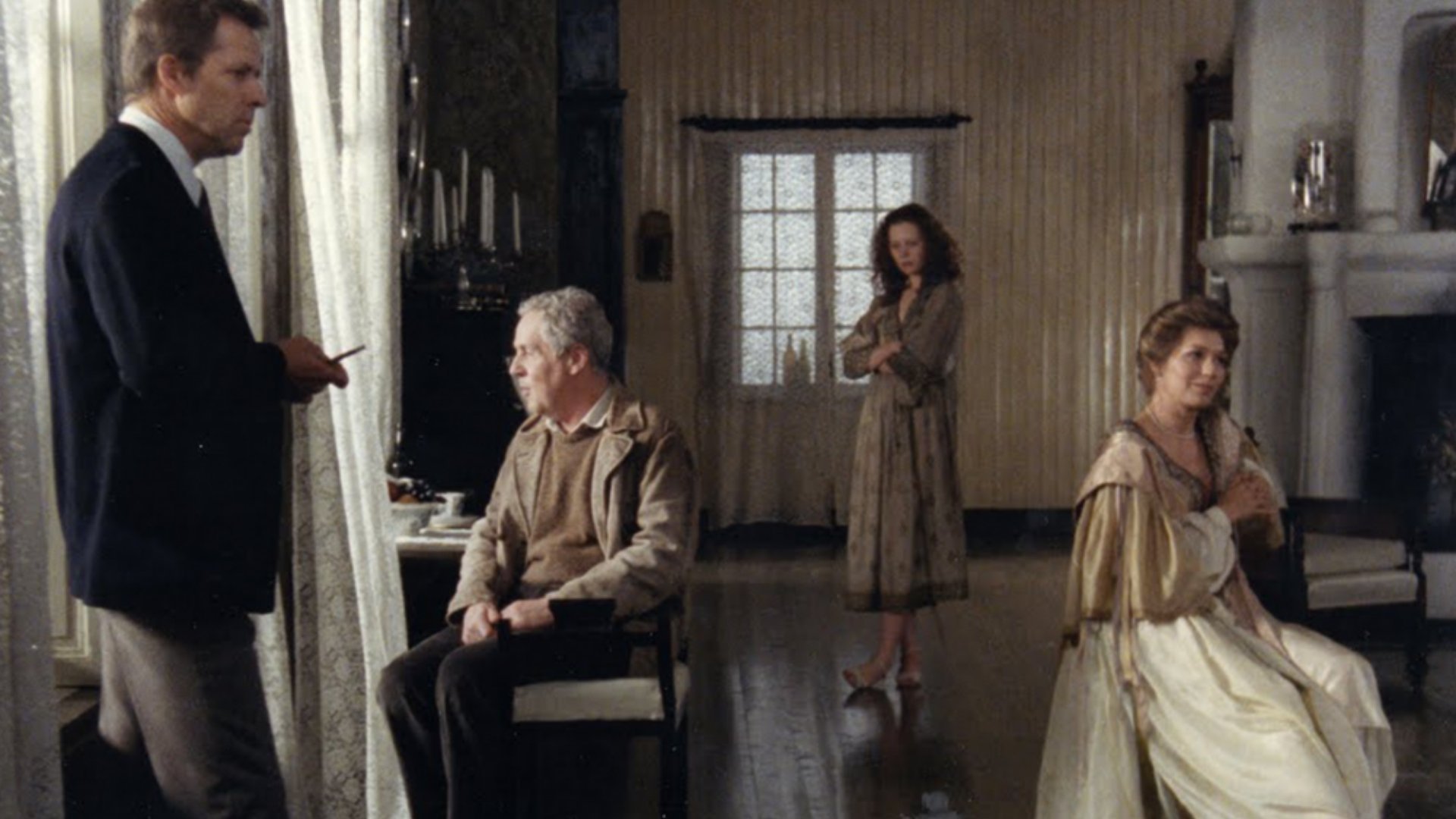
The Sacrifice (1986). The final film of Andrei Tarkovsky
Tarkovsky is a filmmaker who concerns himself with the moral condition of humanity. In this final chapter of his artistic legacy, he is fully committed to exploring that condition in his trademark style. That style will not suit everyone. He was a director that didn’t see cinema’s main function as entertainment or storytelling. He once said, “Cinema is the art of sculpting time. Everything else—plot, character, dialogue—is secondary to temporal truth.”
In The Sacrifice Tarkovsky uses extremely long takes, including the first take at nearly nine and a half minutes, slow pacing, a heavy atmosphere, and minimal plot. Many of the shots are composed at a faraway distance, placing the characters within their environment rather than at the centre of it. The effect is subtle but important: we are not pulled in, but held back, given time and space to observe and reflect. We are meant to inhabit the time of the film. To feel its weight. At its heart, the film asks a terrifying question:
What would you sacrifice to save the world?
Alexander knows. He tells us early on he has been waiting his whole life for this moment, a moment that demands something of him. The consequences of his vow then play out. How you interpret them depends on your own point of view. There is a strong spiritual and philosophical spine. Despite his Soviet background (an atheist, materialist system) Tarkovsky was unafraid to explore spiritual questions. So we have strong religious and biblical imagery, including the symbolic role of the ladder (Jacob’s Ladder), representing the connection between heaven and earth.
Tarkovsky’s film was photographed immaculately by Sven Nykvist, the cinematographer of Ingmar Bergman, another of cinema’s great human moralists. Nykvist’s images are like European oil paintings from the Renaissance, especially the interior shots of the house, framed in light and shadows, space and rule of thirds. The house is a gallery of still life. Outside, in the open space of the remote and beautiful island, we continue to contemplate, not consume, what we are watching.
The extraordinary climax of the film—the burning house scene—has caused much debate and interpretation. I won’t give it away except to remind viewers that Tarkovsky himself believed art should confront questions like faith, sacrifice, and responsibility. I therefore take the film’s conclusion at its most literal, accepting the spiritual and moral interpretations because this is Tarkovsky and this is his last film. Alexander’s sacrifice is the ultimate. He sacrifices his own agency and identity. A sacrifice that will never be known or appreciated by those closest to him.
They only see the destruction.
How many people would pay that cost?
“Tarkovsky’s finest work… no director could wish a more splendid valedictory.” — Kevin Thomas, Los Angeles Times
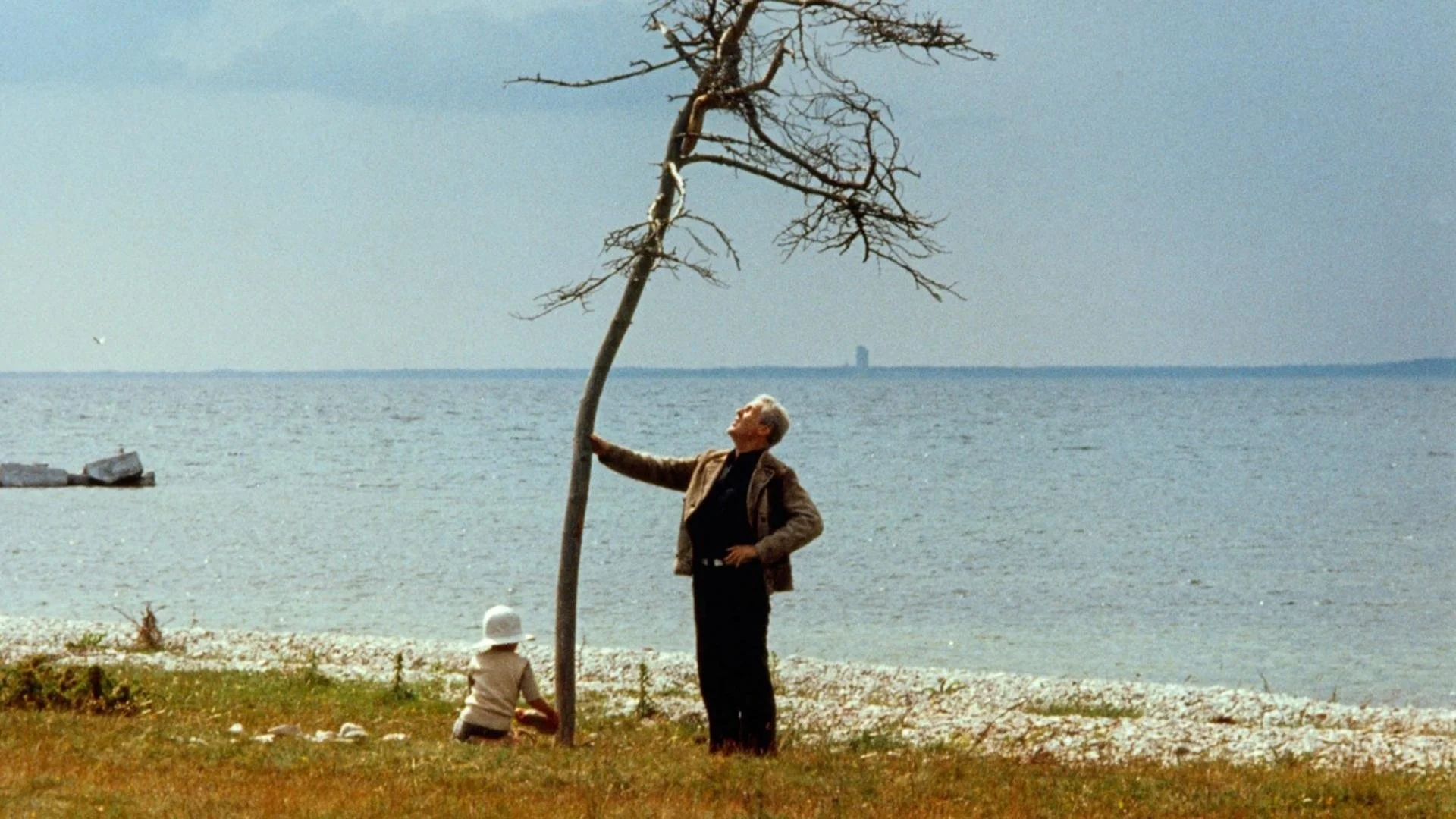
The film opens and closes with the image of a Japanese tree. In that first scene Alexander tells his son that if every man carried out the same ritual, even a simple one such as filling a glass with water, at the same time every day, then the world would change. The tree is a symbol of continuity and renewal. Something that endures, even after everything else has been lost. This is the “hope and confidence” he dedicates to his son.
Tarkovsky’s son made a documentary about his father called Andrei Tarkovsky: A Cinema Prayer. He captures some of his father’s perspective. About The Sacrifice, he said:
“This film speaks about personal responsibility when events come bearing down swiftly and inevitably. It’s dedicated to personal responsibility and the intention and desire to become involved in those events that we usually entrust to politicians, those professionals whose occupation is to plan out our future … That’s precisely what my film is about: involvement of the individual in contemporary social processes, and the desire to return the individual to the very heart of events …”
He is calling for agency. For individual responsibility.
And in his film, his last, he shows the true cost.
Pass It On
If this idea was worth your time, it may be worth someone else’s.
Share this essay with a friend:
https://www.deeplifejourney.com/deep-life-reflections/march-20-2026
If you have a thought you’d like to share, please leave a comment below.
You can read all previous issues of Deep Life Reflections here.