
How a Film Upended a National Identity
A 1969 documentary, The Sorrow and the Pity, shows how France preferred a noble fiction over an uncomfortable reality during the Occupation.
Deep Life Reflections | Essay 163 | James Gibb
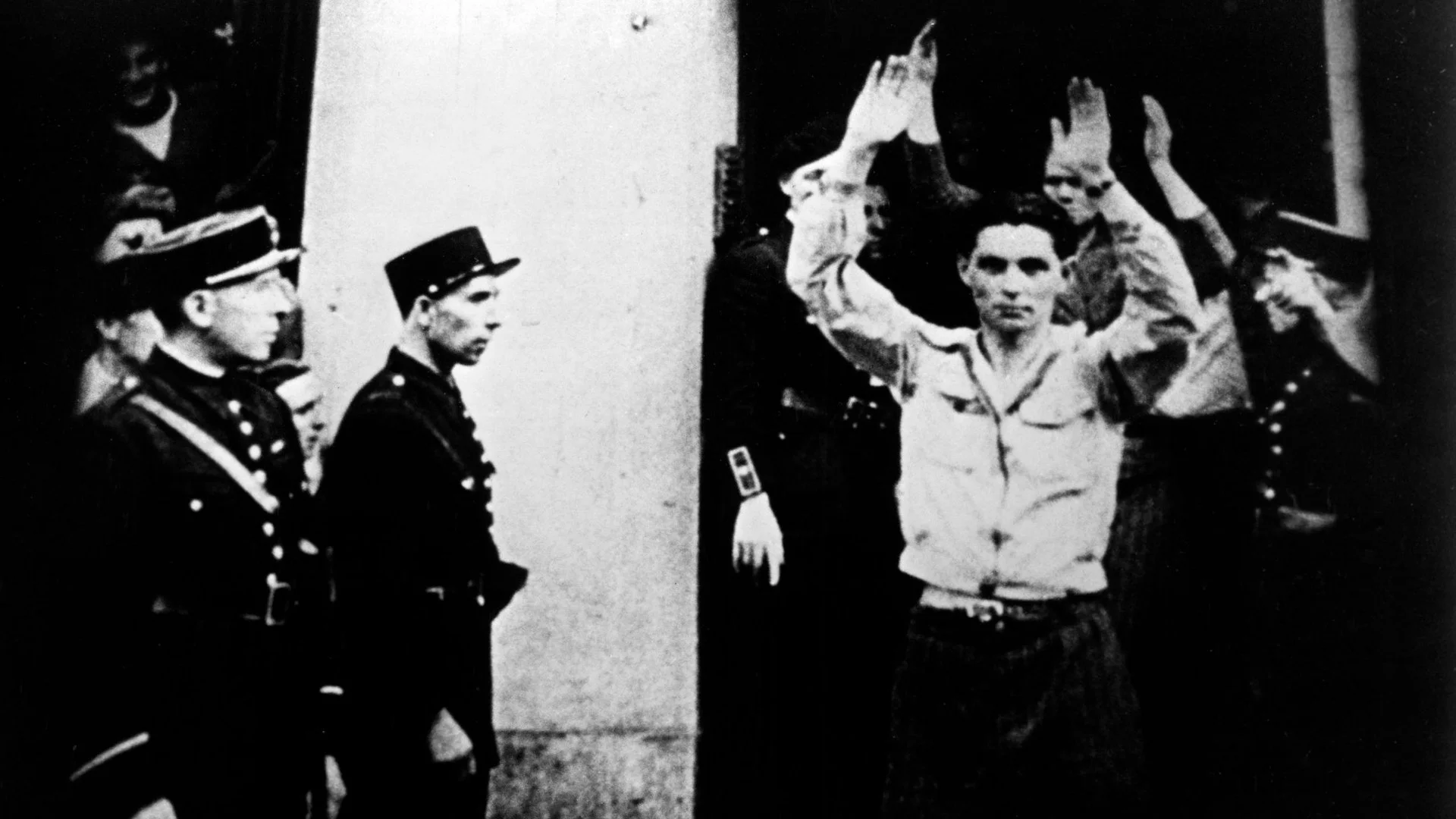
In periods of chaos and upheaval, people can endure guilt more easily than ambiguity.
The best film I’ve watched so far this year begins with grainy footage of a wedding in a small German town in 1969. There are church bells, smiling faces, even a laconic French waltz playing softly in the background. This is how Marcel Ophuls opens his 1969 documentary, The Sorrow and the Pity (Le Chagrin et la Pitié). The wedding suggests something immediately uncomfortable: there is a story being told that doesn’t quite add up. Over the course of the next four hours, Ophuls lets that theme naturally emerge, and in the process dismantles the story France created for itself after the Second World War.
Postwar France told itself a story for decades: that it had almost universally opposed Nazism, that it had largely been a country of resistance, and that collaboration had been confined to a shameful few during the Occupation between 1940–1944. This story became a foundational pillar of France’s postwar identity, in the critical years of the Fourth and Fifth Republic.
The problem, as Ophuls shows us, is that this story is a myth.
Marcel Ophuls was a Franco-German Jew, born in Frankfurt, who later became an American citizen. He died in 2025 at the age of 97. Ophuls made The Sorrow and the Pity in 1969, but it was not shown on French television until 1981. Ophuls maintained that the film wasn’t banned but simply boycotted. The stories told on screen didn’t support the official postwar narrative. The establishment didn’t want it. Nor would they fund it. The film was instead financed by Swiss, German, and Belgian television networks.
The Sorrow and the Pity weighs in at four hours and eleven minutes, but it’s broken into a distinctive two-part format. The first part is called The Collapse; the second, The Choice. The documentary covers the German invasion and the Occupation of France in the Second World War, and its eventual liberation and aftermath. To centre the film, it focuses on the small city of Clermont-Ferrand and its inhabitants. The city was only twenty-nine miles from Vichy, where Germany established a puppet government led by France’s First World War hero, Marshal Philippe Pétain. It is the actions and impact of the Vichy government that draw much of the film’s attention. What the film does so well is demonstrate that far from being a country where resistance was everywhere, many French citizens simply carried on their lives with an air of ease and normality. This was against the ugly backdrop of collaboration, anti-Semitism, Anglophobia, political violence, and a deep deference to military authority.
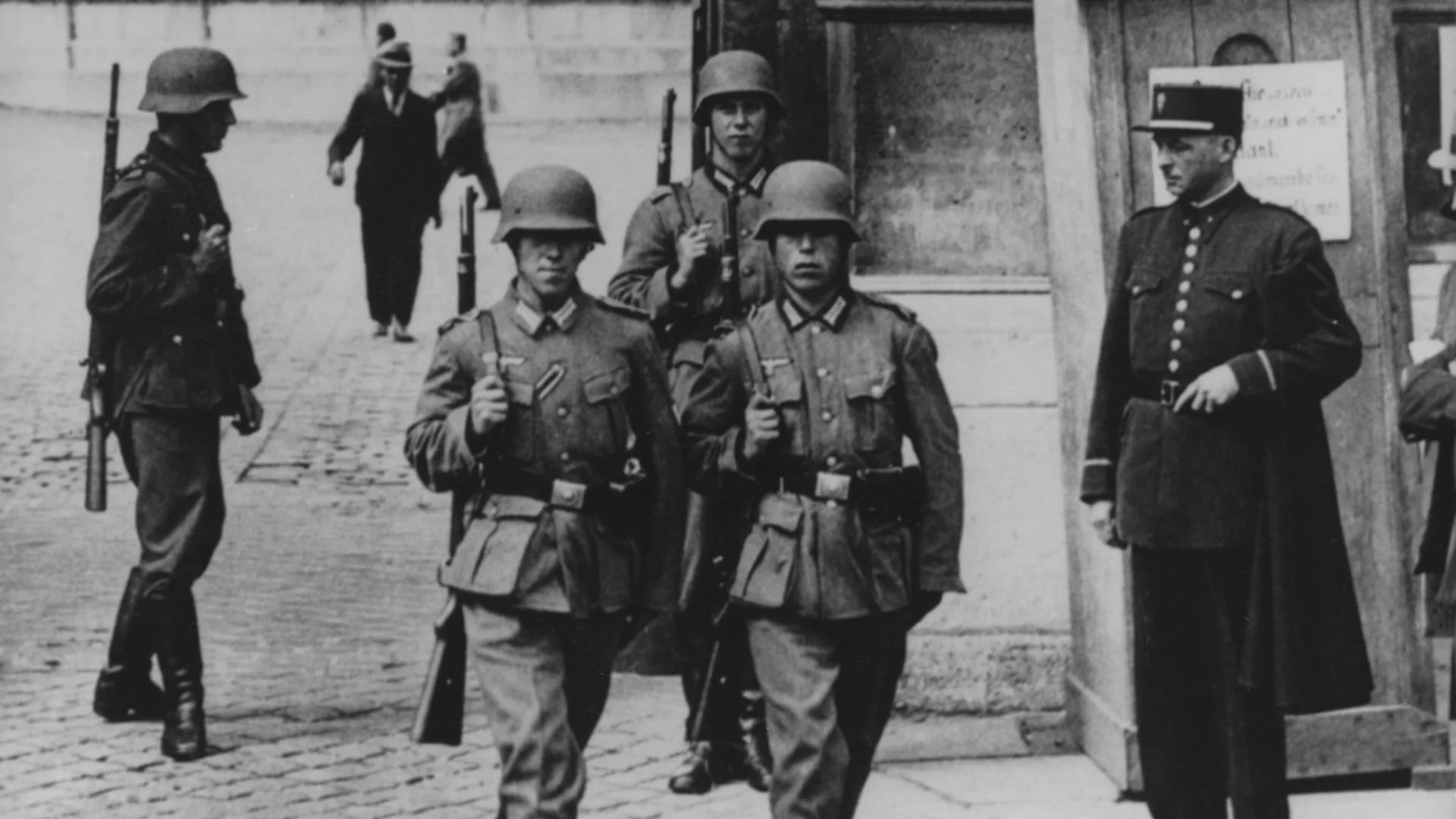
The Sorrow and the Pity (1969) has been called one of the greatest documentaries of all time by film critics.
Ophuls tells a huge and intricate story of this vital period of French history, composed mainly through interviews with a diverse group of participants in present-day 1969. They are older now of course, some wiser, some repentant, others not so much. It’s a real cross-section of French society—politically, socially, and economically. The film includes Resistance fighters from modest backgrounds, high-ranking politicians, pharmacists, farmers, shopkeepers, and even aristocrats seduced by the ideology of fascism and rebellion. Ophuls intercuts his long, exploratory interviews with a rich selection of historical archives: newsreels, propaganda, anti-Semitic films. The result is a fluid visual essay that cohesively presents an alternative to the story France told itself. But it does not undermine the impact or the courage of those who fought in the French Resistance. If anything, that part of the story is made even stronger and more heroic through the film.
Ophuls and his co-writer and co-interviewer, André Harris, take an even-handed approach to the interviews. They are determined and patient to understand the person in front of them, including their motives. In all his interviews, Ophuls allows his subject—whether they resisted, collaborated, or just went on with their lives as best they could—to have their say. This type of interview-style format for a documentary was very new in 1969. As well as understanding the person, Ophuls also wants to find the real story, and he takes his time to assemble all the pieces. He rarely interrupts, although sometimes he does, armed with facts and evidence. When René de Chambrun defends his father-in-law Pierre Laval, the French reactionary and pro-German premier, Ophuls politely but firmly corrects him on his statistics for Jewish deportations. He also hands Chambrun a signed document to prove that Laval handed 4,000 Jewish children over to Adolf Eichmann’s deputy for deportation to concentration camps in the East.
Several Resistance fighters are interviewed for the film, now ageing and tired but still proud and accommodating. One of the most memorable is the farmer Louis Grave. He was denounced, arrested, and deported to Buchenwald. He survived. After the Liberation, he was told by the local police that they knew who had denounced him. They were happy to take revenge on his behalf. Grave declined. He knew who it was and he didn’t want revenge. He didn’t want to forgive either. He preferred to carry the knowledge of betrayal as its own kind of moral punishment, more satisfying than any trial or act of violent retribution.
Those talking about the Resistance often summed it up like this: that those who had nothing to lose fought. Those that had something to protect did not. The first group were typically the marginalised or the working class. The second group were typically the bourgeoisie, the middle class. It is not that this second group necessarily collaborated, but that they allowed the new reality to remain. As the film critic David Denby wrote in 1972, and as I believe still holds true today, the uneasiness of watching the film is that many of us would have behaved much the same way. Doing very little, or nothing at all. If that bristles, consider this punishment meted out to three Resistance fighters by Vichy-supporting militiamen: each had their eyes gouged out, insects placed in the empty cavities, and then sewn back up.
Would you risk such a punishment?
Someone who did was Pierre Mendès-France, an air force lieutenant at the start of the war who would eventually go on to become Prime Minister of France in 1954. When he tried to join the Free French in North Africa, he was arrested for desertion and sentenced to fifteen years’ imprisonment under a judge displaying both antisemitism and Petainist pro-German sentiment. Mendès-France escaped and made it to London, joining up with Charles de Gaulle and other members of France’s future government.
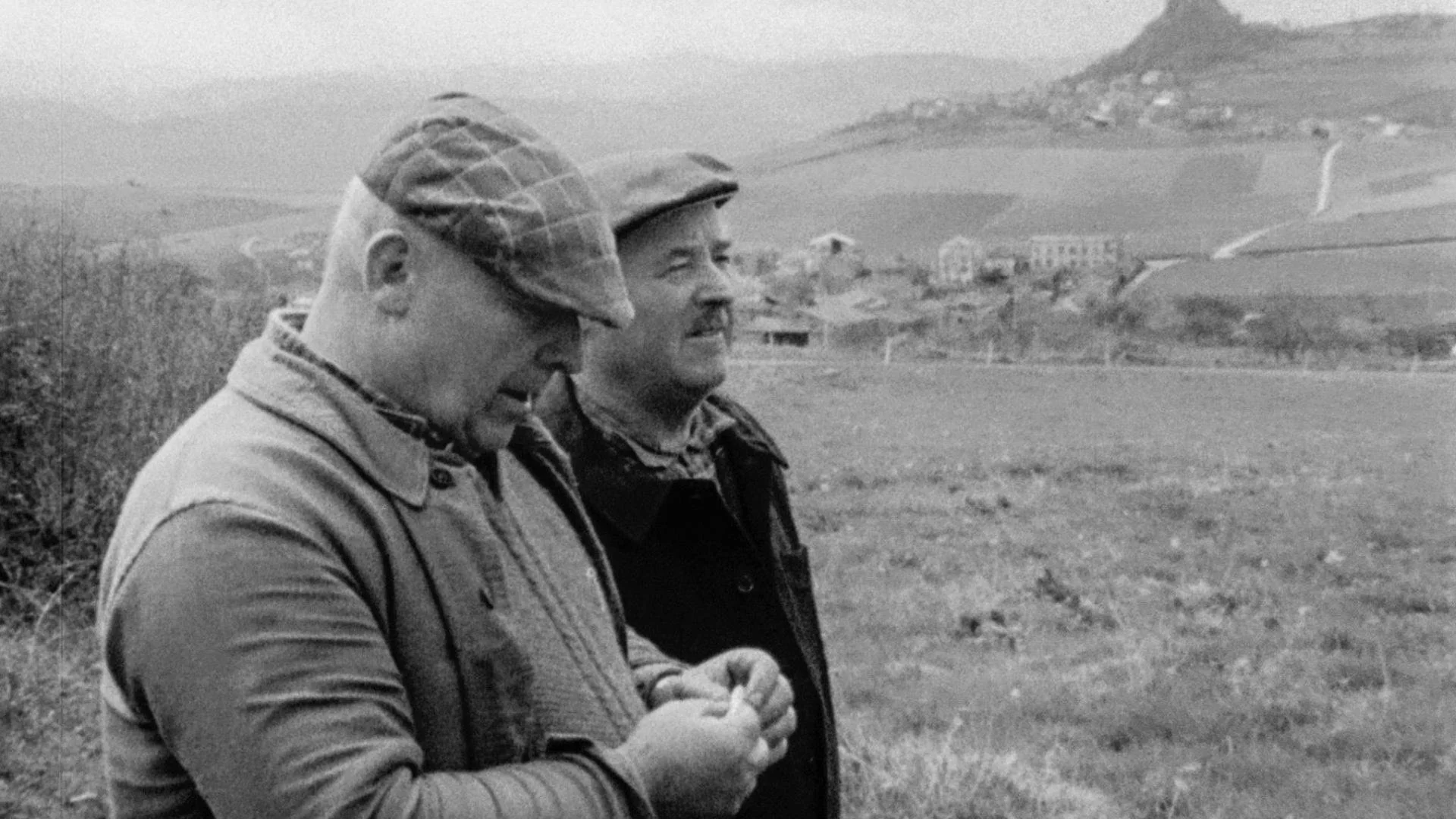
French Resistance member and farmer Louis Grave. He was denounced, arrested, and deported to Buchenwald, but would not take revenge.
In all these eloquent, lengthy, and compelling interviews, and there are many, Ophuls is content to let the audience decide what they hear. Although he is not a witch-hunter, he gives all those interviewed enough rope. Returning to the German wedding that opened the film, we hear from an unrepentant Wehrmacht captain, Helmut Tausend, who had been stationed in Clermont-Ferrand, claiming to have “never heard” of Jews being deported from his area and proudly displaying his seven medals of honour. Ophuls reminds him that many Germans today refuse to wear their medals because they were given by the Nazi regime. Tausend counters that these soldiers don’t wear them because they were not good enough to earn them. As he holds court with his cigar, his family and friends watching and listening, including his newlywed daughter, the camera occasionally moves to a close-up of his wife or daughter. Their expressions range from curiosity to puzzlement to mild embarrassment.
As the film moves into the Liberation and those accused of collaboration are tortured, given long prison sentences, or summarily executed, the crowds previously cheering Pétain now cheer the returning De Gaulle. They cheer too the local women accused of sleeping with German soldiers. As punishment they are lined up to have their heads shaved bald on public platforms, leaving them with a grotesque and falsely similar look to the surviving victims of the concentration camps. We hear a similar story from a wrongly persecuted woman in Clermont-Ferrand, one of the unfortunately few female voices in the documentary, which is itself representative of the time.
To bring all this together, Ophuls turns to a statesman. A British one. Anthony Eden, Foreign Secretary and one of Churchill’s closest advisors during the war, tells Ophuls in perfect French, “You cannot judge unless your own country has been occupied.” It is easy to condemn collaboration from the safety of hindsight, but it is harder to claim any nation, placed under the same pressure, would have behaved more nobly. Ophuls’ film, if it imparts anything along the lines of a lesson, is about personal responsibility and accountability. The ability to look beyond the chaos and persecution, beyond the fear and the loathing, and to choose something like courage. His film is about moral choice and its notoriously difficult path.
When the dignified pharmacist Marcel Verdier is interviewed, with his family around him, including his son and daughters, young and respectful adults of a different generation, he is asked whether there was anything other than courage in the French Resistance.
“Of course,” he replies.
“But the two emotions I experienced the most frequently were sorrow and pity.”
Pass It On
If this idea was worth your time, it may be worth someone else’s.
Share this essay with a friend:
https://www.deeplifejourney.com/deep-life-reflections/may-1-2026
If you have a thought you’d like to share, please leave a comment below.
You can read all previous issues of Deep Life Reflections here.