
Some People Never Arrive
What Kafka on the Shore and Withnail and I reveal about growing up and getting stuck.
Deep Life Reflections | Essay 138 | James Gibb
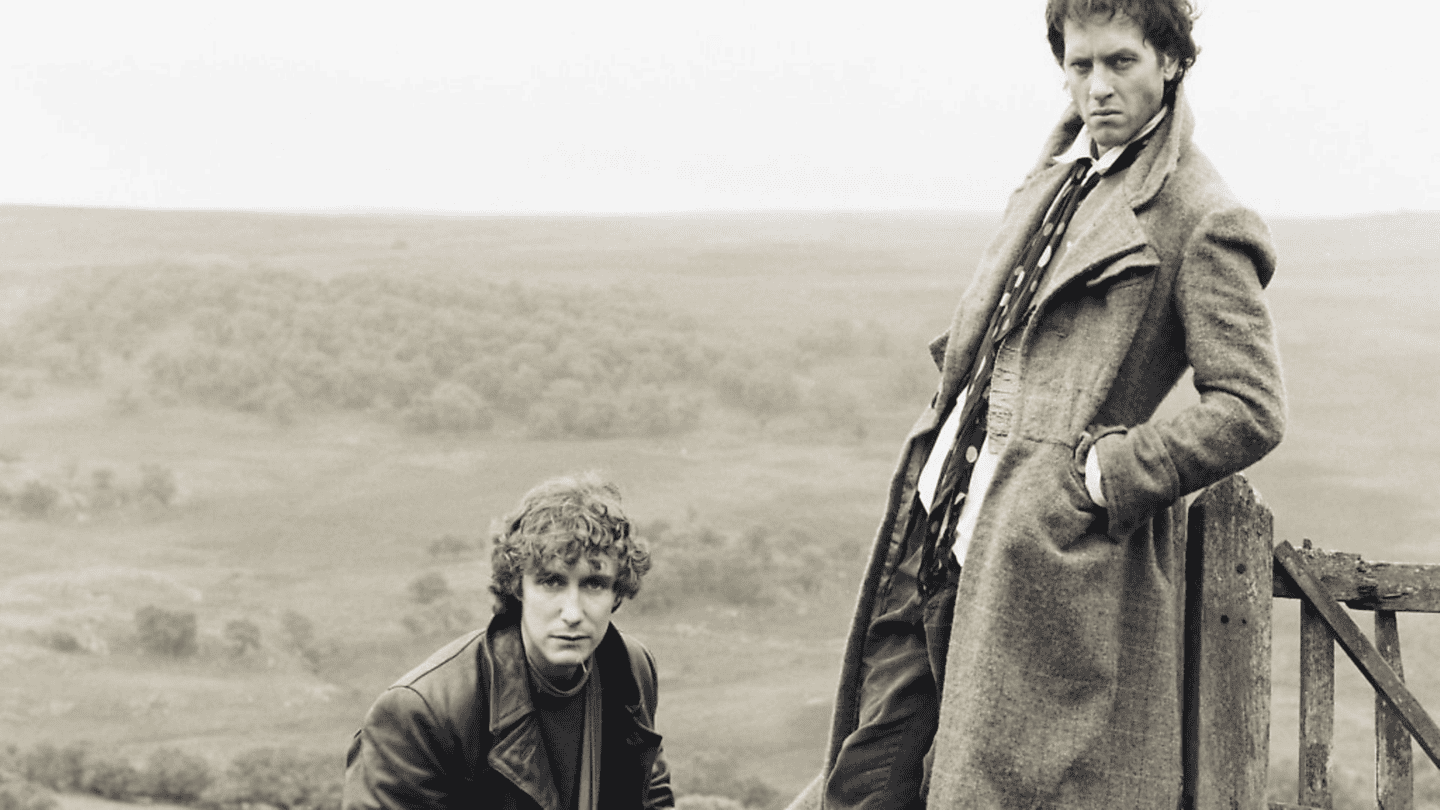
Growing up doesn’t always mean moving forward.
Kafka Tamura is fifteen. He flees home to avoid a fate he believes has already been written, an Oedpial curse. It’s a prophecy that terrifies him. But the running is only part of it. He’s also performing an idea of who he must become: “the toughest 15-year-old in the world.” It’s a mask. Beneath it is a frightened boy searching for his mother, for people he can trust, and for his true identity.
Kafka on the Shore is the second Murakami novel I’ve read. It has a dreamlike, metaphysical quality.
Kafka’s journey leads him to a new city, finding refuge in a private library where he builds a friendship with Oshima, a wise, well-read presence. Oshima tells him an old story. That humans were once made up of two fused selves—male/male, male/female, female/female. Everyone was happy until God took a knife and split us in two. Since then, we spend our lives trying to recover our missing half. Kafka is missing his.
So is Nakata.
Nakata is the second key character. He’s an older man with a childlike mind and the strange ability to speak to cats. The novel alternates between these two characters, chapter by chapter. This structure mirrors the story’s deeper preoccupation with duality. We are in two minds, two bodies, two realities. Their stories appear disconnected at first but gradually begin to converge, linked by questions of identity, memory, youth, and the instability of the self.
Murakami’s style is often called magical realism, where a realistic view of the world is splashed with magical elements. So there are talking cats, spirit soldiers, and liminal libraries. These magical elements exist because for characters like Kafka and Nakata, reality itself is unstable. Especially when you don’t know who you are.
Nakata’s mind was altered by a bizarre event as a child, an unexplained blackout on a school trip to a local forest affecting his whole class. Except all the other children eventually returned to normal. Nakata didn’t. Whether it was militarily induced or something more otherworldly, we never learn. But something was taken from Nakata that day. He lives in a diminished present, disconnected from his past. But his sensitivity, like Kafka’s intensity, makes him a kind of receptor. He knows when something is wrong, even if he can’t explain why.
The novel bridges many dualities: sleep and waking, memory and forgetting, youth and adulthood. Murakami has said the shore of the title represents the border between the conscious and the unconscious. Most of us stand somewhere near that edge, one foot in each world. Kafka, like many adolescents, is caught there longer than most, pulled by the anxiety of who he thinks he should become and who he actually is.
The novel also suggests that independence, for all its necessity, has its limits. That at some point we must learn how to ask for help, and to accept it. Murakami’s characters don’t find this easy. They want to be whole, but don’t trust anyone enough to help them. They run, but don’t know what from. They remain caught in between worlds. And it’s uncomfortable.
Kafka on the Shore isn’t a novel with easy answers and a neat ending. Murakami has said it takes multiple reads to understand it, and even then, maybe it’s not there to be understood. Like the transition from youth to adulthood, it leaves more questions than answers, leaving some parts hidden in the inkwells.
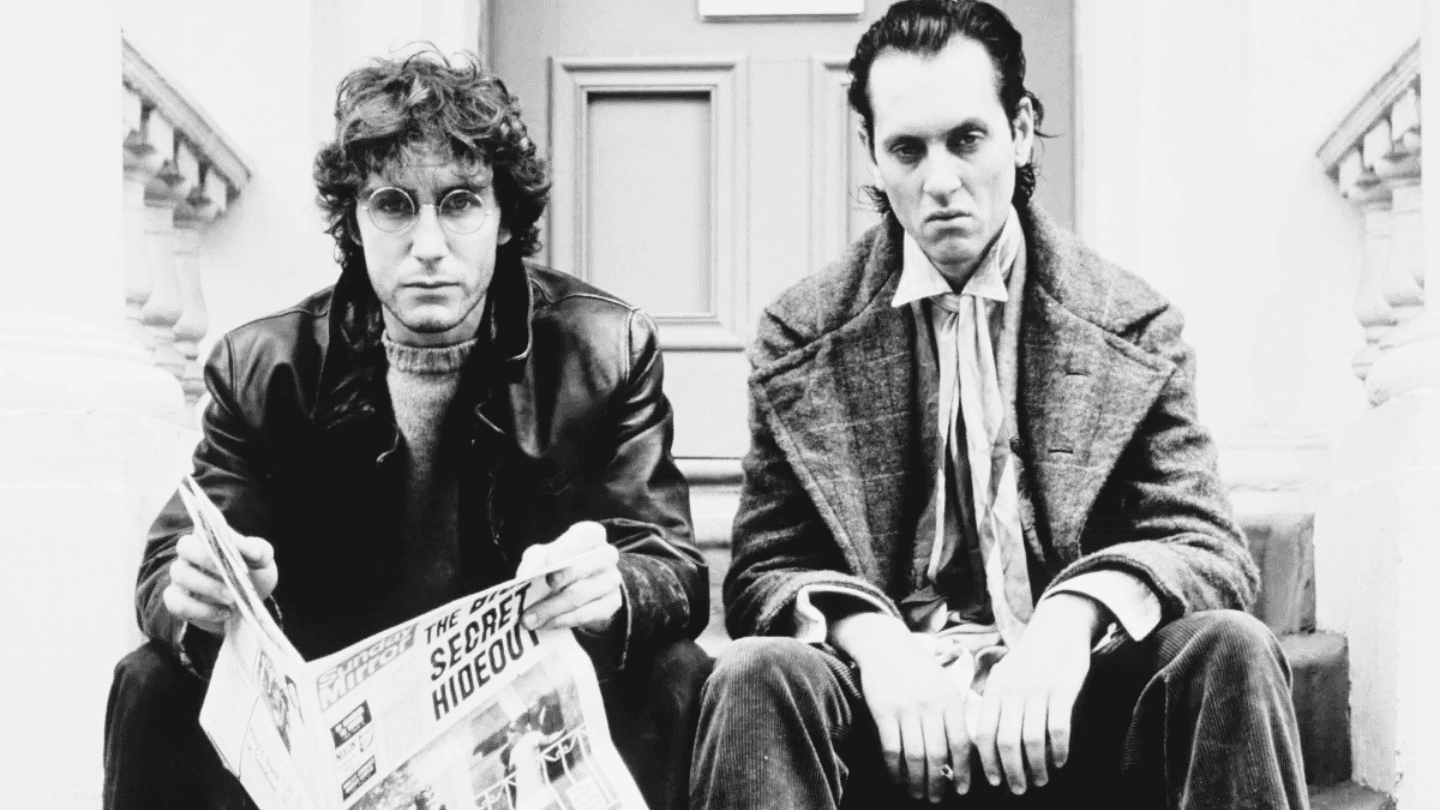
“It was the best of times, it was the worst of times” begins A Tale of Two Cities by Dickens, a line that could easily capture the spirit of the 1987 British cult classic Withnail and I.
While Kafka drifts through a world that doesn’t quite hold together in Kafka on the Shore, Withnail lives in one that does, and still can’t find his place in it.
We are in Camden Town, north London, 1969. Two out of work actors inhabit a foul, freezing, infested student flat. Something may be living in the kitchen sink. Facing their reality: no job prospects, life on the poverty line, and most terrible of all, an empty wine cellar, they decide on a weekend in the country to rejuvenate their spirits, literally and figuratively.
Withnail and I is a unique film with a very British sense of humour. There are scenes and lines a generation of fans can recount word for word. I first watched it sometime around 1995 and loved it immediately. However, it’s accessible to broader audiences because the script is so good and themes such as friendship and the difficulties of early adulthood, are universal. Beneath the absurdity, there’s a depth and melancholy to the film that elevates it beyond comedy.
“Even a stopped clock tells the right time twice a day.”
—Withnail and I
Paul McGann plays I, whose name is revealed off-screen as Marwood, and Richard E. Grant plays the mercurial, highly-strung Withnail. It was the acting debut of both. Both are excellent, as is the full cast. As he waits for his big break on stage, the substance-abusing, self-destructive Withnail marks time by consuming as much alcohol, pills, and at one point, lighter fluid, as his meagre finances allow.
“A pair of quadruple whiskies and another pair of pints, please.”
There are more wonderful bar orders like this.
His roommate, Marwood, the more sensible and certainly the more sensitive of the two, is caught between trying to keep up and trying to talk sense. He convinces Withnail to ask his exuberant Uncle Monty (Richard Griffiths) if they can use his cottage in the Lake District for the weekend. Monty agrees but appears to have ulterior, carnal motives toward the poor, unsuspecting Marwood.
Their escape to the countryside leads to one farce after another. They prove hopelessly inadequate for such tasks as building a fire, cooking, and befriending the locals, including the local poacher who threatens them with a dead eel. Withnail is constantly wounded and aggressive, uttering one of the film’s best lines as he runs alongside the local farmer’s tractor, begging for food:
“Please help us,we’ve gone on holiday by mistake!”
Withnail and I is semi-autobiographical. Bruce Robinson, the film’s director and writer, drew on his own struggling years as an actor. Withnail is based on his friend Vivian MacKerrell, a mostly unemployed actor and full-time alcoholic, with whom Robinson shared a house in Camden. He recalls being down to one light bulb and carrying it with him from room to room. MacKerrell died of throat cancer in 1995.
Through his film, Robinson records the failed promise of a decade that was supposed to change the world. The sixties began with the idealism of a genuine cultural transformation. But as local drug-dealer/squatter/friend Danny tells Withnail and Marwood:
“We are 91 days from the end of this decade. The greatest decade in the history of mankind is over. And we have failed to paint it black.”
And in the combustible Withnail, we receive a fitting eulogy at the film’s end through Hamlet’s “What a piece of work is a man.” Alone in the park, in the teeming London rain, soaked and swigging from a bottle, Withnail performs Shakespeare’s soliloquy. There’s no audience, stage, nor spotlight. It’s a eulogy to a lost generation: failed actors, faded friendships, unmet dreams. The taste of life having slipped away. As he quotes it line by line, we reflect that it is entirely accurate for his character.
For all his drama, ego, and vanity, at his best, Withnail is sincere and compassionate. Yet he also seems to have the knowledge he’s being left behind. He’s almost thirty. He’s unwavering in his belief of being destined for greatness, a star of the stage, living an extraordinary life. But he isn’t. The numbness of long-term rot has set in, and he doesn’t even know why. Beyond the humour—and of that there is much—we are left with something more. Withnail as tragedy.
In 1999, Withnail and I was ranked #29 on the British Film Institute’s 100 Greatest British Films of the 20th Century.
Critic Roger Ebert wrote this of the character, Withnail. “Most of us may have known someone like Withnail. It is likely that Withnail never knew someone like us. His mind was elsewhere.”
Withnail is trapped in a twilight zone between adolescence and adulthood, talent and failure, delusion and reality. At almost thirty, he is self-aware enough that time for him is slipping away. That, to borrow the phrase from the film, “he has failed to paint it black.”
Kafka Tamura runs away from home to escape a self-fulfilling prophecy. Like Withnail, he enters a liminal space—half truth, half myth, where names lose meaning and the self fractures into multiple realities.
Both can be seen as coming-of-age stories with no clear arrival. They are about drifting. And they are also about disappearance.
Kafka himself disappears. He literally vanishes into the woods. It’s ambiguous whether he’s dead, transformed, or free. His identity dissolves.
Withnail doesn’t vanish, but he’s left behind. In the rain, under an umbrella, with only an audience of uninterested wolves. He performs to no one. He exits stage left from a world that isn’t even watching.
Some people don’t arrive. They watch the tide go in and out, convincing themselves they’re moving.
“The beauty of the world, the paragon of animals! And yet, to me, what is this quintessence of dust? Man delights not me... no, nor women neither... Nor women neither.”
—Hamlet (and as quoted by Withnail)
Pass It On
If this idea was worth your time, it may be worth someone else’s.
Share this essay with a friend:
https://www.deeplifejourney.com/deep-life-reflections/november-7-2025
If you have a thought you’d like to share, please leave a comment below.
You can read all previous issues of Deep Life Reflections here.