
The Spectrum of Compromise
Perfume and Fatal Attraction—on obsession and knowing when to bend.
Deep Life Reflections | Essay 84 | James Gibb
Compromise is often framed as weakness. But it’s unavoidable. The question is not whether we compromise, but where.
“In eighteenth-century France there lived a man who was one of the most gifted and abominable personages in an era that knew no lack of gifted and abominable personages. His story will be told here.”
—Perfume: The Story of a Murderer
So begins the fictitious tale of one Jean-Baptiste Grenouille, that most rare of literary characters: insular, sinister, thoroughly unlikeable, yet entirely fascinating because of his singular talent: an incredible sense of smell. The greatest on the planet.
Grenouille’s creator is the German writer Patrick Süskind who penned Perfume: The Story of a Murderer in 1985. It’s an exquisitely written and ingenious story, an outcast’s homicidal quest for the perfect scent. Grenouille, abandoned by his mother at birth, was born with no natural scent of his own. In the filthy slums of Paris, we learn of his tough, hard existence, perhaps reluctantly admiring his durability. But as the subtitle makes clear, this is a murderer, one without remorse or compromise. We follow Grenouille as he takes his unmatched talents in pursuit of what he can never have.
Süskind must have spent countless hours researching the novel. The ancient art of eighteenth-century perfume-making is laid bare in all its fine, rich details, beautifully captured by Süskind’s prose.
“Her sweat smelled as fresh as the sea breeze, the tallow of her hair as sweet as nut oil, her skin as apricot blossoms… and the harmony of all these components yielded a perfume so rich, so balanced, so magical, that every perfume that Grenouille had smelled until now… seemed at once to be utterly meaningless.”
Perfume reminds us that our most powerful sense is scent. We may close our eyes to horror, cover our ears to deceiving words, or close our mouth to unpleasant tastes, yet we cannot escape scent. Our memories can be reignited in a heartbeat by a single scent from our past, even from a lifetime ago.
Grenouille is uncompromising in his diabolical and obsessive quest of creating the perfect scent, which overrides all other aspects of his limited humanity. His inability to develop a normal human scent leaves him alienated and unloved by others. This lack of a basic human trait corrupts him from the start, setting him on his path for power, not through money, status, or even companionship, but simply that people would love him through a force so strong it would evoke “insanity, of self-abandonment… they would quiver with delight, scream, weep for bliss, they would sink to their knees just as if under God’s cold incense, merely able to smell him, Grenouille!”
As Grenouille contemplates later in the novel, “He who ruled scent ruled the hearts of men.”
Perfume gives us a monstrous character who refuses to engage with society, a rejection of the compromises that normal human relationships require. This refusal drives Grenouille down a path of obsession and isolation. While his refusal to compromise grants him the mastery he craves, it comes at a devastating cost.
Where Grenouille refuses compromise, Fatal Attraction makes a different mistake. It compromises where it shouldn’t.
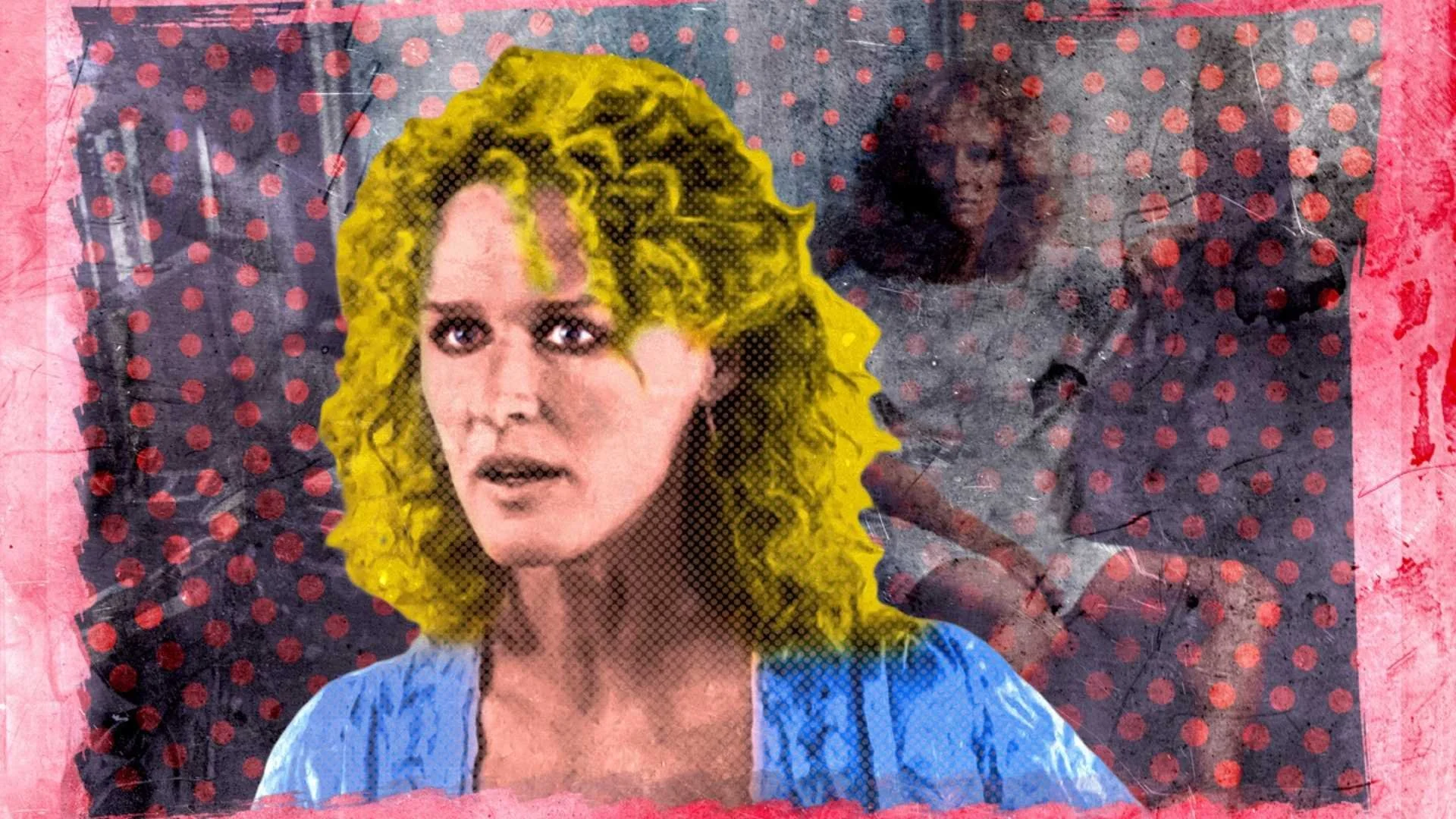
Fatal Attraction (1987). Directed by Adrian Lyne.
Some films garner such a reputation that they become synonymous with the subject they’re portraying. For sharks, we have Jaws. For schizophrenia, Psycho. And for adultery, we have Fatal Attraction. While few would place Fatal Attraction in the same league as Spielberg’s and Hitchcock’s classics, rewatching it in 2024 reveals a film with the potential for greatness.
If only it hadn’t compromised its ending.
The story of Fatal Attraction is well known. Michael Douglas, in one of his classic 80s roles, plays New York lawyer, Dan Gallagher, happily married for nine years with a six-year-old daughter. He seems content. Then he meets Alex Forrest, played by Glenn Close (who was far from first choice for the role.) There’s an instant attraction and when she finds him willing to be seduced, they have an affair over a weekend. Afterward, he makes it clear it was a one-off and he’s happily married.
She sees it differently.
From there, the story snakes into a taut, dark, psychological thriller as the increasingly desperate Alex spirals into a dangerous obsession, punishing Dan for what she sees as ignoring her. Phone calls to the family home in the middle of the night are just the start. Douglas is effectively stalked by Close, an interesting reversal of the more typical male-female stalker dynamic. This is compelling filmmaking as we are drawn into the ratcheting fear and frustration experienced by Douglas, as he contemplates the magnitude of his actions. However, this intelligent script is thrown out the window in the final third of the film as it inexplicably morphs into a slasher-film ending that betrays its original intentions.
This wasn’t the original ending.
The original ending had Alex commit suicide while dressed in white, with Dan being arrested for her murder. This maintained the thematic alignment with Madame Butterfly, the opera to which the film made direct and indirect nods throughout. Puccini’s famous work is an enduring tale of unrequited love, following the tragic tale of a young Japanese girl who falls in love with an American naval officer, but ends her life when she realises she can’t have him. The original psychological ending of Fatal Attraction mirrored this bleak ending, exploring the consequences of infidelity in a more sophisticated way. You can watch it here with a short introduction by the director. But test audiences hated the original ending. They wanted retribution for Alex. So, reluctantly, the director reshot it.
Glenn Close was staunchly opposed to the new ending and initially refused to do it. A co-producer later said, “[Close] felt sympathy for Alex, a woman battling mental illness, and fiercely resisted cliches about another female psycho.” Close herself said, “The original ending was a gorgeous piece of film noir. But audiences wanted some kind of cathartic ending.” After talking with her friend William Hurt, Close went back and filmed the infamous horror-movie ending we know today.
The film was nominated for six Oscars, including Best Film and Best Actress, though it didn’t win any. That ending probably helped give the film its reputation. It did for adultery what Jaws did for the water.
But unlike Jaws, it compromised its ending, rejecting the psychological ending in favour of one designed to bring in more dollars and send audiences home happy.
Artistic integrity for broader appeal.
Compromise runs through every part of life. Indeed, to grow up is to recognise how many things won’t be possible. Yet, compromise doesn’t have to be seen as a negative. We’re always compromising. Life rarely lets us remain in total control. Even the most steadfast environmentalist inadvertently impacts the environment. Even the most dedicated professional eventually needs rest.
The question is not whether or not we compromise, but where we want to be on that spectrum. Being comfortable moving up and down as we need, guided by our values and intentions, is what brings freedom and peace.
We need to deciding where, for any given situation, we want to position ourselves on that spectrum. We can look to the words of Thomas Jefferson to help guide us:
“In matters of style, swim with the current; in matters of principle, stand like a rock.”
Compromise is part of life. Knowing where to compromise and where not to is what gives it meaning.
Pass It On
If this idea was worth your time, it may be worth someone else’s.
Share this essay with a friend:
https://www.deeplifejourney.com/deep-life-reflections/october-25-2024
If you have a thought you’d like to share, please leave a comment below.
You can read all previous issues of Deep Life Reflections here.