
Out of Time
The Catcher in the Rye and Sunset Boulevard—on what happens when we resist who we are becoming.
Deep Life Reflections | Essay 83 | James Gibb
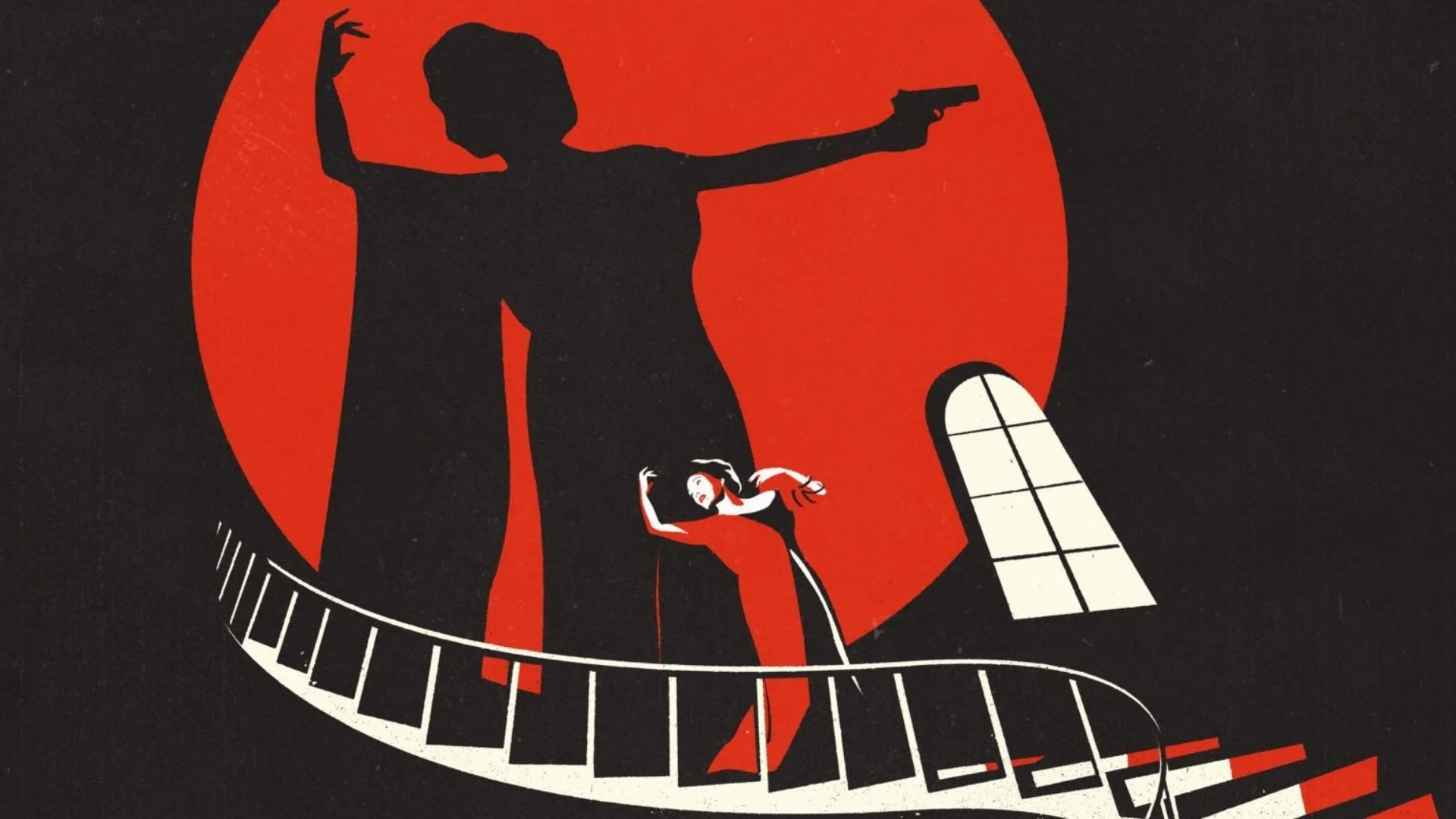
You don’t stay the same person for long. The trouble begins when you try to.
What do you remember about being 16?
For Holden Caulfield, life is far from golden. Expelled from his prestigious school and aimlessly wandering the streets of New York City, Holden is the embodiment of teenage angst and alienation, a stranger in a strange land. His prickly language is right there in the very first line, “If you really want to hear about it, the first thing you’ll probably want to know is where I was born, and what my lousy childhood was like… but I don’t feel like going into it, if you want to know the truth.”
J. D. Salinger’s, The Catcher in the Rye, is one of the most iconic and controversial works of twentieth-century fiction. First serialised in 1945 and later published as a novel in 1951, it tells the story of a disillusioned youth struggling to find identity, connection, and meaning in a world he views as “phony.” Despite numerous attempts to ban the book for its profanity and sexual references, joining the ranks of other challenged classics like 1984, The Color Purple, and The Great Gatsby, it has sold more than 65 million copies and continues to be read by new generations of readers.
Though written for adults, it was teenagers who flocked to The Catcher in the Rye, recognising the existential struggles Holden Caulfield faced. Released in post-war America, an era marked by optimism, new jobs, mass consumerism, and the rise of the middle class, not everyone was on board this train of prosperity. Holden, adrift, represented those left behind.
The story takes place over the course of a few days as Holden drifts around the city, checking into a hotel and meeting various people, some friends, some strangers. But none of these interactions brings him any peace. He can’t connect with anyone, ruminating on the superficiality of society. “I am always saying ‘Glad to’ve met you’ to somebody I’m not at all glad I met. If you want to stay alive, you have to say that stuff, though.”
Holden’s only genuine connection is with his younger sister, Phoebe, who represents his best chance at finding meaning. He yearns to be the “catcher in the rye,” saving children from falling off a cliff, a metaphor for preserving their innocence. This reflects one of the book’s central themes: the fraught transition from the innocence of childhood to the difficult path of adulthood, with all its loaded expectations and responsibilities. Not everyone makes it. Some, like Holden, remain trapped in a no-man’s-land. In a fleeting moment of happiness, he watches Phoebe ride a carousel before retreating back into his default role as an outsider.
I first read The Catcher in the Rye at 23, while living in Cleveland, Ohio, on six-months work experience. While no longer a teenager, I remember being engrossed in Holden’s story, especially as I too, was traveling alone and meeting new people. Unlike Holden, I did feel connection, but perhaps because I had made that difficult transition from adolescence into early adulthood.
Holden Caulfield has become ingrained in the American psyche as much as any other fictional character. When Mark Chapman assassinated John Lennon in 1980, he was found with a copy of the book, claiming its pages explained his actions. J. D. Salinger himself led a reclusive life, publishing only a thin body of work, his last in 1965, almost five decades before his death. Rumours persist that as many as ten finished novels remain locked away in his home.
It is with little irony that the lives of Holden Caulfield and J. D. Salinger became seemingly intertwined. The resentment and alienation in his most famous character bleeding into the man who created him.
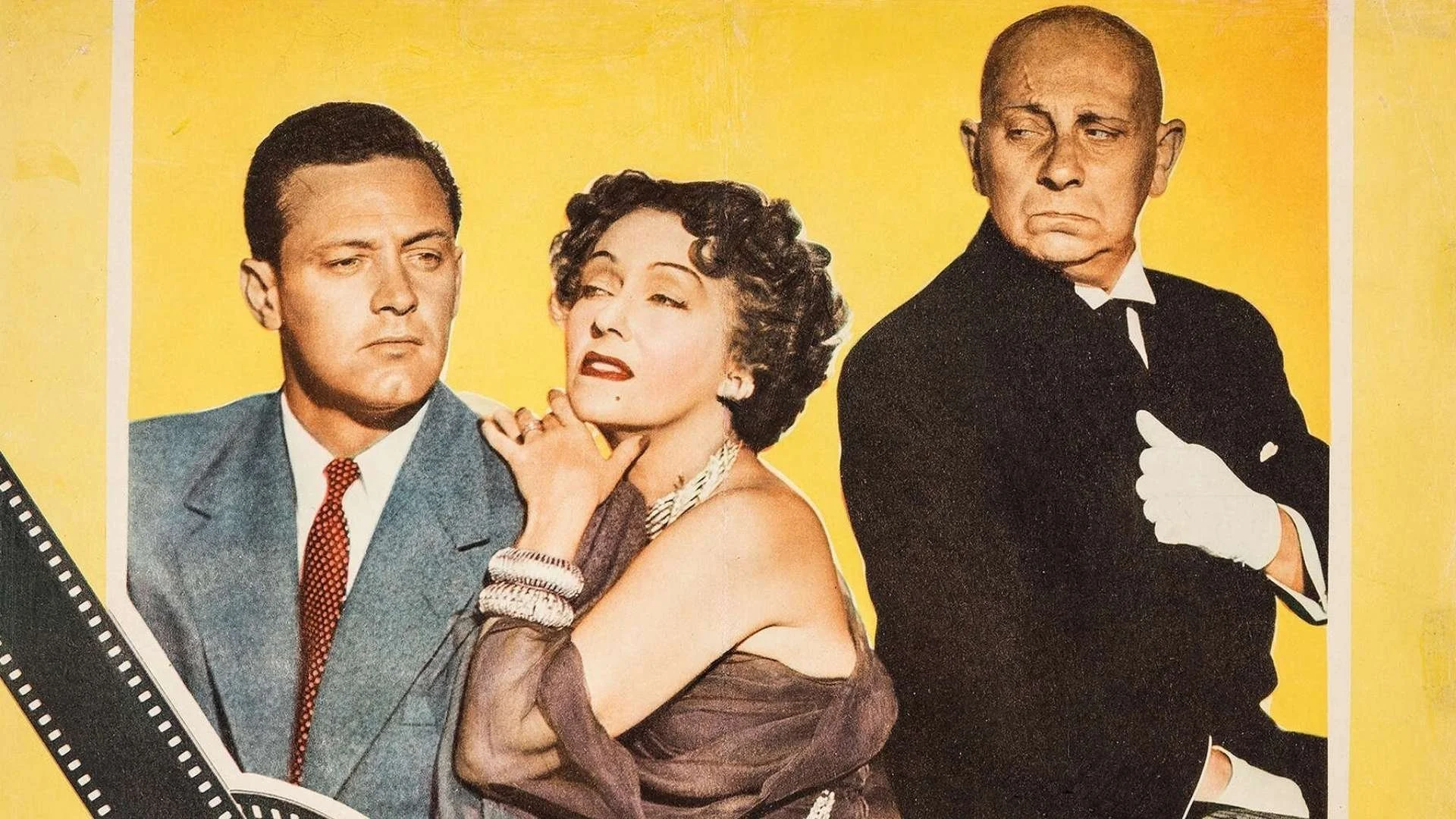
Sunset Boulevard (1950). Directed by Billy Wilder
“No one ever leaves a star. That’s what makes one a star.”
—Norma Desmond, Sunset Boulevard
If Holden Caulfield resists the future, Norma Desmond resists the present.
Sunset Boulevard is a film about Hollywood that is anything but glamorous. If the classic films of Hollywood’s golden era are represented by the golden stars lining the Hollywood Walk of Fame, then Sunset Boulevard is the shabby and dilapidated sidewalk across the street, tarnished by time and long discarded chewing gum, bolted into the surface.
Directed by the legendary Billy Wilder in 1950, the film shatters the myth of Hollywood as a dream factory. It’s a portrait of the ills, narcissism, and notoriety of the film industry seen through the fallen star. Isolated and delusional. Long past their prime. In two words, Norma Desmond.
Norma Desmond is a forgotten silent movie queen, her star having burned out “10,000 midnights ago.” She lives in exile in her decaying, gothic Hollywood mansion, screening her old films and obsessed with reclaiming her past fame. When struggling B-movie screenwriter Joe Gillis stumbles upon her home, Norma convinces him to write her a screenplay that she believes will mark her triumphant comeback. Desperate for money, and slightly self-loathing, Joe agrees, becoming her reluctant writer, lover, saviour, and live-in lackey—a boy-toy/hired hack. As their relationship grows more complicated, Joe attempts to escape the suffocating grip of Norma’s increasingly deranged and violent fantasies.
It’s a remarkable film for 1950, cutting close to the bone. Norma Desmond is played by Gloria Swanson, herself a real-life silent film star. However, unlike her character, Swanson had already accepted that Hollywood no longer wanted her. Nevertheless she was intrigued by the role when it was offered and delivers a magnificent performance, highly theatrical, holding Norma “at the edge of madness for most of the picture, before letting her slip over,” as one critic aptly noted. Likewise, William Holden is excellent as the writer half her age, who allows himself to be kept by Norma as part of his own subconscious defeat and subtle denial of his limited writing abilities.
Another key character to the story is Max, Norma’s loyal butler and unwavering support. He has devoted his life to Norma, and is a true believer. There’s a key revelation about Max later in the film that says a lot about Norma and why Joe, despite his protests, accepts her and finds himself unable to leave her. While he may rail against being trapped by Norma, on some level Joe seems content to be a prisoner, and perhaps even enjoy it. It’s something he shares deeply in common with Max.
Norma is only 50, so of course she’s far from the twilight of her years. Swanson in real-life was 53 when she made the film. The point in Sunset Boulevard though is that she has aged not in her body, but in her mind. She is fixated on the glory of her past, unable to move beyond her greatness from thirty years ago. When Joe first meets Norma, he says, “You used to be big.” To which she famously replies, “I am big. It’s the pictures that got small.” The character of Norma Desmond was modelled on the fate of several leading actresses of the silent era.
Sunset Boulevard won three Academy Awards and has endured because it sees right through the illusions of Hollywood, even if Norma herself cannot. The film’s final line, voted the 7th best movie quote of all time by the American Film Institute, captures the tragic nature of Norma and allows her to leave the stage with the dignity she always craved:
“There’s nothing else. Just us, and the cameras, and those wonderful people out there in the dark. All right, Mr. De Mille, I’m ready for my closeup.”
In both works, we see an intimate portrait of the contrasts between the youthful desire represented by Holden Caulfield and the denial of the present in Norma Desmond. Despite living at opposite ends of life, they are trapped by the same problem: neither can accept where they are.
As we read about the culture clashes between generations, whether it’s Gen Z, Millennials, Gen X, or Baby Boomers, it’s easy to lose sight of the shared experiences that transcend these labels. Millennials are now in their forties, and my own generation, Gen X—the children of the Baby Boomers—are now firmly in middle age. Some of the Baby Boomers have long since passed.
It’s not that every generation faces the exact same challenges. Young people today, for example, contend with the addictive nature of social media, which was thankfully absent in my youth, but there are common patterns across time. Every generation tends to be relatively poor and happy in youth, agitated in middle age, and happier later in life, a pattern known as the Happiness U-Curve, though this idea continues to be debated, and life is too nuanced to be neatly summarised by a letter of the alphabet.
As Holden Caulfield narrates in The Catcher in the Rye, “I’m just going through a phase right now. Everybody goes through phases and all, don’t they?”
We do.
The advantage, if we choose to see it, is that these phases aren’t lived in isolation. We move through them alongside others: people ahead of us, people behind us. This provides a commonality between generations. Different age groups are always learning from and influencing one another. We work across generations, we interact daily across generations, and we watch films and read books about different generations created by people from those same generations. If we’re lucky in life, we get to live across every generation. There is always something to learn from someone who is 20, 50, or 80 if we’re willing to look.
Holden and Norma fail to do that. They remain fixed in their own perspective, unable to step outside it. That is what traps them. It is their own tragic failure.
Every life moves forward. Not everyone goes with it.
Pass It On
If this idea was worth your time, it may be worth someone else’s.
Share this essay with a friend:
https://www.deeplifejourney.com/deep-life-reflections/october-18-2024
If you have a thought you’d like to share, please leave a comment below.
You can read all previous issues of Deep Life Reflections here.