
The Verdict on Redemption
Sidney Lumet, Paul Newman, and the redemptive power of reclaiming belief in yourself.
Deep Life Reflections | Essay 81 | James Gibb
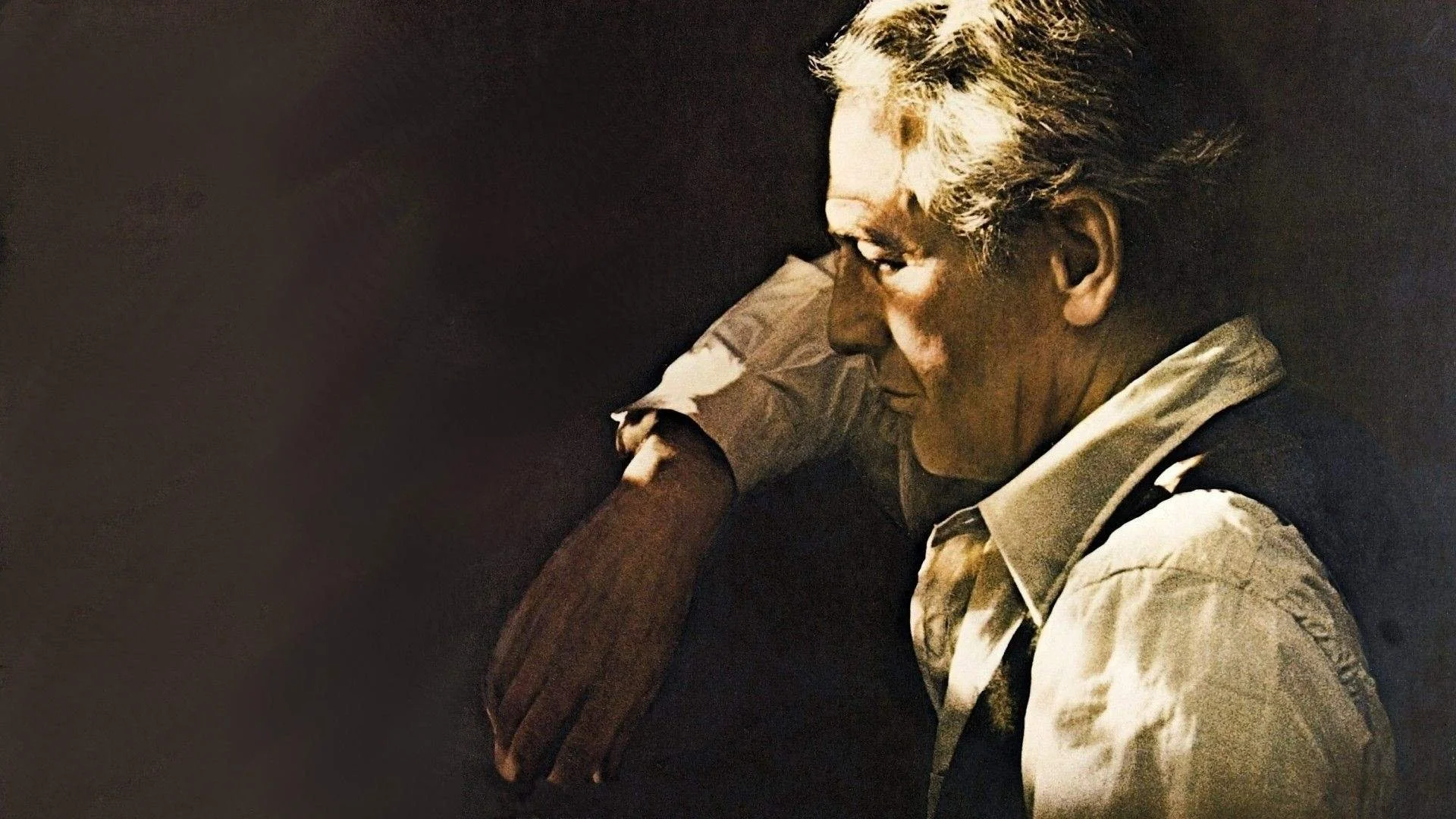
Redemption begins when we earn our way back through the choices that restore our faith in ourselves.
As a lover of film and its history, I’ve read many books over the years about cinema and the people who inhabit its glamorous and elusive world. Sidney Lumet, who passed away in 2011, is one of the all-time great directors, yet he’s not as widely known as Hitchcock, Scorsese, or Spielberg. With over 40 films and more than 50 Academy Award nominations to his name, Lumet’s work was often complex and emotional, yet rarely overly sentimental. In his 1995 memoir, Making Movies, Lumet shares a definitive guide to the art, craft, and business of film, revealing a lifetime of passion for cinema.
Much like the production of a movie, Lumet’s book takes the reader step by step through the creative process. From the initial script to a director’s vision, selecting the right actors, and the technical aspects of filmmaking—cinematography, art direction, sound—culminating in editing, production, and release. Few books on film pull back the curtain so comprehensively, making the inner workings of cinema accessible through Lumet’s straightforward language and fascinating anecdotes from his four decades in the industry.
Lumet worked with many Hollywood legends. Marlon Brando, Katharine Hepburn, Al Pacino, Faye Dunaway, Paul Newman, and Ingrid Bergman, to name a few. In his chapter on actors, Lumet writes, “I love actors. I love them because they’re brave. All good work requires self-revelation.”
One particularly memorable story involves Brando during the filming of The Fugitive Kind (1960). Brando struggled through 34 takes and two and a half hours to deliver a key line. Lumet recognised that Brando’s personal struggles at the time were connected to the difficulty with the line. He debated whether to say anything but ultimately decided not to, feeling it would violate Brando’s confidence. Later, Lumet confessed this to Brando, who smiled and said, “I’m glad you didn’t.” Lumet writes that this exchange reveals everything about actors and movie acting: the trust between actor and director, the personal stakes involved, and the dedication to the craft.
One of the best moments in the book comes when Lumet emphasises what he calls the all-encompassing question: “What is the movie about?” He goes on to distil the essence of his films in just a few words. The Anderson Tapes: “The machines are winning”; Serpico: “A portrait of a real rebel with a cause”; 12 Angry Men: “Listen.” Storytelling at its finest.
At its heart, Making Movies is about truth in storytelling. Lumet’s dedication to truth, in both life and art, mirrors the redemptive journey of many of his characters, who are flawed, struggling, but ultimately fighting to reveal something meaningful about themselves. Every film, every shot, is an attempt to make sense of the world’s imperfections and injustices, to explore the messy moral landscapes in which we all live.
One of those flawed characters seeking redemption is Frank Galvin. He appears in Lumet’s 1982 film, The Verdict.
For the role of Galvin, Lumet brought Paul Newman to the screen as the washed-up, alcoholic Boston lawyer seeking redemption through a last-ditch case that could restore his career and his self-respect. The Verdict earned five Academy Award nominations, including Best Picture, Best Director, Best Actor, and Best Screenplay. It’s an emotionally charged film, with a lot of depth. Newman is superb. I watched it for the first time recently while reading Making Movies.
Galvin is a man in such low standing, both in his own eyes and society’s, that we first meet him paying a few bucks to sneak into local funeral homes, pretending to know the deceased in a desperate bid to solicit malpractice cases from grieving families. From there, he heads to a bar to drink beer and play pinball in the middle of the day. This is a man at the end of the rope. Lumet reflects Galvin’s state of mind by creating a sombre mood and stripping Boston of any colour, all browns, beiges, and greys.
Frank’s luck seems to change when his long-suffering law partner hands him a slam-dunk case, a clear out-of-court settlement for a young woman left in a vegetative state after a prestigious doctor administered the wrong anaesthesia during childbirth. The hospital, run by the Archdiocese, wants to avoid publicity and offers a hefty settlement. Galvin is all set to accept until he visits the young woman in hospital and sees her terrible condition. Something flickers within him, anger that the doctor responsible for this was guilty of both incompetence and dishonesty. He rejects the settlement and takes the case to trial, despite facing the might of the Catholic Church and the city’s top defense attorney. In Galvin’s mind, bringing this case to trial serves two purposes: justice and reclaiming his self-respect.
The Verdict, with an excellent screenplay by David Mamet, is more of a character study than a courtroom thriller, though it certainly excels at that in the film’s final third. As critic Roger Ebert wrote, “The buried suspense in this movie is more about Galvin’s own life than about his latest case… Frank Galvin provides Newman with the occasion for one of his great performances… [He] gives us old, bone-tired, hung-over, trembling (and heroic) Frank Galvin, and we buy it lock, stock and shot glass.”
Frank’s closing summation to the jury, which was delivered in a single take by Newman, though he did an even better second one because of a hair on the camera in the first, feels more like a sermon to himself. His message is a sober one: redemption is a path we can walk only if we first believe in ourselves. After that, anything is possible, including justice.
Redemption is often seen as an individual’s anguished effort to confront their past, put right their wrongs, and rediscover their sense of meaning. Frank Galvin’s redemption is about reclaiming his belief in justice and his belief in himself. Both were at the bottom of a bottle when we first encountered him. His victory comes from pursuing the truth against a more resourceful and more potent opponent and in doing so, exposing systemic failures that had long been accepted by society. It is a deeply personal triumph for Galvin.
This idea of redemption through the pursuit of truth and craft resonates with Sidney Lumet’s philosophy in Making Movies. For Lumet, filmmaking was about telling stories that captured the real and the urgent. His films were often gritty New York dramas focused on the working class, social injustice, and the wretched abuse of power. His commitment to his craft was his way of seeing and engaging with the world, putting it on film with clarity and honesty. Telling a story that could both entertain and hold an important message.
As for redemption in our own lives, we are all in some way searching for it. For a way to reconcile who we are with who we hope to become. Maybe it’s in our relationships, where we’ve faltered and want to make amends. Or maybe it’s in our work, or as I prefer to call it, craft, where we labour to contribute something meaningful that aligns with our values, yet too often get dragged into daily digital distractions or feel overwhelmed by the sheer volume of tasks piling up on us like supersized bricks.
The towering redemptive arcs so often shown in the climax of two-hour movies don’t usually transfer so neatly to the comparatively glacial pace of real life. Here, redemption usually arrives in the more modest, everyday choices like when we decide to face a difficult truth, or when we push a little harder to do what’s right. In the effort to be better, to create better, we begin to find redemption from the doubt and fear that often hold us back.
So maybe redemption isn’t only about righting wrongs. It’s also about striving toward something bigger than ourselves. Whether it’s in our craft, our relationships, or the way we live our daily lives, redemption can lie in the ongoing effort to line up our actions with the ideals we aspire to. And in that pursuit, we rediscover who we are and what we are truly capable of.
The verdict that matters most is the one we earn through the work we choose to do.
Pass It On
If this idea was worth your time, it may be worth someone else’s.
Share this essay with a friend:
https://www.deeplifejourney.com/deep-life-reflections/october-4-2024
If you have a thought you’d like to share, please leave a comment below.
You can read all previous issues of Deep Life Reflections here.