
One Shot
How one of the twentieth century’s most infamous photographs depended on a reality that images today no longer need.
Deep Life Reflections: Essay 188 | October 23, 2026 | James Gibb
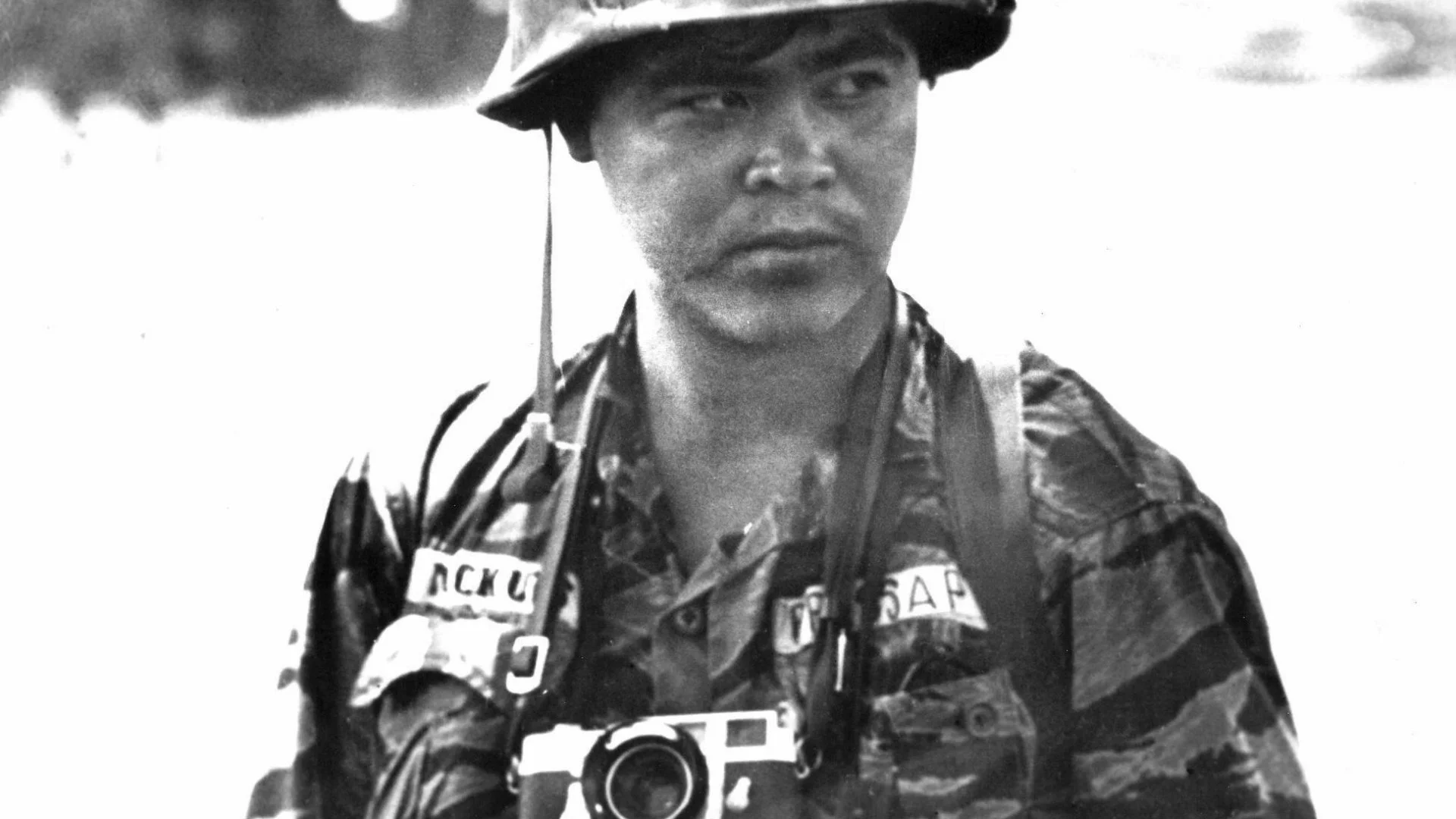
The crisis facing photography isn’t simply about whether an image has been manipulated, but whether the world it shows ever existed at all.
The photograph long credited to Nick Ut, The Terror of War, also known as Napalm Girl, remains one of the most infamous images of the twentieth century. It was taken on June 8, 1972, and shows a group of terrified children running from a South Vietnamese napalm strike that hit the village of Trang Bang instead of its intended target of nearby North Vietnamese troops. At the centre of the photograph is a 9-year-old girl, Phan Thi Kim Phuc.
The publication of the photo was initially delayed due to a debate about whether a photograph of a naked girl could be sent over the wire. Full frontal nudity of all ages and sexes was absolutely forbidden by the Associated Press (AP) in 1972. The argument was made that in this case an exception must be made. In the end, it was. The photo appeared in newspapers across the world in the following days. Ut received the Pulitzer Prize for the picture, as well as World Press Photo of the Year.
The photo became an enduring indictment of the effect of war on the innocent, not just in Vietnam but beyond. Ut, a 21-year-old Vietnamese photographer who worked for the AP and later became a US citizen, has spoken about the photograph, which many people credited for hastening the end of the war. Ut remains unsure about that. He is certain of only one thing: that it captured the absolute horrors of war. Ut may have been a photographer, but he was also a human being. After taking the photograph, he helped get Kim Phuc to a hospital, where doctors saved her life.
He later reflected, “If I don’t help here, if something happened and she died, I think I’d kill myself after that.”
Kim Phuc spent years undergoing medical treatment for her injuries. At one point the pain was so bad she considered suicide. She studied medicine as a young woman but in 1982 was taken from her university and used as a propaganda symbol by Vietnam’s communist government. Kim Phuc eventually moved to Canada where she became a citizen and later founded the Kim Foundation International, a nonprofit dedicated to helping child victims of war. She has since become a goodwill ambassador for UNESCO and a prominent advocate for peace and aid for those trapped in war-torn regions. While she initially despised the photograph, she now believes it has given her a purpose in life.

The Terror of War, Trảng Bàng, Vietnam, 8 June 1972. Associated Press. Long credited to Nick Ut; authorship now disputed.
More than fifty years later, the Napalm Girl photograph has once more returned to its controversial roots. A 2025 documentary called The Stringer investigated the photo and claimed it was not taken by Nick Ut but rather a Vietnamese photographer called Nguyen Thanh Nghe. Also at the centre of this controversy is the German photo-journalist Horst Faas, a two-time Pulitzer prize winner. Carl Robinson, a former AP photo editor in Saigon, alleges that Faas told him to change the credit for the photograph from a photo stringer (freelance photographer, Nguyen Thanh Nghe) to Nick Ut. According to Robinson, Faas felt guilty for the death of Ut’s older brother on an assignment Faas had given him. He wanted to make it up to him.
On the back of the documentary, World Press Photo—the Amsterdam-based independent non-profit organisation—ran its own investigation and concluded that based on a range of technical factors like location, distance, and the camera used on the day, “photographers Nguyen Thanh Nghe, or Huynh Cong Phuc [another freelance photographer who has since died] may have been better positioned to take the photograph than Nick Ut”. It then suspended attribution of the photo, stating that the authorship is “uncertain, with no conclusive evidence either way.” Ut has contested all of this, and he is backed up by Kim Phuc, one of the few surviving witnesses. She and Ut have become close over the years, bonded by the traumatic events of that day.
Joumana El Zein Khoury, executive director for World Press Photo, said, “We all agree there’s doubt. We’re not here to say, ‘This is right, this is wrong’, or to accuse Nick Ut of anything. We are just here to just put the facts as they are… What we’re making very clear in this specific case is the… importance of authorship, especially in terms of in today’s society.” AP, for its part, agrees that uncertainty remains but reaches a different conclusion. It says the existing Nick Ut credit should remain because there is insufficient definitive evidence to remove it. Both may dispute the original author, but the photograph itself remains undisputed.
While it seems there will now always be doubt over who took the photograph, its impact remains unambiguous. A single photo can make a difference in shaping history. Or at least, it could in 1972. There was a real girl, a real road, real napalm, and real burns. While most of the world saw that photo because of the pervasive reach of newspapers in daily life, and then in later decades, the archival power of the internet, today there is both a massive media fragmentation and an exponentially expanding field of AI generative art. We face a new ethical frontier.
With approximately 5.3 billion photos taken every day and a projected surge to about 6.8 billion by 2030, the prevalence of images is unparalleled. But that is only half the story. According to the latest data, more than 3 billion images a week are created across OpenAI, and more than 50 billion images have been created by Google’s Nano Banana models to date. If we take that number of 5.3 billion photos a day, the volume of OpenAI’s disclosed number of images is equivalent to about 8%. That’s around one generated image for every twelve photographs taken—a ratio that is only going to increase.
AI has clearly added another vast source of visual production, open to anyone with an internet connection. While of course it’s true that a photograph can mislead through how it’s framed, staged, or edited—and we can even debate the original author as in the case of Napalm Girl—a wholly generated photographic image presents an even greater challenge. It doesn’t need to have a corresponding world and context. No napalm cloud, no children running in terror, not even a war itself. Traditional manipulation of photography had to begin with an actual photograph of something. Generative imagery removes that particular concern, making image manipulation and creation more accessible and easier than ever.
Richard Nixon, President of the United States in 1972, questioned the validity of the photograph. He thought it might have been staged. When his aide H.R. Haldeman brought up the subject of the “napalm thing”, Nixon said, “I wonder if that was a fix”, alluding to the growing anti-war sentiment among the US public. “Could have been,” Haldeman replied, “because they got that picture of the little girl without any clothes.”
While Nixon questioned it—from the perspective of possible propaganda and an increasing level of paranoia that would later lead to Watergate—the rest of the world did not. That was then. But today the impact of a Napalm Girl moment is at risk of major dilution by fabricated or falsified content that bears little relation to reality, intentionally designed to misdirect and manipulate.
If it is seen at all.
Pass It On
If this idea was worth your time, it may be worth someone else’s.
Share this essay with a friend:
https://www.deeplifejourney.com/deep-life-reflections/one-shot
If you have a thought you’d like to share, please leave a comment below.
You can read all previous issues of Deep Life Reflections here.