
The After-Effect
My Dinner with André and how the best conversations change what we notice.
Deep Life Reflections | Essay 183 | James Gibb
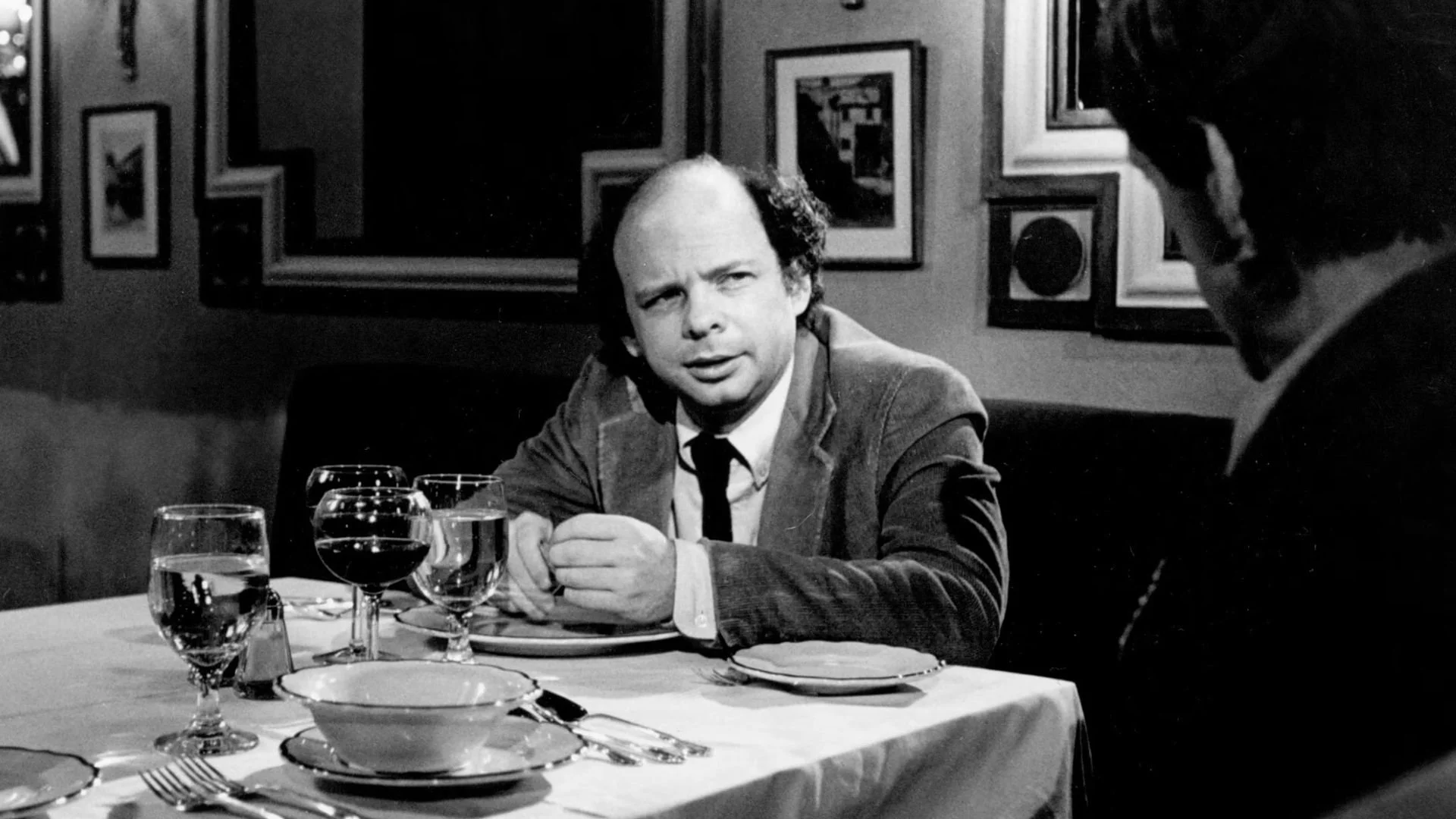
The value of a good conversation is simply that we leave seeing the world a little differently.
I caught up with my uncle Ian a few weeks ago in the Spanish coastal town of Mazarrón. We found a café overlooking the harbour and ordered some coffee. Ian is one of my mum’s younger twin brothers. He’s 73 now. Over the next three hours we spoke about the life and times of Winston Churchill, the rise and fall of Leicester City Football Club (which Ian’s father—my grandfather—played for in the 1930s and 40s), the importance of meaning in work, the ageing process, Franco and the Spanish Civil War, the social, economic and political ills of our time, helping people back into work (what Ian does), and the Glen Cinema Disaster of 1929, which killed 69 children in Paisley, Scotland. My grandfather’s brother, Archie, was one of them.
By the time we finished, the coffee count had grown to six.
Ian, like my mum, is interested in the world and what makes it turn. Every time we catch up, he has a story or a perspective I make a mental note of. There’s an after-effect.
Towards the end of our time, I recommended a film to Ian I’d watched a few days earlier, My Dinner with André.
It is hard to imagine a film like this being made today. It’s also hard to imagine a film like this being made in 1981 (when it was actually made), given how audacious it is in its concept. Two old friends meet for dinner in an upscale restaurant in New York. They talk. The film ends. It runs just shy of two hours. That’s the superficial summary, anyway. But many have cited the film as life-changing. Turns out, we are still interested in what people say. And André has a lot to say.
The two diners are figures from New York’s theatre world, but very different in temperament and outlook. Wallace Shawn (Wally) is the ‘My’ of the title, a balding, earnest, struggling playwright and actor. His dining partner is André Gregory, a charismatic, exceptionally articulate man and avant-garde theatre director. We learn the gifted André suddenly quit the scene five years ago and travelled the world. He has now returned, armed with extraordinary tales. If André is the searcher of new truths, Wally is simply happy to accept life as it is.
André is quite the conversationalist. Rich in his verse and oratory, his words conjure images that easily form in our minds. André is absolutely sincere in his stories. It’s clear he’s had some kind of transformative experience. Before, he was disillusioned with life and restless. Then he accepted an invitation to join an experimental theatre group in Poland, and this strange little tale of 40 other people with no common language, living in the woods, sleeping under the trees, and communicating only through gestures and glances is the first story André tells Wally. Others follow, including a monk in the Sahara who could support his entire bodyweight on his fingertips, a mathematician who claimed to see fauns, and his visit to Findhorn, an ecological and spiritual commune in northern Scotland. As an (important) aside, André is also the first American I’ve ever heard pronounce ‘Edinburgh’ correctly.
Wally listens, sometimes with a look of bemusement or incredulity on his face. But he’s listening. Wally’s a good listener. He needs to be, as André does the lion’s share of the talking. But André is also a good listener; he’s not just talking to Wally. In fact, both men demonstrate a beautiful ability to listen. One of the pleasures of the film—if you can accept the premise and go with it—is that we are also at the table with them. We, like Wally, are listening, and we are also reacting, albeit silently, in our own heads. The setting of the New York restaurant adds to this intimate and philosophical experience. It is elegant and warm, but also slightly out of time. We don’t see much of the other customers. There is a waiter, perhaps in his late 60s or 70s, with white hair. He is one of those waiters who seems to have been serving customers since time immemorial, impenetrable and correct. He brings them their food as they talk.
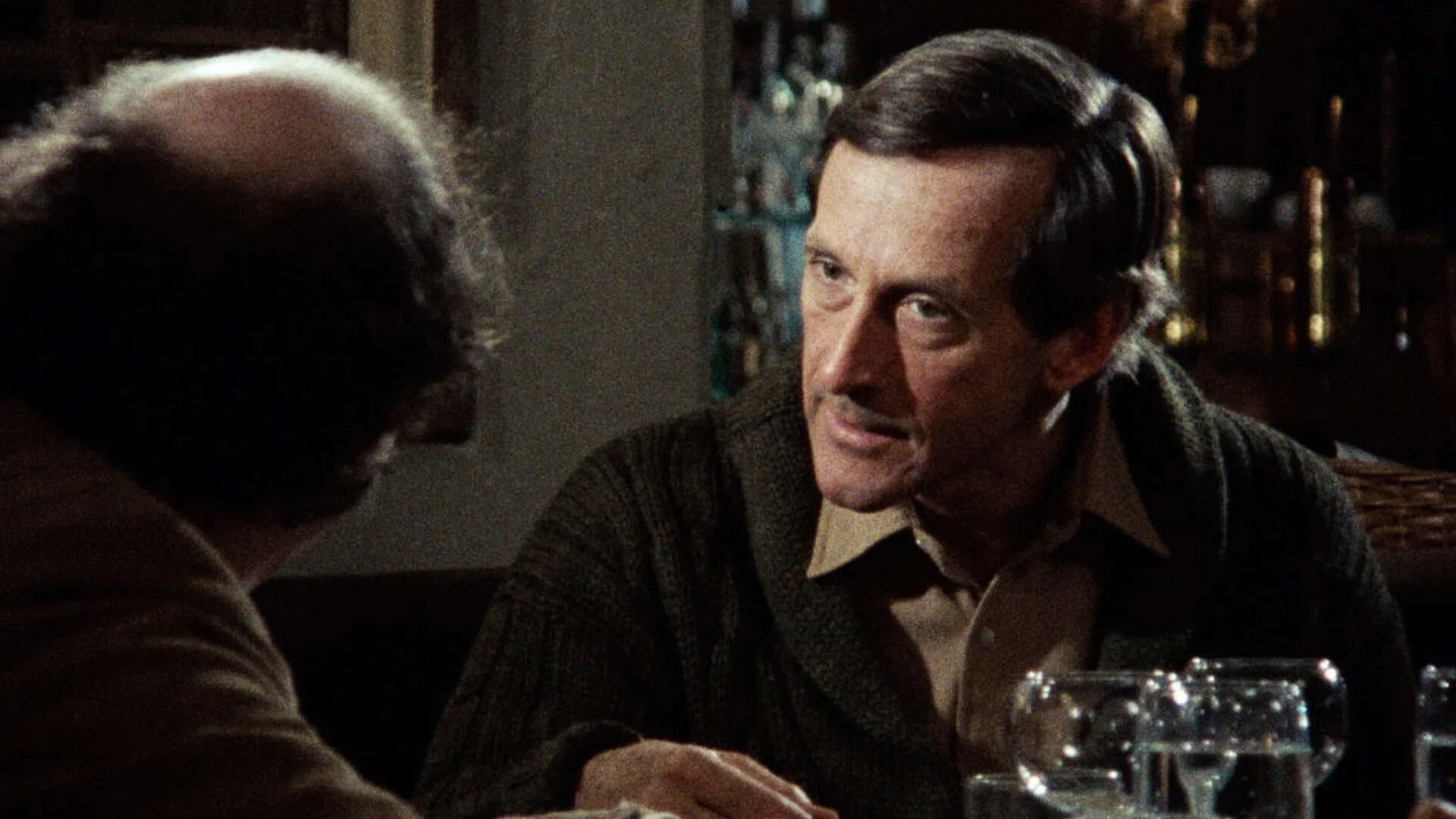
My Dinner with André (1981). Directed by Louis Malle, with Wallace Shawn and André Gregory playing fictionalised versions of themselves.
One of the reasons I believe the film has resonated with so many people is that the conversations taking place over dinner are the ones that have taken place for centuries: questions of life, and how to live it better. André’s collection of exotic, seductive experiences essentially leads him to his belief that modern existence has anaesthetised us. As a result, we live in a dream world of our own making. We are asleep. It’s here, in the latter part of the film (and the dinner) that Wally becomes less passive and more active in the conversation. He challenges André’s radical ideas about spiritual suffering, about being happy to sail into the unknown, into uncharted seas without a life jacket. And here, I think Wally represents us.
He gives a passionate defence of the simple and mundane. Wally tells André that he loves the routine of having the New York Times delivered to his door, his daily hot cup of coffee, having dinner with his girlfriend, Debbie, reading Charlton Heston’s autobiography. And his electric blanket. He is content with those, even as André tells him that feeling the cold reminds us that we are actually alive. To André, Wally’s search for sanctuary and warmth in his electric blanket lulls his mind and spirit into a “dangerous tranquillity” that might prevent him from truly feeling or growing.
But Wally isn’t buying it.
He fiercely defends his electric blanket, pointing out that New York winters are particularly uncompromising and daily life is already abrasive. He’s not looking to suffer more. Wally actively seeks comfort to protect himself from the daily beatdowns. He’s a pragmatist. He’s enjoying André’s company, but he’s not a convert. He can’t buy André’s vision. That vision might work for some: those souls who can drop everything and experiment in European forests for half a decade. But there are others who need to remain in the real world, under an electric blanket, finding their pleasures and comforts where they can.
André listens. This is where the discourse really holds its own. There’s no bitter argument or insults. Simply two points of view. There is some jousting, but with respect. A lot has been shared. Wally has listened seriously enough to disagree seriously. And then the dinner ends with these final words from André:
“People hold on to these images: ‘father’, ‘mother’, ‘husband’, ‘wife’ because they seem to provide some firm ground, but there’s no wife there. What does that mean, ‘a wife’, ‘a husband’, ‘a son’? A baby holds your hands and then suddenly there’s this huge man lifting you off the ground, and then he’s gone. Where’s that son?”
The film opens with Wally walking the cold and grimy streets of New York. He has errands to run. Bills to pay. We hear his inner monologue. “I’ve lived in this city all my life. I grew up on the Upper East Side and when I was ten years old I was rich, I was an aristocrat, riding around in taxis, surrounded by comfort, and all I thought about was art and music. Now I’m thirty-six and all I think about is money.”
As Wally returns home after his dinner, he treats himself to a taxi. André’s words are still in his head. As he stares out the cab window at the New York streets where he has spent his life, he sees the connectedness of the streets and the buildings. He sees the place he bought a suit with his father. And there’s the spot where he enjoyed an ice-cream soda after school. The preciousness and finiteness of life there on the streets all around him, brought back into the light following his dinner with André.
Pass It On
If this idea was worth your time, it may be worth someone else’s.
Share this essay with a friend:
https://www.deeplifejourney.com/deep-life-reflections/september-18-2026
If you have a thought you’d like to share, please leave a comment below.
You can read all previous issues of Deep Life Reflections here.