
How two characters from Paul Thomas Anderson’s Magnolia tell us much about our strained relationship with regret.
Deep Life Reflections: Essay 193 | November 27, 2026 | James Gibb
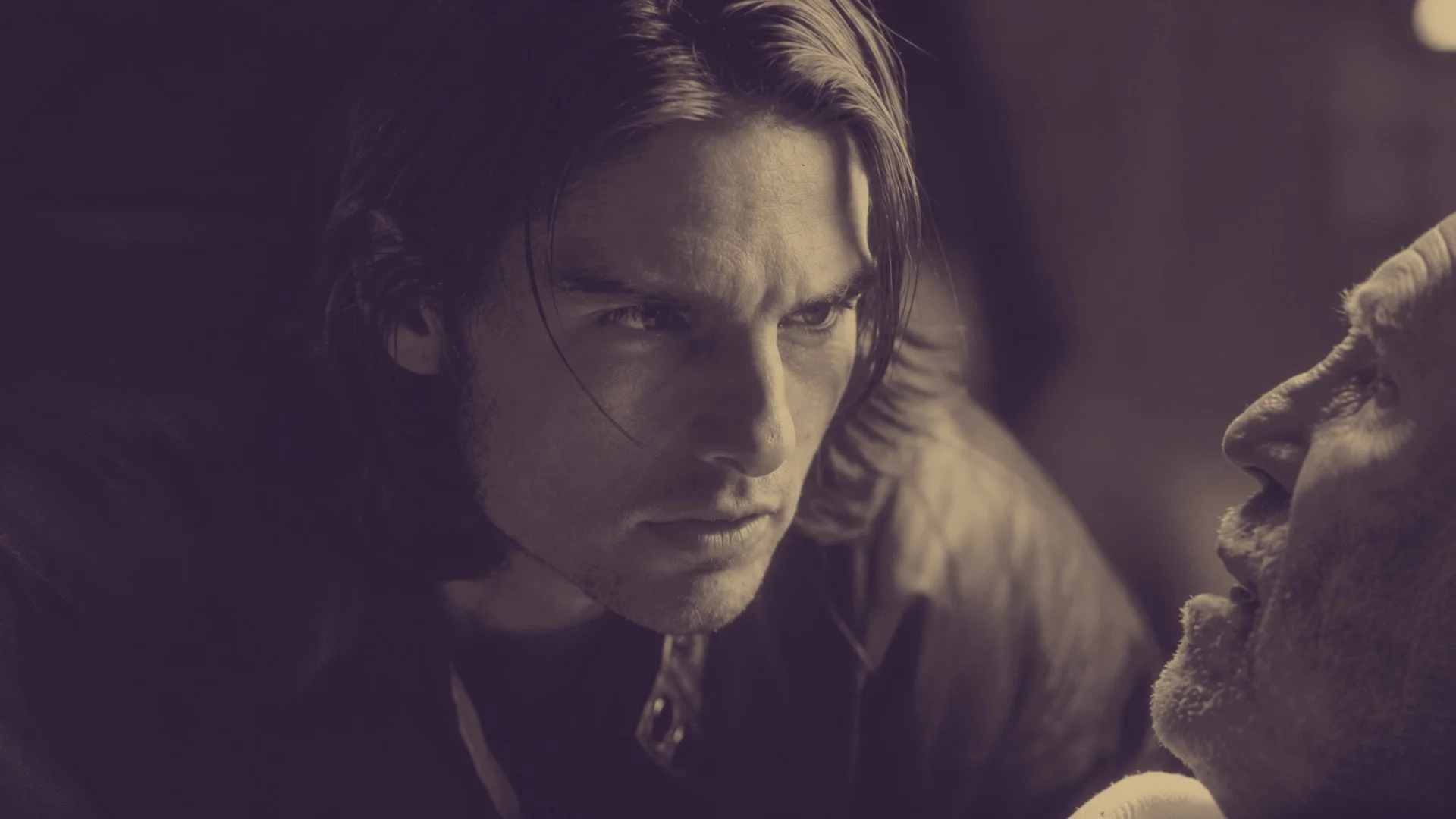
Regret need not be something we seek to remove from our lives.
There is a scene in Paul Thomas Anderson’s 1999 film, Magnolia, where a dying man, Earl, has come to realise his terrible behaviour towards those he loves. Earlier in life, he abandoned his dying wife and teenage son. Now old and bedridden, the only thing that seems more painful than this memory is the acceptance that he cannot undo what he has done. He tells his nurse with the last bit of strength he has, “Don’t ever let anyone ever say to you you shouldn’t regret anything. Don’t do that. Don’t. You regret what you want. Use that. Use that. Use that regret for anything, any way you want.” This deathbed monologue on the past and regret is among the most important in the film.
Earl’s words, penned by the hand of Anderson, feel countercultural, especially today. We live in a time when we are regularly encouraged to move on and forgive ourselves, to live without regrets and leave the past behind. In Magnolia, however, there is the suggestion that regret can have a legitimate and valuable place in a person’s life. We may not always find a way to ‘use’ our regrets—much depends on the individual and the circumstances—but that doesn’t mean we can’t gain something in being willing to examine them. Examining them might not heal us or offer a road to redemption but might provide another page in our moral understanding of the world; perhaps a page that was missing when the original decision was made. In the case of Earl, his tragedy is that much of his understanding came far too late. There can be a cost to acquiring wisdom late in life.
Magnolia is a film full of people suffering from what others have done to them—usually a parent upon a child—but also people suffering from what they themselves have done. The film is a sprawling story set over one eventful day in the San Fernando Valley. It follows nine seemingly unconnected and disparate characters as they go about their lives. They are linked by unhappiness, damage, loneliness, and the residual force of what has already happened to them.
That is true in the case of Frank T.J. Mackey, played by Tom Cruise in perhaps his finest onscreen performance. Frank is a manic and misogynistic self-help guru—an early prototype of the manosphere that would emerge more dangerously a quarter of a century later. We meet him instructing a roomful of male disciples to “seduce and conquer” in the sort of cheap event where one gets a free pen and greasy nachos for lunch. Frank is all aggression and bravado on the surface, but it’s a front, a mask to protect the grievous wounds underneath. When a female journalist sees through the performance and probes for the truth of his damaged past, Frank’s mask slips. He is slowly reduced to silence, and a seething hatred: for his father, for the world, and maybe even for himself.
Frank’s father is Earl. And Frank is the living consequence of Earl’s actions, decades later. Anderson allows us to recognise the sincerity of Earl’s remorse without diminishing the legitimacy of Frank’s hatred. Frank was just fourteen years old when he was left to nurse his dying mother alone before she succumbed to cancer. Earl may now have undergone a moral awakening, but it does nothing to give Frank back his childhood or erase his scars. Anderson eventually brings the incensed Frank to Earl’s deathbed in a scene of extraordinary emotional force. Frank unleashes years of pent-up rage, hate, trauma, fear, vulnerability, loss. Earl lies silent throughout, his medication too potent for consciousness. It becomes a one-way unburdening, perhaps the closest these two men will ever come to reconciliation.
A life without regret is impossible unless you happen to be born with the wisdom of a Greek or Roman philosopher from day one, or if you possess an extraordinary capacity for self-deception. I am certainly not the former, and I would hope not the latter. But in any case, regret is fundamental to being human. Regret sheds light on our values and what we hold as most important in our lives.
There is also an important distinction: we can regret something we did or something we didn’t do. Regrets of action and regrets of inaction have a different impact on our imagination. When we regret something we did, we are usually aware of at least some of the consequences. If we betrayed someone’s trust or made a poor decision, there is something tangible against which to measure our regret. By contrast, when we regret something we didn’t do, we move to the intangible, an imagined alternative life. Regrets of this kind tend to have a long shelf life. This can be dangerous territory. We can create a utopia out of the relationship we passed up or the country we never moved to. The musical instrument that remained in its case gathering dust. Not all regrets are reliable barometers of our past.
Whatever we feel we did or didn’t do in life, our time to act upon our regrets is finite. The character of Earl is representative of the extreme end of that reality. I turn 51 in two days, and naturally a birthday, especially one well into the second half of life, offers an opportunity to examine our regrets while there is still time to do something with them. They can tell us a great deal about what we hold most dear. But we should be wary of the generosity of our imagination when it comes to those alternative lives we never lived.
And had we lived those other lives, might we now regret not having lived this one?
Pass It On
If this idea was worth your time, it may be worth someone else’s.
Share this essay with a friend:
https://www.deeplifejourney.com/deep-life-reflections/this-is-something-that-happens
If you have a thought you’d like to share, please leave a comment below.
You can read all previous issues of Deep Life Reflections here.