
Why suspense isn’t just for the movies.
Deep Life Reflections: Essay 192 | November 20, 2026 | James Gibb
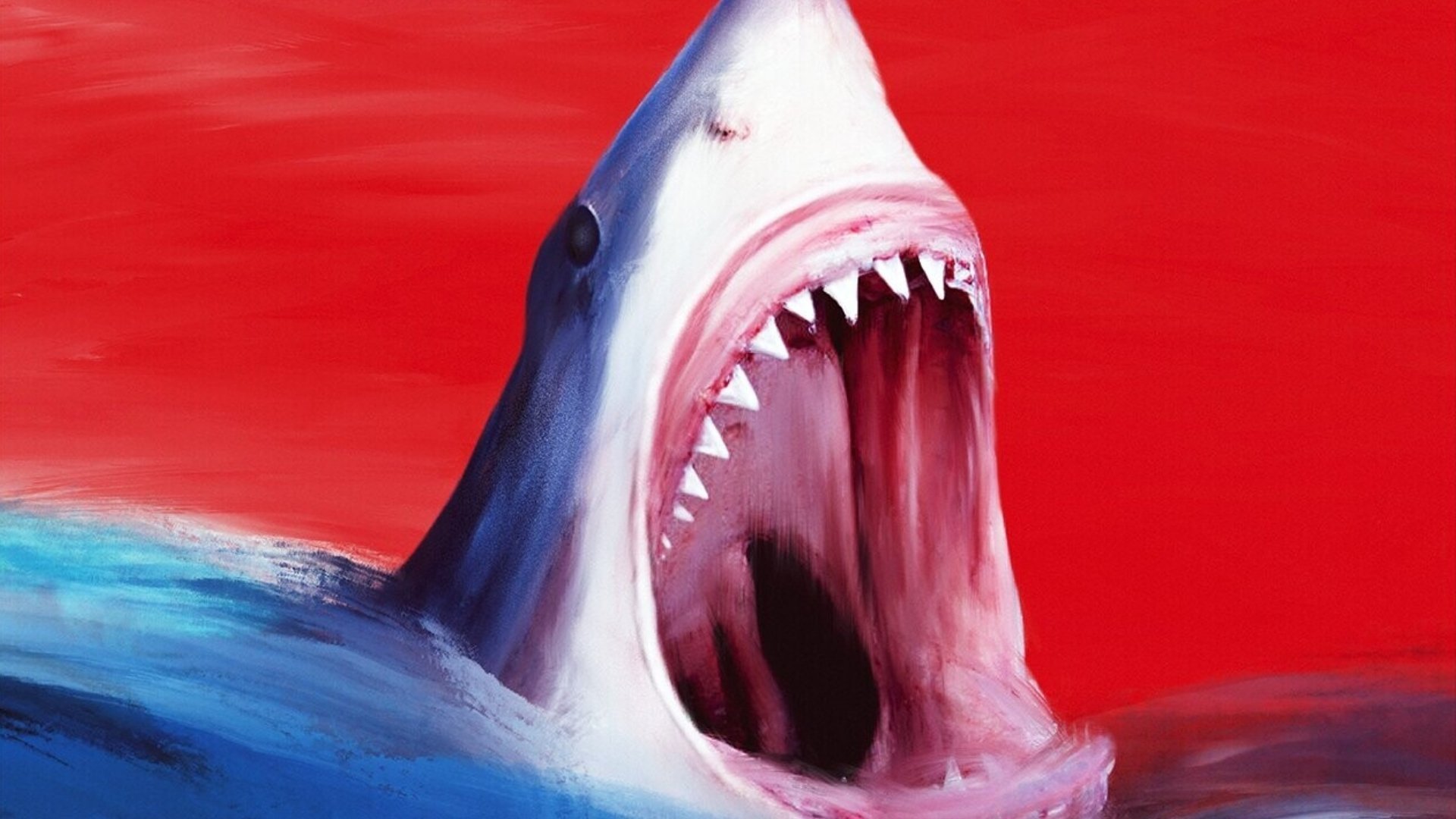
The question we wrestle with most is not why we are here, but what happens next.
“The suspense is terrible. I hope it will last.”
—The Importance of Being Earnest, Oscar Wilde.
Most days, we are not walking around asking why we exist. That question is best left to those well-practised in such matters, such as your average philosopher or 3am soul searcher. We are instead waiting for something. That might be a result, a reply, a decision, or a diagnosis. Life may contain all the noble questions that have gripped philosophers for more than two millennia, but on an ordinary Wednesday the question that takes up the most mental space is often much simpler: what happens next?
The uncertainties in the everyday plot of life create suspense. And suspense is really the uncomfortable gap between now and knowing. That gap is like the proverbial piece of string: it might be a few seconds, it might be many months. But whatever the length, we feel the discomfort because we have an inherent urge to know what the future has in store for us. From the pause before a doctor reveals your scan results to that most modern apparatus of suspense, “someone is typing…” when you’re waiting for a do-or-die reply to your last text message. Even the weather, that most mundane of conversations, can be suspenseful—just ask anyone who lives in a flood or tornado zone. Whether minor or major, each of these uncertainties produces variations of the same feeling: that for a short period, the future has become unusually important and we can’t get to it quickly enough. Much may have changed in the human experience over two million years, but one thing that hasn’t is our ability to remain absolutely uncertain as to what happens next.
Suspense matters as much in stories as it does in life. And here it gets interesting because knowing how something ends doesn’t necessarily remove the suspense of getting there. How many times have you watched, read, or spent time with something knowing how it ends, but jumped aboard for the journey anyway? The story of the Titanic is perhaps one of the best modern examples of this phenomenon. Everybody knows the ship sank and everybody knows it sank because it slammed into an iceberg. We know many people died and how the survivors were rescued. We even know the ship itself is presently sitting at the bottom of the Atlantic Ocean. By all rights, there should be no suspense left—we know how it ends. Yet we still watch James Cameron’s 1997 film, read articles and books about it, revisit all the mishaps and missed opportunities, and find ourselves mentally willing a different ending. We remain invested in the suspense of going from plain sailing to catastrophic maritime disaster.
Much of that suspense comes from our fascination with another very particular human trait: hubris—and its moral consequences. The story of the Titanic is a story of decisions that now look loaded with arrogance, overconfidence, and misplaced faith in technology and speed. It’s even in the name. Titanic was named after the Titans, those mighty figures of Greek mythology who symbolised strength and authority. Its owners, the British shipping company White Star Line, wanted to build the largest and most luxurious ship ever seen. And if that meant an extra funnel to give the ship a more imposing and symmetrical appearance, so be it. And so the ship’s fourth funnel became just that—a largely decorative addition with little apparent practical value. Survivors later recounted seeing it split and collapse during the sinking.
But the most famous legacy of the Titanic is the misplaced confidence of its builders, who touted the Titanic as “unsinkable” due to its advanced design. On the day of the tragedy, April 14, 1912, a lifeboat drill was scheduled and then cancelled by Captain Edward Smith. The reason for the cancellation remains unknown, but viewed in light of what happened, it becomes a further detail in the mythology of overconfidence surrounding the ship. A few hours later, over 1,500 lives were lost as the unthinkable happened and the Titanic succumbed on its first and only ocean voyage.
Even though we know exactly what happens, we remain drawn to the suspense of the Titanic because of the consequences, the what ifs, and the human tragedy. All the information is there for us to inspect and scrutinise, every inch of the ship and its birth, life, and death. By contrast, sometimes a filmmaker does the very opposite: they know instinctively that suspense grows from withholding information. One of the best examples is Steven Spielberg’s approach to Jaws in 1975. When a great white shark terrorises the residents of a small Cape Cod town—the fictional Amity Island—it falls to three men to hunt down the shark at sea. When audiences first watched the film in theatres, they knew there was a shark, but Spielberg didn’t let them see it. And it changed cinema.
Suspense is central to the entire film, thanks to Spielberg’s decision not to reveal the shark until much later. It plays into our primal fear of the unseen, knowing that something menacing is out there, watching and stalking. The music of John Williams taps into this primal fear with perhaps the greatest two-note movie score in history. Spielberg himself said the film would only have been half as successful without Williams’ score. The suspense peaks when the unlikely trio climb aboard their small vessel, the Orca, in search of the shark. Each man has his own reason for being there: Brody, the chief of police, a man afraid of the water but determined to do his duty; Quint, the shark-hunter who has already lived through one nightmare at sea and will never put on a life jacket again; and Hooper, the young and wealthy marine biologist, facing a danger he doesn’t yet fully understand with hi-tech gadgets and a boatload of confidence.
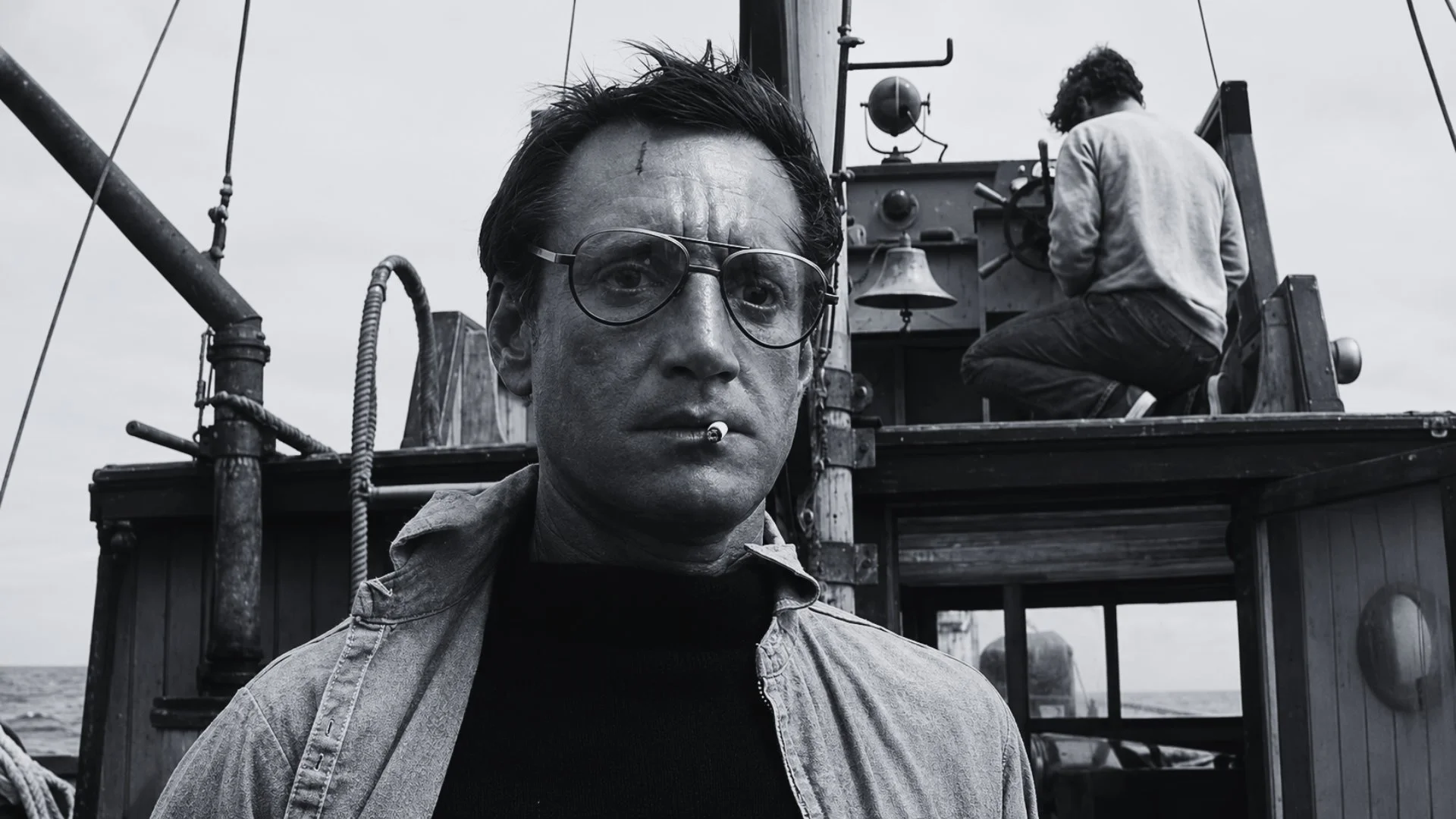
As they bicker and bond, the tension continues to build as they venture further out to sea. One of the film’s most suspenseful scenes has nothing to do with the shark. It’s a story told late around the dinner table—Quint’s dark retelling of the fate of the USS Indianapolis. In July 1945 the ship delivered the world’s first atomic bomb, to be used on Hiroshima. On its return journey it was torpedoed by the Japanese Navy, sending 890 men into the water in twelve minutes. Stranded in the open sea with almost no food or water, they faced exposure and dehydration—and shark attacks. Only 316 men survived. Quint’s description of the shark, “he’s got lifeless eyes. Black eyes. Like a doll’s eyes,” sounds like the words of a condemned man approaching his reckoning. He doesn’t know what happens next, but I suspect there’s a part of him that knows it’s his final hunt.
Meanwhile, Brody eventually overcomes his fear of the water and does what needs to be done. His fear of the water and his duty to protect thrash against each other, while the shark is driven by something much more pure and elemental. And like the shark, we too keep coming back, drawn by the faint thrashing of limbs in the water and the scent of the next reveal.
This desire for the reveal in our everyday lives keeps us on edge and keeps us coming back. We desperately want to know what happens next—to stride across the gap from now to knowing. Those who write stories understand this need instinctively, and know how to use it to pull us through fear, hope, dread, anticipation, exhilaration, and everything in between. They know when to reveal.
And when we already know what happens?
There may be a reason we revisit so many things where we already know how they end. For there remains that impossible human impulse: perhaps this time it will be different.
Pass It On
If this idea was worth your time, it may be worth someone else’s.
Share this essay with a friend:
https://www.deeplifejourney.com/deep-life-reflections/what-happens-next
If you have a thought you’d like to share, please leave a comment below.
You can read all previous issues of Deep Life Reflections here.