
The Second Brain
Notes on Knowledge
Deep Life Notes | Knowledge
Our brains are great at having ideas, but not so good at storing them. A second brain gives those ideas somewhere to live.
In the early 1990s, I enjoyed playing a popular computer game called SimCity. The aim of the game is to build a city from a few acres of empty green land and a small budget. It might not sound that exciting, especially compared with the immersive games of today, but there was something strangely satisfying about building a city from nothing. Watching it grow and connect to something bigger.
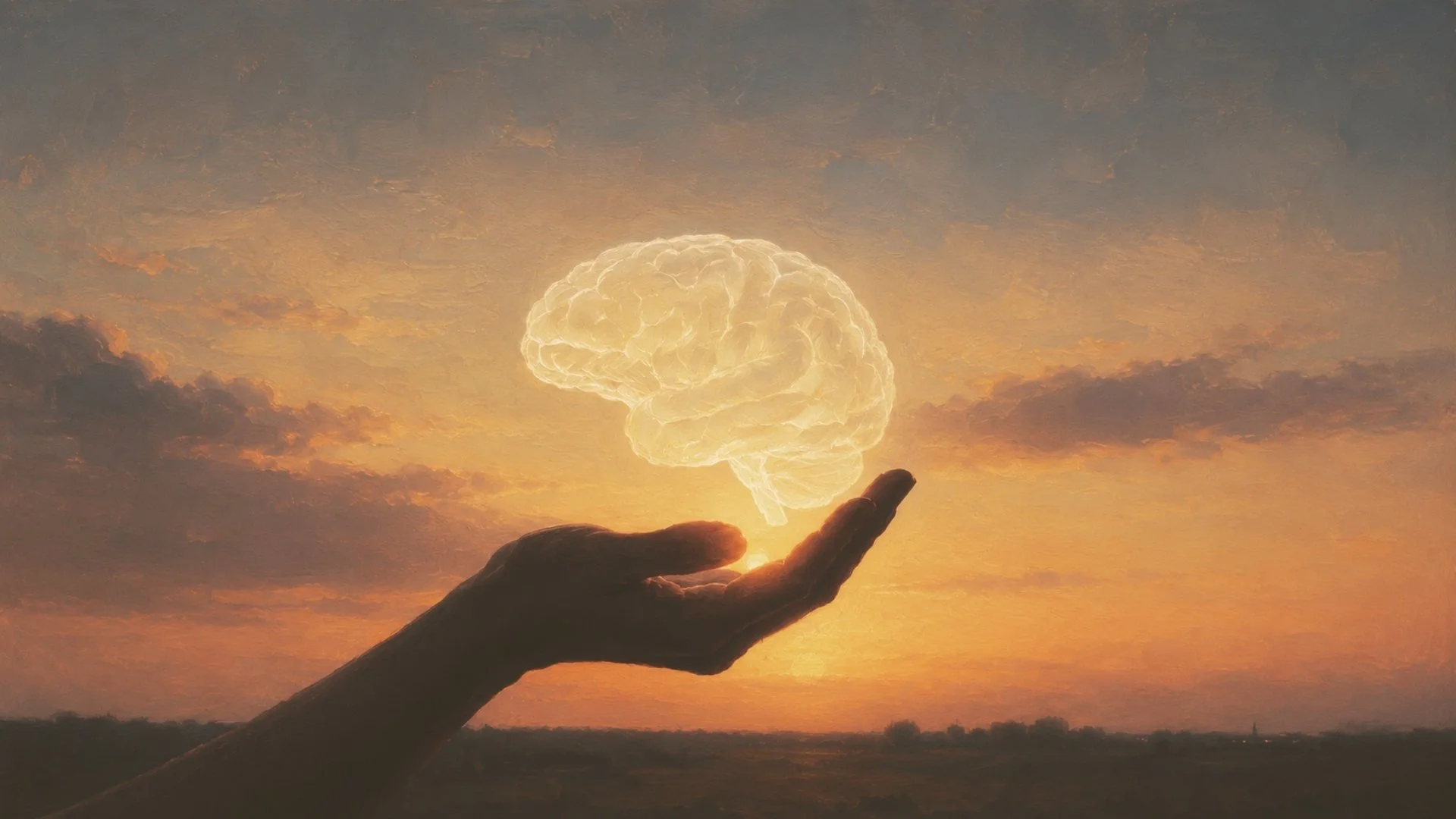
I thought of SimCity when I began building a ‘second brain’ last year. You might ask what’s wrong with my first brain. Well, fortunately nothing. It’s served me well so far. The brain is a phenomenal piece of human architecture, but it’s not perfect.
Brains are great for having ideas, but not so good at storing them. The cognitive psychologist George A. Miller put forward the seminal idea in 1956 that most adults can only store between 5 and 9 items in their short-term memory. The principle still holds.
How many great ideas have you forgotten?
How many insights from books have you admired and then lost?
How much good advice have you received but can’t remember?
If those questions (and your answers) strike a chord, the idea of a second brain may be worth exploring. A place where ideas, notes, insights, and useful scribblings can be kept, connected, and returned to. But first, the obvious question you’re likely asking:
Just what is a second brain?
A second brain explained
A second brain is a personal knowledge system held digitally. Think of it as a modern upgrade on the paper filing cabinet, which sat in millions of homes and offices in the twentieth century. These cabinets held and organised entire personal and professional lives. They still do in some homes and offices.
In a digital personal knowledge system, information can also be searched, tagged, linked, and connected. This helps us see patterns in our thinking, improves our understanding, and generates new ideas. Something the paper filing cabinet never allowed.
Losing our ideas and drowning in unmanageable personal data
We know the brain isn’t great at storing short-term information. We often lose the ideas and insights our brain can generate every day if we don’t record them. That means useful thoughts can disappear before they have the chance to become anything more.
Then there is the genuine challenge of how to organise all our personal information, most of which exists in digital form today. Our digital lives have grown unwieldy, with thousands of photos, screenshots, notes, text messages, and bookmarked tabs scattered across multiple devices and accounts. It feels like it would take a decade just to organise them.
There are existing organisational tools that help, such as Google Photos, iOS Notes and Evernote, but a second brain system offers a more comprehensive and structured solution for those inclined and willing to put in the effort.
A second brain isn’t about storing everything. Instead, it’s about being selective. I started with the things that interest me most in my personal and professional life. In my second brain, I save and organise information on subjects like running technique, insights from the books I’ve read, and my personal and professional goals. They are often linked.
Many of us are trying to learn continuously: through books, articles, podcasts, conversations, films, work, travel, and experience. Without some kind of system, much of that learning passes through us and disappears.
Keeping ideas for later
Your captured information is knowledge you may use now or in the future. We never know how the insights we capture today might be important in the future. This is something the author and founder of the Unmistakable Creative podcast, Srini Rao, stresses, “Our greatest work comes from using a compass, not a map.”
This is the real value of the second brain—using our stored and acquired knowledge and insights to create. Now or in the future. This might be useful to the wider world, your local community, family and friends, or just yourself.
As an example, this series of Deep Life Notes developed from my second brain. As I reviewed my personalised notes from various books, articles, and my own experiences, I saw themes and ideas for living more deliberately.
Perhaps your second brain helps you launch a business venture, or develop insights that can help solve real-world problems, or further develop your craft in a skill important to you. Or even just a place to record your thoughts and memories for your children and grandchildren. A treasure trove of your life.
Building a place for your knowledge
Building your second brain starts by choosing your workspace tool. I use Notion, which works well for how I think and write. Other tools may suit different people better. The tool matters less than the habit of giving important ideas somewhere reliable to live.
To organise the information in your chosen tool, we can turn to the excellent work of Tiago Forte and his PARA method. In this organisational system, Forte suggests we only use four category folders: Projects, Areas, Resources and Archives. These four categories are designed to cover most types of information we encounter in our professional and personal lives. More details on his PARA method are available online. I’ve found his system really effective and I’ve been using it for years now.
Piece by piece
If the idea of a second brain resonates, it doesn’t need to begin as a blueprint for the Empire State Building. It can begin with a few notes, a few saved ideas, and a small amount of regular attention.
Building a second brain takes time. It’s just like the SimCity computer game. You build piece by piece, watching how it connects. Think of it as an ongoing life project, building something of substance. It may help you notice patterns, return to forgotten ideas, and connect thoughts that might otherwise have remained separate.
In our attention-sapped times, there is something valuable and even hobbyistic about building a place that gathers our thoughts, ideas, tabs, and notes. Even if we’re not entirely sure why.
Not everything needs to have a purpose at first and not everything needs to vanish.
Two brains may be better than one after all.
Pass It On
If this note was worth your time, it may be worth someone else’s.
Share it with a friend, or read more Deep Life Notes here.