
The Vanishing
Stefan Zweig, Chess Story, The Grand Budapest Hotel, and a lost Europe.
Deep Life Reflections | Essay 155 | James Gibb
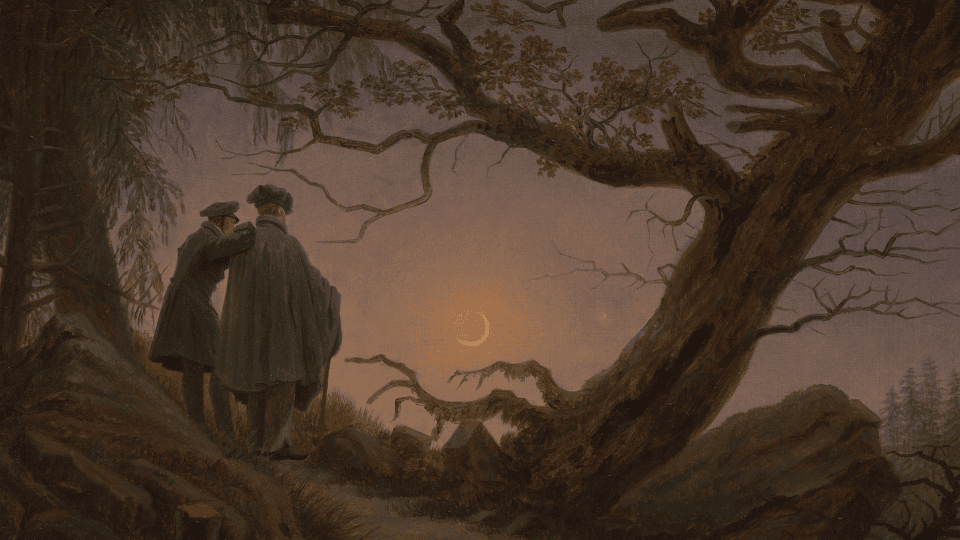
When the world we know disappears, the mind constructs its own order.
Stefan Zweig was once the world’s most translated author, before fading into obscurity in the English-speaking world. During the Second World War, he wrote a novella about chess. History has a way of returning us to the past.
“The game of chess is a lake in which a mosquito can bathe and an elephant can drown.”
— Indian proverb
I played chess at school. I remember my parents giving me a gift of a Greek chessboard with hand-carved figures painted either gold or a dull silver. I always chose gold. They looked more resplendent and better equipped for battle. The colour however—as I quickly realised—made little difference to the outcome. To be clear, it made no difference at all.
A good friend of mine recently recommended a 1942 novella called Chess Story (1942), also known as either The Royal Game or simply Chess, by the Austrian author, Stefan Zweig. I read it one afternoon this week in just two sittings. It might be one of the best short stories I’ve read.
Chess Story takes place on a ship traveling from New York to Buenos Aires. The unnamed narrator is a passenger and is delighted to learn that no less than the World Chess Champion, Mirko Czentovic, is on board. A prodigy yet cold and arrogant, Czentovic possesses little social or intellectual curiosity beyond his phenomenal mastery of chess.
The narrator, along with a few chess-loving passengers, manages to buy a game against the champion at an exorbitant price. Playing as a group, they are quickly and easily defeated. They pay for a second game and appear headed for the same outcome when a voice from behind them begins guiding their moves. Miraculously, the game ends in a draw. We learn this voice belongs to a man called Dr. B. And it is his remarkable story we now follow.
Dr. B is a former Austrian lawyer for the Habsburg monarchy, imprisoned by the Gestapo during the Nazi occupation and held in complete isolation. Deprived of books, conversation, or any kind of mental stimulation, his mind becomes both his prison and his only companion. I will not spoil the story except to say Zweig explores how a disciplined intellect can endure extreme pressure, but also how that same discipline can push a person almost beyond sanity. Zweig’s novella is about mental endurance and control of the mind, with that control ebbing back and forth like a rudderless ship.
Zweig wrote Chess Story in 1942, during his exile in Brazil. He was heavily influenced by the collapse of the cultured, cosmopolitan Europe he loved. (We will explore that theme further in this week’s film selection shortly.) Dr. B represents the refined intellectual world. The chessboard becomes his refuge of order and logic, although it too is slipping away like a lost world. We see what happens to the human mind when civilisation gives way to brutality.
In 1942, not long after Chess Story was published, Zweig and his wife were found dead in bed in an apparent double suicide. World War II was still raging, its outcome still very much in the balance. He left a suicide note:
“Before parting from life of my own free will and in my right mind I am impelled to fulfill a last obligation: to give heartfelt thanks to this wonderful land of Brazil which afforded me and my work such kind and hospitable repose. My love for the country increased from day to day, and nowhere else would I have preferred to build up a new existence, the world of my own language having disappeared for me and my spiritual home, Europe, having destroyed itself …
… I salute all my friends! May it be granted them to see the dawn after the long night! I, all too impatient, go on before.”
From his note, we might infer Zweig had reached a point where he felt there was nothing left but to set the pieces aside and think of a world that had already slipped away from him. No gold nor dull silver.
If Zweig watched the collapse of that world, filmmaker Wes Anderson attempted to restore it. While browsing the shelves of a bookshop in Paris many decades after Zweig’s death, Anderson found a novel he wrote in 1939 called Beware of Pity. He became hooked on Zweig’s writing. When in 2014 Anderson made what I believe is his best film, The Grand Budapest Hotel (winner of four Academy Awards and nominated for a further five), he was quick to acknowledge the influence of Zweig. “It’s basically plagiarism,” Anderson joked at a press conference promoting the film.
The film, which pays credit to Zweig’s writings in the closing credits, is a homage to the writer and the themes from his life and works, especially his refined vision of Europe before the destruction of the Second World War and the dark stain of National Socialism.
The Grand Budapest Hotel is like the famous Russian Matryoshka doll—a story within a story within a story. Except unlike the wooden dolls, which decrease in size with every reveal, the film’s themes become grander and more tragic the deeper we go. Anderson has a unique style as a filmmaker. Witty, ironic, and definitely quirky, with a set of favourite actors he often returns to.
The Russian-doll narrative begins in the present day with a young girl visiting a monument to a famous author. We soon learn that this author, many years earlier, had travelled to the once-grand Grand Budapest Hotel in the fictional Republic of Zubrowka. There he meets the hotel’s owner, the reserved and reflective Zero Moustafa (F. Murray Abraham), who agrees to share the story of how he came to possess the hotel.
We are transported back to the hotel’s golden years in the 1930s, when it was run by the legendary concierge, Monsieur Gustave (Ralph Fiennes). A man of impeccable manners and gigolo charm, M. Gustave oversees the hotel with military precision and schools the young Zero in the art of understanding what a guest wants—and getting it to the guest before they’ve even thought of it.
When one of M. Gustave’s elderly admirers dies under suspicious circumstances and leaves him a priceless painting—the wonderfully named Boy with Apple—the two find themselves caught in inheritance disputes, prison escapes, and a chase across a rapidly darkening Europe where a Nazi-like fascist party called The Zig-Zag Division (ZZ) has taken control.
All this takes place under Anderson’s masterful direction. When I think of the film, I can’t help but see the vibrant colours of pink and maroon splashed across a meticulous wintry set and costume design. Beneath that very Anderson surface, however, lies something more serious and reflective. More Zweig. There is a rising sadness that the coming war and sinister political forces will soon bring this elegant world to an end. One can argue, of course, that this ‘elegant world’ never really existed, but in Zweig’s eyes and works it did—and Anderson respects that.
The vanishing of Zweig’s intellectual Europe is more whimsical in The Grand Budapest Hotel than Chess Story, but it is present nonetheless. The shadow looms over it, especially in the shape of the ZZ, who are shown as both brutal and absurd (like all good dictatorships). The film reflects on the roles people construct for themselves and the fragile worlds those roles help sustain. Sometimes these illusions are the only defence we have against a harsher reality. In M. Gustave, who embodies these illusions better than anyone, we eventually see—despite his flamboyance and occasional vulgarity—a man of decency and courage. His manners, elegance, and moral clarity embody a disappearing culture. He becomes a relic of a lost world.
In The Grand Budapest Hotel, Anderson has taken Zweig’s life and works and reimagined them in his unique cinematic language. It is something of an odd collaboration, seventy-five years apart, but what’s left standing is the film as a kind of monument. To something that once was—and to a writer who captured it with rare clarity.
The worlds created by people like M. Gustave, or remembered by writers like Stefan Zweig, feel long gone. When they disappear, which is often sudden and without warning, their absence is frequently painful. History shows that when old systems collapse, even the most brutal ones, people don’t always celebrate. Often they mourn.
Societies have shed tears after the deaths of notorious and long-ruling dictators like Joseph Stalin, Mao Zedong, and Saddam Hussein, men responsible for tens of millions of deaths.
There is often an outpouring of emotion, from both loyalists and dissenters. This emotion, often at the extremes, might seem confusing or performative, especially from the outside. But those scholars who study such societies say the most common emotional trigger for tears is a feeling of powerlessness or helplessness.
In other words, people lose predictability.
When Stalin died in 1953, copious tears flowed through Russian streets. Despite the brutality of his reign, Stalin had been as reliable as a ration line for three decades. Citizens were used to him. People grew up, got married, had children, and grew old, all the time the portrait of Stalin hung over their heads. The Soviet poet Joseph Brodsky said for Soviets, Stalin was a “category of consciousness.” He lived inside their heads.
Such emotional outpourings after deaths of tyrants are drawn from a deeper well than normal. Reality has been torn up. The implications for what happens next are far more troubling. That kind of existential rupture cannot simply be wiped away like spilt ink on a table.
People become comfortable with the reality they know. The tears will soon dry, but the void becomes the new reality. And the void—as Dr. B discovered in Chess Story—is where the human mind struggles most.
When the world disappears, the mind begins to rebuild it.
Pass It On
If this idea was worth your time, it may be worth someone else’s.
Share this essay with a friend:
https://www.deeplifejourney.com/deep-life-reflections/march-6-2026
If you have a thought you’d like to share, please leave a comment below.
You can read all previous issues of Deep Life Reflections here.