
Welcome to the Machine
The Chaos Machine, Civil War, and how modern media conditions us to see what we want to see.
Deep Life Reflections | Essay 60 | James Gibb
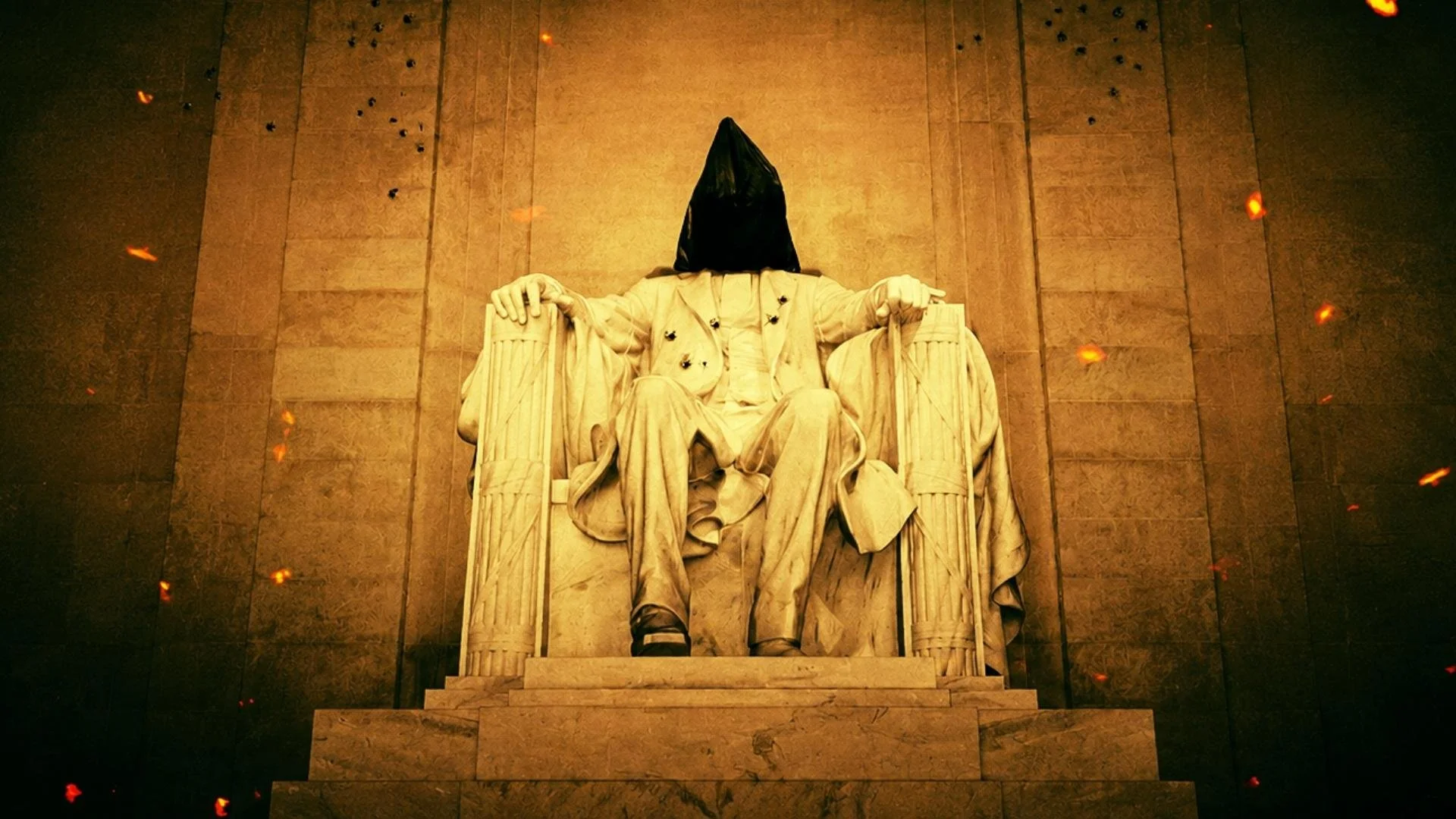
Modern media conditions our attention, rewards our impulses, and changes how we respond to reality.
“We’ve reached a point where things that are popular and emotionally resonant are much more likely to be seen by you than things that are true.”
—Max Fisher, The Chaos Machine
In The Chaos Machine, Max Fisher, a New York Times investigative reporter, provides a definitive account of how social media has seeped into the fabric of our society, demonstrating that its reach and impact run far deeper than we think. He argues that the technology behind social media has such a powerful pull on our psychology and identity that it reshapes how we think, behave, and relate to each other, effectively changing society itself because practically everyone is using it.
Fisher draws from a range of examples to show how social networks preyed on psychological frailties to create the algorithms that drive everyday users to extreme opinions and, increasingly, extreme actions. One such example is the country of Myanmar, where Facebook, largely unregulated in the region, was manipulated to spread hate speech and misinformation against the Rohingya Muslim minority. This created a humanitarian crisis, resulting in thousands of Rohingya deaths and the displacement of hundreds of thousands more.
One would assume Facebook didn’t intend such an appalling outcome, but as Fisher shows, companies like Facebook, and the other social media heavyweights like Twitter and YouTube, had a relentless focus on “maximising engagement” at all costs. He quotes Sean Parker, the co-founder of Napster and first president of Facebook: “How do we consume as much of your time and conscious energy as possible? We need to give you a little dopamine hit once in a while.”
This led to the social-validation feedback loop, which remains just as powerful, if not more so, today. It’s why our phones resemble Las Vegas slot machines; a battery of apps with colourful notifications, whooshes, and vibrations designed to respond to every action with visual, auditory, and tactile feedback. It’s a Pavlovian effect, training our minds to conflate the thrill of winning with its mechanical clangs and buzzes.
The Chaos Machine was a finalist for the Helen Bernstein Book Award for Excellence in Journalism, recognising its critical and cultural importance. In his research and conclusions, Fisher amplifies the voices of outsiders and Silicon Valley defectors who courageously raised the alarm.
Whether it’s enough is another question entirely.
Filmmaker Alex Garland imagines another kind of machine in his latest work, Civil War. The machine is the media apparatus that follows catastrophe and violence, not always in that order. Much like its title, it has been divisive among audiences. Released amid America’s current political divisiveness, the title raises immediate expectations and questions: Who is at war? How did it start? Which party does the fascist president belong to? English director Garland, however, deliberately offers few answers.
“Journalism is printing what someone else does not want printed.”
—George Orwell
Set in a dystopian future America, Civil War follows four journalists on a journey across the country to reach Washington D.C. before rebel factions seize the White House. They want an interview with the president. The film is a combination of road-trip and on-the-horizon apocalypse. It’s loud, ferocious, and violent. It’s also thoughtful, unexpected, and surprisinglynuanced. I agree with film critic Matt Zoeller Seitz’s interpretation that the film isn’t just a cautionary tale about the ramifications of a divided United States, but instead a reflection on journalistic ethics, challenging the audience to consider the responsibilities and dilemmas faced by reporters in tumultuous times.
Civil War presents a portrait of these four reporters. The lead journalist, Lee, excellently played by Kirsten Dunst, is a legendary female photojournalist modelled after her namesake Lee Miller. Her Reuters partner is a South American-born reporter named Joel (Wagner Moura). They join up with Sammy, an older African-American journalist who writes for “what’s left of the New York Times” and a young, almost junior version of Lee called Jessie, who wants to follow in her footsteps.
We watch the journalists single-mindedly chase the story, often recklessly putting their lives in danger. The journalists are driven by their indisputable belief that their sole duty as a member of the free press is to report the events as they unfold, whatever those events may reveal. Through this narrative, Garland seems to ask whether a journalist’s highest obligation is to simply document events or choose a side. He leaves this question open, inviting the audience to wrestle over the answer.
Garland himself comes from a family of journalists, with a grandfather who was a foreign correspondent and a father who worked as a political cartoonist. This impressive journalistic heritage may well influence the thematic layers of Civil War, suggesting that the film’s title not only refers to the literal conflict within the U.S., but also to a metaphorical battle raging within the field of journalism itself. After all, it has hardly been a zone of harmony in the U.S. over the past decade.
Returning to Fisher’s book, he shares a famous 1950s lab experiment by psychologist B. F. Skinner. Skinner observed that mice responded most favourably to random rewards: sometimes a small treat, sometimes a large one, sometimes nothing at all. This is a concept known as intermittent variable reinforcement. It is the premise behind social media. It is also the exact model casinos use in their slot machines to keep players gambling. Players know the machine will pay out at some point, but they don’t know when. That’s difficult to walk away from, especially with a few small treats thrown their way now and then.
A different version of Skinner’s random rewards concept runs through Garland’s film. The reporters in Civil War are not chasing likes or shares, but they are still caught in the momentum of the next payout: the payout being the next image or quote that catches a nation coming apart; the next scene of history before it disappears completely. Their work has moral purpose, but it also has its own momentum. The story keeps calling.
The danger is not only that media misleads us, but that over time, it trains us. It teaches us what to notice, fear, reward, and ignore. We lose our innate capacity to be discerning.
The machine does not need to control everything.
It just needs to keep us plugged in and playing long enough.
Pass It On
If this idea was worth your time, it may be worth someone else’s.
Share this essay with a friend:
https://www.deeplifejourney.com/deep-life-reflections/may-10-2024
If you have a thought you’d like to share, please leave a comment below.
You can read all previous issues of Deep Life Reflections here.