
The Writer and the Racing Car Driver
John McPhee and Ayrton Senna are two master craftsmen whose crafts demand different relationships with time.
Deep Life Reflections | Essay 61 | James Gibb
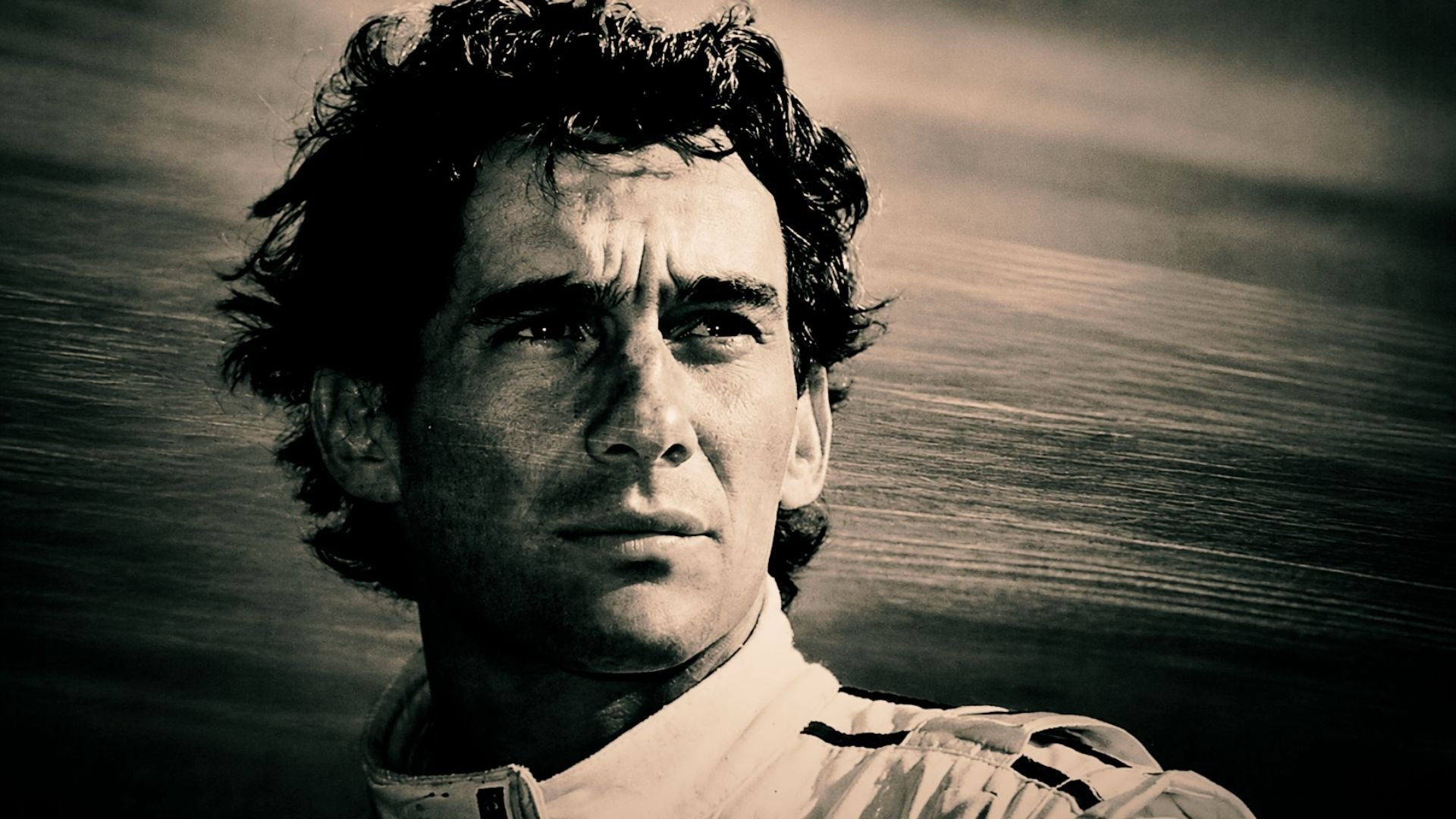
Mastery is not one kind of discipline, but takes the full shape of the person, the craft, and the demands of the work.
John McPhee is a writer. An exceptional one. He’s been honing his craft for over half a century as a staff writer for The New Yorker, where he’s worked since 1965. McPhee has published thirty-three books and is a four-time finalist for the Pulitzer Prize, winning the award in 1999. His memoir, Draft No.4: On the Writing Process, is a collection of essays that share his lifetime of insights and experiences in writing.
“A piece of writing has to start somewhere, go somewhere, and sit down when it gets there.”
—John McPhee
What drew me towards McPhee is that he has built a life around making difficult things readable without making them simple, reflecting one of the many truths of life. He writes about eclectic subjects, not the type of things you’d normally read about. His topics range from the psyche of a nuclear engineer (‘The Curve of Binding Energy’), a wilderness area in New Jersey (‘The Pine Barrens’), the movement of coal across America (‘Coal Train in Uncommon Carriers’), to a memoir of his family’s stay on the island of Colonsay in Scotland (‘The Crofter and the Laird’). He’s even written a short book entirely about oranges. He takes subjects and finds the hidden architecture within them. This requires patience, arrangement, attention, revision, and a commitment to the difficult. McPhee has them all.
He’s profiled scientists, athletes, eccentrics, and specialists of all kinds. While McPhee’s lessons universally apply, the book’s primary audience is aspiring and established writers. In one essay, he emphasises the importance of experimentation in discovering a writing identity:
“Young writers find out what kinds of writers they are by experiment. Write in every genre. If you are telling yourself you’re a poet, write poems. Write a lot of poems. If fewer than one work out, throw them all away; you’re not a poet. Maybe you’re a novelist. You won’t know until you have written several novels.”
He’s also adamant there’s no real competition between writers. No one can ever write in the same way anyone else does. Writing, then, is strictly a matter of developing oneself, says McPhee. “You develop yourself by writing.”
Given his extensive body of work and the high regard of his peers, one might assume McPhee is a workaholic, tirelessly and frantically typing for hours day upon day. But this is not the case. McPhee reveals he rarely writes more than 500 words a day. When asked about this paradox, he responded:
“People say to me, ‘Oh, you’re so prolific’…God, it doesn’t feel like it—nothing like it. On a certain scale, it does look like I do a lot. But that’s my day, all day long, sitting there wondering when I’m going to be able to get started. And the routine of doing this six days a week puts a little drop in a bucket each day, and that’s the key. Because if you put a drop in a bucket every day, after three hundred and sixty-five days, the bucket’s going to have some water in it.”
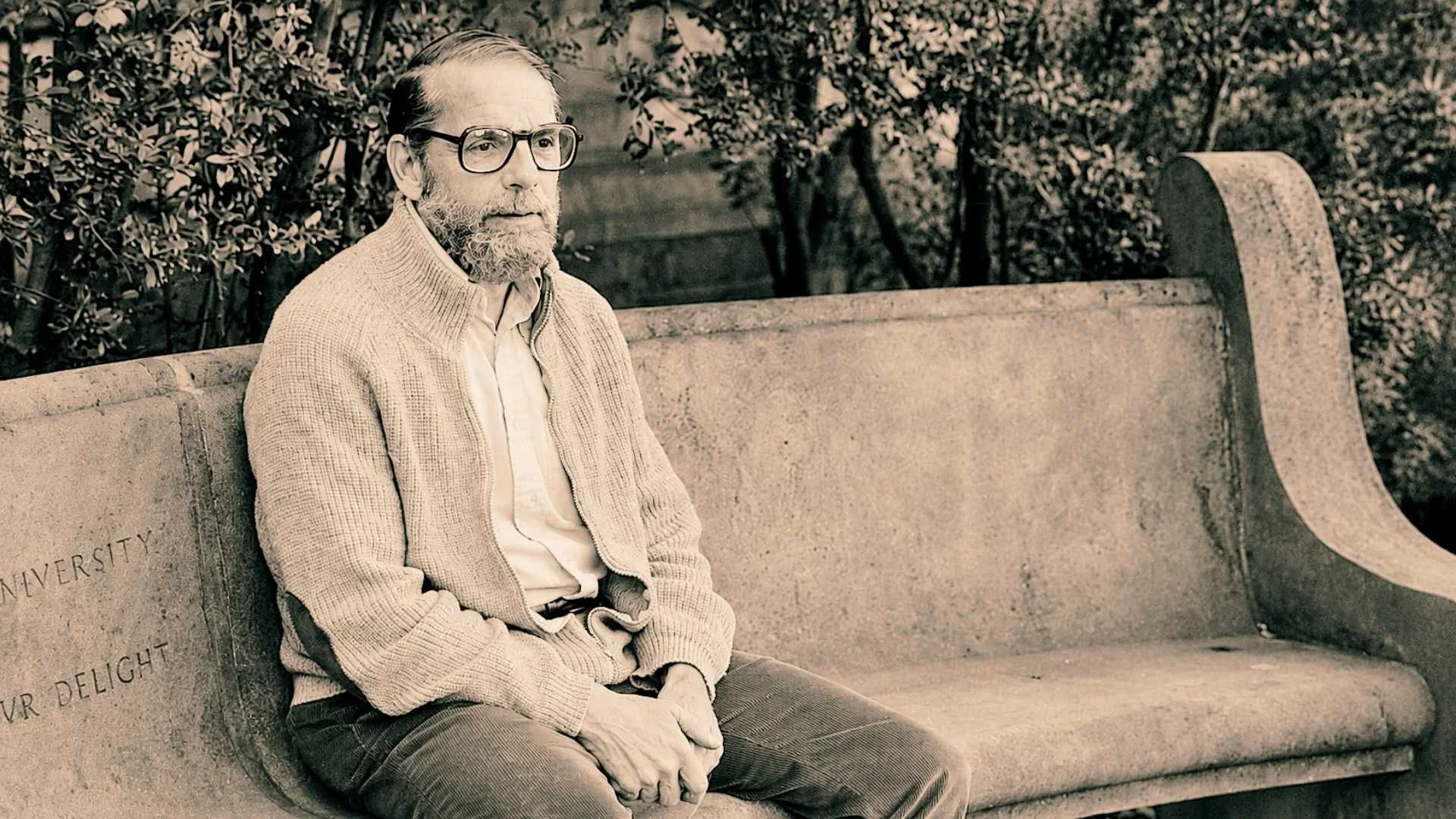
Writer John McPhee. Honing his writing craft for over half a century.
McPhee’s craft moves slowly, built from a thick library of notes, drafts, structure, and an instinct to know when to push and when to stop and sit under a tree for a few hours. Draft No.4 celebrates a life devoted to writing and mastering a craft, not for the sake of mastering a craft, but for the end result: stories that articulate the sometimes strange, often incomprehensible, and occasionally wonderful world we inhabit.
McPhee gives these stories both life and an afterlife. The best gift a writer can give.
John McPhee worked slowly and rhythmically, patiently adding drops to the bucket. His relationship with time was expansive, measured in notes, drafts, revisions, and long periods of thought. Ayrton Senna’s relationship with time was compressed almost beyond human recognition. His world was constructed of fractions of a second, aerodynamics, and terrifying levels of speed. Yet both men were consumed by the same force: the need to devote themselves fully to mastering a single thing.
“There’s only one word that describes Ayrton’s style, and that is ‘fast.’”
—John Bisignano, ESPN F1 commentator.
Other drivers may have more Formula One World Championships, but many see Ayrton Senna as the greatest racing driver of all time. Seven-time World Champion Lewis Hamilton said this of Senna, “He was the most iconic individual, a real leader and a master of his craft.”
May 2024 marked the 30th anniversary of the death of Ayrton Senna. The Brazilian won the F1 World Championship three times before his death at the San Marino Grand Prix. There, at 2:17 pm, Sunday, May 1, 1994, Senna’s car flew off the track on lap 7 at the Tamburello corner, slamming into an unprotected concrete barrier at 211 km/h (131 mph). At 6:40 pm, doctors announced that Senna had died. The Brazilian government declared three days of national mourning, and an estimated three million people lined the streets of his hometown in São Paulo on the day of his funeral.
Asif Kapadia’s documentary, Senna, released in 2010, captures the legend and legacy of Ayrton Senna, both as a man and a driver. Relying entirely on archival footage, Kapadia contrasts episodes of adrenaline-pumping speed (Senna’s mastery of the compact, twisted streets of Monaco being particularly spellbinding) with moments of reflective slow motion and thought. The contrast is not accidental. Senna was both the deep thinker and the performance artist, driven by excellence, yes, but also his faith.
The documentary’s impact is heightened by the music of composer Antonio Pinto, a fellow Brazilian. Pinto’s score seems to mirror the perfect lines of Senna’s racing: sublime and exact, exuberant and exhilarating. It is also uniquely Brazilian. I can’t think of a more appropriate soundtrack to a man’s life. The crescendo when Senna finally wins his beloved Brazilian Grand Prix—despite having to drive the final few excruciating laps stuck in sixth gear—lifting the huge trophy despite the agony in his shoulder, captures the soul of Senna. A man seemingly put on earth to do only one thing.
“You either commit yourself as a professional racing driver that's designed to win races or you come second or you come third or fifth. I am not designed to come third, fourth or fifth, I race to win.”
—Ayrton Senna
The film analyses Senna’s ‘win at all costs’ mentality, particularly focusing on his infamous rivalry with competitor and later teammate, Alain Prost. It reveals a complex and sometimes contradictory man: one always ready to push for the gap—whether it existed or not—and one committed to improving driver safety with the higher-ups in F1.
On that final day of his life, on the warm, crowded tarmac of Imola just ahead of the start, we see that conflict etched all over his face. Senna was unsure whether to race after the death of the young Austrian driver Roland Ratzenberger the day before. There had been several other collisions that weekend, including a serious one involving his young fellow Brazilian, Rubens Barrichello. But Senna was already losing ground in the World Championship to Michael Schumacher’s superior Benetton car.
He was always going to race.
When Senna’s damaged car was later assessed by the crash engineers, they found an Austrian flag tucked into the cockpit. Senna had planned to unfurl the flag during his post-race victory lap to honour the life of Roland Ratzenberger.
That small gesture tells us that beneath the ferocity of the competitor, there was still a man capable of reverence.
Mastery does not always look the same. It is not built through the vague ideal of ‘passion.’ It is built through repeated contact with the thing itself: the sentence, the structure, the corner, the machine, the risk, and the revision.
In either case, the work leaves its mark on the person doing it.
And by extension, on us.
Pass It On
If this idea was worth your time, it may be worth someone else’s.
Share this essay with a friend:
https://www.deeplifejourney.com/deep-life-reflections/may-17-2024
If you have a thought you’d like to share, please leave a comment below.
You can read all previous issues of Deep Life Reflections here.