
Once Upon a Time in Cinema
Cinema Speculation, Paper Moon, and the films that let us travel back home.
Deep Life Reflections | Essay 62 | James Gibb
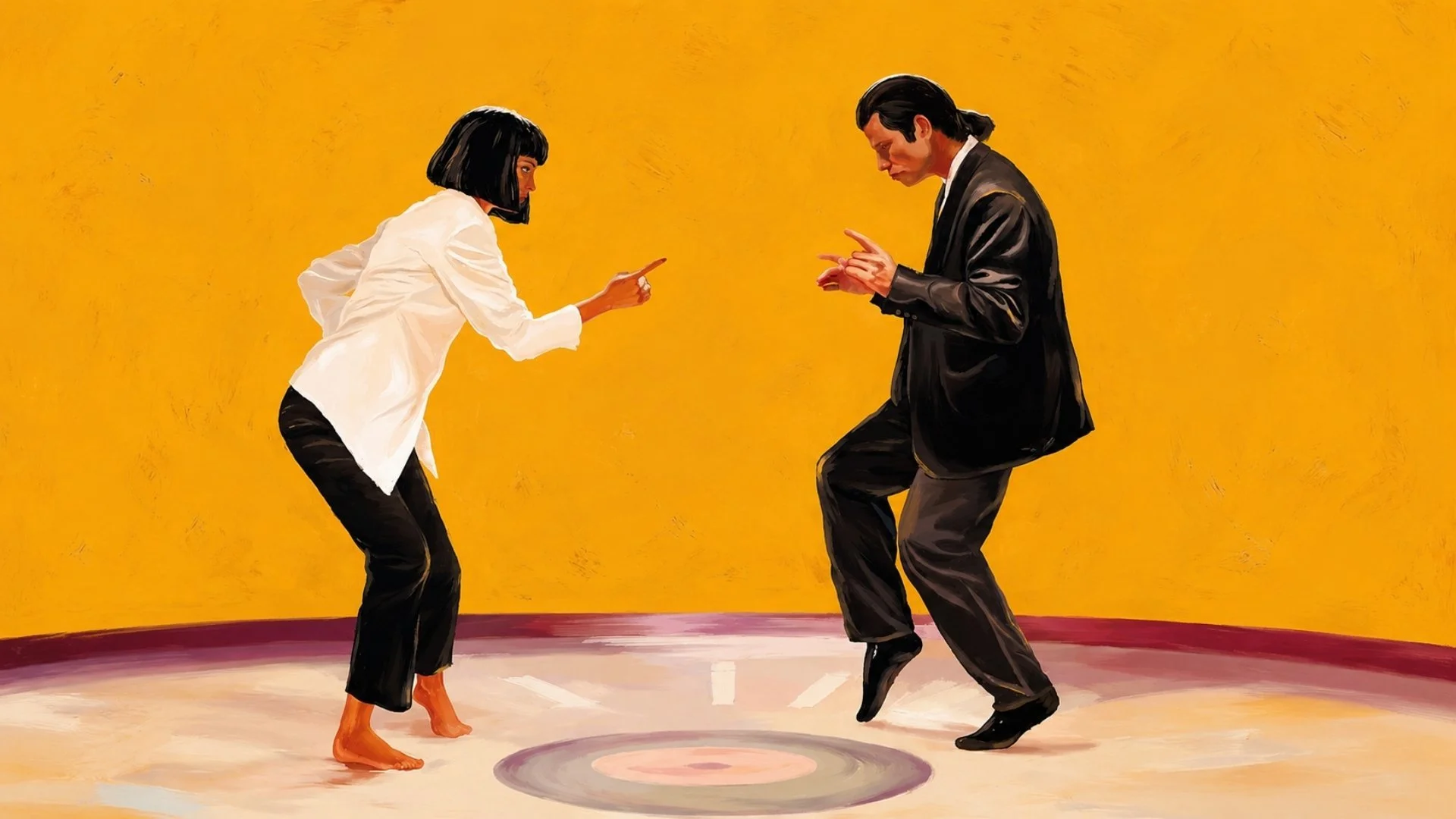
Nostalgia is delicate but powerful because it lets us revisit the past without ever fully returning to it.
Everyone seems to have an origin story these days. The one people know most about Quentin Tarantino starts at the video store in Manhattan Beach, Los Angeles, where he worked for five years, between 1984 and 1990. There, at Video Archives, Tarantino soaked up everything about movies. He eventually decided he knew enough about them to make them. While this is true, his real origin story begins much earlier.
It comes in the opening chapter of his 2022 non-fiction book, Cinema Speculation. In ‘Little Q Watching Big Movies,’ Tarantino speaks with reverence about how his young and hip mother took him to see grown-up movies when he was only six. The rule was simple: stay quiet and don’t ask questions. Don’t bother the adults and we won’t bother you. So, Tarantino spent his youth watching movies that would shape him for life.
Cinema Speculation is Tarantino’s love-letter to a special kind of American movie. The genre ones from the late 1960s and 70s that had such a hold over him. B-movies, exploitation films, revenge flicks, modern classics. The book gives us chapters on Tarantino’s personal favourites, including well-known films like Taxi Driver, Dirty Harry, and Bullitt, as well as lesser-known ones such as Paper Moon, Sisters, and Rolling Thunder. Many of the films he would go on to create—highly stylised, dialogue-rich, and bathed in pop culture—paid homage to the movies he grew up watching as an impressionable youth.
Cinema Speculation reinforces Tarantino’s pure love of film and the entire movie experience. He is still that six-year-old in the movie theatre, watching a double-bill of Steve McQueen in The Getaway and Joe Don Baker in Walking Tall. His knowledge of cinema and the men and women who made it is obsessive and infectious. Tarantino would have also made an astute film critic, as he understands the historical and cultural currents that shaped cinema’s revolution in the late 1960s, when New Hollywood became the dominant force.
New Hollywood represented a seismic shift away from the safe, easily identifiable black-and-white heroes and villains of the 1950s, where the hero walked into the sunset with the girl. These films were made by men who were celebrated for their craft. However, New Hollywood introduced a new kind of filmmaker, those who went to film school and made movies because they loved movies. Young directors like Francis Ford Coppola, Martin Scorsese, Steven Spielberg, Peter Bogdanovich, and Brian De Palma created films about anti-heroes that were real and flawed, reflecting the changing times of the 1970s. We see these traits in characters like Michael Corleone, Travis Bickle, and Harry Callaghan, aka Dirty Harry.
Tarantino has made nine full-length films, and his long-awaited tenth and supposedly final film remains a mystery. Whether or not you enjoy his films, Tarantino is the one director in Hollywood every A-list actor wants a call from. Cinema Speculation captures some of that allure and gold-dust: a hyperactive, fanatical, kinetic lover of film who is still part pre-teen moviegoer, part video store clerk, and part Big Hollywood Director, mesmerised by the movies and how they make people feel.
After thoroughly enjoying Cinema Speculation and being a cinephile myself, I watched a few of Tarantino’s favourites, including some I hadn’t seen before. One of these was the 1973 movie Paper Moon, directed by Peter Bogdanovich.
Set during the Great Depression of the 1930s, the film follows a con man named Moses Pray who unexpectedly ends up traveling with a 9-year-old girl, Addie, whose mother has just passed away. They form an unlikely partnership as they journey through the stark dust bowl of Kansas to take Addie to her relatives in Missouri.
There is a suggestion that Moses might be Addie’s father, and it’s perhaps not a coincidence that the roles are played by real-life father and daughter, Ryan O’Neal and Tatum O’Neal. Both are excellent in their roles, particularly Tatum O’Neal, who shows a maturity and presence far beyond her years. Her character is tough and savvy, often outsmarting Moses. Tatum’s performance earned her the Academy Award for Best Supporting Actress, making her the youngest person ever to win an Oscar, a record she still holds.
Bogdanovich recreates 1930s America with the help of cinematographer Laszlo Kovacs, who uses black-and-white film to add a nostalgic beauty that complements the Depression-era setting. While the movie centres on two con artists, it’s less about their con and more about their relationship. The film is poignant without being sentimental as Moses and Addie discover what they really need from each other.
The movie is based on the book Addie Pray by Joe David Brown, published in 1971. Bogdanovich, however, didn’t like the original title and proposed ‘Paper Moon’ instead. Unsure about the new title, he sought advice from his mentor, Orson Welles, who responded, “That title is so good, you shouldn’t even make the picture, just release the title!” Following the film’s release, they also changed the book’s title to ‘Paper Moon’.
Bogdanovich was one of the New Hollywood artistic filmmakers, recreating the Golden Thirties with the panache and style characteristic of the Golden Seventies. I can see why it’s a favourite of Tarantino’s. It has scams, broken families, Depression-era roads, and the tenderness of people trying to figure out if they belong to anyone.
With a book like Cinema Speculation, and a film like Paper Moon, it’s hard not to feel a sense of nostalgia. Nostalgia is a potent force in cinema and in life, capable of transporting us to different times and places, evoking emotions and memories long dormant.
Thinking about nostalgia reminds me of a fantastic scene in Mad Men, when Creative Director Don Draper makes the greatest sales pitch of all time. His client, Kodak, has produced a slide projector with a rotary tray for storing photographs. It’s tentatively called the Wheel. But Don believes it’s capable of something more. As he flips the projector from slide to slide, contemplating the memories onscreen of his family, he says:
“Nostalgia is delicate but potent. In Greek, 'nostalgia' literally means 'the pain from an old wound'. It’s a twinge in your heart, far more powerful than memory alone…[The slide projector] isn’t called the wheel, it's called the carousel. It lets us travel the way a child travels. Around and around and back home again, to a place where we know we are loved.”
Don has been having his own marital issues, so his message is less to Kodak and more to himself.
For many, the movies of our childhood and youth are time capsules that capture something important about that period in our lives. Those movies remind us of who we were, where we came from, and sometimes, where we wanted to go. Just like Don says, nostalgia lets us travel the way a child travels, around and around, to a place where we feel safe and loved.
Even if we cannot stay.
Pass It On
If this idea was worth your time, it may be worth someone else’s.
Share this essay with a friend:
https://www.deeplifejourney.com/deep-life-reflections/may-24-2024
If you have a thought you’d like to share, please leave a comment below.
You can read all previous issues of Deep Life Reflections here.